NASA is set to introduce the world to the four astronauts who will fly the Artemis 3 mission Tuesday morning.
The announcement will take place at NASA’s Johnson Space Center, with the event kicking off at 10:30 a.m. CDT (11:30 a.m. EDT / 15:30 UTC). According to a social media post by NASA Administrator Jared Isaacman, in addition to announcing the crew and backup crew members, the agency “will also be providing a confidence update on the mission.”
Spaceflight Now will be live-streaming the event on our 24/7 stream on YouTube, Launch Pad Live.
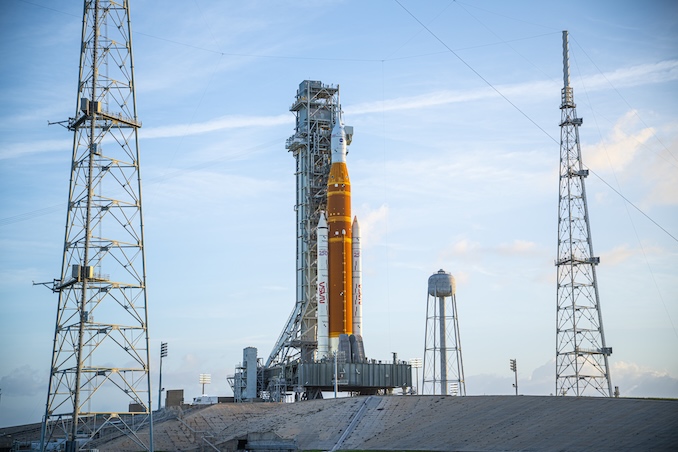
The identity of the four crew members isn’t known publicly, but will be unveiled in a fashion similar to the crew naming for the Artemis 2 mission in April 2023. A number of issues, including needing further analysis on the Orion heat shield ultimately delayed the Artemis 2 from fall 2024 to launching on April 1, 2026.
The Artemis 3 mission is currently the only mission in the program designed to exist entirely in low Earth orbit. Heading into Tuesday’s event, the plan for the mission was for the Orion spacecraft to rendezvous and dock with one or both of the Human Landing System landers: Blue Origin’s Blue Moon Mark 2 and SpaceX’s Starship.
Based on the data gathered and the development for each, one of the two landers would be selected to fly the first lunar landing mission for the Artemis program. That mission is Artemis 4, which NASA hopes to fly as soon as early 2028.
Tuesday’s announcements come as many questions about the details of the mission remain unknown to the public. Those include the planned duration of the overall mission, the duration that Orion will be docked with each lander, and whether or not some or all of the crew members will be able to cross from Orion into the HLS landers.
Both Blue Origin and SpaceX have been fairly tightlipped when it comes to specifics about their HLS landers, as they compete to perform the first U.S.-led crewed landing since 1972.
Artemis 3 is likely to not demonstrate one of the technically challenging hurdles for the landers: propellant transfer. Both architectures will rely on that to support landing missions on the Moon. The companies have not revealed exactly how many launches will be needed to fuel their landers for the trip to the Moon.
Neither SpaceX nor Blue Origin have publicly shown a flight version of the HLS edition of Starship or Blue Moon Mk.2. NASA has not said if either company will have a representative to speak on behalf of their lander programs.
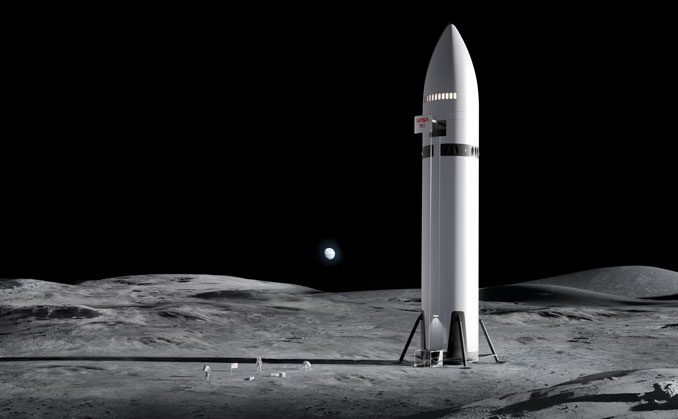
SpaceX just launched the first test flight of its Starship Version 3 rocket, the iteration of the rocket that will be used on its Artemis missions. But the flight while largely successful did encounter issues with the Super Heavy booster and the Raptor engines used on both stages.
SpaceX has yet to perform an orbital flight of its Starship rocket.
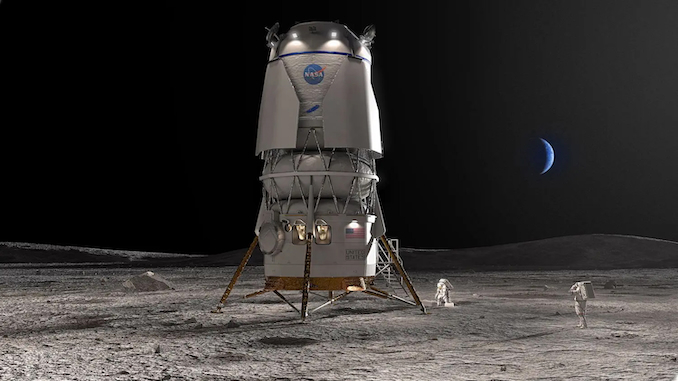
Meanwhile the explosion of a Blue Origin New Glenn rocket at its pad at Cape Canaveral Space Force Station leaves that company without its only orbital launch pad. Company leadership vowed to return to flight with New Glenn before the end of the year, which would be a remarkably fast recovery by industry standards.
In recent media appearances, Isaacman said that the agency was looking to decouple the Blue Moon landers from the New Glenn rocket and fly them on another launcher, like SpaceX’s Falcon Heavy. There may be some logistical hurdles to that, since the Blue Moon landers may need to be fueled with liquid hydrogen at the launch pad, a capability that currently doesn’t exist at SpaceX’s Falcon Heavy pad, Launch Complex 39A at NASA’s Kennedy Space Center.
One other big watch item for Tuesday is whether or not the AxEMU spacesuit being developed by Axiom Space will be ready to fly on the Artemis 3 mission. On Sunday, the company unveiled the Liquid Cooling and Ventilation Garment (LCVG) for the suits, which was designed and manufactured in partnership with Prada.