A United Launch Alliance Atlas 5 rocket blasted off Friday and boosted a pair of prototype internet satellites into orbit for Amazon’s Kuiper program, the latest entry in the increasingly competitive space-based broadband market currently dominated by SpaceX.
A pair of Earth observation satellites along with ten auxiliary payloads will launch aboard Arianespace’s penultimate Vega rocket into sun-synchronous orbit on Friday. The first launch attempt for the light launcher was scrubbed Friday.
About a year and a half after signing a Space Act Agreement with NASA to develop a commercial space station, Northrop Grumman formally withdrew from its solo plans in order to partner with Nanoracks, a subsidiary of Voyager Space.
The launch of NASA’s Psyche asteroid mission is being delayed a week due to allow “verifications” of parameters used by the spacecraft’s thrusters, the space agency confirmed Thursday. Liftoff on a SpaceX Falcon Heavy rocket is now scheduled for no earlier than Oct. 12.
NASA astronaut Frank Rubio and two Russian cosmonauts undocked from the International Space Station and plunged back to Earth early Wednesday, landing on the steppe of Kazakhstan to close out an unexpected yearlong stay in space, the longest single flight in U.S. space history.
Two Russian cosmonauts and a NASA astronaut return to Earth after an extended tour of duty aboard the International Space Station. The landing marked the end of a 370-day-21-hour-22-minute-long mission. It was the third longest human space flight in history and the longest by a U.S. astronaut.
Nearly two weeks after the successful launch of a payload for the U.S. Space Force’s Space System Command, leaders from the branch along with launch provider, Firefly Aerospace, and satellite manufacturer, Millennium Space Systems, touted the importance and details of the mission during a press briefing on Tuesday.
Outgoing space station commander Sergei Prokopyev and his two Soyuz crewmates, co-pilot Dmitri Petelin and NASA astronaut Frank Rubio, packed up Tuesday for a fiery plunge back to Earth early Wednesday to close out a yearlong stay in orbit, the longest flight in U.S. space history.
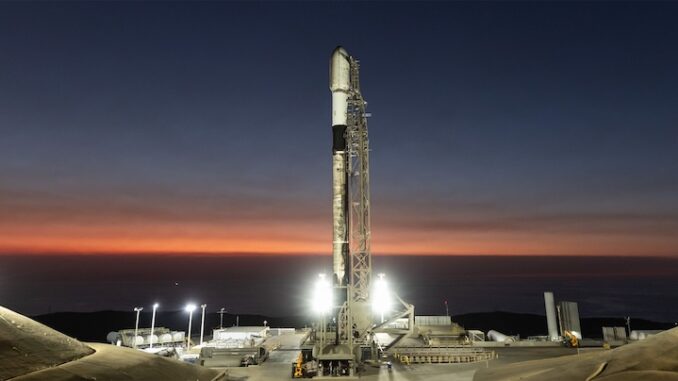
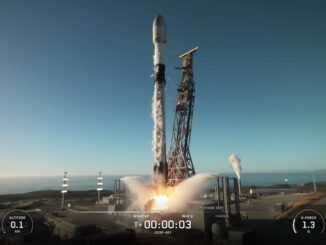
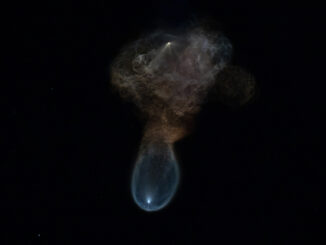
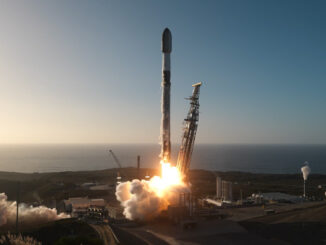
SpaceX launched its 42nd Starlink delivery mission of the year with a Falcon 9 lifting off from the West Coast carrying a batch of 21 satellites at 1:48 a.m. PDT (4:48 a.m. EDT / 0848 UTC) Monday morning.
A saucer-shaped capsule carrying asteroid fragments that may hold clues about the birth of the solar system slammed into Earth’s atmosphere Sunday and descended to an on-target parachute-assisted touchdown in Utah in the final chapter of a dramatic seven-year, four-billion-mile voyage.
Spaceflight Now’s Will Robinson-Smith speaks with some of the key figures at Lockheed Martin, who helped bring the OSIRIS-REx mission to life and will continue working with both the spacecraft and the asteroid samples after the return capsule lands in the Utah desert.
Live coverage as a capsule lands in the U.S. Army test range in the Utah desert carrying samples from the surface of asteroid Bennu. NASA’s OSIRIS-REx (short for the Origins, Spectral Interpretation, Resource Identification, and Security-Regolith Explorer) mission has been on a seven-year journey to Bennu and back. If all goes according to plan the capsule will land under a parachute at about 10:55 a.m. EDT (1455 UTC) on Sunday.
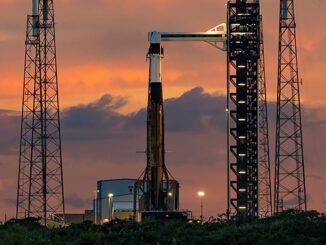
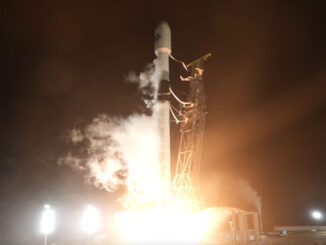
A SpaceX Falcon 9 launched from Cape Canaveral Saturday night with a first-stage booster making its 17th flight. It was only the second to reach this milestone. Liftoff, with 22 Starlink satellites occurred at 11:38 p.m. EDT (0338 UTC Sunday).