NASA
On eve of New Horizons flyby, Ultima Thule still holding onto its mysteries
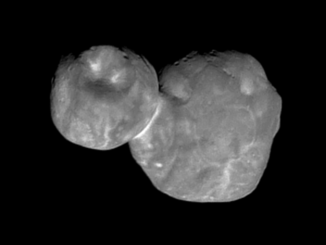
A day before NASA’s New Horizons spacecraft closes in on a frozen outpost nicknamed Ultima Thule 4.1 billion miles from Earth, basic facts about the city-sized object continued to elude scientists Sunday as the ground team braced for a deluge of data and imagery that should unmask the unexplored world at the frontier of the solar system.
Live coverage: New Horizons flyby target comes into focus
NASA’s New Horizons spacecraft made a historic New Year’s encounter with an object nicknamed Ultima Thule in the Kuiper Belt a billion miles beyond Pluto. The NASA space probe passed Ultima Thule at a distance of around 2,200 miles (3,500 kilometers) at 12:33 a.m. EST (0533 GMT) on Jan. 1, making it the most distant planetary body ever explored up close.
Live coverage: Soyuz crew lands in Kazakhstan
Russian commander Sergey Prokopyev, German flight engineer Alexander Gerst, and NASA astronaut Serena Auñón-Chancellor closed out a nearly 197-day space mission with a landing in Kazakhstan aboard their Soyuz MS-09 crew carry ship at 0502 GMT (12:02 a.m. EST) Thursday. The Soyuz crew undocked from the International Space Station at 0140 GMT (8:40 p.m. EST Wednesday) to begin their return to Earth.
Station crew set for overnight landing in Kazakhstan
Eight days after a dramatic spacewalk to inspect the site of a leak in the hull of his Soyuz ferry ship, Russian commander Sergey Prokopyev, German flight engineer Alexander Gerst and NASA astronaut Serena Auñón-Chancellor geared up to depart the International Space Station Wednesday for a fiery plunge back to Earth.
NASA, Rocket Lab partner on successful satellite launch from New Zealand
Rocket Lab’s commercial Electron booster fired into orbit from New Zealand on Sunday, carrying a flock of 13 CubeSats on the company’s first mission chartered by NASA, and closing out a landmark year for the new smallsat launch provider as Rocket Lab aims to grow its flight rate to at least one per month in 2019.