Artemis

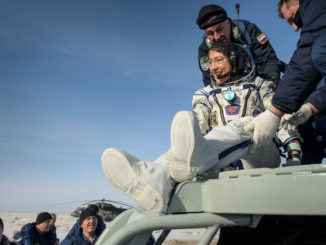
Christina Koch, veteran of six spacewalks outside the International Space Station — including the first all-female excursion — joined a Russian commander and an Italian flight engineer for a fiery plunge to landing in frigid Kazakhstan early Thursday, setting a new record for the longest single flight by a female.
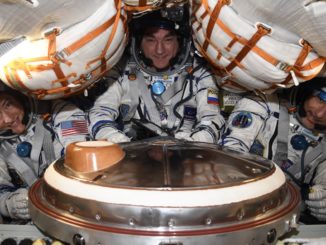
The Russian Soyuz MS-13 spacecraft departed the International Space Station and landed in Kazakhstan Thursday, bringing home outgoing space station commander Luca Parmitano, Soyuz pilot Alexander Skvortsov, and NASA astronaut Christina Koch, who concluded a 328-day mission, the longest-ever spaceflight by a woman. The Soyuz undocked from the station at 0550 GMT (12:50 a.m. EST) Thursday, then landed on the Kazakh steppe at 0912 GMT (4:12 a.m. EST).
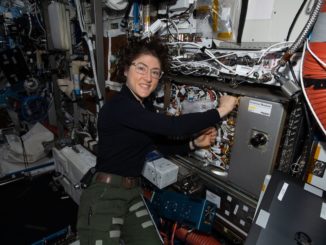
Christina Koch, veteran of six spacewalks outside the International Space Station — including the first all-female excursion — will join a Russian commander and an Italian flight engineer for a fiery plunge back to Earth early Thursday, setting a new world record for the longest single flight by a female astronaut.
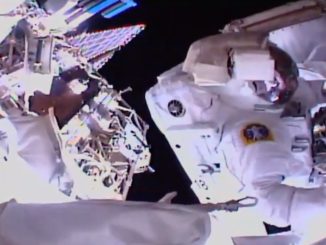
During a fourth spacewalk Saturday to wrap up repairs of the coolant system in a $2 billion cosmic ray detector, Italian astronaut Luca Parmitano and Drew Morgan discovered a leak in one of eight coolant lines that were spliced into a new pump module during three earlier excursions. But Parmitano was able to tighten a fitting on the line and the astronauts were able to complete the repair work, setting the stage for the instrument to resume science operations.
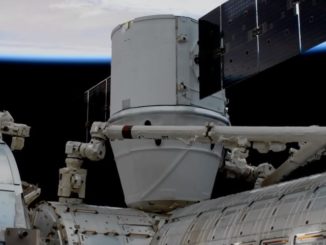
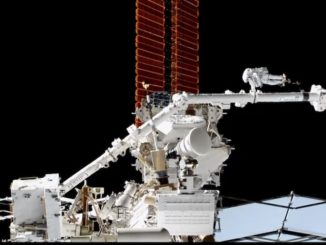
After prepping their patient — a $2 billion cosmic ray detector — during two earlier spacewalks, two space station astronauts ventured back outside for a third outing Monday to carry out what amounted to transplant surgery, installing replacement coolant pumps in a bid to revive the costly instrument and extend its life.
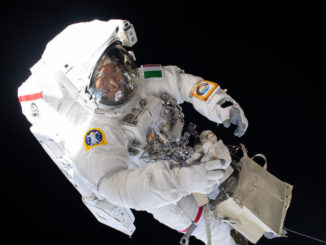
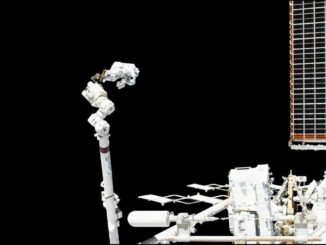
Two astronauts ventured outside the International Space Station Friday for the first of four spacewalks to repair a $2 billion cosmic ray detector, breezing through work to prep the device for invasive surgery to splice in new coolant pumps and extend the instrument’s life probing the composition of the universe.
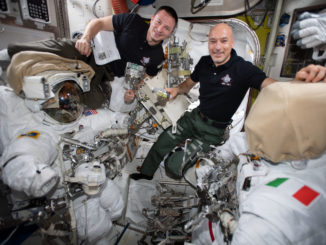
After four years of brainstorming, custom tool development and training, two astronauts plan to venture outside the International Space Station Friday for the first of four spacewalks to repair a $2 billion cosmic ray detector. The excursions are considered the most challenging since work to service the Hubble Space Telescope.
© 1999-2026 Spaceflight Now Inc