Falcon 9


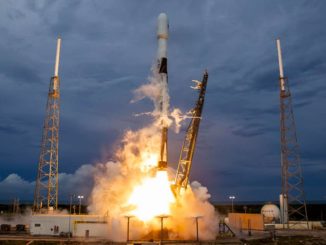
SpaceX launched a Falcon 9 rocket Wednesday at 9:06 a.m. EST (1406 GMT) from Cape Canaveral with 60 satellites for the company’s Starlink Internet network. Previous attempts to launch the mission were stymied by strong upper level winds and rough seas in the Falcon 9’s downrange recovery area northeast of Cape Canaveral.
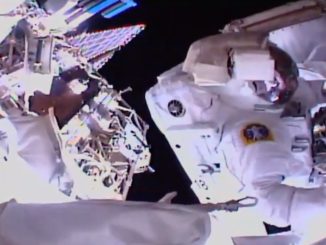
During a fourth spacewalk Saturday to wrap up repairs of the coolant system in a $2 billion cosmic ray detector, Italian astronaut Luca Parmitano and Drew Morgan discovered a leak in one of eight coolant lines that were spliced into a new pump module during three earlier excursions. But Parmitano was able to tighten a fitting on the line and the astronauts were able to complete the repair work, setting the stage for the instrument to resume science operations.
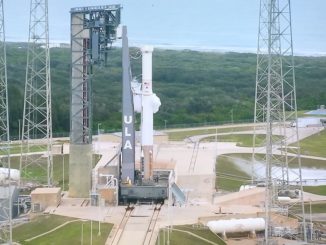
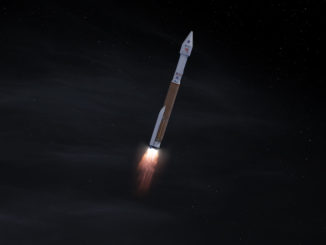
United Launch Alliance teams loaded super-cold liquid hydrogen and liquid oxygen into an Atlas 5 rocket Friday at Cape Canaveral during a countdown dress rehearsal for a planned launch next month with the Solar Orbiter mission, a robotic spacecraft to study the origins of the solar wind and image the sun’s poles for the first time.

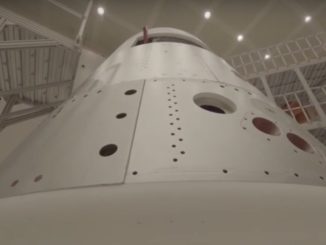
The next flight of China’s heavy-lift Long March 5 rocket will debut a new configuration designed to launch modules for a Chinese space station. But a demonstration launch of the Long March 5B booster scheduled as soon as April will instead carry a prototype of China’s next-generation deep space crew capsule into orbit on an unpiloted test flight.
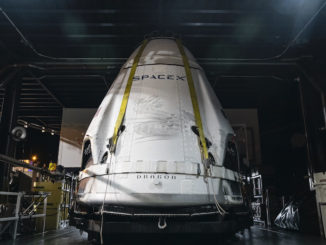
Data from the Jan. 19 in-flight launch escape demonstration of SpaceX’s Crew Dragon spacecraft indicate the performance of the capsule’s SuperDraco abort engines was “flawless” as the thrusters boosted the ship away from the top of a Falcon 9 rocket with a peak acceleration of about 3.3Gs, officials said Thursday.
© 1999-2026 Spaceflight Now Inc