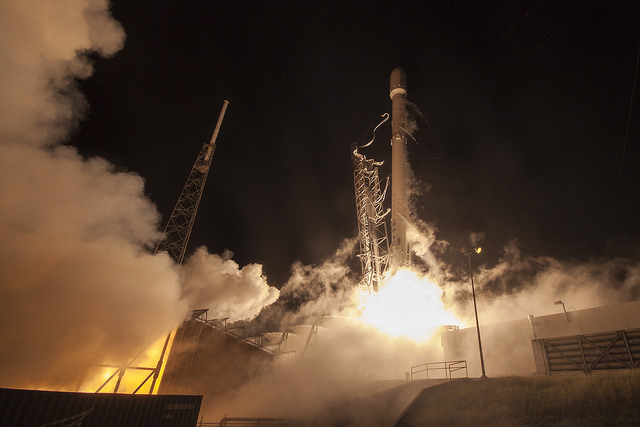
SpaceX’s Falcon 9 rocket is set for liftoff from Cape Canaveral early Friday, heading due east over the Atlantic Ocean to deliver the JCSAT 14 communications satellite into orbit 32 minutes later.
The 229-foot-tall rocket is poised for launch from Complex 40 at 1:21 a.m. EDT (0521 GMT) Friday at the opening of a 120-minute launch window.
Perched atop the rocket is the JCSAT 14 communications satellite, an approximately 5-ton spacecraft made by Space Systems/Loral, ready to beam television programming, data services and Internet connectivity to homes, and businesses in the Asia-Pacific, Russia and parts of Australia.
The timeline below outlines the launch sequence for the Falcon 9 flight with JCSAT 14. It does not include times for the experimental descent and landing attempt of the first stage booster, which SpaceX says is unlikely to succeed due to the high speed required for the launch to reach geostationary transfer orbit.
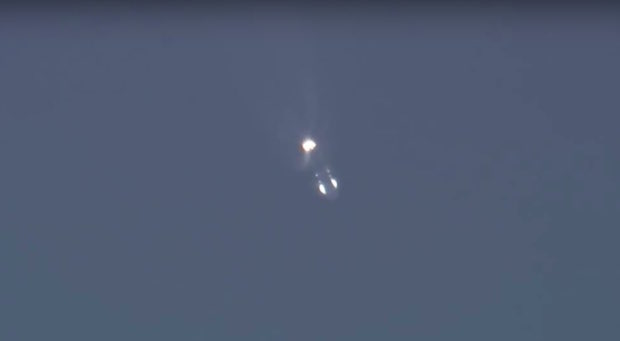
SpaceX’s landing platform is positioned about 400 miles (650 kilometers) east of Cape Canaveral for the first stage landing attempt, which is expected around 10 minutes after liftoff.
Data source: SpaceX
T-0:00:00: Liftoff
After the rocket’s nine Merlin engines pass an automated health check, hold-down clamps will release the Falcon 9 booster for liftoff from Complex 40.
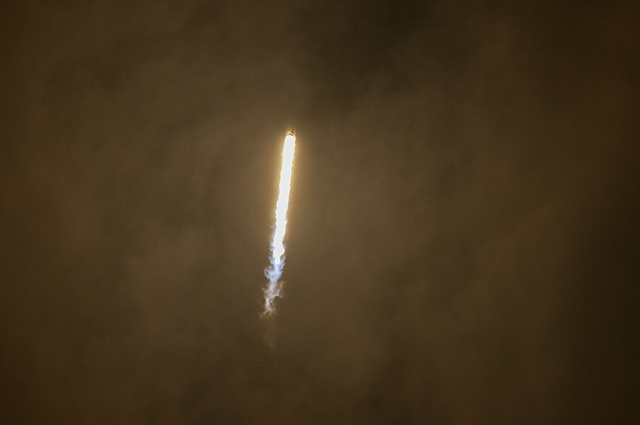
T+0:01:13: Mach 1
The Falcon 9 rocket reaches Mach 1, the speed of sound.
T+0:01:20: Max Q
The Falcon 9 rocket reaches Max Q, the point of maximum aerodynamic pressure.
T+0:02:38: MECO
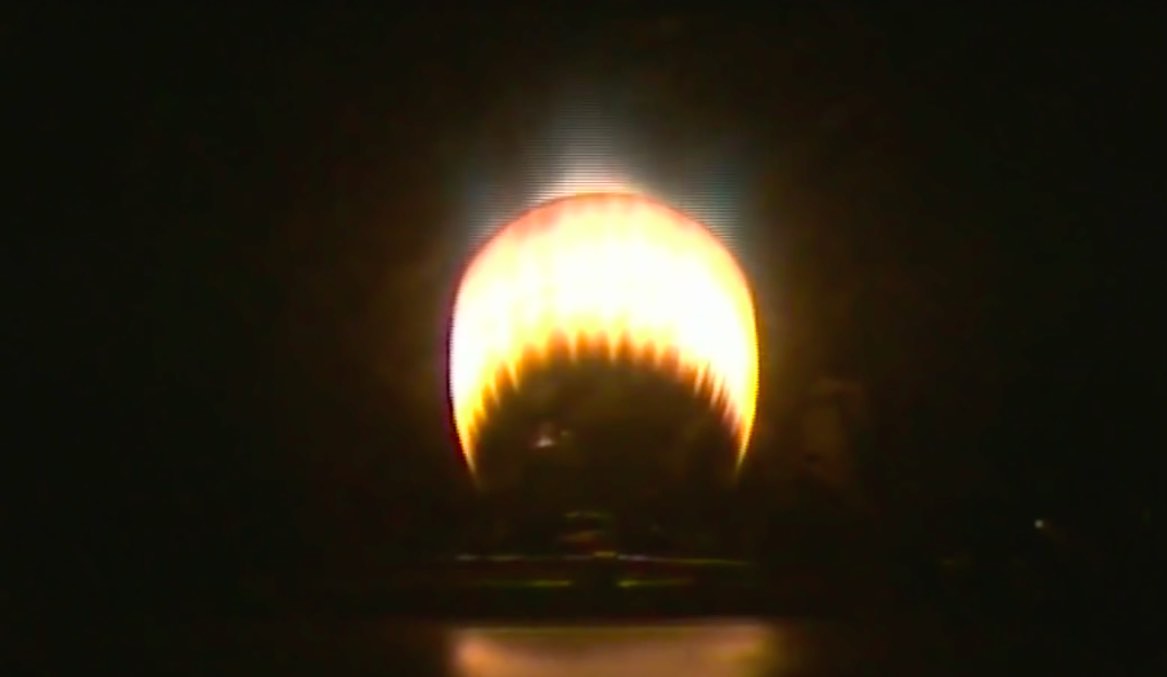
The Falcon 9’s nine Merlin 1D engines shut down.
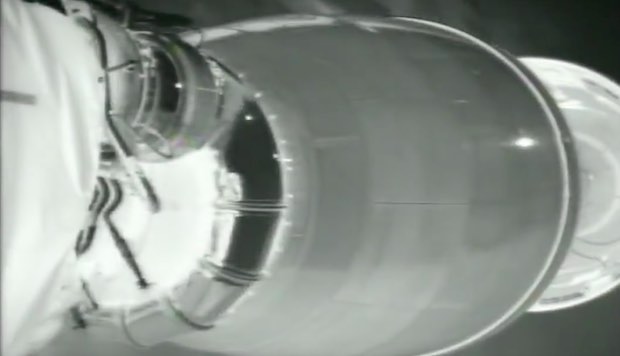
T+0:02:41: Stage 1 Separation
The Falcon 9’s first stage separates from the second stage moments after MECO.
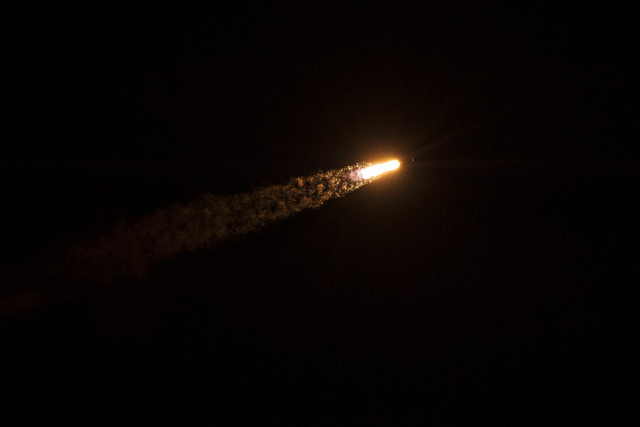
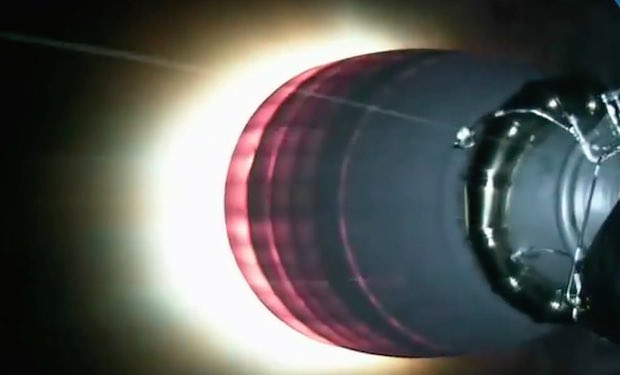
T+0:02:49: First Ignition of Second Stage
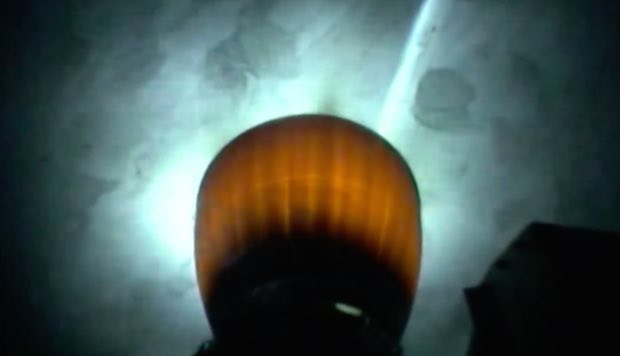
The second stage Merlin 1D vacuum engine ignites for an approximately 6-minute burn to put the rocket and JCSAT 14 into a preliminary parking orbit.
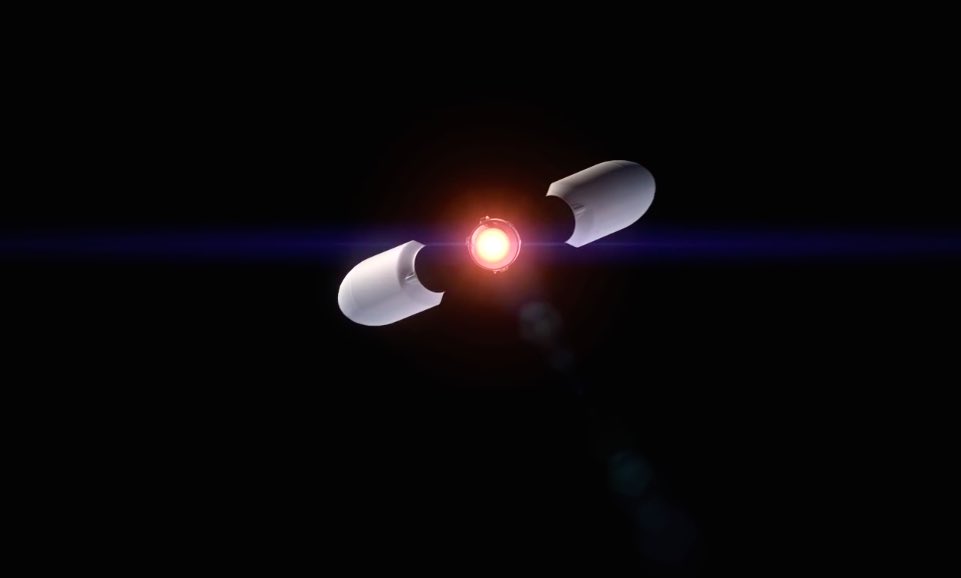
T+0:03:36: Fairing Jettison
The 5.2-meter (17.1-foot) diameter payload fairing jettisons once the Falcon 9 rocket ascends through the dense lower atmosphere. The 43-foot-tall fairing is made of two clamshell-like halves composed of carbon fiber with an aluminum honeycomb core.
T+0:08:53: SECO 1
The second stage of the Falcon 9 rocket shuts down after reaching a preliminary low-altitude orbit. The upper stage and JCSAT 14 begin a coast phase scheduled to last nearly 18 minutes before the second stage Merlin vacuum engine reignites.
T+0:26:27: Second Ignition of Second Stage
The Falcon 9’s second stage Merlin engine restarts to propel the JCSAT 14 communications satellite into a supersynchronous transfer orbit.
T+0:27:26: SECO 2
The Merlin engine shuts down after a short burn to put the JCSAT 14 satellite in the proper orbit for deployment.
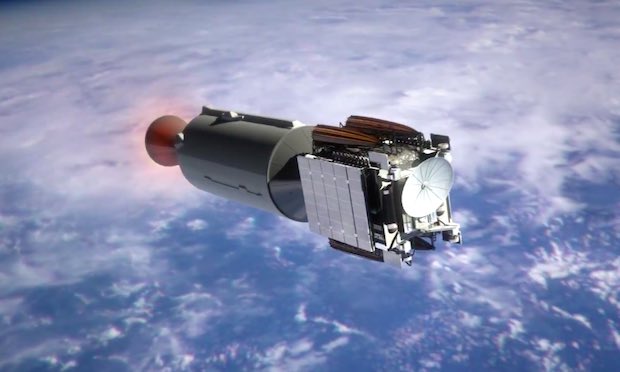
T+0:32:02: JCSAT 14 Separation
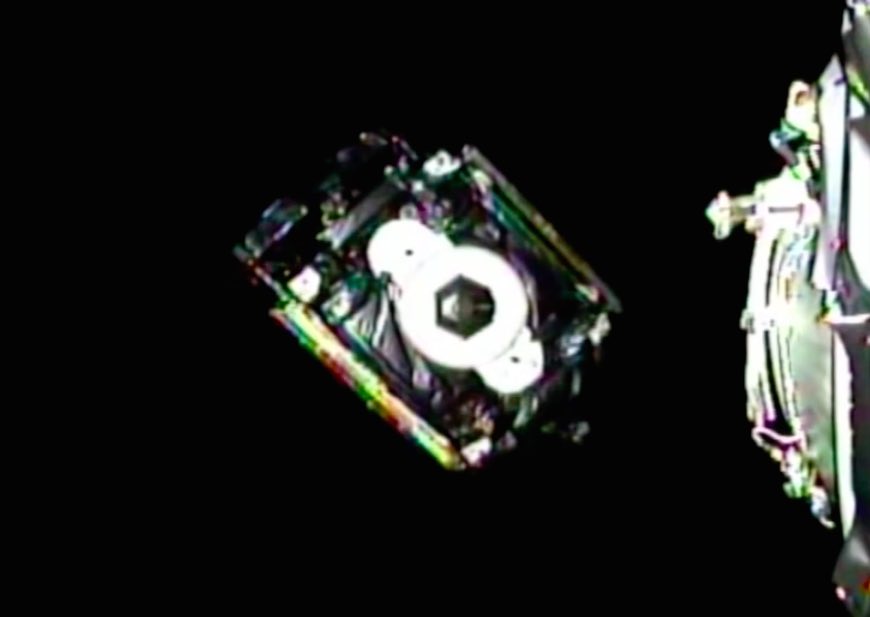
The JCSAT 14 satellite separates from the Falcon 9 rocket in a geostationary transfer orbit. SpaceX and SKY Perfect JSAT have not released the exact orbit targeted on tonight’s launch.
A Japanese HTV cargo freighter is ready for launch Wednesday with the last set of six lithium-ion batteries to upgrade the International Space Station’s solar power truss.
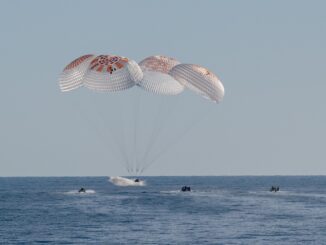
Dragon Freedom undocked from the space station at 1:05 a.m. EDT (1705 UTC) on Tuesday to begin its roughly 17-hour trip to splash down along Florida’s Gulf Coast. The parachute-supported splash down happened at 5:57 p.m. EDT (2157 UTC).
SpaceX is preparing to launch another batch of satellites for the Starlink Internet network from Florida’s Space Coast as soon as April 16, a sign that launch operations at Cape Canaveral could continue at a reduced pace amid the global coronavirus pandemic.