Update Sept. 5, 11:46 a.m. EDT (1546 UTC): SpaceX deployed its 27 Starlink satellites.
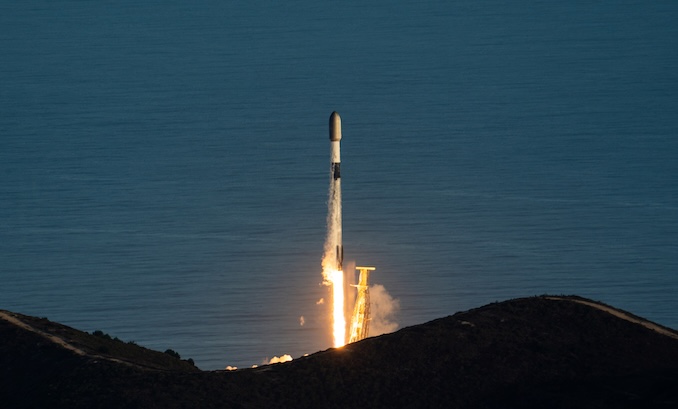
SpaceX completed a Labor Day weekend launch of its Falcon 9 rocket from Vandenberg Space Force Base. The Sunday morning flight was the 80th Starlink mission this year.
Liftoff of the Starlink 15-24 mission from Space Launch Complex 4 East happened at 7:26 a.m. PDT (10:26 a.m. EDT / 1426 UTC). The rocket flew on a southeasterly trajectory upon leaving the pad.
SpaceX launched the mission using the Falcon 9 first stage booster with the tail number B1088. It flew for a 19th time after previously launching three national security missions, Transporter-12, NASA’s SPHEREx, and 13 batches of Starlink satellites.
Nearly 8.5 minutes after liftoff, B1088 landed on the droneship, Of Course I Still Love You, positioned in the Pacific Ocean. This was the 223rd landing on this vessel and the 659th Falcon booster landing to date.
Shifting priorities
The Starlink 15-24 mission was the third Starlink mission since SpaceX announced that it would no longer launch its broadband internet satellites from on Falcon 9 rocket’s from Florida.
“From here on, Starlink missions out of Florida will fly on Starship,” said Kiko Dontchev, Vice President for Launch at SpaceX.
Currently, SpaceX is working on three Starship launch towers in the Sunshine State: one at Launch Complex 39A at NASA’s Kennedy Space Center and two at Space Launch Complex 37 at Cape Canaveral Space Force Station.
The company has said it aims to launch its first Starship mission from Florida before the end of the year. SpaceX is working towards its first orbital launch of the more than 400-foot-tall rocket, which will fly from Starbase, Texas.
SpaceX completed single-engine and six-engine static fire tests for Ship 41 and a 33-engine static fire test for Booster 21, both of which will fly on the forthcoming Starship Flight 14. A launch date hasn’t been announced, but hazard warnings for aviators and mariners suggest that the mission may fly no earlier than Sept. 15.