SpaceX is set to launch a batch of 27 Starlink satellites from Vandenberg Space Force Base in California Tuesday afternoon.
The mission comes roughly 12 hours after it launched a series of customer satellites to a mid-inclination orbit on the Bandwagon-5 rideshare mission from Cape Canaveral Space Force Station in Florida.
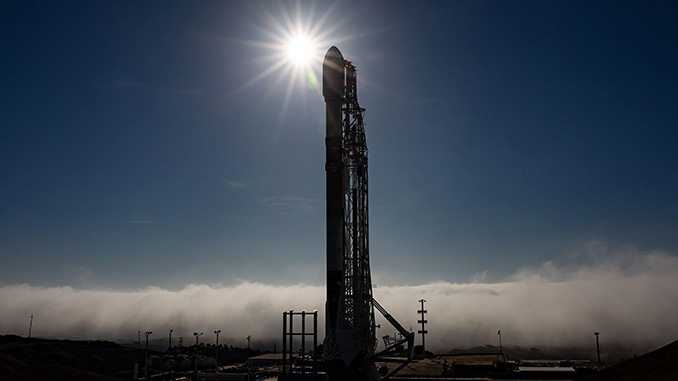
Liftoff of the Falcon 9 rocket from the West Coast is scheduled for 4:10 p.m. PDT (7:10 p.m. EDT / 2310 UTC). The rocket will fly on a southeasterly trajectory upon leaving the pad.
Spaceflight Now will have live coverage beginning about 30 minutes prior to liftoff.
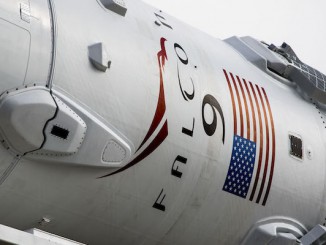
SpaceX will launch the mission using the Falcon 9 first stage booster with the tail number B1063. This will be its 36th flight and will become the second booster to reach three dozen flights.
Roughly 8.5 minutes after liftoff, B1063 will target a landing on the droneship, A Shortfall of Gravitas. If successful, this will be the 229th landing on this vessel and the 673rd Falcon booster landing to date.
Starlink growth
During a third quarter earnings call on Tuesday afternoon, hours before the launch, SpaceX Chief Operating Officer (COO) and President Gwynne Shotwell noted that the company added 1.6 million customers in that three-month period. She said the service was active across 174 markets globally.
“This number does not include additional hundreds of thousands of enterprise subscribers and aviation customers,” Shotwell said during the earnings call. “We remain incredibly inspired by the impact of Starlink on communities around the world, including providing service to hundreds of thousands of students and teachers in schools globally, as well as for emergency response during natural disasters.”
In a filing to the U.S. Securities and Exchange Commission (SEC), SpaceX noted that it closed the third quarter with more than 11,100 Starlink satellites in low Earth orbit, which includes the 26 Starlink Version 3 satellites launched during Starship Flight 14.
“The Starship launcher itself will provide additional capacity across markets and enable new sales in high-demand areas,” Shotwell said. “We expect the market for communications to grow far beyond just human communication that we traditionally think about. Connecting cars, robots, and the adoption of super intelligence (artificial intelligence) will increase communication demands not in percentages, but in orders of magnitudes.”
The SEC filing stated that connectivity revenue for the quarter was $5.2 billion, an increase of 22 percent from the previous quarter.
“Total costs and expenses for the Connectivity segment were up $974 million year-over-year, driven primarily by our growing satellite constellation, Starlink Kit deliveries, and marketing initiatives to support revenue growth,” SpaceX said in its filing.
Constant communication is what makes autonomy like this safe. Early contact lets us take maneuvering responsibility, publish ephemeris faster than ground radar can catalog the object, and deorbit and keep commanding through demise if needed
We treat early communications as a requirement, not a nice-to-have
— Starlink (@Starlink) October 6, 2026
Bret Johnsen, SpaceX Chief Financial Officer (CFO), said that the company’s ability to increase the flight rate of orbital Starship missions is critical for future revenue growth on the Starlink satellite internet side of their business.
“Looking ahead, the satellite roadmap is a key driver of both the capacity and capability of our connectivity segment,” Johnsen said. “Through the end of the year and throughout 2027, we expect to deploy [Starlink] V3 broadband satellites in meaningful volume, with each Starship launch ramping towards a payload that delivers over 20 times the downlink capacity of the current generation of Falcon 9 launches today.
“In parallel, we will ramp Starlink Mobile V2 satellites on Starship, starting in 2027, and leverage our newly enhanced wireless spectrum portfolio to expand our direct-to-device and become a major mobile carrier, as Gwynne mentioned, in the United States.”
SpaceX founder Elon Musk said the next Starship launch is anticipated in November and is planned to include a catch attempt of both the Ship and Super Heavy booster. The company is seeking approval for this from the Federal Aviation Administration.