Update Dec. 17, 6:30 p.m. EST (2330 UTC): Adding comments from SpaceX’s vice president of launch.
For the third time, SpaceX launched one of its Falcon 9 rocket boosters on a 30th flight, continuing along the path to certifying its rockets for use up to 40 times.
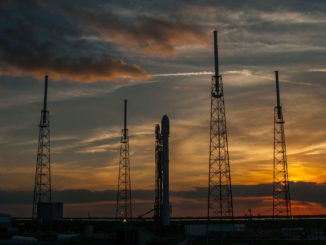
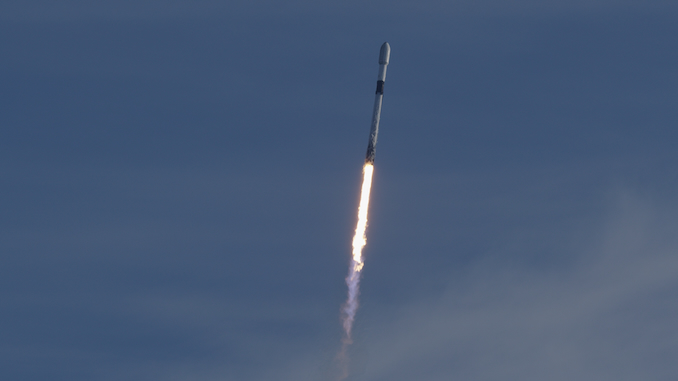
The nine Merlin 1D engines at the base of the booster, tail number 1063, roared to life at 7:27 a.m. PST (10:27 a.m. EST / 1527 UTC) Wednesday morning. The flight from Vandenberg Space Force Base in California was the second out of two planned flights that day, following a launch from NASA’s Kennedy Space Center in Florida that launched less than two hours prior at 8:42 a.m. EST (1342 UTC).
Taking a south-easterly trajectory upon leaving the launch pad, B1063 separated from the rocket’s upper stage less than three minutes into the mission. About six minutes later it was standing atop the SpaceX drone ship, ‘Of Course I Still Love You’, positioned in the Pacific Ocean.
SpaceX has at least one more launch scheduled from Vandenberg before the end of the year. On Dec. 27, it’s slated to launch the COSMO-SkyMed Second Generation mission for the Italian Ministry of Defence and the Italian Space Agency.
Assuming no other launches crop up before the new year, SpaceX will close out 2025 with a total of 167 Falcon 9 rocket launches. This was affirmed Wednesday evening in a social media post from Kiko Dontchev, SpaceX Vice President of Launch.
Congrats to the entire @SpaceX team for achieving 165 launches🚀 ! While we originally set out for 170, we actually revised the manifest to 165 this summer based on business and manifest needs. We have two more Falcon launches to go in 2025 for extra credit for a total of 1-6-7… pic.twitter.com/wCH1O1qmEY
— Kiko Dontchev (@TurkeyBeaver) December 17, 2025