This is the launch timeline to be followed by the Atlas 5 rocket’s ascent into space from Cape Canaveral with NASA’s Mars 2020 mission. Launch is scheduled for Thursday during a two-hour window opening at 7:50 a.m. EDT (1150 GMT).
The 197-foot-tall rocket will arc to the southeast from Florida’s Space Coast on its fourth flight of the year. It will be the 85th Atlas 5 launch overall since United Launch Alliance’s workhorse rocket debuted in August 2002.
The timeline below ends with the conclusion of the primary mission, the deployment of the Mars 2020 spacecraft on an interplanetary trajectory toward Mars
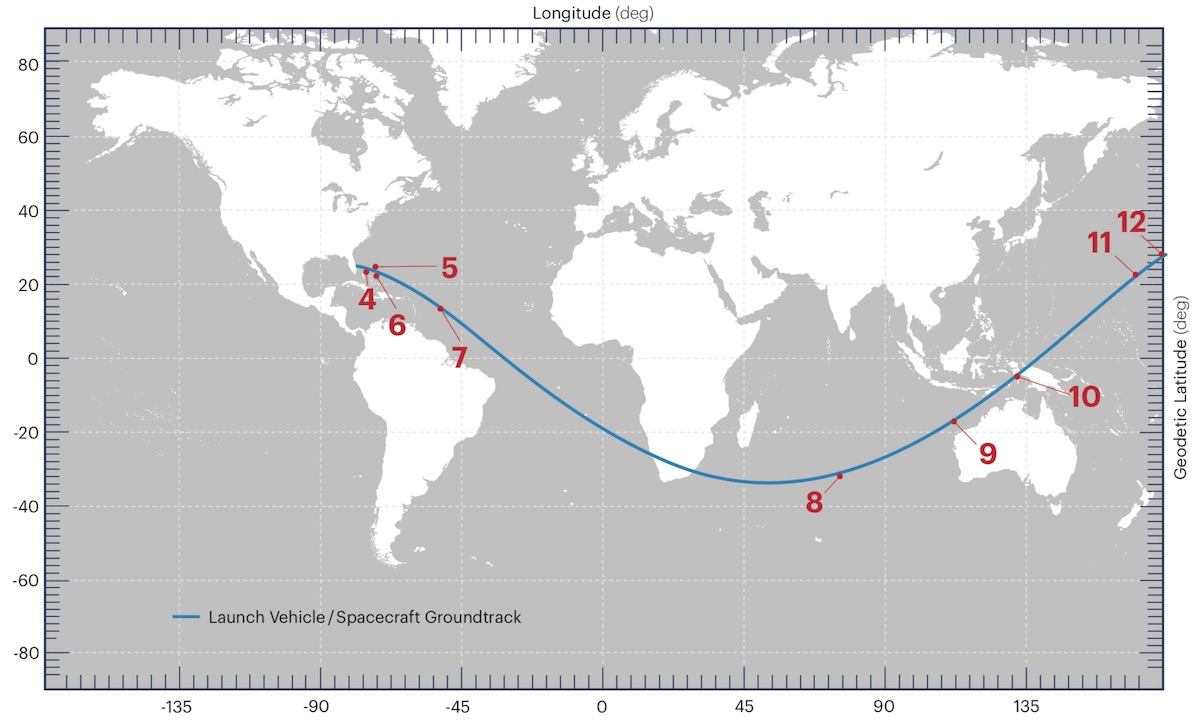
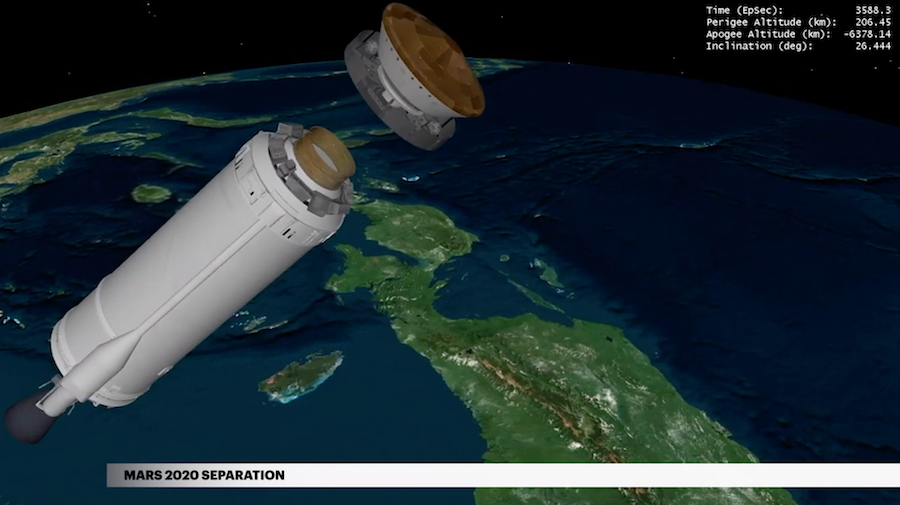
A video overview of the Atlas 5 launch sequence also describes the major milestones on the Mars 2020 mission, and a map below shows the Atlas 5’s expected ground track toward the southeast from Cape Canaveral, culminating in separation of the Mars 2020 spacecraft from the Centaur upper stage over Indonesia.
This map illustrates the Atlas 5’s ground track after liftoff from Cape Canaveral with NASA’s Mars 2020 mission. The milestones labeled include: 4) Atlas engine shutdown; 5) Atlas/Centaur separation; 6) Centaur Main Engine Start 1; 7) Centaur Main Engine Cutoff 1; 8) Centaur Main Engine Start 2; 9) Centaur Main Engine Cutoff; 10) Mars 2020 separation; 11) Start Blowdown; 12) End of Atlas 5 Mission. Credit: United Launch Alliance
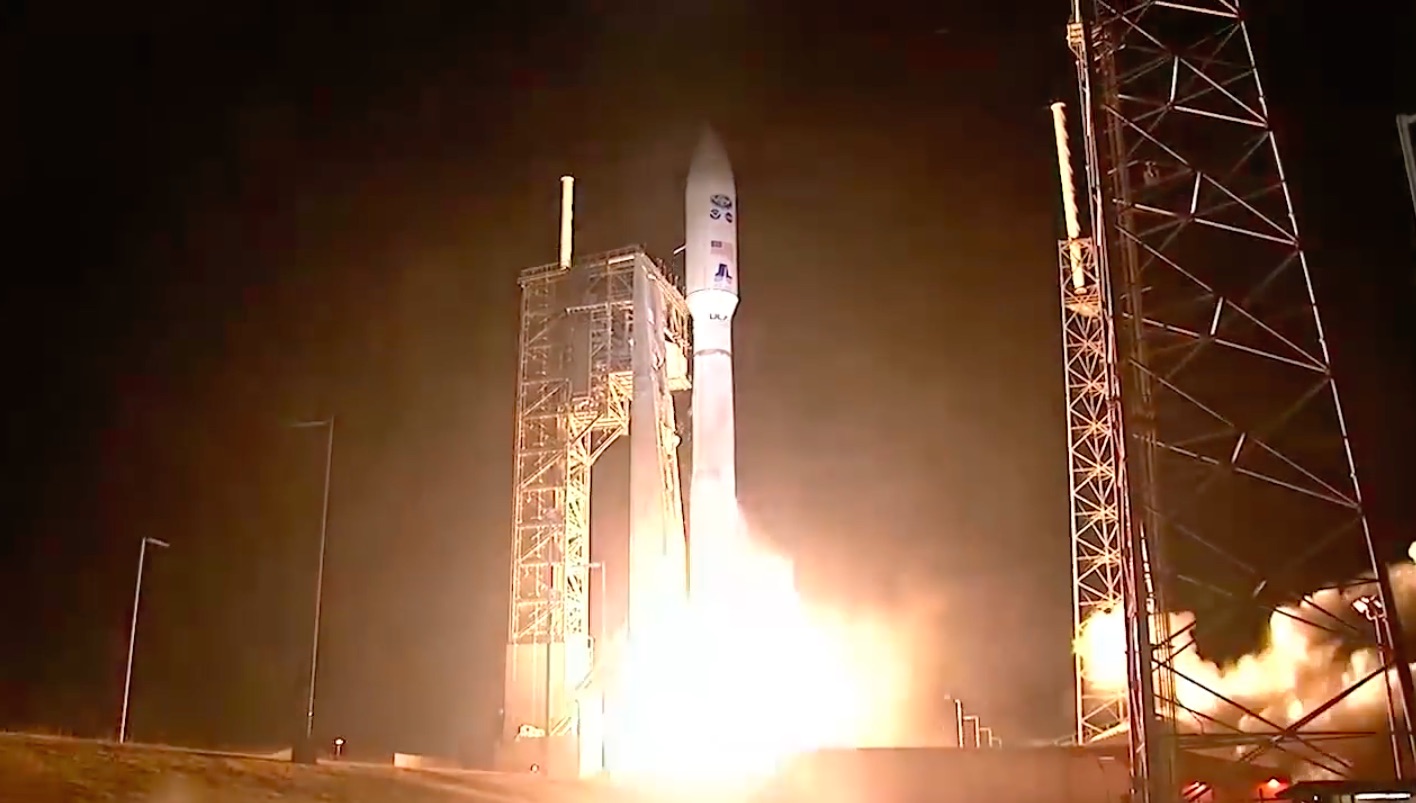
T+0:00:01.1: Liftoff
With the RD-180 main engine running, the Atlas 5 vehicle lifts off and begins a vertical rise away from Complex 41 at Cape Canaveral Air Force Station, Florida.
T+0:00:35.2: Mach 1
Riding 2.3 million pounds of thrust from its RD-180 main engine and four solid rocket boosters, the Atlas 5 exceeds the speed of sound.
T+0:00:47.1: Max-Q
The Atlas 5 rocket passes through the region of maximum dynamic pressure during ascent through the lower atmosphere.
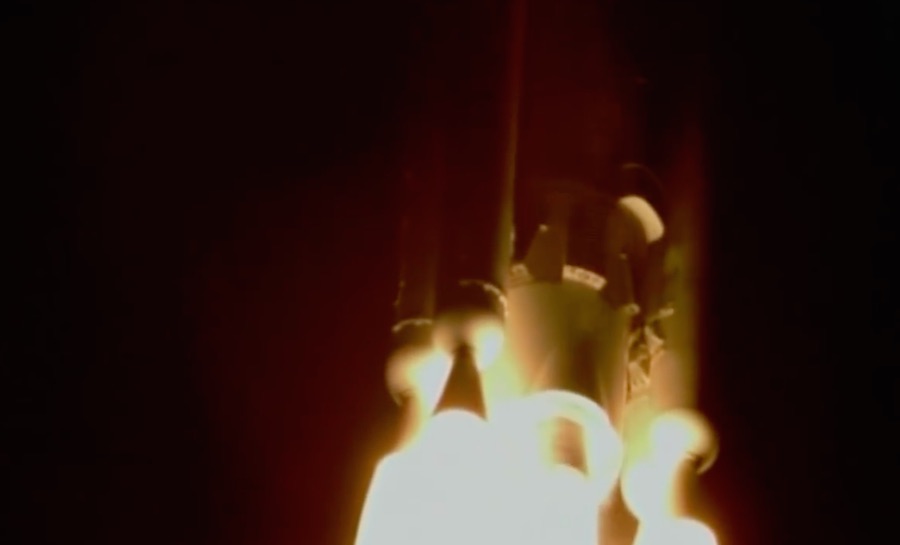
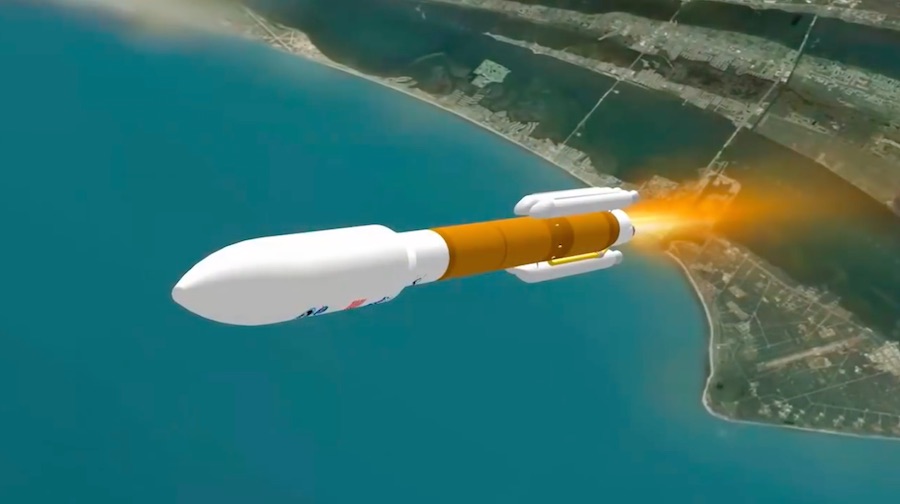
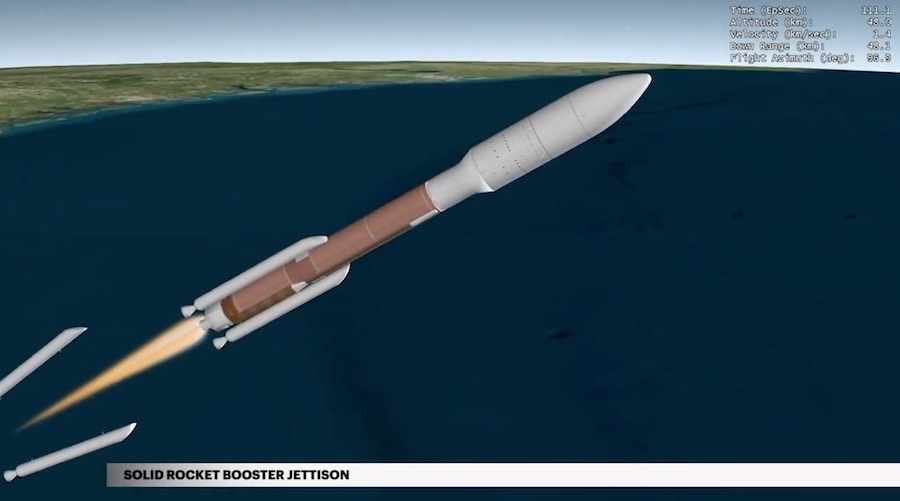
T+0:01:49.3: Jettison SRBs
Having burned out of propellant approximately 20 seconds earlier, the four spent Aerojet Rocketdyne-built solid rocket boosters are jettisoned once dynamic pressure conditions are satisfied.
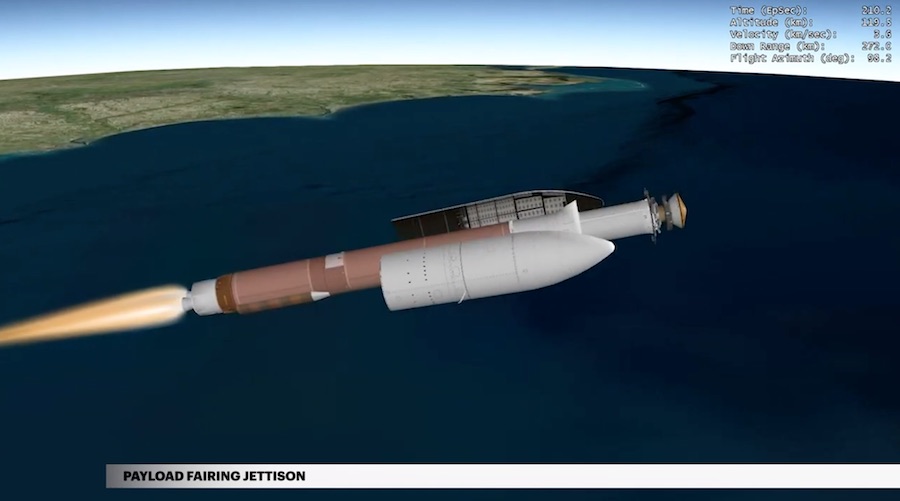
T+0:03:27.6: Payload Fairing Jettison
The Atlas 5 rocket’s payload fairing, made in Switzerland by Ruag Space, is jettisoned in a clamshell-like fashion once external heating levels drop below predetermined limits after climbing through the dense lower atmosphere. The Forward Load Reactor deck that connected the payload fairing’s structure to the Centaur upper stage is released five seconds after the shroud’s jettison.
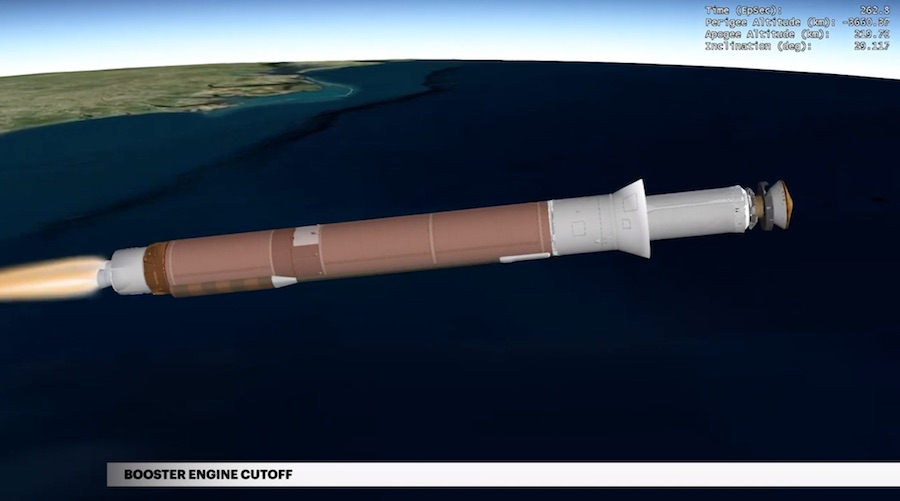
T+0:04:22.1: Main Engine Cutoff
The RD-180 main engine completes its firing after consuming its kerosene and liquid oxygen fuel supply in the Atlas first stage.
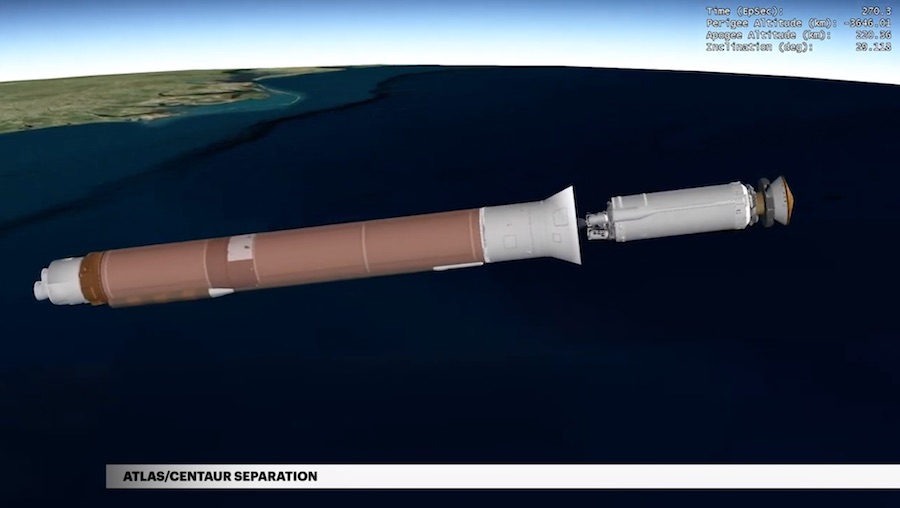
T+0:04:28.1: Stage Separation
The Common Core Booster first stage of the Atlas 5 rocket separates from the Centaur upper stage. Over the next few seconds, the Centaur engine liquid hydrogen and liquid oxygen systems are readied for ignition.
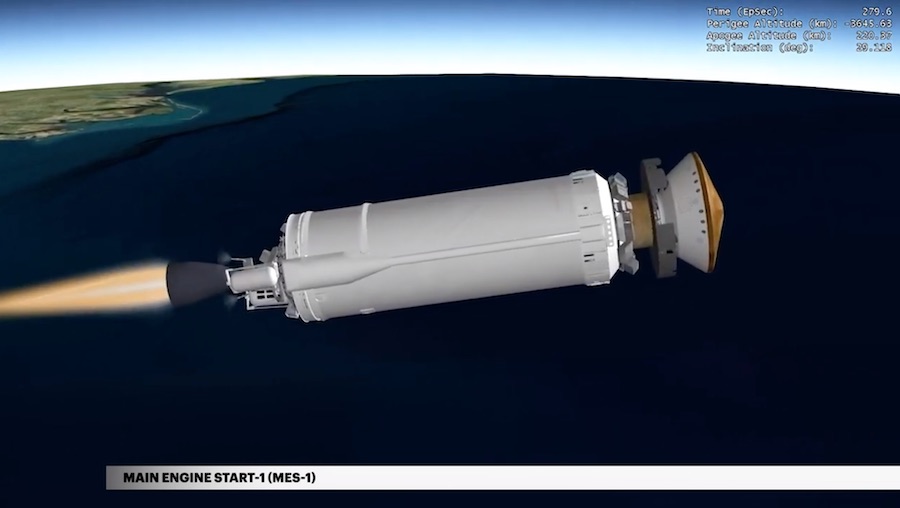
T+0:04:38.1: Centaur Ignition 1
The Centaur RL10C-1 engine ignites for the first of two upper stage firings. This burn will inject the Centaur stage and Mars 2020 spacecraft into an initial parking orbit.
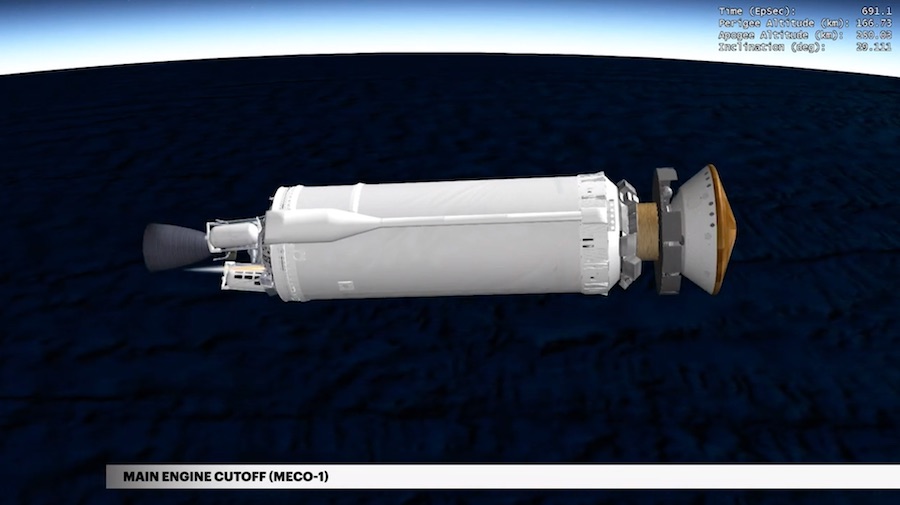
T+0:11:27.9: Centaur Cutoff 1
The Centaur engine shuts down after arriving in a planned low-Earth parking orbit. The vehicle enters a 33-minute coast period before arriving at the required location in space for the second burn.
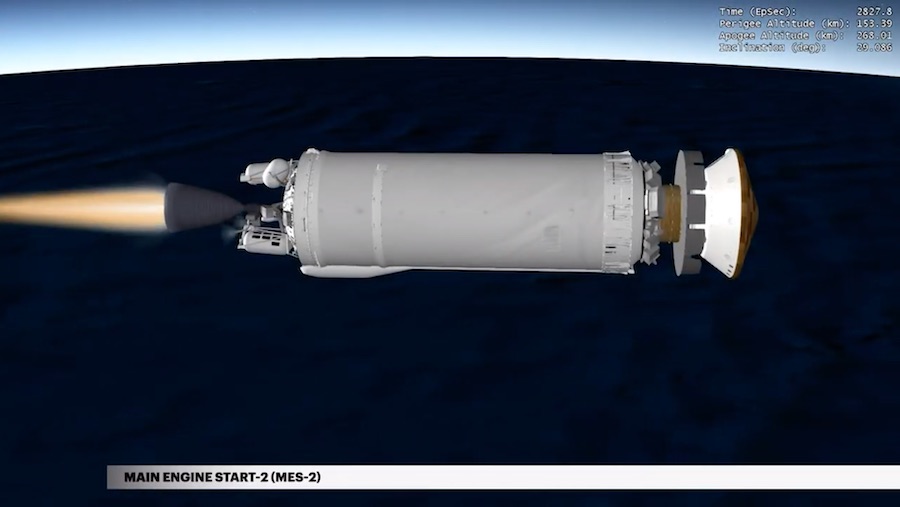
T+0:44:59.5: Centaur Ignition 2
After coasting over the Atlantic Ocean and crossing South Africa, the Centaur re-ignites its RL10C-1 engine to accelerate the Mars 2020 payload with enough velocity to escape Earth’s gravity. This burn lasts nearly eight minutes.
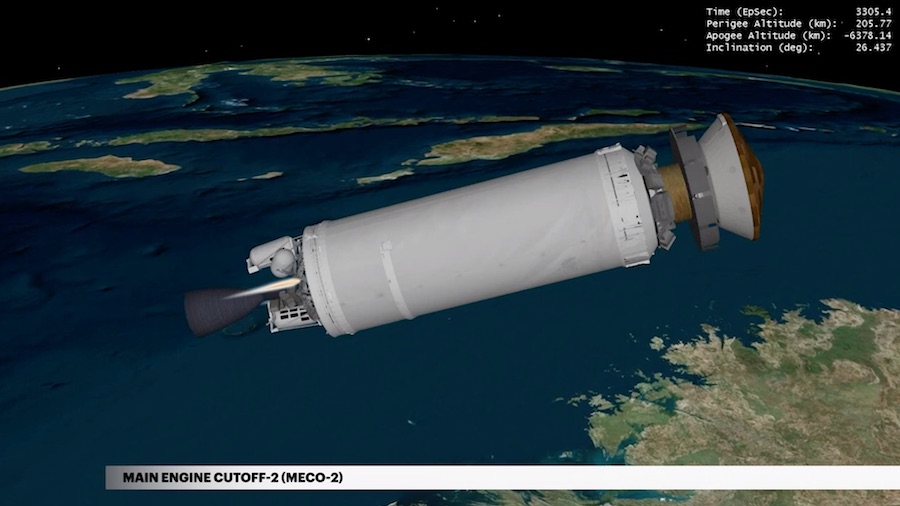
T+0:52:50.1: Centaur Cutoff 2
After accelerating the Mars 2020 spacecraft to a velocity of 24,785 mph, or about 11 kilometers per second, relative to Earth, the Centaur upper stage shuts down its engine and begins re-orienting itself into the proper position for separation of the Mars 2020 payload.
T+0:57:32.8: Mars 2020 Separation
The Mars 2020 spacecraft, containing NASA’s Perseverance rover, deploys from the Centaur upper stage over Indonesia. Around 20 minutes later, the first signals from the spacecraft should be received by ground controllers through a NASA tracking station in Canberra, Australia.
A three-man crew that departed the International Space Station on Oct. 4 flew their Soyuz spaceship into position to take spectacular photos of the orbiting research complex as officials prepare to celebrate the 20th anniversary of the first element’s launch.
In the first official weather outlook the planned launch this week of NASA’s Mars 2020 Perseverance rover, meteorologists predict an 80 percent chance of favorable conditions to allow liftoff of an Atlas 5 rocket from Cape Canaveral Thursday.
In the ten years since its launch from Cape Canaveral, NASA’s Dawn spacecraft has orbited the two largest worlds in the asteroid belt and overcome defective components that threatened to derail the mission on its 4 billion-mile voyage, discovering unexpectedly rich geologic tapestries suggesting both destinations have a watery past.