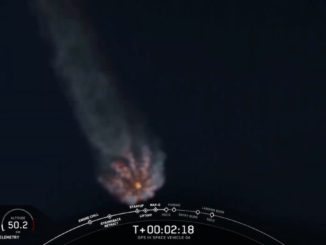
Follow the key events of the Falcon 9 rocket’s ascent to orbit with the first 10 next-generation satellites for Iridium’s voice and data relay fleet.
The 229-foot-tall (70-meter) rocket will lift off Saturday at 9:54:39 a.m. PST (12:54:39 p.m. EST; 1754:39 GMT) from Vandenberg Air Force Base in California.
Data source: SpaceX
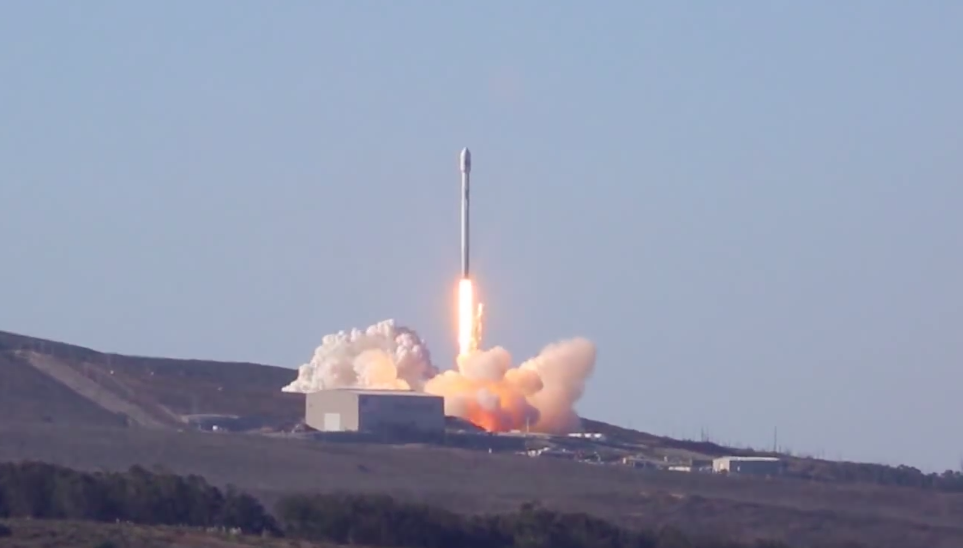
T-0:00:00: Liftoff
After the rocket’s nine Merlin 1D engines pass an automated health check, the Falcon 9 is released from Space Launch Complex 4-East at Vandenberg Air Force Base, California.
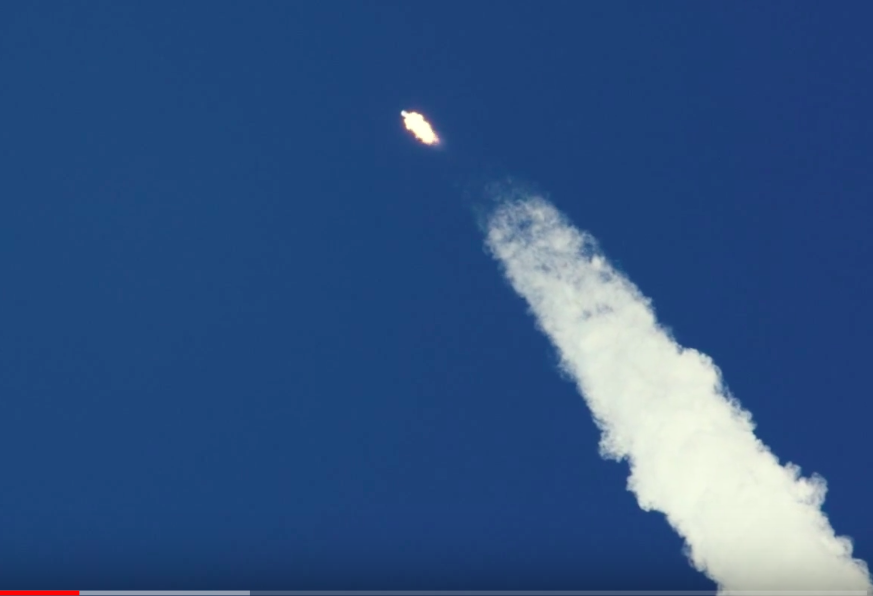
T+0:01:09: Max-Q
The Falcon 9 rocket reaches Max Q, the point of maximum aerodynamic pressure. The first stage’s nine Merlin 1D engines produce about 1.5 million pounds of thrust at sea level, ramping up to 1.7 million pounds of thrust in vacuum.
T+0:02:24: MECO
The Falcon 9’s nine Merlin 1D engines shut down.
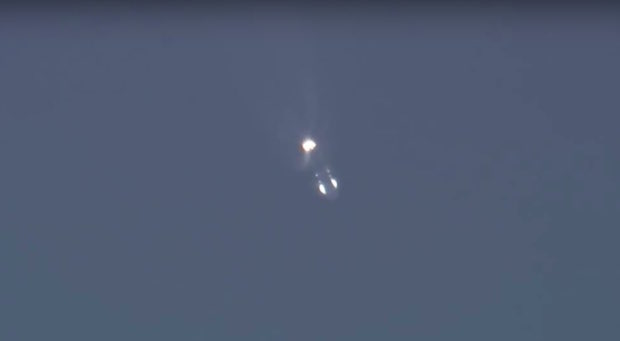
T+0:02:27: Stage 1 Separation
The Falcon 9’s first stage separates from the second stage moments after MECO.
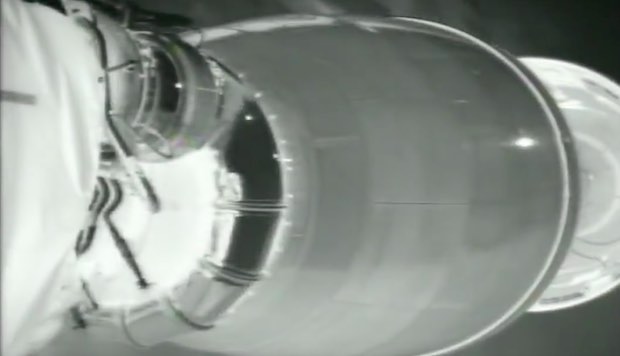
T+0:02:35: Stage 2 Ignition
The second stage Merlin 1D vacuum engine ignites for an approximately 6-and-a-half-minute burn to inject the Iridium Next satellites into a parking orbit.
T+0:03:15: Fairing Jettison
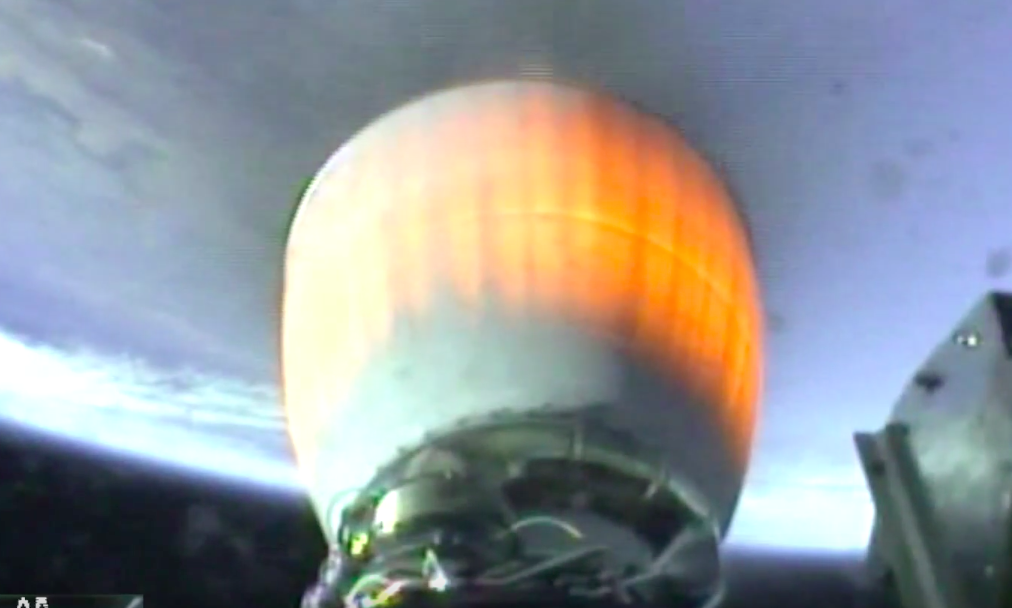
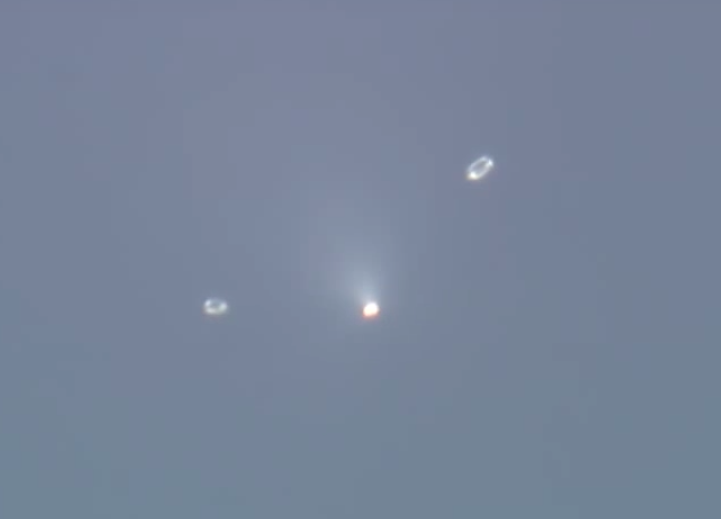
The 5.2-meter (17.1-foot) diameter payload fairing jettisons once the Falcon 9 rocket ascends through the dense lower atmosphere. The 43-foot-tall fairing is made of two clamshell-like halves composed of carbon fiber with an aluminum honeycomb core.
T+0:07:49: Stage 1 Landing
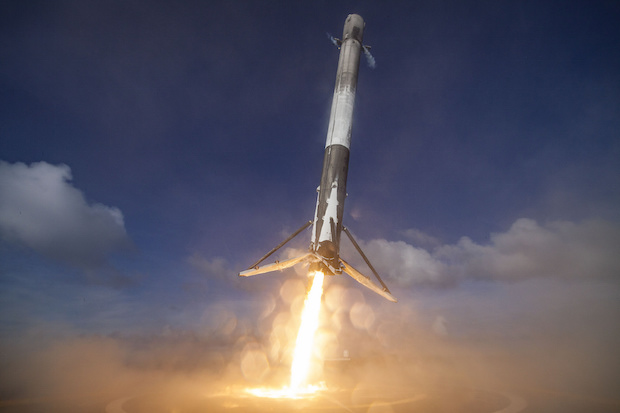
The Falcon 9 rocket’s first stage booster touches down on SpaceX’s drone ship in the Pacific Ocean.
T+0:09:09: SECO 1
The Merlin 1D vacuum engine turns off after placing the Iridium satellites in a temporary parking orbit, beginning at 43-minute coast in space.
T+0:52:31: Stage 2 Restart
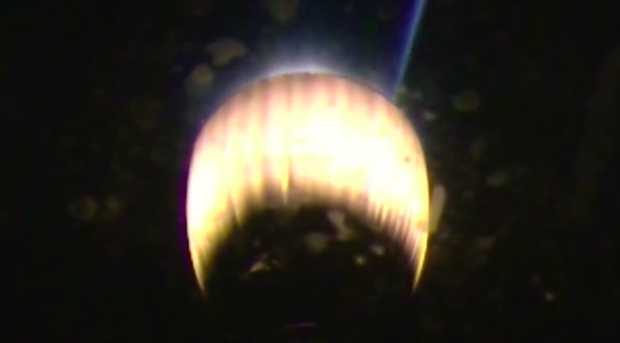
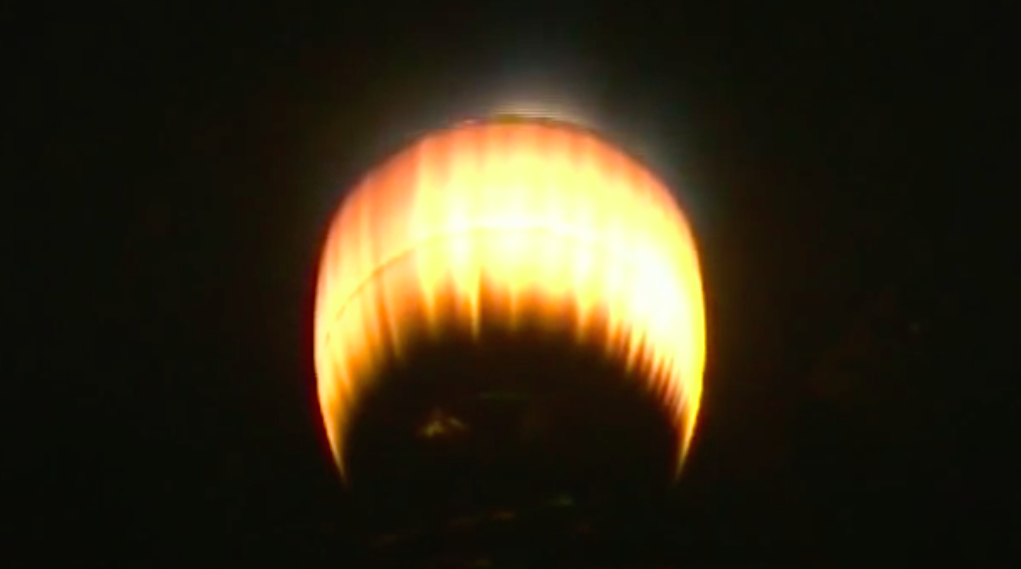
The Falcon 9’s second stage engine ignites again for a 3-second burn to circularize its orbit.
T+0:52:34: SECO 2
The Merlin 1D vacuum engine shuts down after reaching a target orbit about 388 miles (625 kilometers) high with an inclination of 86 degrees.
T+0:59:16: Begin Iridium Deployments
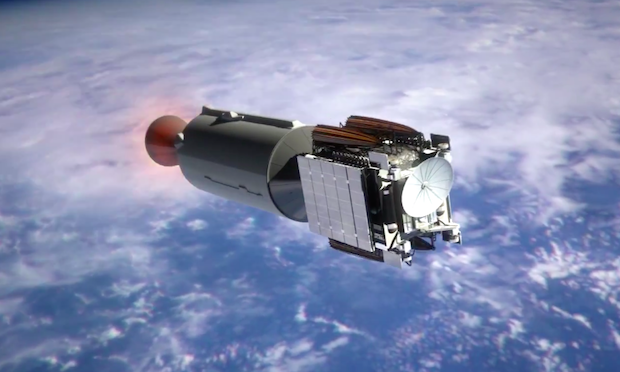
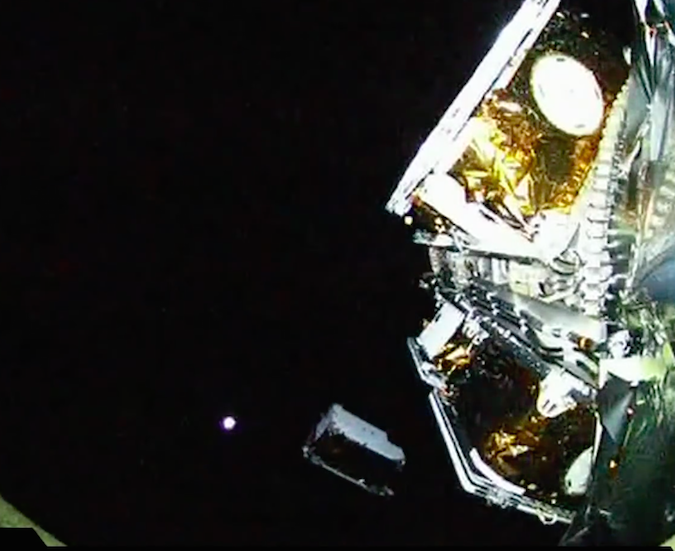
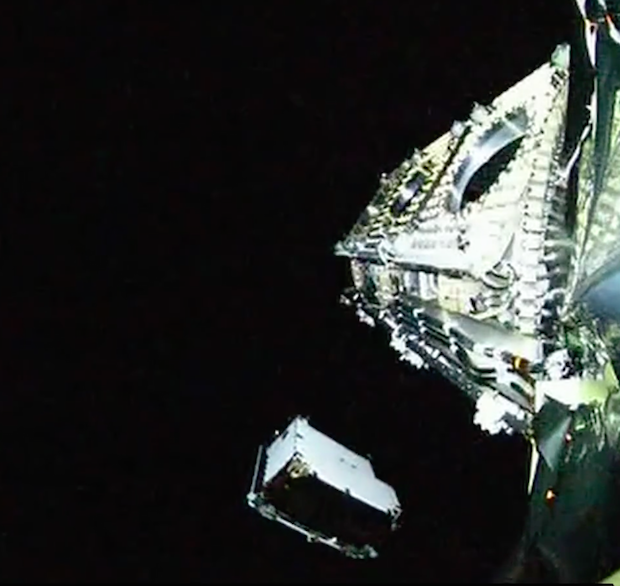
The 1,896-pound (860-kilogram) Iridium Next satellites begin deploying from their two-tier dispenser on the Falcon 9 rocket’s second stage, separating at intervals of approximately every 90 seconds.
T+1:14:16: End Iridium Deployments
The last of the 10 Iridium Next satellites will separate from the rocket.
SpaceX launched a Falcon 9 rocket from Cape Canaveral Air Force Station at 6:24 p.m. EST (2324 GMT) Thursday with the U.S. military’s next GPS navigation satellite. The mission was delayed more than a month after a previous countdown was aborted seconds before liftoff.
A United Launch Atlas 5 rocket is set to launch the U.S. Air Force’s fourth Advanced Extremely High Frequency communications satellite from Cape Canaveral. This timeline shows the major mission events planned over a three-and-a-half-hour flight to an optimized geostationary transfer orbit.