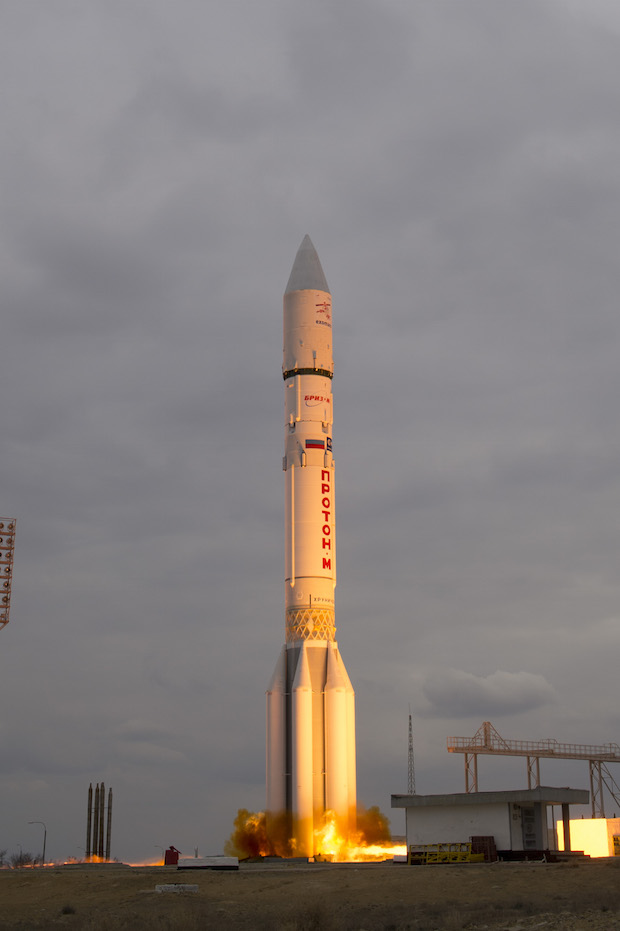
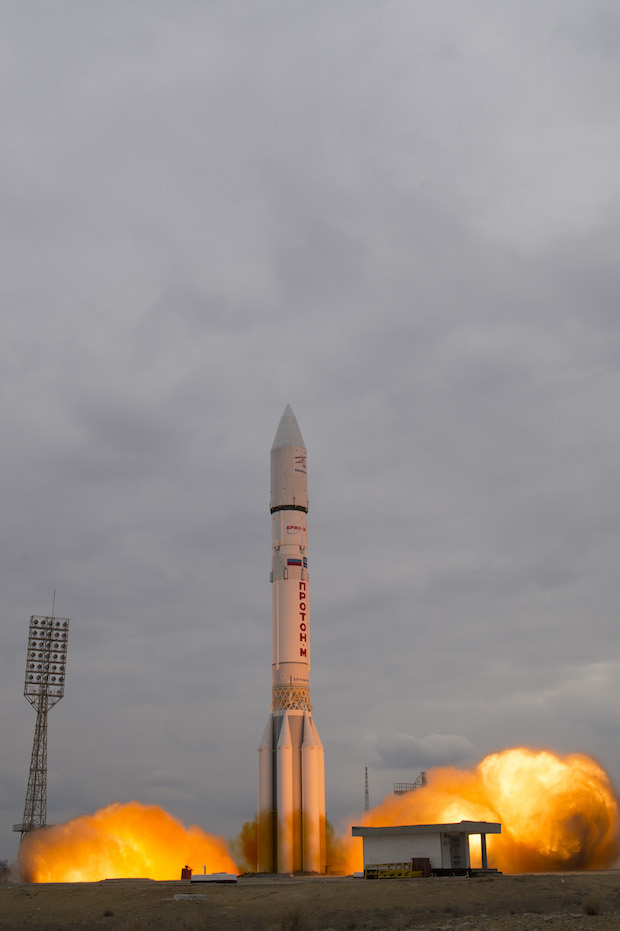
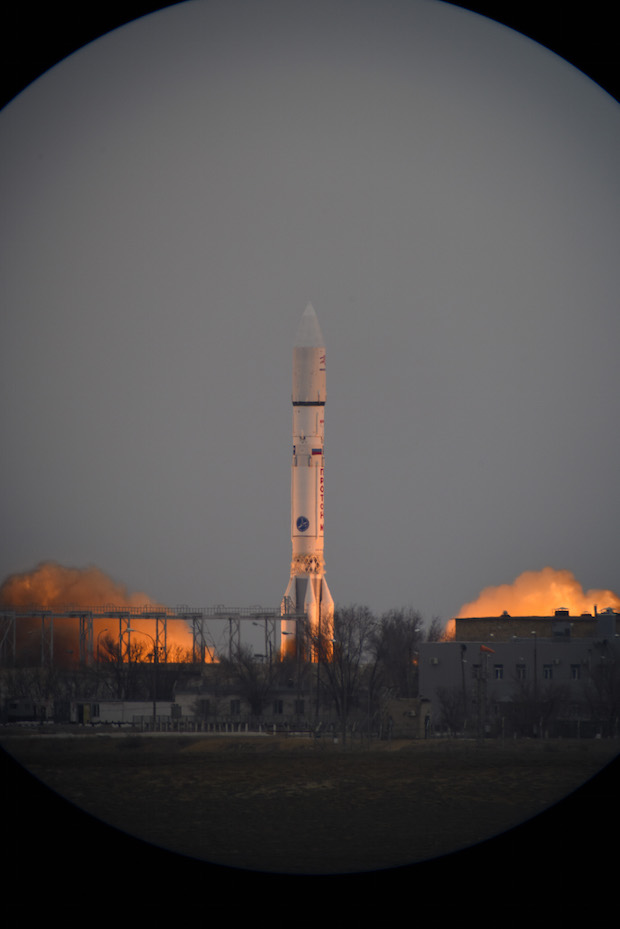
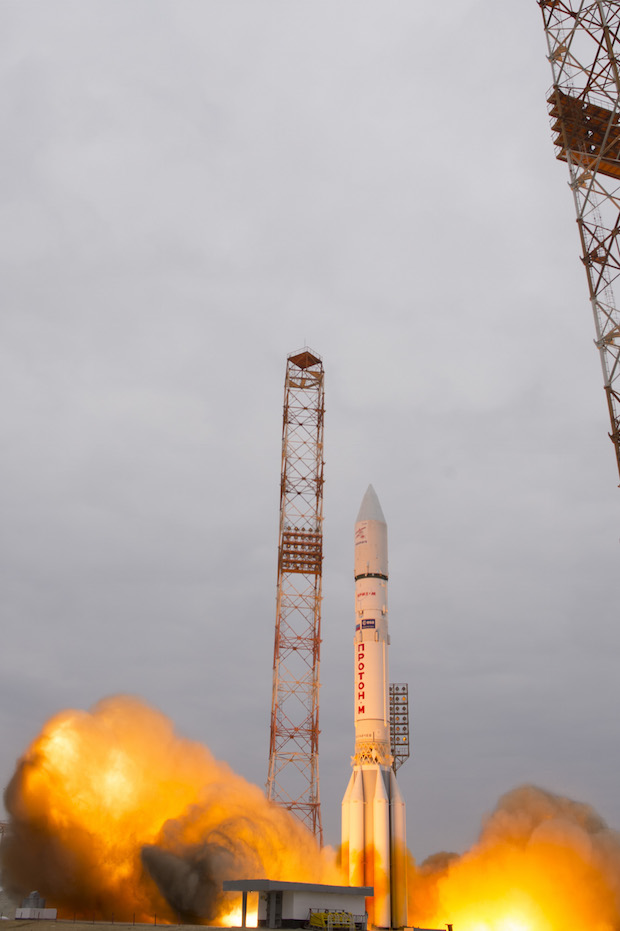
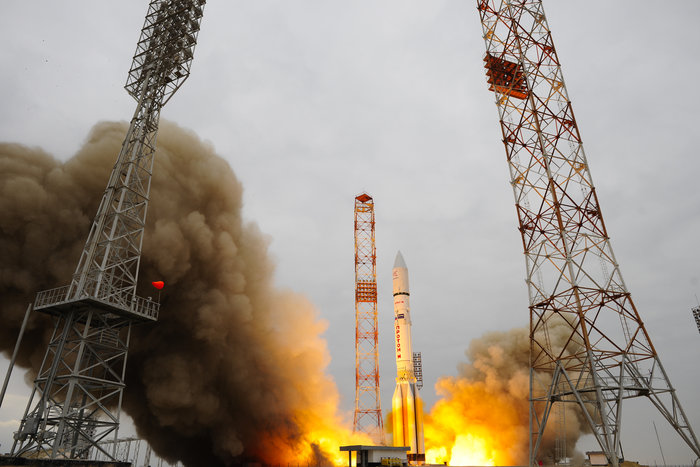
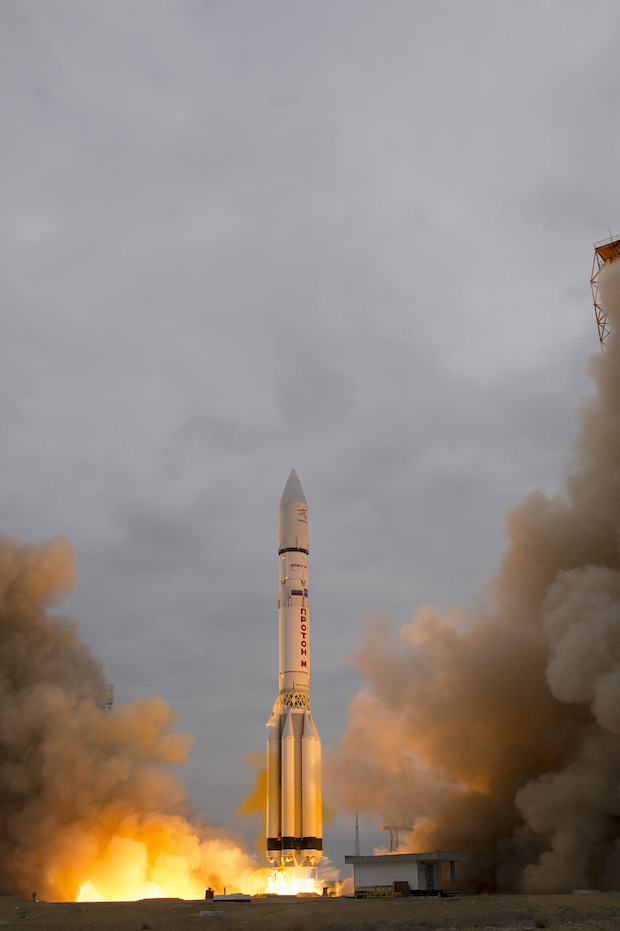
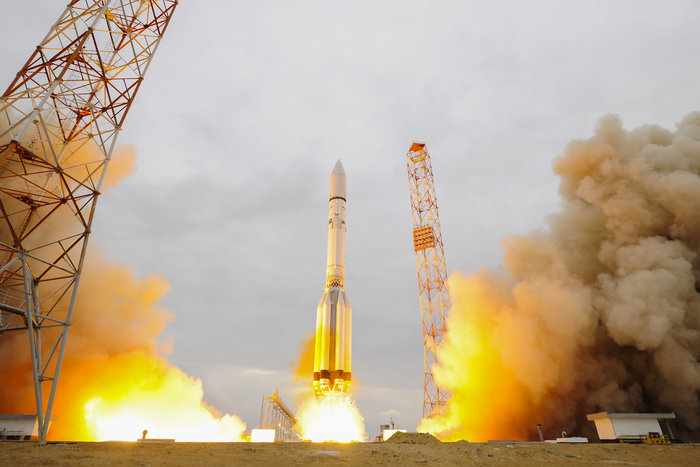
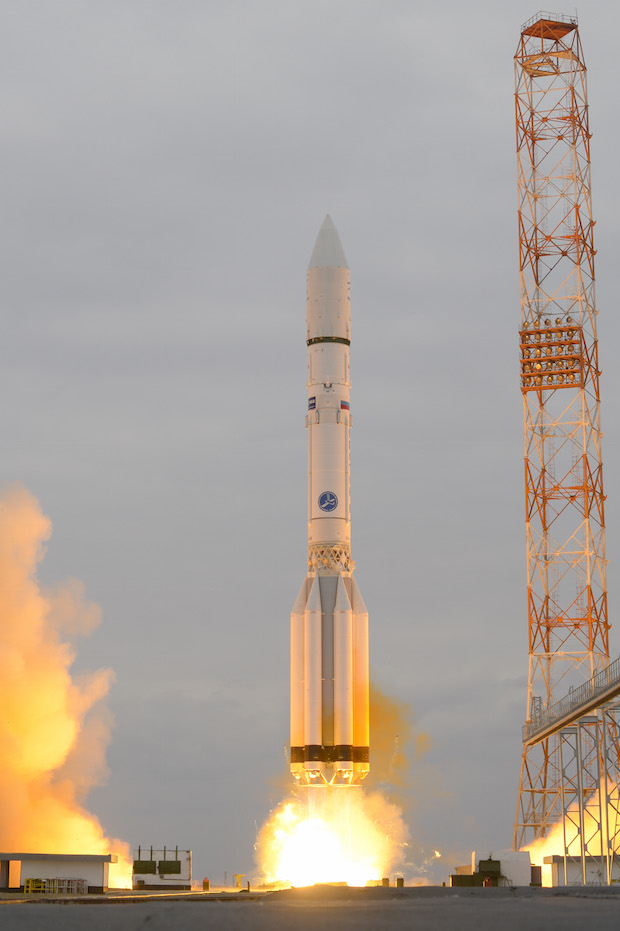
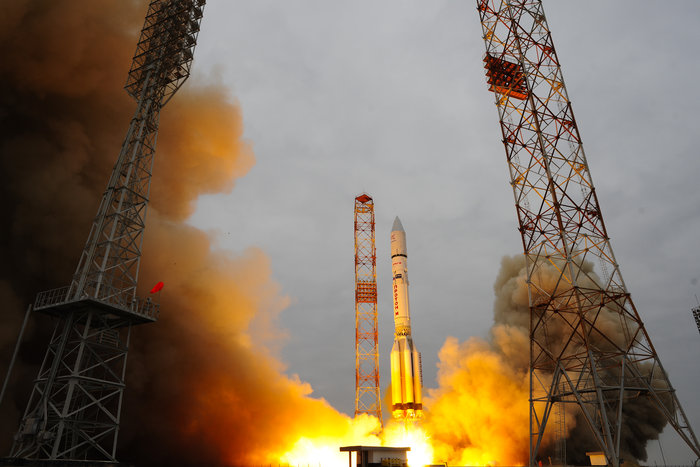
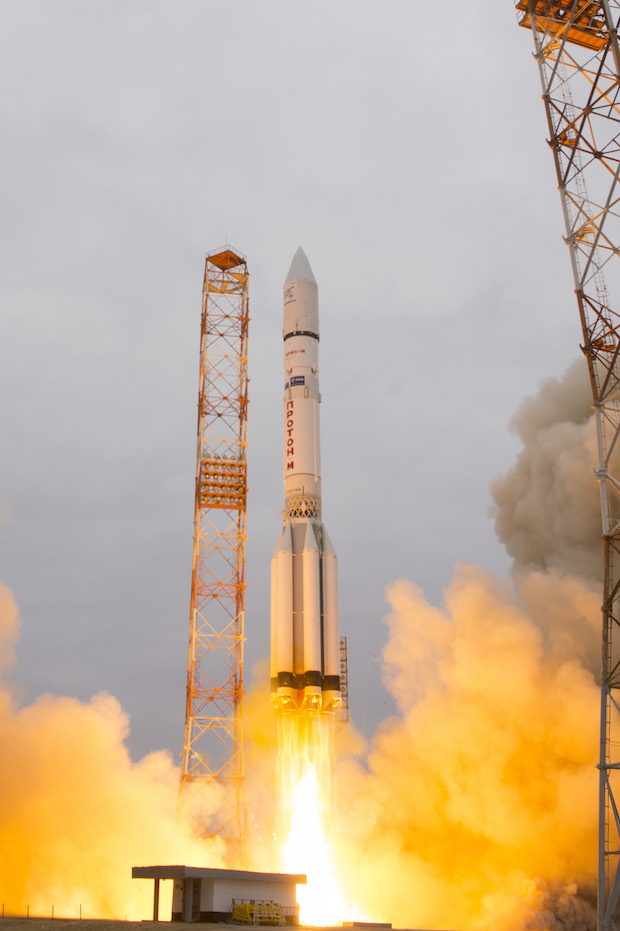
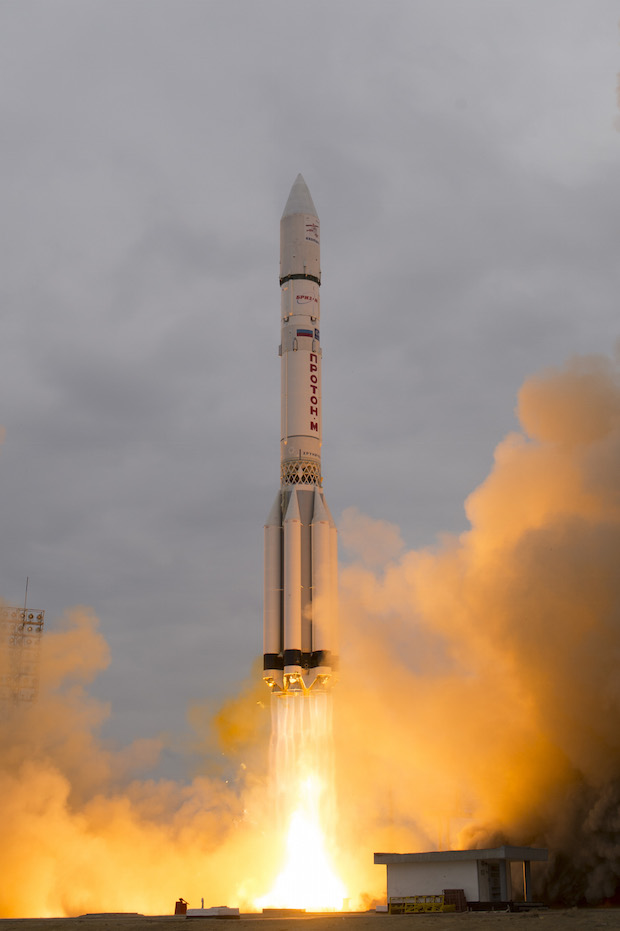
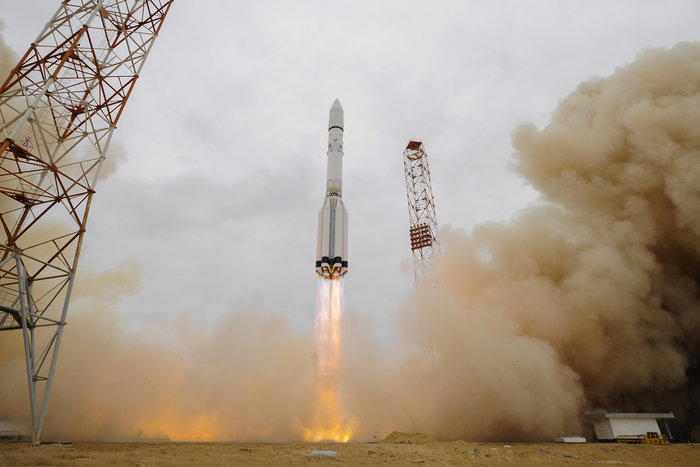
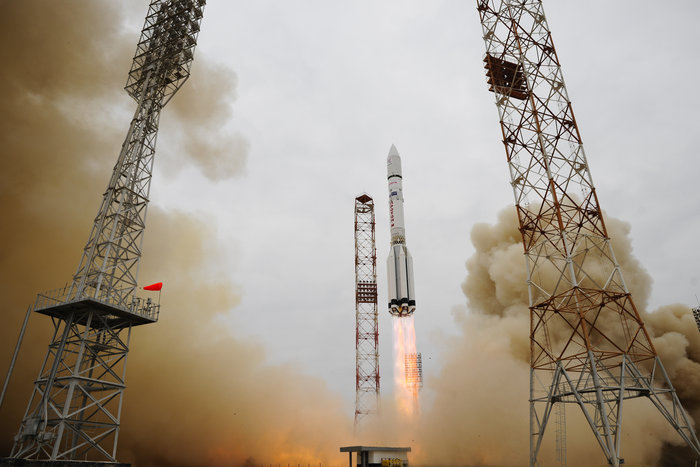
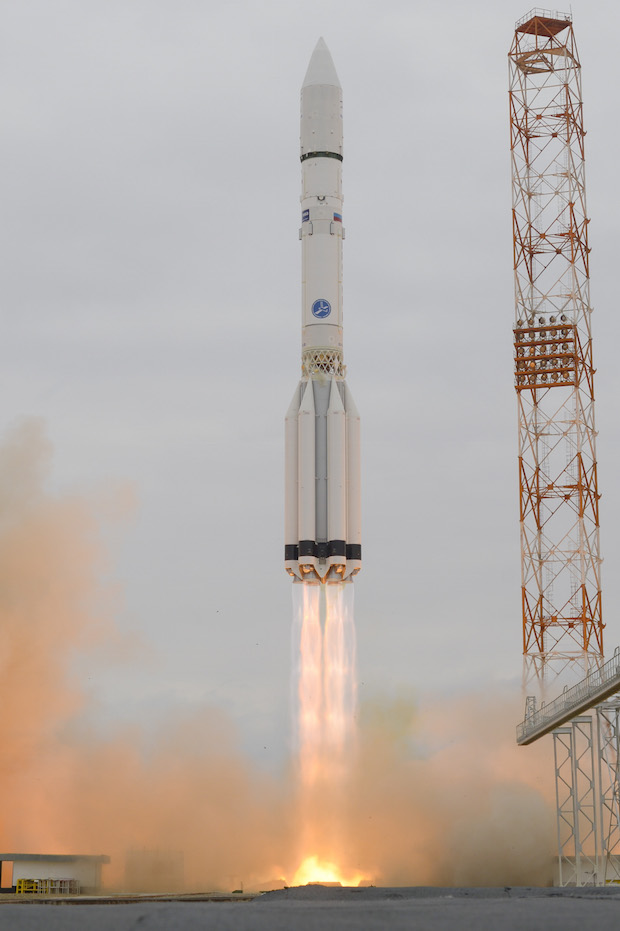
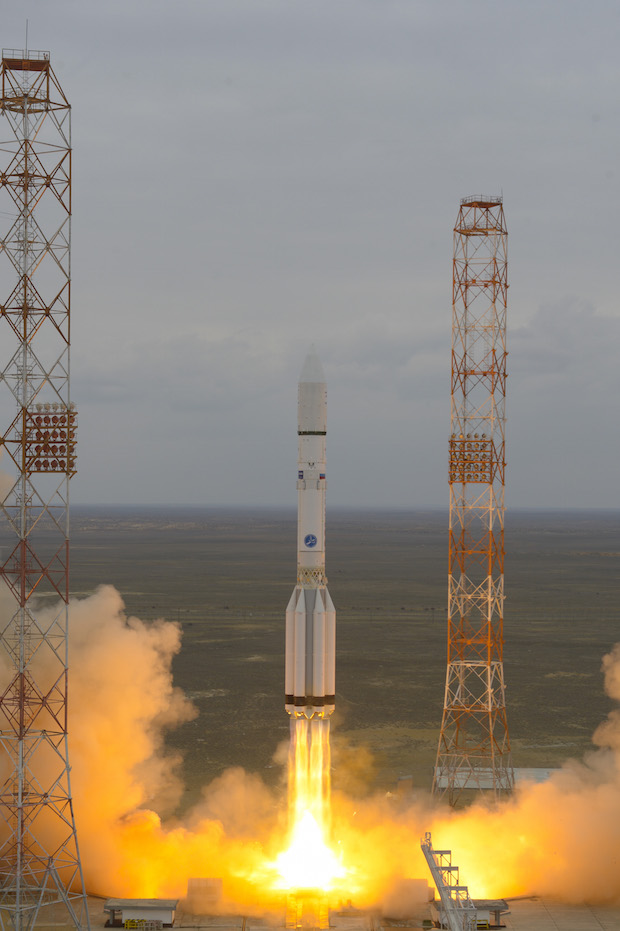
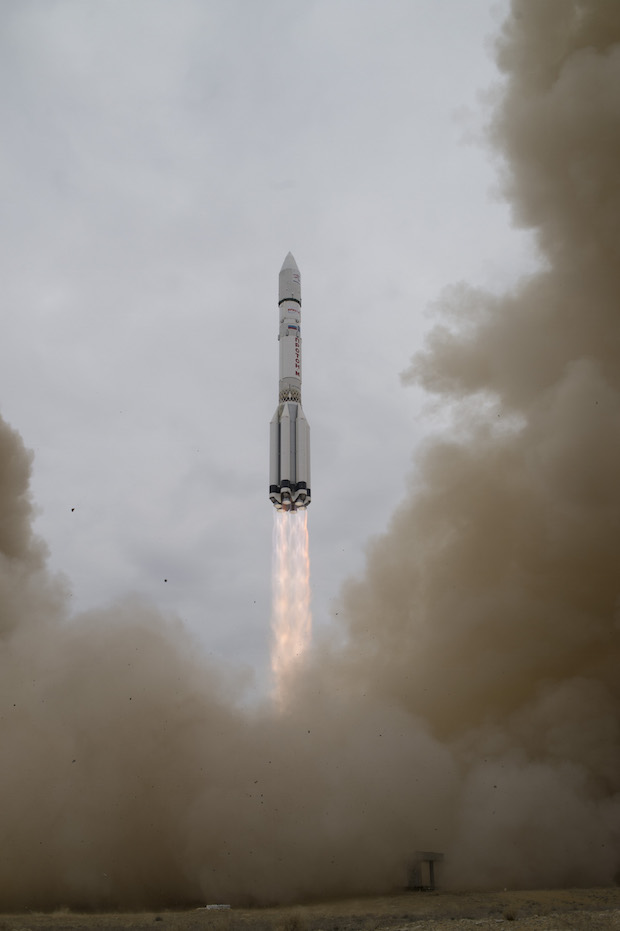
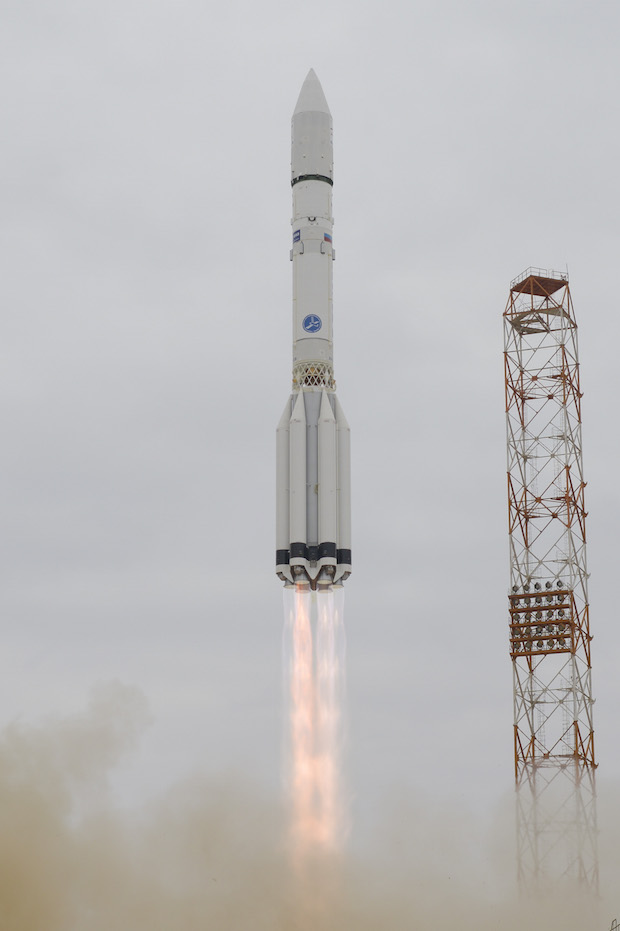
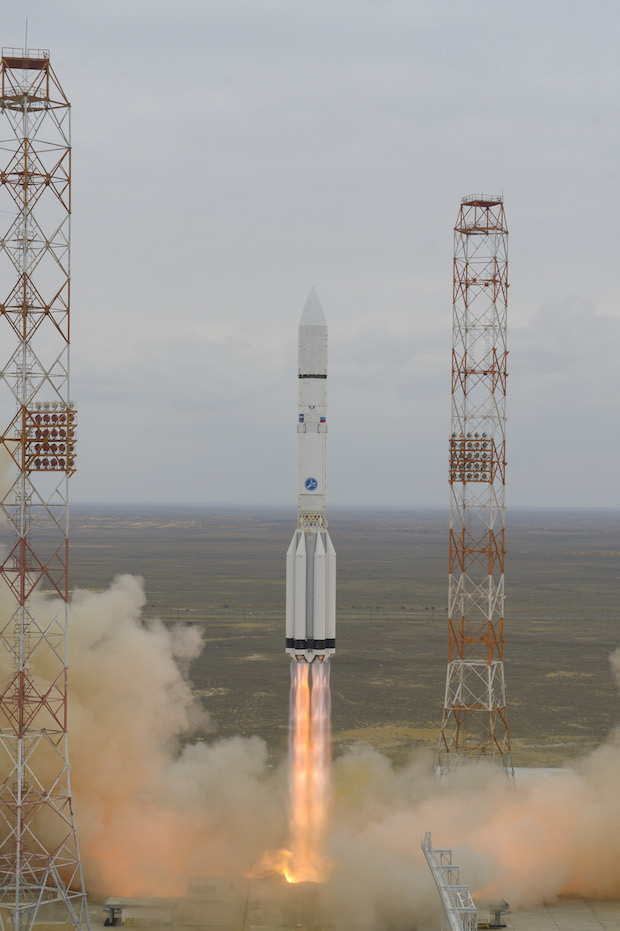
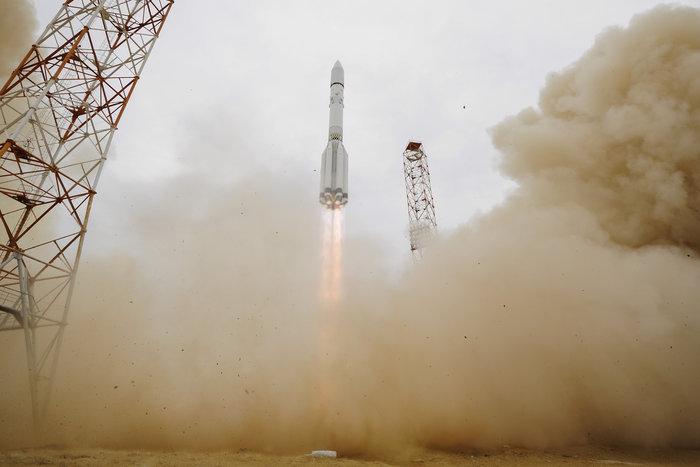
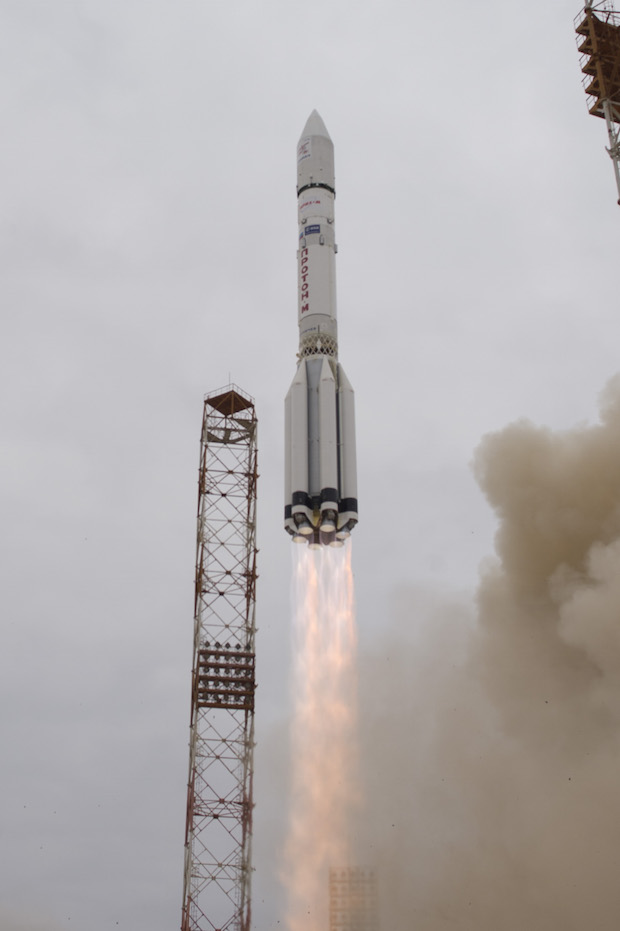
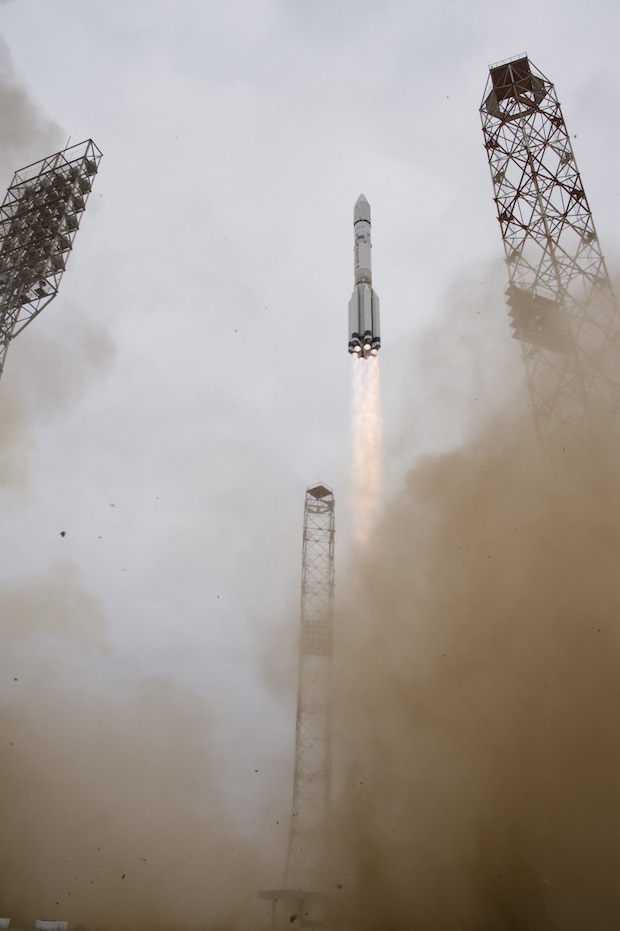
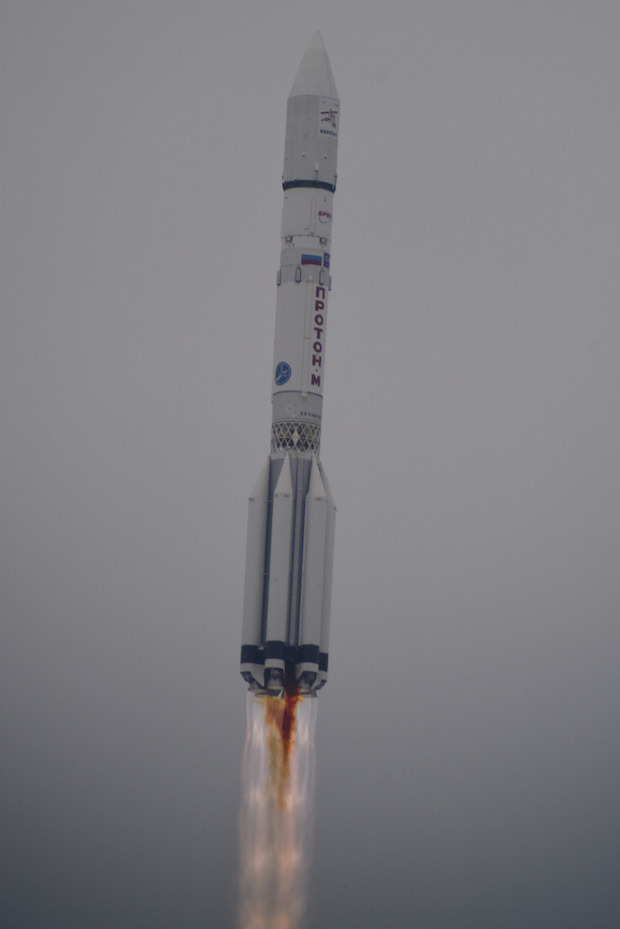
Take a look back at the fiery blastoff of a Russian Proton rocket Monday with the ExoMars 2016 mission to examine the red planet’s atmosphere and test new European entry, descent and landing technologies.
The 191-foot-tall (58-meter) rocket took off from the Baikonur Cosmodrome in Kazakhstan at 0931:42 GMT (5:31:42 a.m. EDT) Monday with the ExoMars Trace Gas Orbiter and Schiaparelli lander.
Nearly 11 hours later, the rocket’s Breeze M upper stage deployed the ExoMars orbiter on a trajectory toward Mars after a series of maneuvers to build up enough energy to escape Earth’s gravity.
The ExoMars mission will arrive at Mars on Oct. 19, making it the European Space Agency’s second probe to explore the red planet.
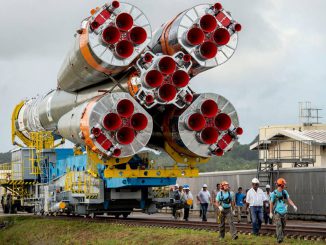
Mounted on a mobile platform, a European Ariane 5 rocket followed dual rail tracks across the Guiana Space Center in South America on the way to its jungle launch complex Monday, a day before its scheduled blastoff with four satellites to expand Europe’s independent navigation network.
China placed is first spacecraft into orbit around Mars on Wednesday, continuing an international blitz on the Red Planet one day after the arrival of a spacecraft from United Arab Emirates and eight days before the landing of NASA’s Perseverance rover.
Five European satellites packaged inside an aerodynamic fairing have joined a Soyuz rocket its launch pad in the French Guiana jungle for a roaring ride into orbit Friday.