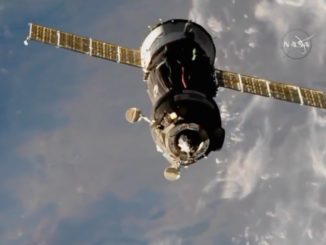
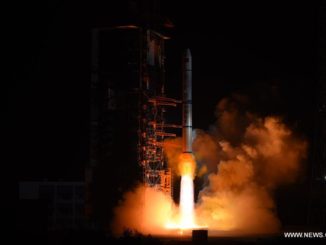
It will take less than 10 minutes for a Long March 2F rocket to send two astronauts inside the Shenzhou 11 space capsule on course toward a docking with China’s Tiangong 2 space lab.
The 191-foot-tall (58-meter) rocket is scheduled to blast off from the Jiuquan space center in northwestern China’s Inner Mongolia territory at 2330 GMT (7:30 p.m. EDT), or around sunrise Monday at the launch site.
Astronauts Jing Haipeng and Chen Dong will be aboard the Shenzhou 11 spaceship, beginning a 33-day mission in orbit.
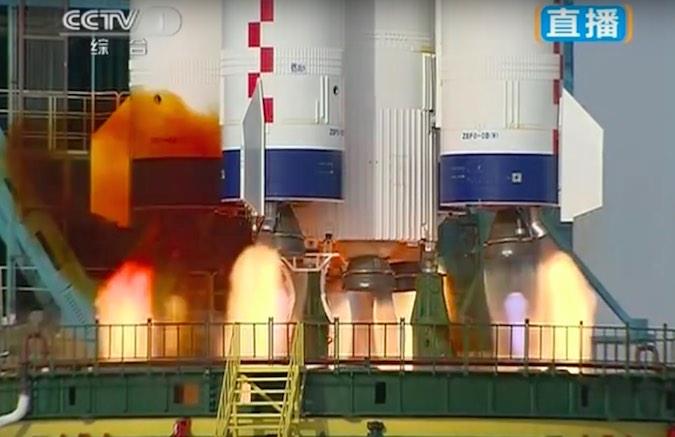
T-0:00:01: Ignition
The Long March 2F rocket’s first stage and four liquid-fueled boosters ignite and throttle up to 1.4 million pounds of total thrust.
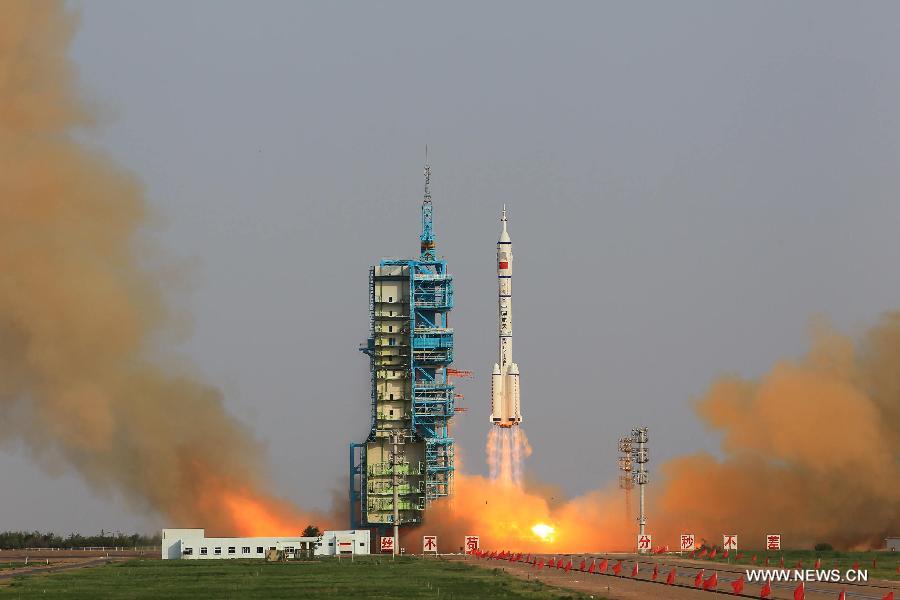
T-0:00:00: Liftoff
The 191-foot-tall (58-meter) Long March 2F rocket lifts off from the Jiuquan satellite launching center.
T+0:00:12: Pitch and roll program
The Long March 2F rocket begins a pitch-over maneuver to steer on the proper heading toward orbit.
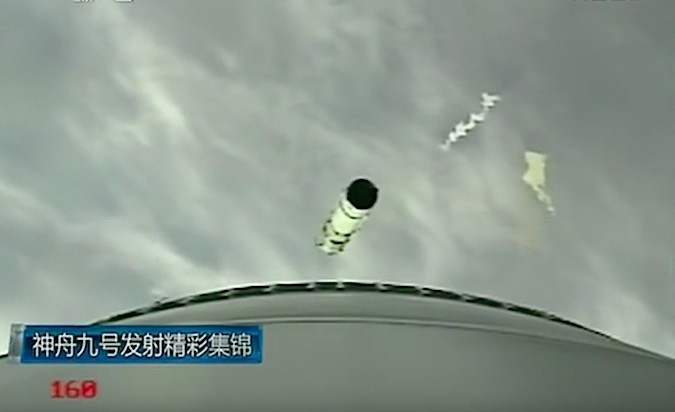
T+0:02:35: Escape tower jettison
The launch abort system, which would be used by the crew to escape the Long March rocket in the event of a mishap, is jettisoned after it is no longer needed.
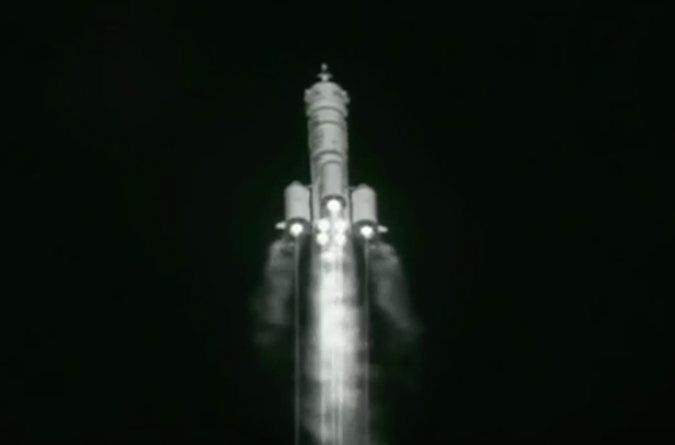
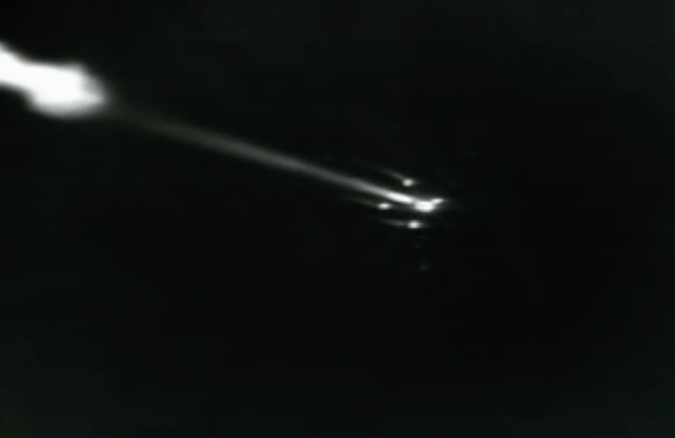
T+0:02:35: Booster separation
Moments after the boosters drain their hydrazine and nitrogen tetroxide propellant, the rockets are jettisoned from the Long March 2F first stage.
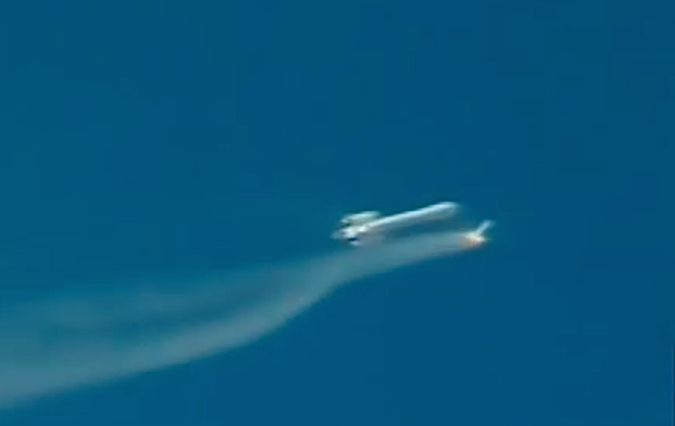
T+0:02:40: First stage separation
The Long March 2F first stage separates about four seconds after the strap-on boosters are jettisoned. The second stage ignites moments later.
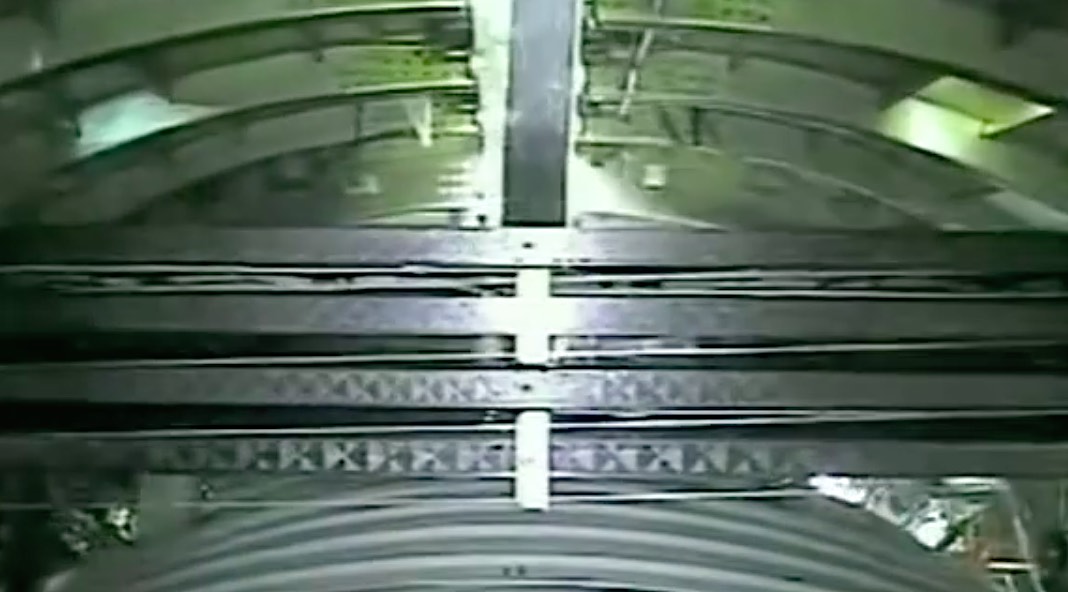
T+0:03:30: Fairing separation
The aerodynamic shroud covering the Shenzhou 9 spacecraft is released once the Long March rocket flies out of the lower atmosphere.
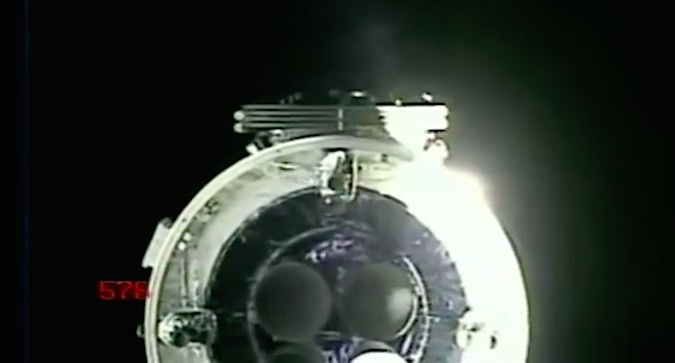
T+0:08:45: Shenzhou 11 separation
The Shenzhou 11 spacecraft separates from the second stage of the Long March 2F rocket. The launch is targeting an orbit with an inclination of 42.8 degrees. Shenzhou 11’s power-generating solar panels will be extended a few minutes later.
Two days after launch from Kazakhstan, a Russian Soyuz spacecraft carrying a crew of three wrapped up a problem-free rendezvous Friday, docking at the International Space Station’s Earth-facing Rassvet port less than a week after three other crew members departed.
Astronauts Steve Bowen and Woody Hoburg suited up and floated outside the International Space Station Friday for a spacewalk to install and unroll an upgraded solar array wing delivered to the complex earlier this week by a SpaceX Cargo Dragon supply ship.
A Chinese rocket placed three experimental military surveillance satellites in orbit Friday, the second set of related triplets launched in less than two months.