Mission Reports
First images of Mars rover landing just a taste of what’s to come
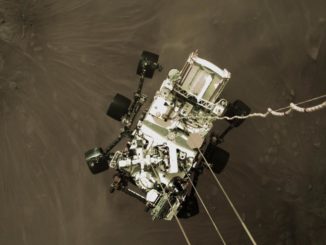
The first picture of NASA’s Perseverance rover landing on Mars shows the nuclear-powered robot suspended under its rocket jetpack just before touchdown. The spectacular view could be upstaged next week with the release of a first-of-its-kind high-definition video replay of the rover’s final descent.