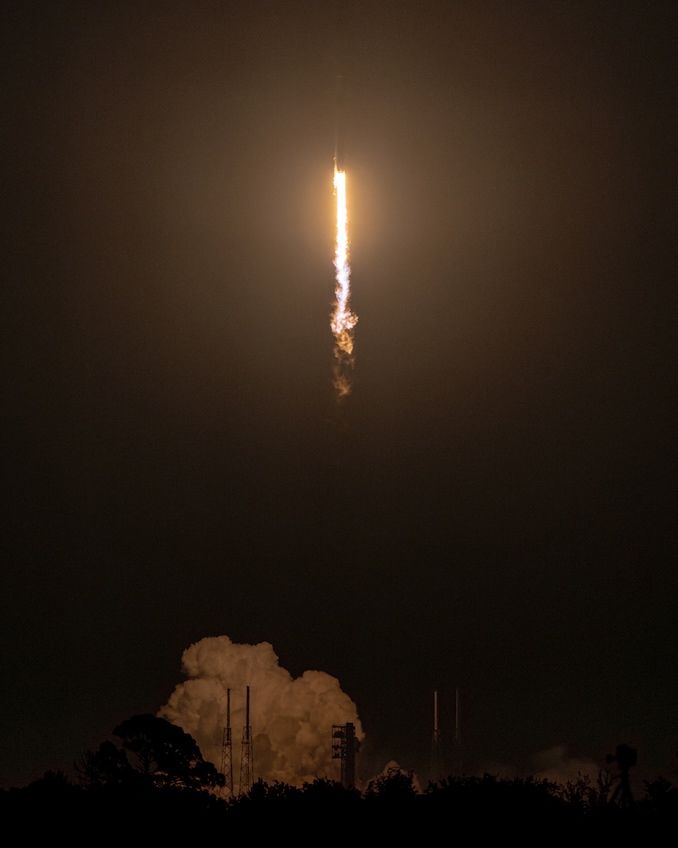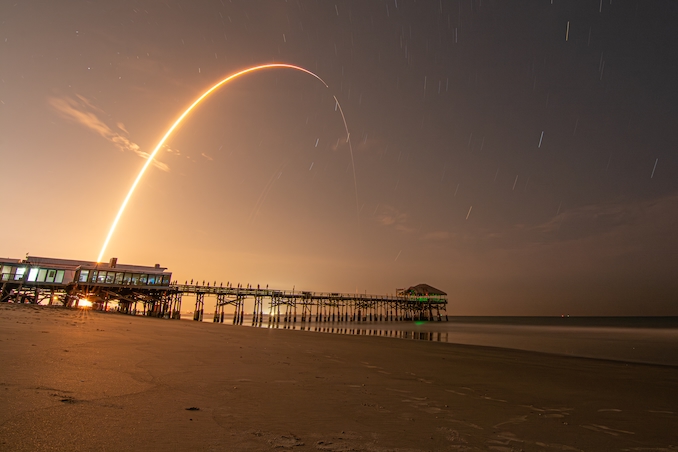
Update June 17, 4:10 a.m. EDT (0810 UTC): SpaceX confirms deployment of the three BlueBird satellites.
AST SpaceMobile bounced back from the loss of its BlueBird 7 satellite last month with the launch of three more in the predawn hours of Wednesday morning.
The company launched BlueBird 8, 9, and 10 onboard SpaceX’s Falcon 9 rocket from Cape Canaveral Space Force Station. AST SpaceMobile’s low Earth orbit constellation is designed to generate space-based broadband services to unmodified smartphones in the United States and elsewhere around the world.
Liftoff from Space Launch Complex 40 happened at 2:39 a.m. EDT (0639 UTC). The rocket flew on a north-easterly trajectory upon leaving the pad.
The 45th Weather Squadron forecast a 90 percent chance for favorable conditions at the pad, but a low to moderate risk for unacceptable weather in the area of the drone ship, SpaceX’s booster recovery vessel. Meteorologists are tracking the possibly interference of cumulus and anvil clouds.
“On both primary and backup launch days, abundant moisture may support a few lingering cells or anvil tops from previous thunderstorms lingering in the vicinity of the Cape with a low concern of violating the Cumulus Cloud Rule and Anvil Cloud Rules,” launch weather officers wrote on Tuesday.
SpaceX launched this mission using the Falcon 9 first stage booster with the tail number B1077. This was its 29th flight after previously launching missions, like NASA’s Crew-5, GPS III Space Vehicle 06, and CRS-28.
A little more than eight minutes after liftoff, B1077 landed on the drone ship, ‘A Shortfall of Gravitas,’ positioned in the Atlantic Ocean. This was the 156th landing on this vessel and the 625th booster recovery for SpaceX to date.
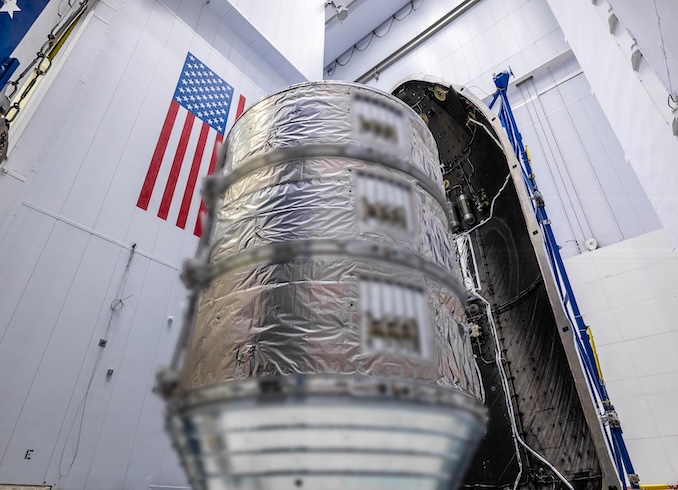
The rocket’s upper stage deployed the three, six-ton satellites into low Earth orbit beginning with BlueBird 10 about 54.5 minutes after liftoff. The other two satellites will deploy roughly five minutes apart.
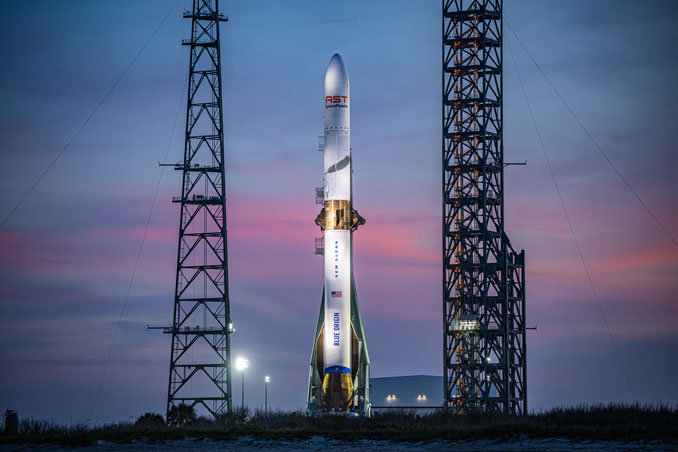
This flight came about two months after the ill-fated BlueBird 7 mission, which launched aboard a Blue Origin New Glenn rocket from the Cape. While the company was able to recover its first stage booster, ‘Never Tell Me the Odds,’ Blue Origin suffered an upper stage anomaly and was unable to deliver the satellite to the intended orbit.
“While the satellite separated from the launch vehicle and powered on, the altitude was too low to sustain operations with its on-board thruster technology and was de-orbited. In connection with the loss of the Block 2 BB7 satellite, the Company expects a replacement launch pursuant to the terms of the applicable contract with the launch provider,” AST SpaceMobile wrote in a financial document filed with the U.S. Securities and Exchange Commission (SEC).
“The total loss associated with this event is expected to be consistent with the carrying value of this initial satellite. The Company estimates the carrying value of the satellite to be in the range of $155.0 million to $160.0 million.”
Prior to this launch, the company deployed its BlueWalker 3 test satellite and five, Block 1 BlueBlue satellites on SpaceX Falcon 9 rockets in Sept. 2022 and Sept. 2024 respectively. The first Block 2 satellites, BlueBird 6, alucnved on an Indian LVM3 rocket.
The Federal Communications Commission (FCC) granted AST SpaceMobile the ability to deploy 248 of its satellites into low Earth orbit. Each of the Block 2 BlueBird satellites has a massive communications array that measures about 2,400 square feet (223 square meters).
The company currently has agreements with nearly 60 mobile networks globally, including AT&T, Verizon, and Vodafone.