
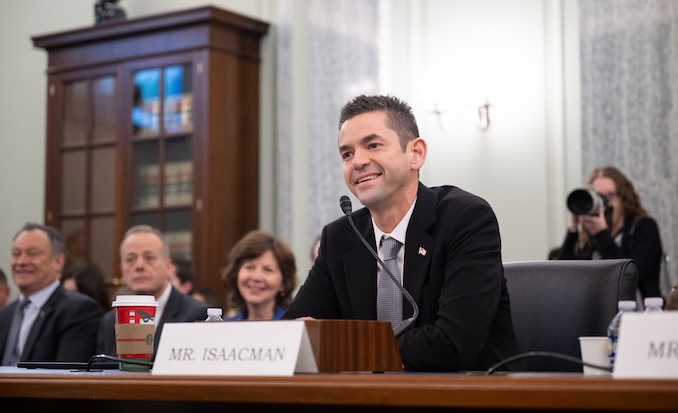
Jared Isaacman was confirmed by the U.S. Senate to be NASA’s newest administrator on Wednesday afternoon.
The commercial astronaut, entrepreneur, and philanthropist received 67 votes of approval with 30 senators voting against his confirmation.
“For nearly 70 years, the United States has been at the forefront of space exploration. President Trump knows how critical it is to reinvigorate NASA as we aim to reach new heights in the greatest frontier ever known, and that’s why he chose exactly the right man for the job,” wrote Sen. Tim Sheehy (R-MT) in a social media post shortly after the vote.
“I’m proud to see [Jared Isaccman] confirmed as our NASA administrator and confident he will work tirelessly to ensure America wins the 21st century space race.”
Messages of support came in swiftly for Isaacman, ranging from industry members to special interest groups, like the American Institute for Aeronautics and Astronautics and the Planetary Society.
“After nearly a year of historic disruptions to the agency’s workforce, facilities, and budget, Mr. Isaacman has the opportunity to stabilize and reinvigorate the U.S. space program,” the Planetary Society wrote in a social media statement. “Congress is on a path to provide Mr. Isaacman with a restored budget that better funds national priorities: returning humans to the Moon, maintaining U.S. leadership in space science and exploration, and training the next generation of scientists and aerospace engineers.
“This is a remarkable statement of support for NASA’s mission, and Mr. Isaacman publicly committed to make full use of the funds that Congress provides.”
From commanding missions to commanding the agency, Jared Isaacman has been confirmed as @NASA Administrator.
Next stop: Swearing in
Let’s accomplish the near impossible! 🚀 pic.twitter.com/Fq12OeueOP
— Bethany Stevens (@NASASpox) December 17, 2025
A date for Isaacman’s official swearing in ceremony hasn’t been announced, but is expected soon, potentially before the Christmas holiday.
Isaacman was first announced as President Donald Trump’s pick for the position of NASA Administrator on Dec. 4, 2024, and sat for his first confirmation hearing on April 9.
About a month and a half later, the President withdrew that nomination amid the backdrop of a very public falling out with SpaceX founder and one of Trump’s biggest political donors, Elon Musk.
Isaacman was renominated to the position on Nov. 4 and had a second confirmation hearing less than a month later.
Secretary of Transportation Sean Duffy was named acting administrator replacing the interim Administrator, Janet Petro, who returned to her role as director of the Kennedy Space Center in Florida.
“Congratulations to Jared Isaacman on his confirmation as NASA Administrator,” Duffy wrote in a social media post. “It’s been an honor to help drive [The President’s]’ vision for American leadership in space. I wish Jared success as he begins his tenure and leads NASA as we go back to the Moon in 2028 and beat China.”
A busy time ahead
Isaacman will step into the Administrator role at an inflection point for the agency with Congress and the Trump Administration pushing different directions for the agency. Also a reduction in the NASA workforce and brutal budget cuts will create a challenging environment.
Most immediately, NASA is on the cusp of launching the Artemis 2 mission, the first crewed flight of the Orion spacecraft, which will fly around the Moon and back to Earth on a 10-day mission, as soon as early February.
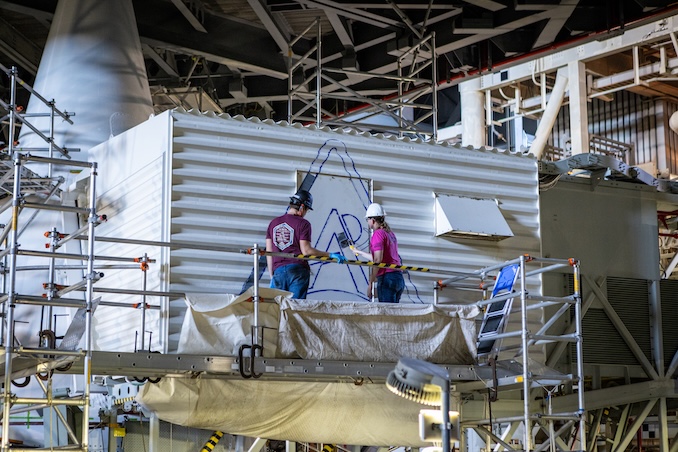
Across his two confirmation hearings, Isaacman faced numerous questions about his views on the Artemis program, which uses the Space Launch System (SLS) rocket and Orion spacecraft for lunar expeditions.
In his list of questions for the record following Isaacman’s second nomination hearing, Sen. Katie Britt (R-AL) pushed Isaacman on his support for using the SLS rocket through the Artemis 5 mission. She noted that he’d previously talked about the potential for using commercial heavy lift rockets on the Artemis 4 and Artemis 5 missions.
“SLS is the fastest path to achieving America’s near-term lunar objectives through Artemis 5,” Isaacman wrote in response. “Pivoting to another architecture earlier than contemplated in the One Big Beautiful Bill could place the nation at an unacceptable risk of a strategic capability gap. I will, of course, follow the law.”
On the other side of the aisle, Sen. Maria Cantwell (D-WA) asked Isaacman about the initiative started by Duffy to reopen the competition for the Artemis 3 Human Landing System (HLS) contract. NASA confirmed that it had received proposals for expedited landing options from SpaceX and Blue Origin and would see input from the broader industry in time.
“If confirmed, I fully intend to solicit feedback from all commercial partners on ways to reduce requirements and remove obstacles that impede America’s near-term lunar objectives,” Isaacman wrote in response. “This applies not only to Blue Origin and SpaceX, but to Lockheed Martin, Boeing, Northrop, and every other vendor contributing to Artemis and NASA’s broader mission.
“As I stated during the hearing, America is best served when both HLS providers are able to compete–and as a nation, we must select the first landing system ready to ensure the United States returns to the Moon before China.”
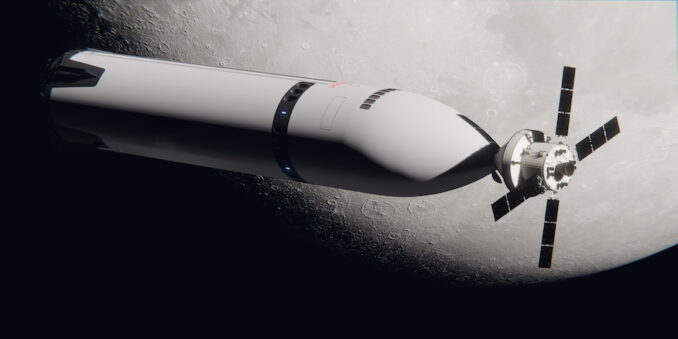
Isaacman also faces challenges with NASA’s science budget. The President’s Budget Request, issued earlier this year, proposed deep cuts to science, with the Earth science portion taking a heavy reduction.
Asked by Sen. Dan Sullivan (R-AK) about the President’s proposal to eliminate the Office of STEM Engagement (OSTEM) and reduce the funding to the NASA Research Opportunities in Space and Earth Sciences (ROSES) program, Isaacman said the following:
“If confirmed, I can commit to being an advocate for science and a strong American workforce and will do all I can to maximize the scientific value of every dollar provided by Congress.”

Just in time to take the blame for the failure of Artemis III.