In the wake of the catastrophic explosion of Blue Origin’s New Glenn rocket, NASA wants to find an alternative launcher for the first of the company’s Blue Moon landers.
In an interview with FOX Business on Thursday, NASA Administrator Jared Isaacman described a “whole of government response” to the May 28 incident, which badly damaged Launch Complex 36 at Cape Canaveral. “We are also de-coupling the lander from the launch vehicle and the pad itself,” he said.
“NASA is laser focused on the lander because we’re laser focused on our mission to return astronauts to the surface of the moon before 2028, and we’re gonna be able to keep that lander in development, progressing, so it’s available for our test mission in 2027, which is Artemis 3, and potentially available to meet our landing objectives in 2028,” Isaacman said.
“It’s a setback that happens in this business. It’s incredibly complicated. A rocket is a controlled explosion, whether you’re going to Earth orbit, 17,500 miles an hour, escape velocity, 25,000 miles an hour, it’s an awful lot of energy, things will happen. We have to learn from it and be ready to move forward.”
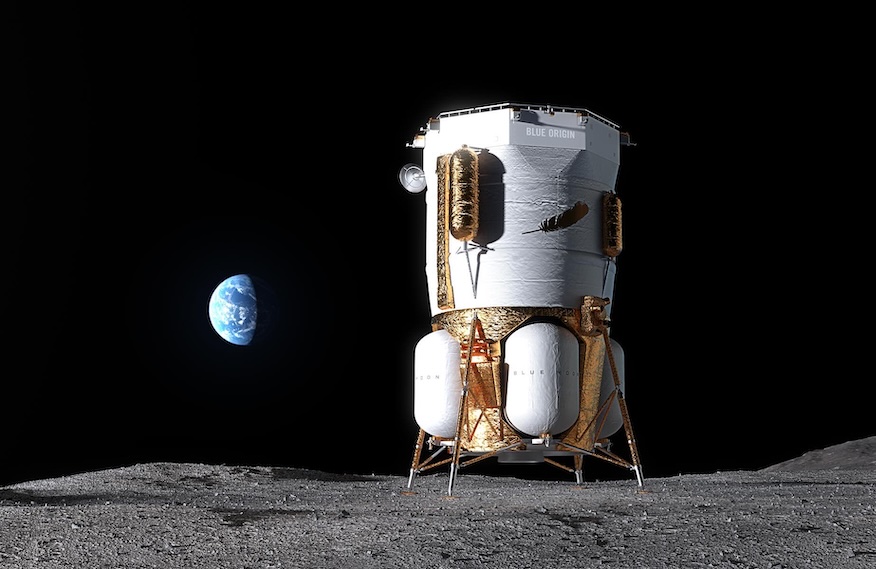
An agency spokesperson confirmed to Spaceflight Now that NASA would like to see the launches of the Blue Moon Mark 1 cargo lander and potentially the Blue Moon Mark 2 crewed lander move to a rocket that’s not New Glenn.
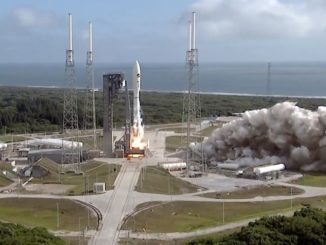
The New Glenn static fire anomaly triggered what was “the largest explosion” seen at Cape Canaveral Space Force Station, according to Col. Brian Chatman, the commander of Space Launch Delta 45, which encompasses Cape Canaveral and Patrick Space Force Base. Chatman and officials with Blue Origin confirmed the night of the explosion that there were no injuries or fatalities as a result of the blast.
Isaacman and several senior engineers at NASA traveled to Florida the following day to speak with Blue Origin engineers and to survey the damage directly. At the time, Isaacman pledged NASA’s support of Blue Origin in helping to find the root cause and get back to launching New Glenn rockets “as soon as safely possible.”
“We have been saying for months at NASA that we are not going to sit on our hands and wait for the capabilities necessary to achieve the nation’s most pressing objectives,” Isaacman wrote in a post on X. “We are going to take an active role alongside our partners, just as we did in the 1960s, to overcome setbacks, remove obstacles, and deliver the intended outcomes.”
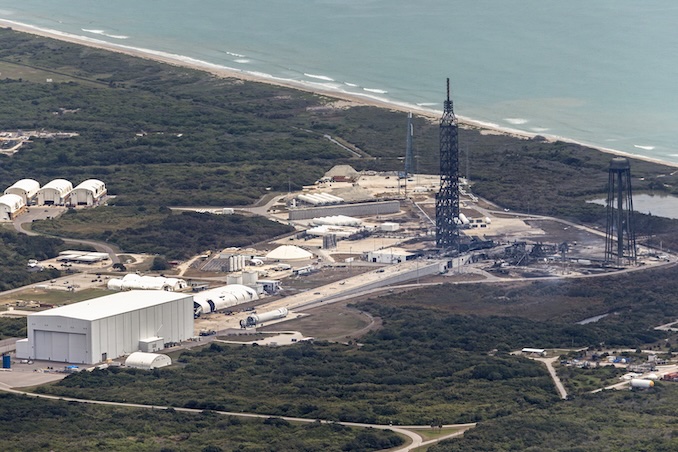
On Monday, June 1, Blue Origin CEO Dave Limp also took to social media to share with the public that the pads propellant storage tanks were “all in good shape” and that the large support tower “can be repaired in place rather than torn down and replaced.”
Limp concluded his post by stating, “We will fly again before the end of this year.”
Not fast enough
Just days prior to the explosion at Launch Complex 36, Isaacman and others at NASA held a news conference to tout multiple missions that will help either directly build or test technologies needed to support a Moon Base at the south pole of the Moon.
Multiple missions were awarded to Blue Origin and its Blue Moon Mk.1 cargo lander, including the delivery of lunar terrain vehicles to the lunar surface to allow greater mobility for future astronauts on Moon landing missions, like Artemis 4, which is planned for 2028.
The Blue Moon Mk.2 crew lander, a larger version of the Mark 1 lander that includes a crew habitation volume, is slated to launch as part of the Artemis 3 mission as soon as mid-2027. NASA wants to see both it and SpaceX’s Starship lander dock with the agency’s Orion spacecraft to help buy down risk for future lunar landings.
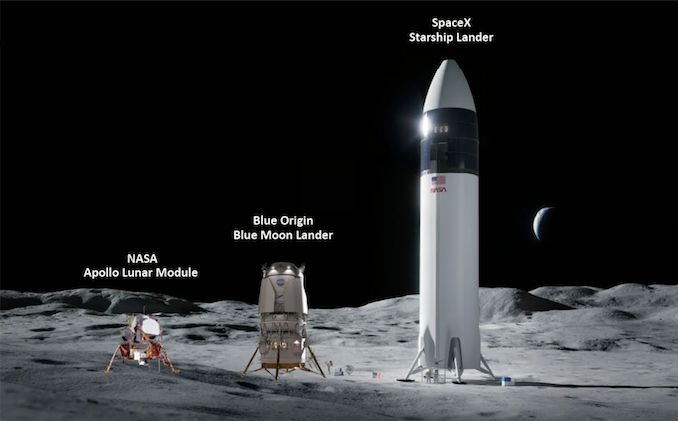
Blue Origin officials have said that the Blue Moon landers were designed and optimized to fly as a payload on the New Glenn rocket.
“One of the best things about that was being able to work with the New Glenn Team. Having the launch vehicle as the same company’s vehicle as the lander has allowed us to optimize the entire stack, the entire design,” said John Couluris, senior vice president of Lunar Permanence at Blue Origin during it’s NG-3 launch broadcast in April. “So we’ve gotten a lot more performance out of our lander thanks to New Glenn.”
During an appearance at CNBC’s CEO Summit earlier this week, Isaacman said the mass and volume of the Blue Moon landers leaves few options for alternative vehicles. “In terms of heavy lift, you know, real heavy lift, you’ve got, SpaceX and Blue Origin, and obviously one of them is down a pad right now.”
The Blue Moon landers were tailored to fit within the seven-meter diameter fairing of a New Glenn rocket. The Falcon Heavy payload fairing has a diameter of 5.2 meters and although the company has developed a taller version, it has not revealed any wider options. Additionally, SpaceX’s launch pads are not equipped to service a hydrogen-fueled lander like Blue Moon.