Update Jan. 12, 5:50 p.m. EST (2250 UTC): SpaceX confirms deployment of the 29 Starlink satellites.
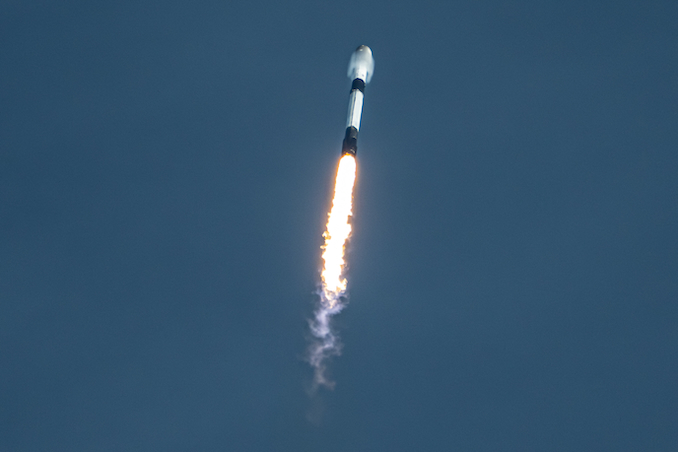
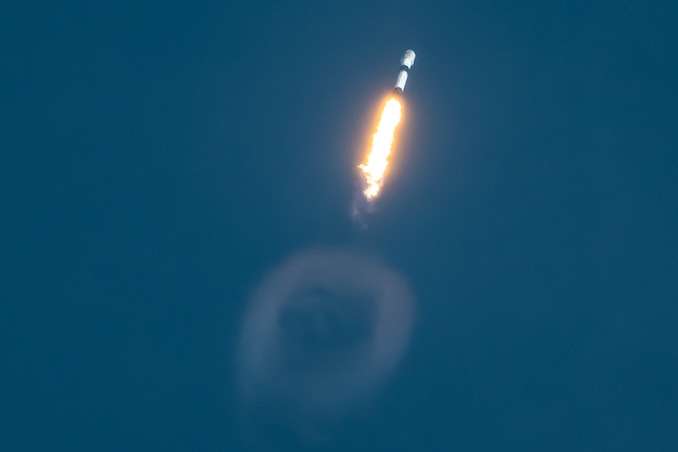
Space completed its fifth Falcon 9 rocket launch of 2026 on Monday afternoon, continuing a brisk pace of launching at a rate slightly faster than once per 2.5 days.
The Starlink 6-97 mission added another 29 Starlink V2 Mini Optimized satellites to the growing low Earth orbit constellation. According to statistics maintained by astronomer and expert orbital tracker Jonathan McDowell, there are more than 9,400 satellites in LEO as of Jan. 11.
Liftoff from Space Launch Complex 40 happened at 4:08:20 p.m. EST (2108:20 UTC). The Falcon 9 rocket flew on a south-easterly trajectory upon leaving the pad.
Meteorologists with the 45th Weather Squadron forecast an 85 percent chance for favorable weather at liftoff on Monday with a somewhat elevated risk regarding the weather in the booster recovery zone. Officials were tracking a cold front that moved through the area on Sunday.
“High pressure will build in early next week, however onshore flow and a boundary along the coast may generate coastal showers Monday and Tuesday, with some possibly moving onshore,” launch weather officers wrote. “This will increase the risk of a Cumulus Cloud Rule violation during the primary and back up launch opportunities.”
“Seas at the recovery location will be elevated on Monday from the passage of the cold front, then begin lowering on Tuesday,” they added.
SpaceX launched the Starlink 6-97 mission using one of its most flown Falcon 9 boosters, tail number 1078. It tied another booster, tail number 1077, as the booster with the fifth most number of launches: 25.
B1078 flew two critical missions for the U.S. government: NASA’s Crew-6 and USSF-124.
Nearly 8.5 minutes after liftoff, B1078 landed on the SpaceX droneship, ‘Just Read the Instructions.’ This was the 148th landing on this vessel and the 558th booster landing for SpaceX to date.