Update Jan. 9, 6:14 p.m. EST (2214 UTC): SpaceX confirms satellite deployment. Adding FCC announcement details.
The Federal Communications Commission granted SpaceX the ability to expand its Starlink constellation in low Earth orbit to a total of up to 15,000 satellites.
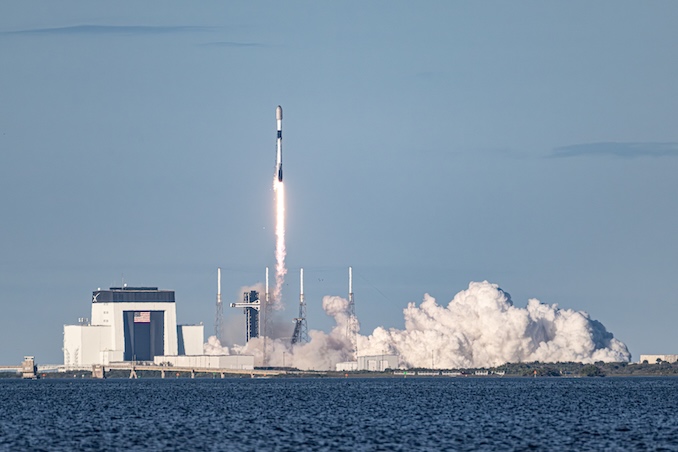
The announcement Friday evening from the FCC came less than an hour after SpaceX launched its latest batch of Starlink V2 Mini Optimized satellites from Cape Canaveral Space Force Station in Florida.
“This FCC authorization is a game-changer for enabling next-generation services,” said FCC Chairman Brendan Carr in a statement. “By authorizing 15,000 new and advanced satellites, the FCC has given SpaceX the green light to deliver unprecedented satellite broadband capabilities, strengthen competition, and help ensure that no community is left behind.”
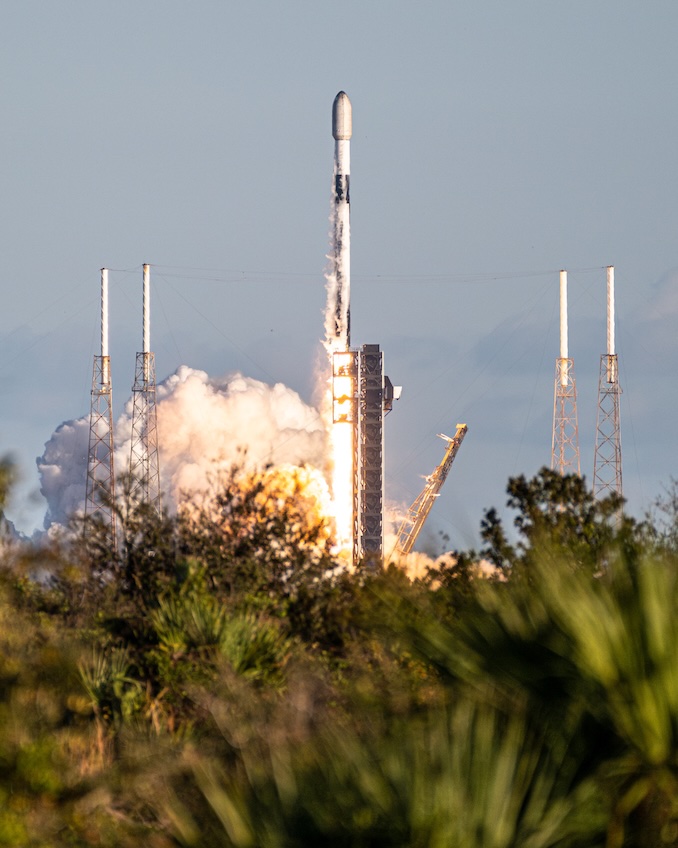
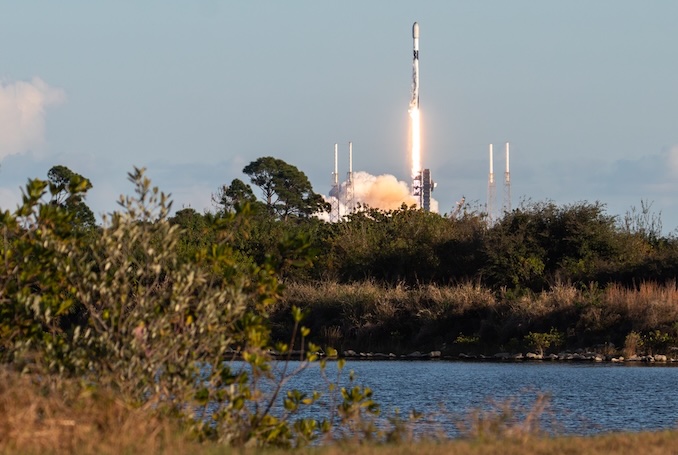
SpaceX’s Falcon 9 lifted off from Space Launch Complex 40 at 4:41 p.m. EST (2141 UTC) with the rocket flying on a south-easterly trajectory after flying away from the pad.
SpaceX launched the mission using the Falcon 9 booster with the tail number 1069. This was its 29th flight after launching missions, like CRS-24, Eutelsat Hotbird 13F and 24 batches of Starlink satellites.
Nearly 8.5 minutes after liftoff, B1069 landed on the drone ship, ‘A Shortfall of Gravitas,’ positioned in the Atlantic Ocean to the east of The Bahamas. This was the 138th landing on this vessel and the 556th booster landing for SpaceX to date.
A little more than an hour after liftoff, the 29 Starlink satellites deployed into orbit. According to astronomer and expert orbital tracker Jonathan McDowell, there were more than 9,400 Starlink satellites in orbit as of Jan. 5.
The FCC’s move to allow SpaceX to launch an additional 7,500 of its Starlink V2 satellites allows the company to make additional changes, like adding giving them the latitude to make new design changes and adding new orbital shells from 340 km to 485 km.
SpaceX’s vice president of Starlink Engineering Michael Nicolls said last week that the company planned to lower about 4,400 satellites currently orbiting at about 550 km down to roughly 480 km, though he didn’t provide a timeline for the shift.
“Lowering the satellites results in condensing Starlink orbits, and will increase space safety in several ways,” he said in a social media post. “As solar minimum approaches, atmospheric density decreases which means the ballistic decay time at any given altitude increases – lowering will mean a >80% reduction in ballistic decay time in solar minimum, or 4+ years reduced to a few months.
“Correspondingly, the number of debris objects and planned satellite constellations is significantly lower below 500 km, reducing the aggregate likelihood of collision.”