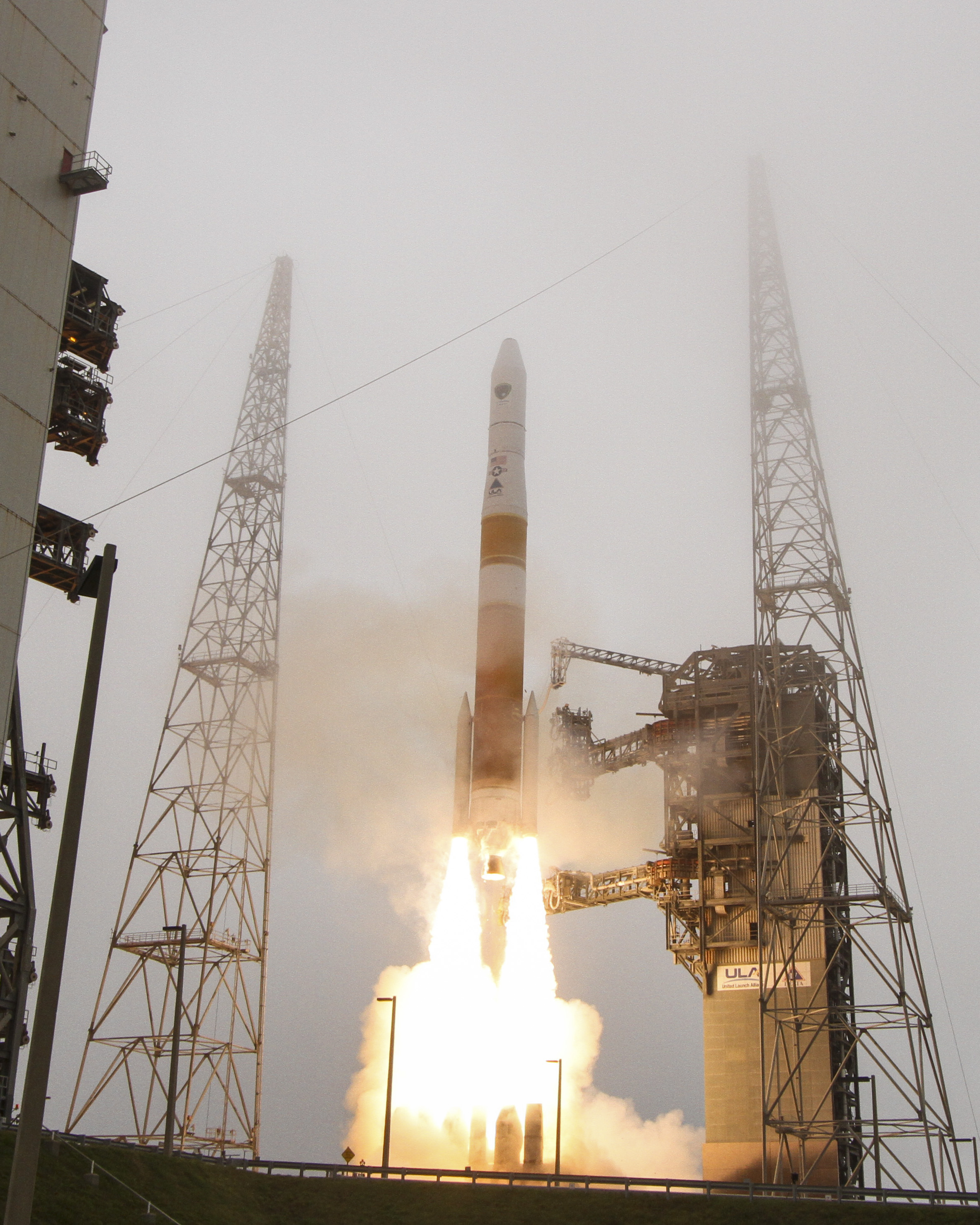
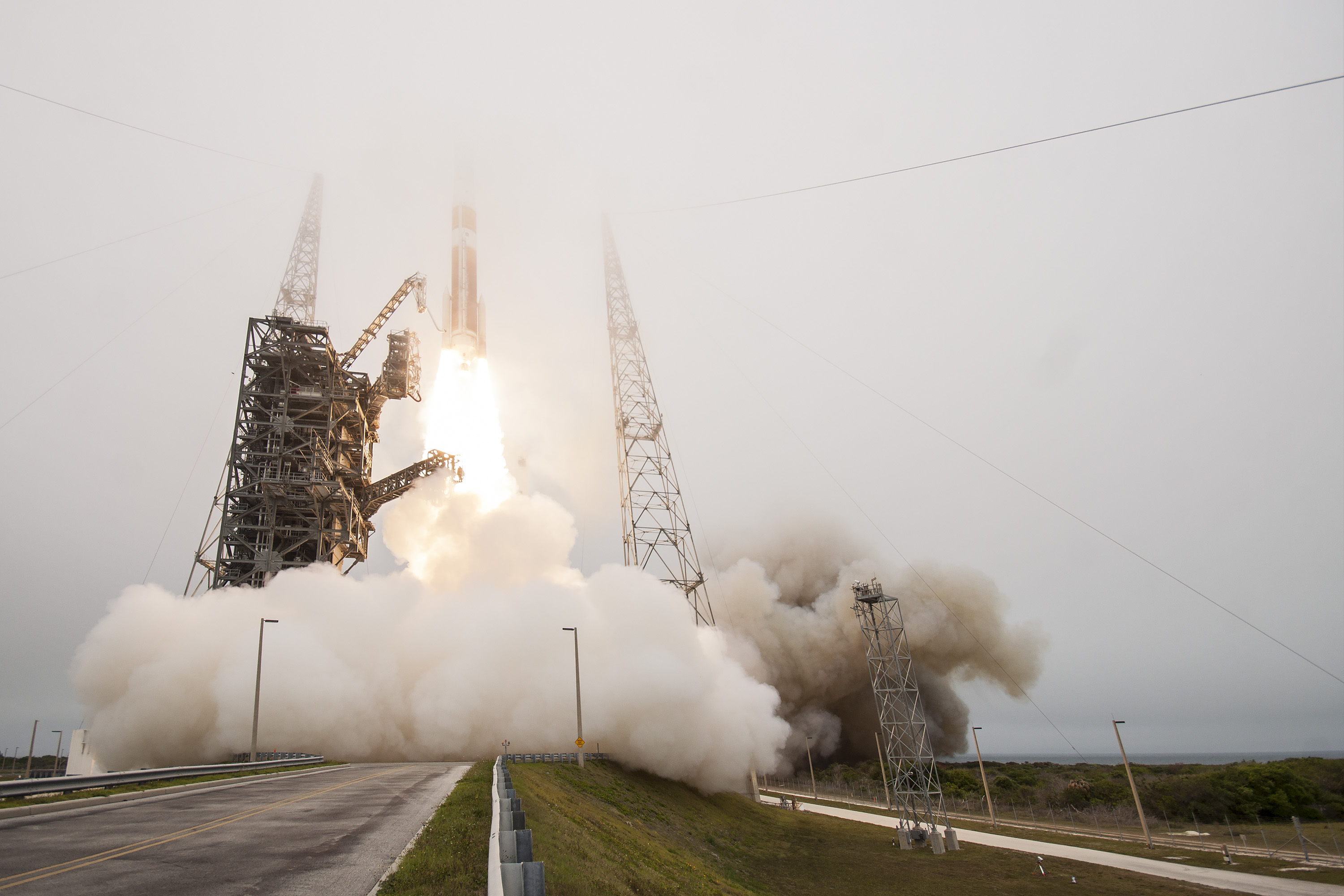
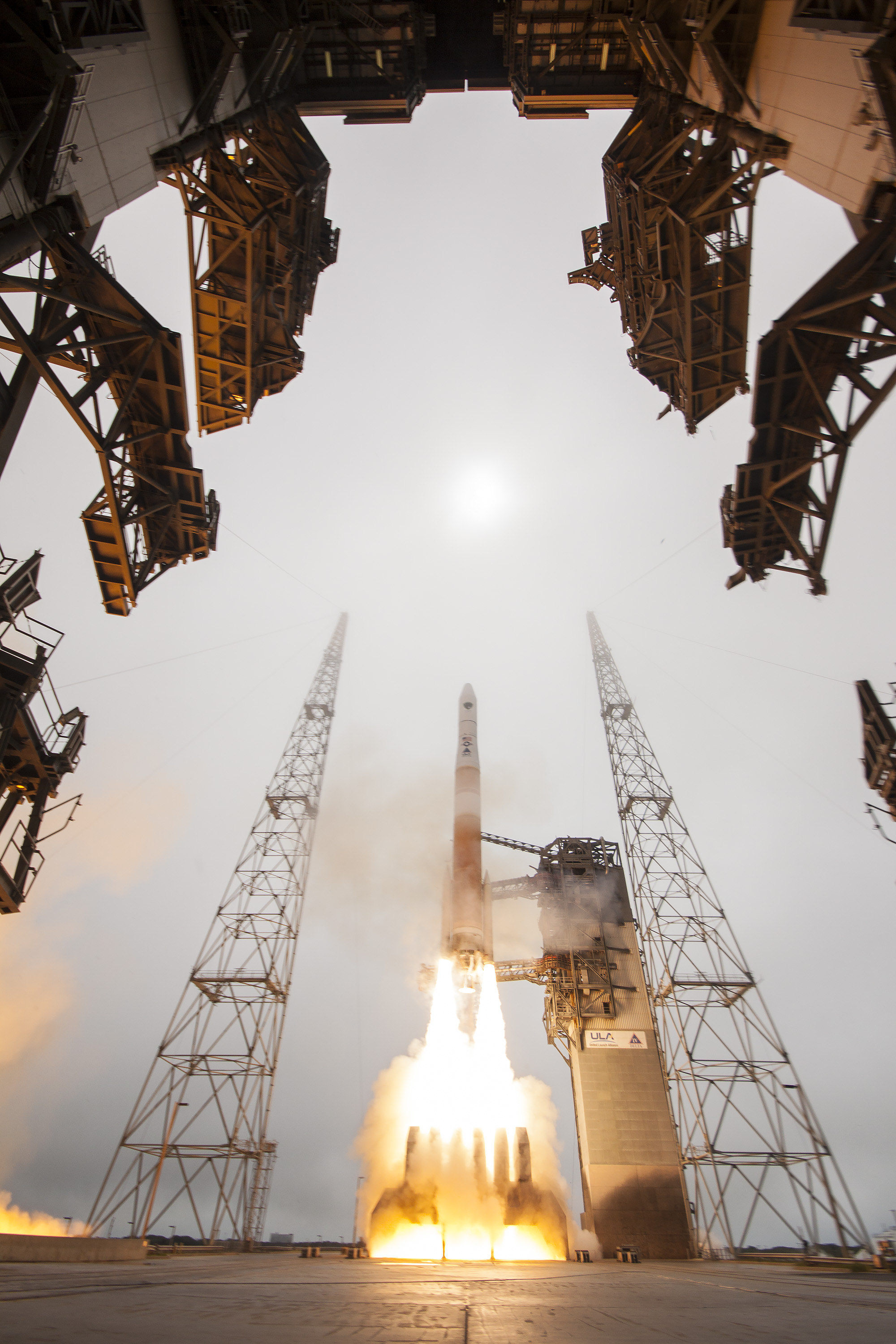
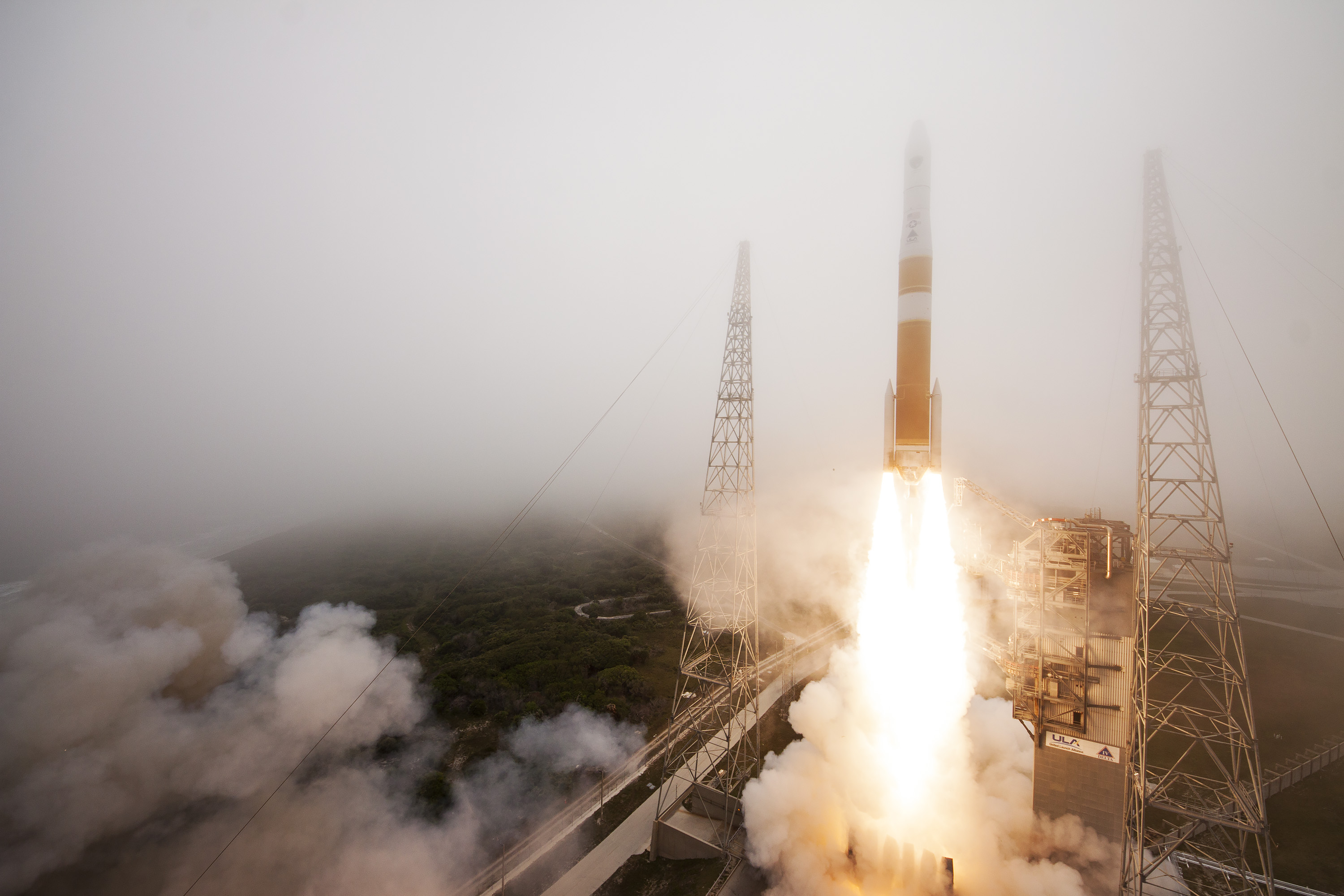
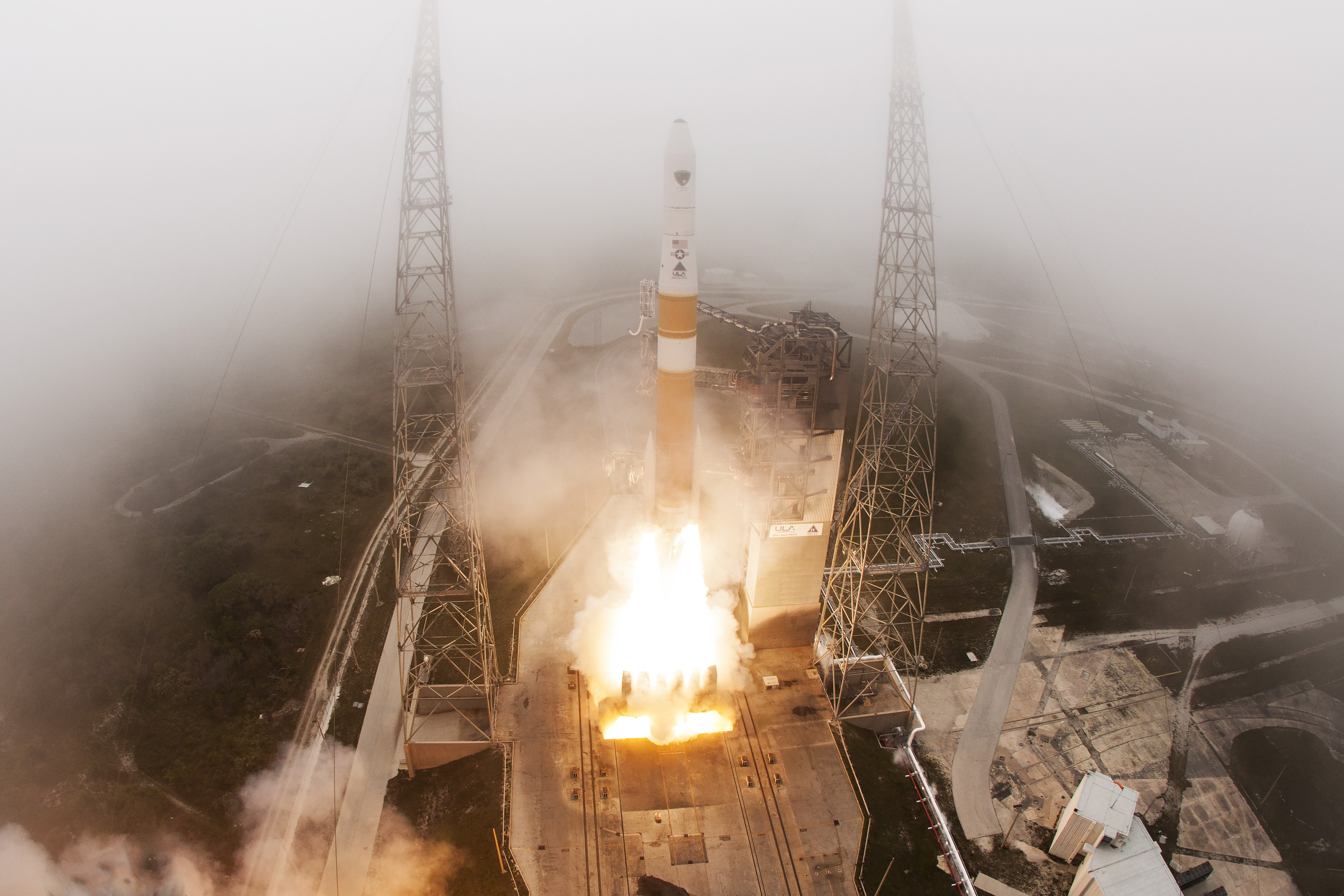
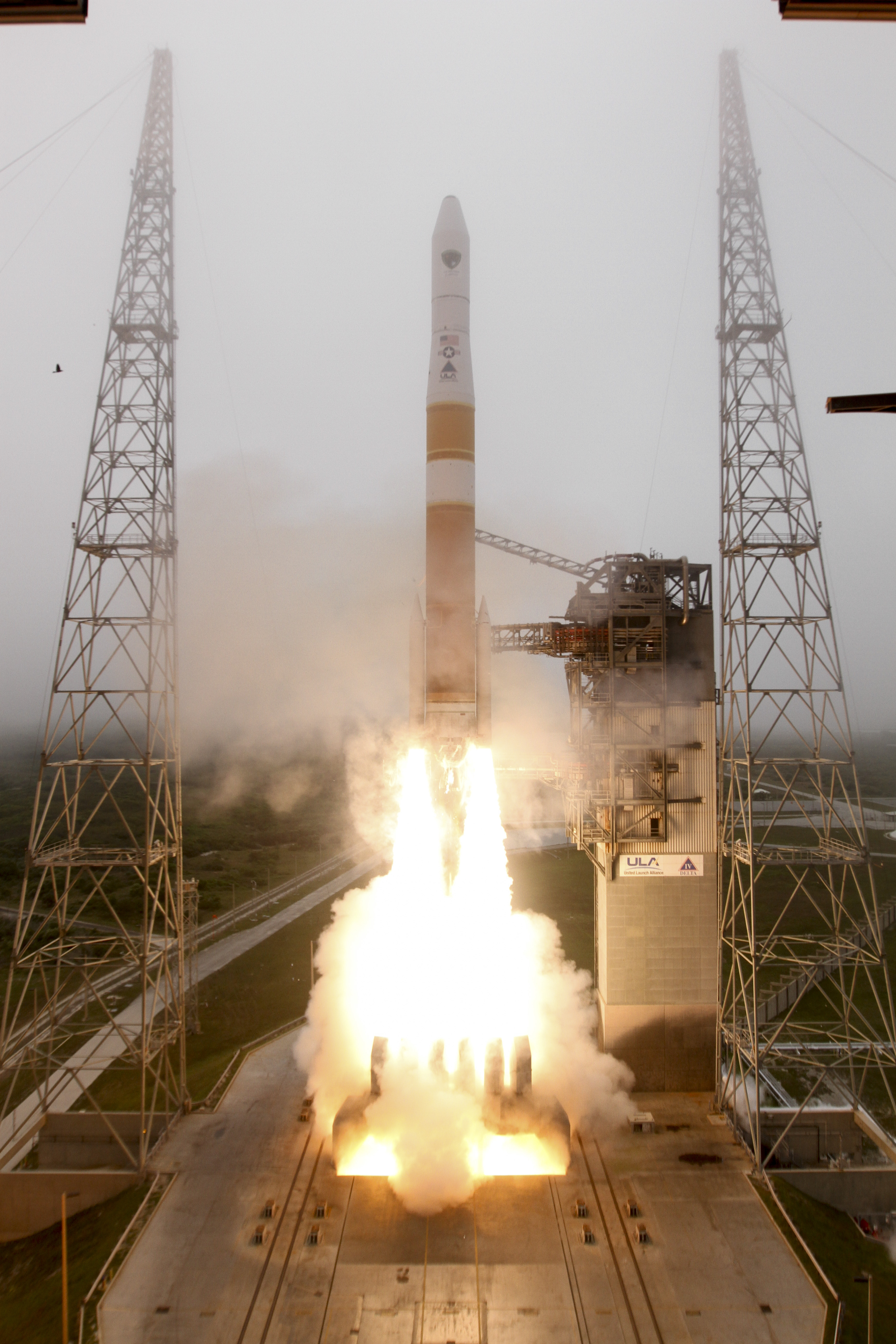
The 721,000-pound United Launch Alliance Delta 4 rocket launches on-time at 2:36 p.m. EDT into a deck of low-hanging clouds over Complex 37 at Cape Canaveral Air Force Station carrying the GPS 2F-9 navigation satellite.
Credit: ULA
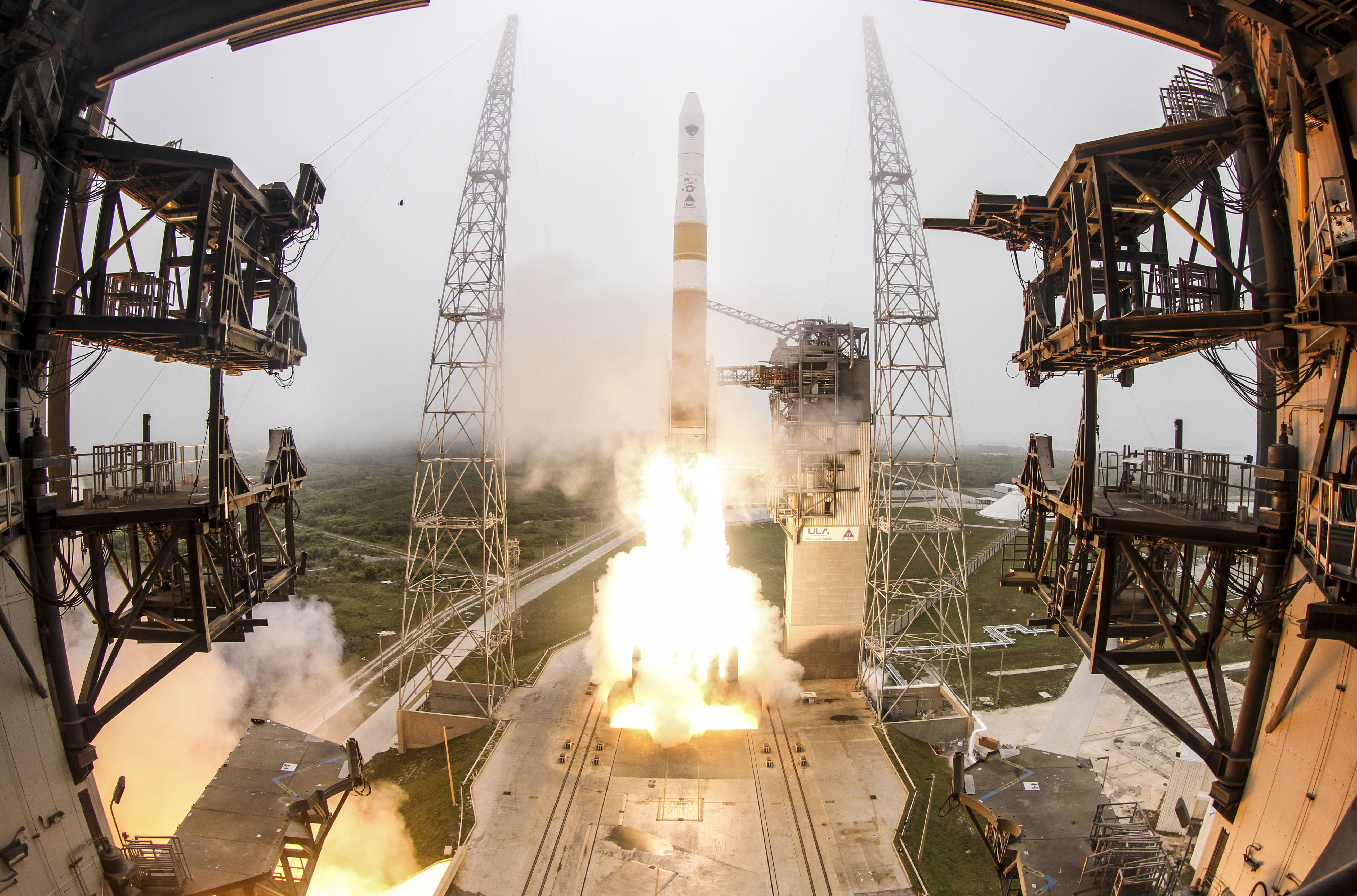
The 721,000-pound United Launch Alliance Delta 4 rocket launches on-time at 2:36 p.m. EDT into a deck of low-hanging clouds over Complex 37 at Cape Canaveral Air Force Station carrying the GPS 2F-9 navigation satellite.
Credit: ULA
A SpaceX Falcon 9 rocket launched at 4:25 p.m. EST (2125 GMT) Wednesday from Cape Canaveral with the GovSat 1 communications satellite, a military-grade craft to relay signals for Luxembourg and allied nations. SpaceX’s launch team scrubbed an attempt Tuesday to replace a transducer on the company’s Falcon 9 rocket and wait for improved weather conditions.
A powerhouse communications satellite owned by Inmarsat has been fueled for liftoff on a SpaceX Falcon 9 rocket Monday from the Kennedy Space Center in Florida on a mission to provide broadband links for passengers and crews aboard ships and airplanes, while technicians are loading space station-bound supplies into a commercial Dragon cargo capsule and preparing a Bulgarian telecom for launch on two other SpaceX boosters by mid-June.
After a 24-hour delay due to poor weather, an air-launched Northrop Grumman Pegasus XL rocket fired into orbit at 9:59 p.m. EDT Thursday (0159 GMT Friday) after release from a carrier jet at an altitude of 39,000 feet over the Atlantic Ocean northeast of Cape Canaveral. The Pegasus rocket carried NASA’s ICON satellite into orbit to collect measurements of the ionosphere.
© 1999-2026 Spaceflight Now Inc