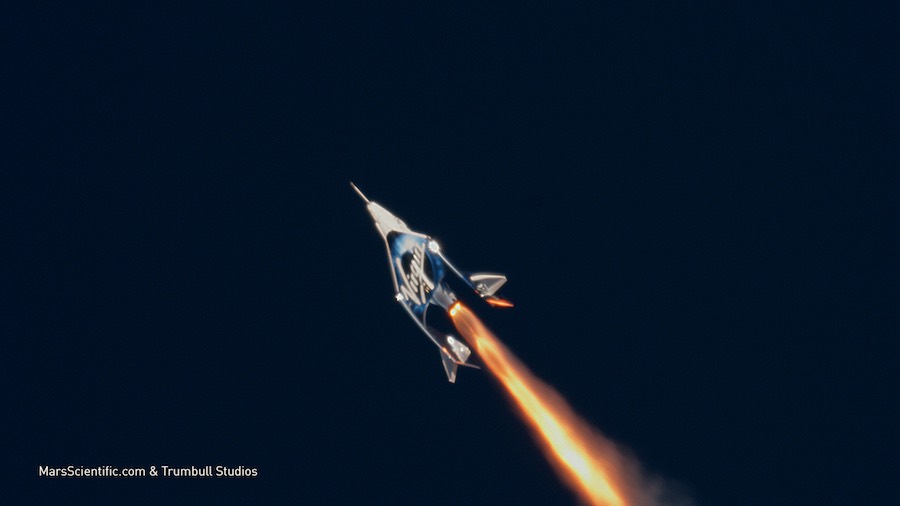
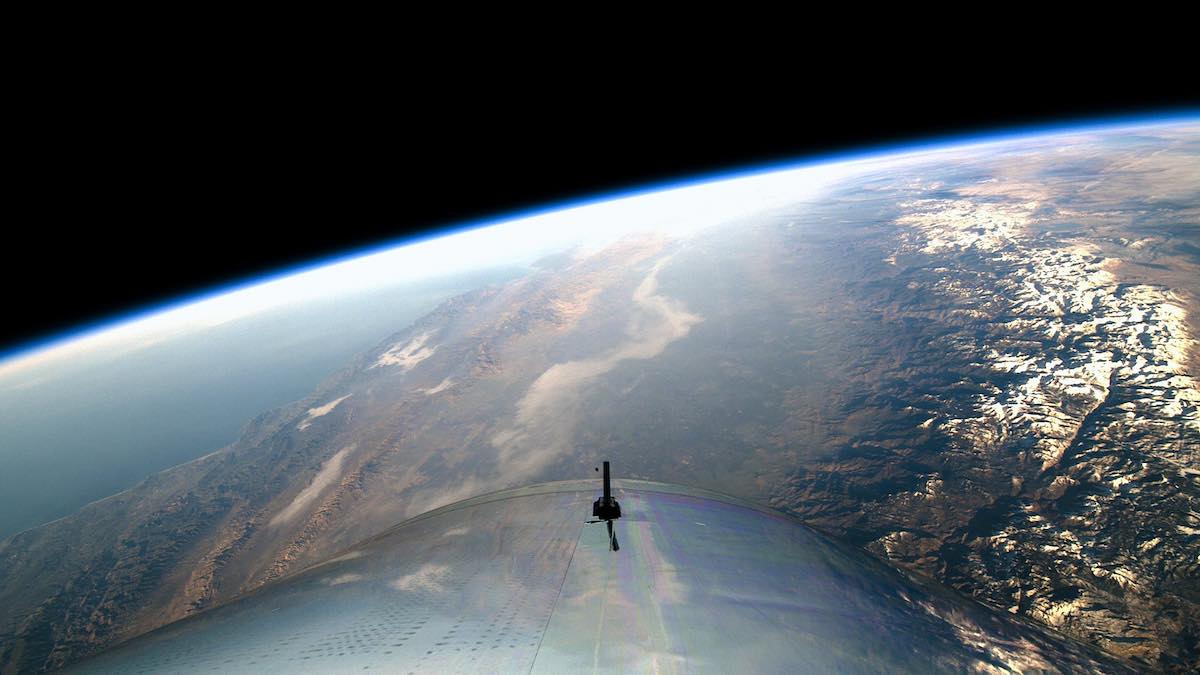
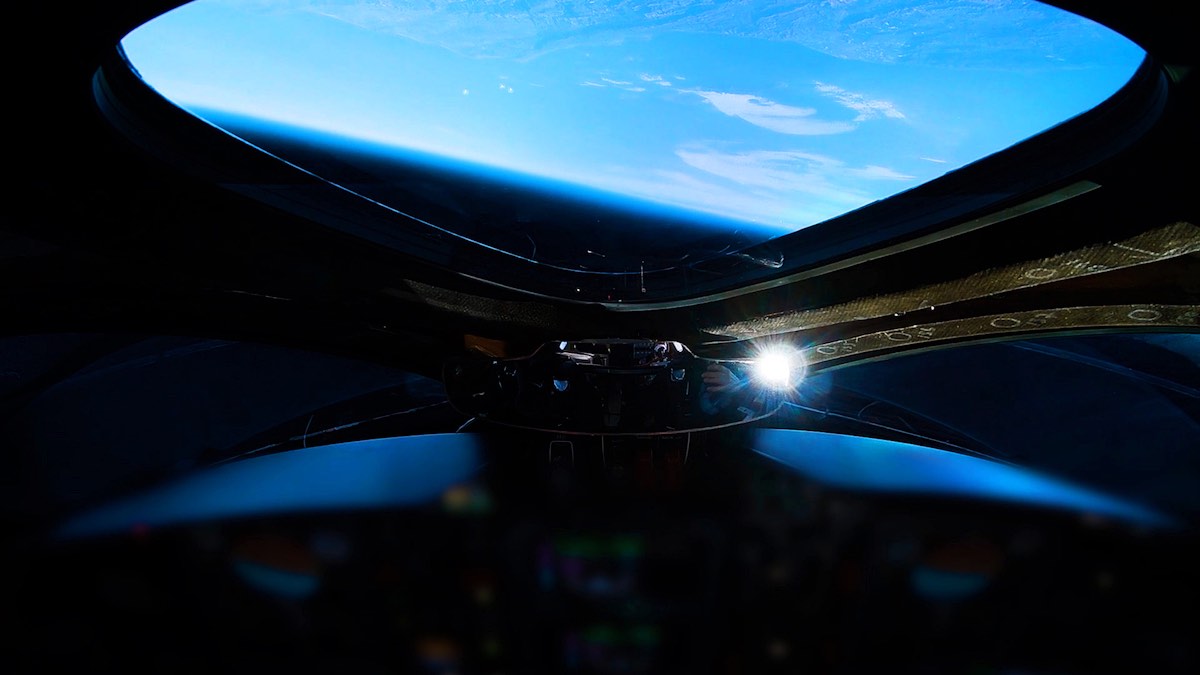
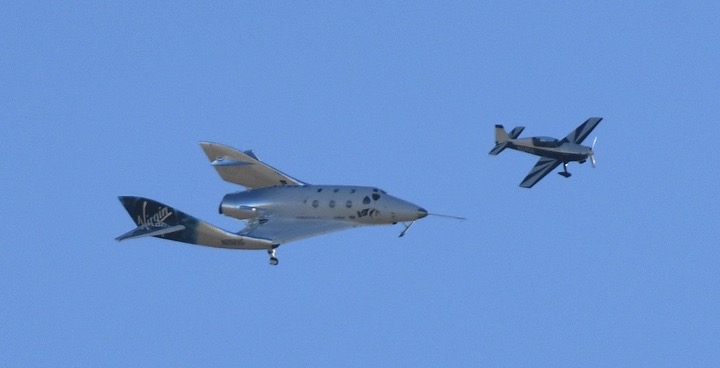
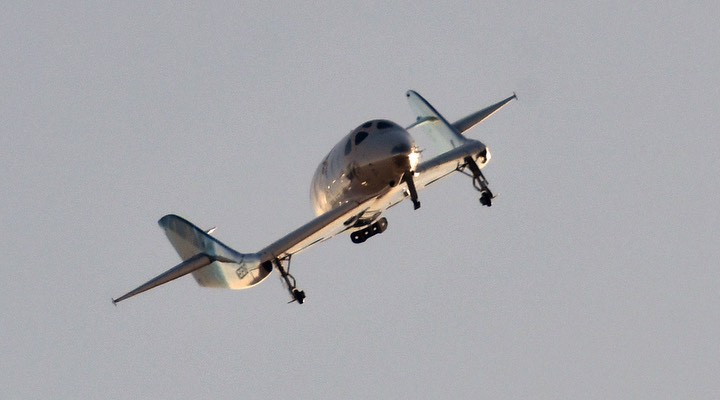
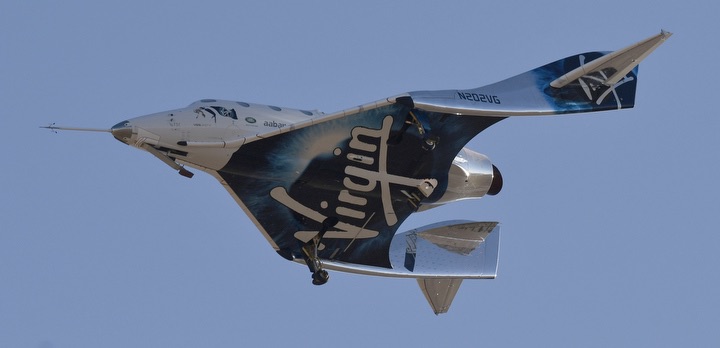
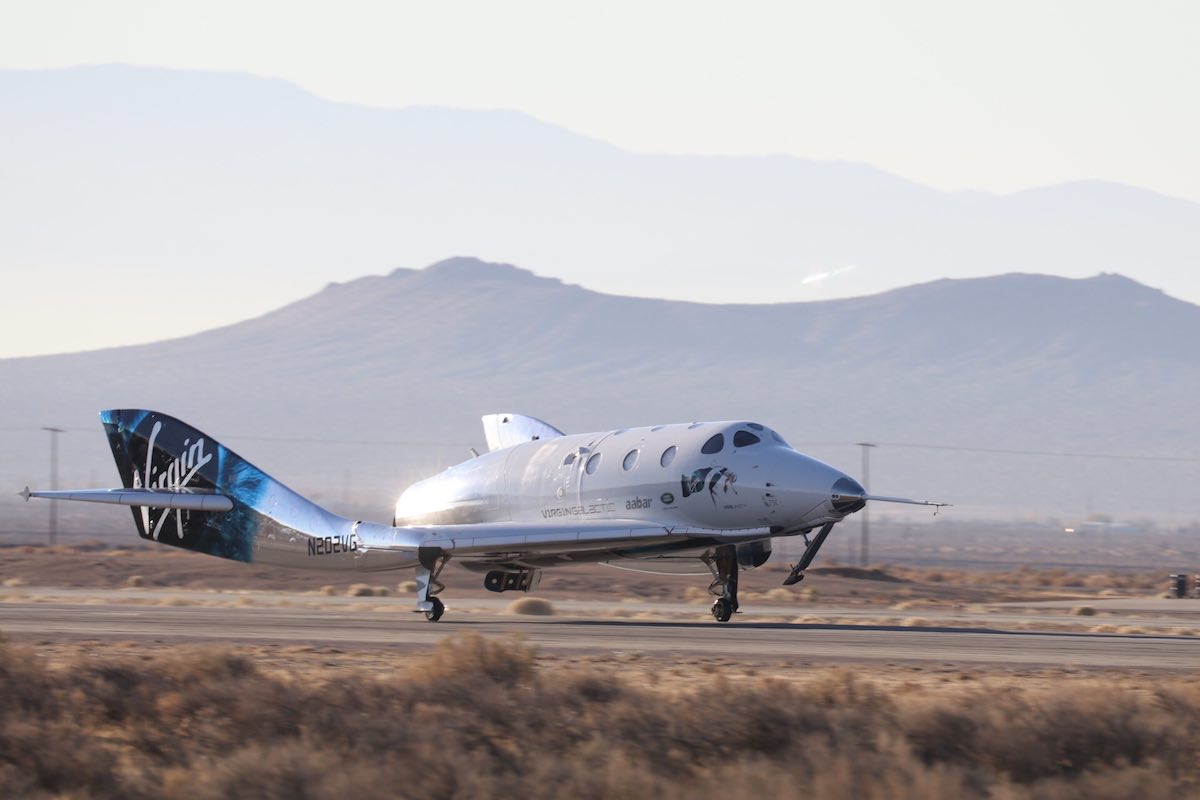
Check out video highlights released by Virgin Galactic of Thursday’s test flight by the company’s SpaceShipTwo rocket plane to an altitude of 271,000 feet (82.7 kilometers), above a boundary recognized by the U.S. government as the edge of space.
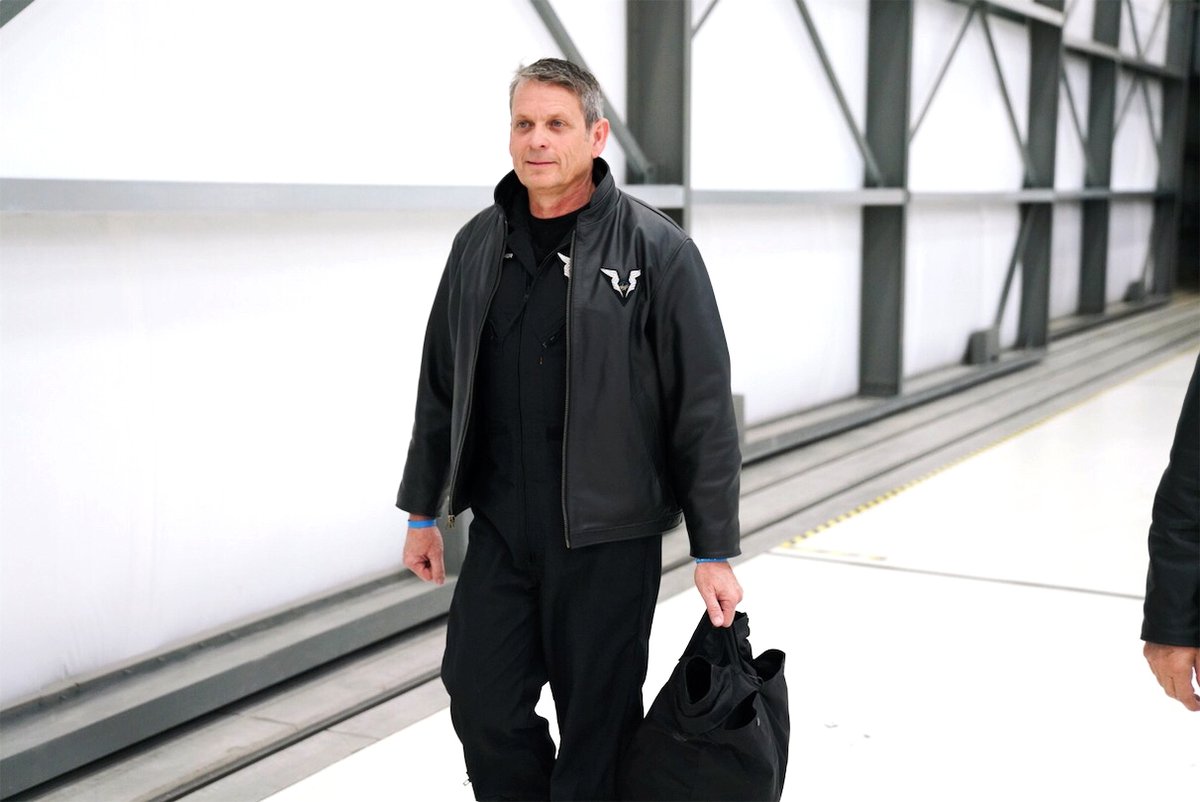
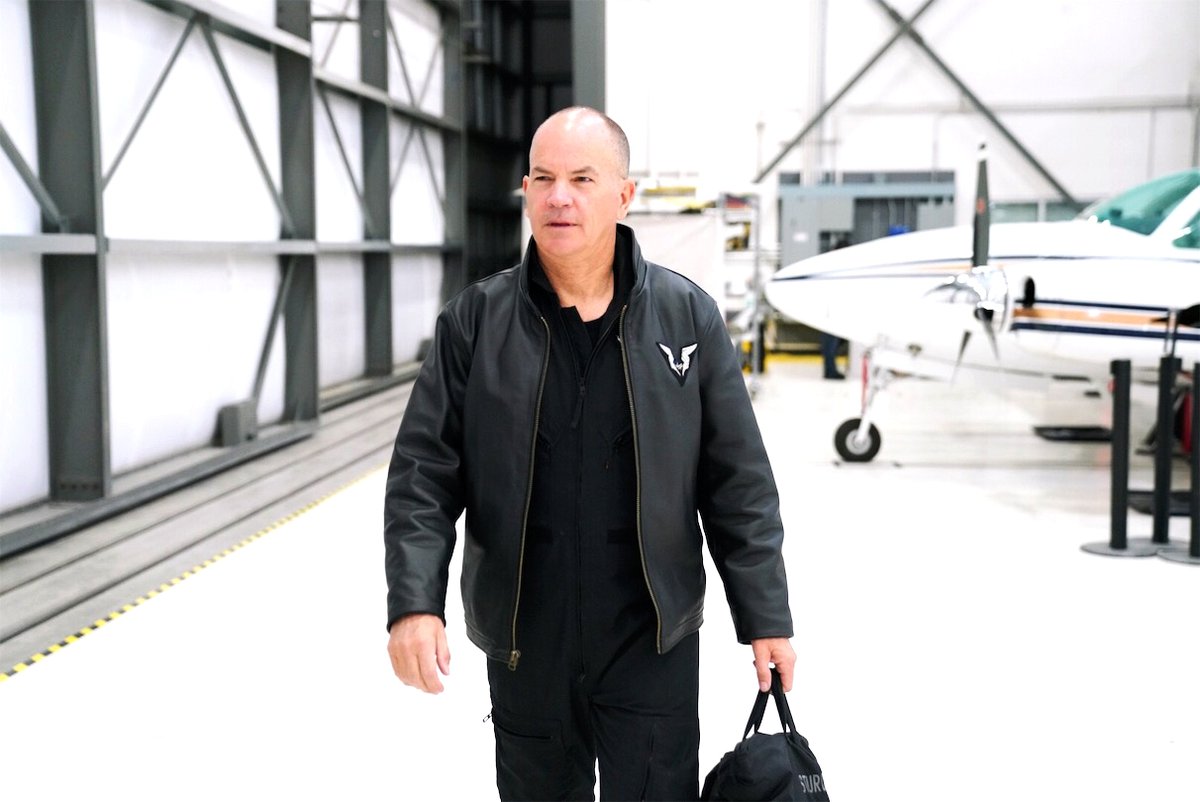
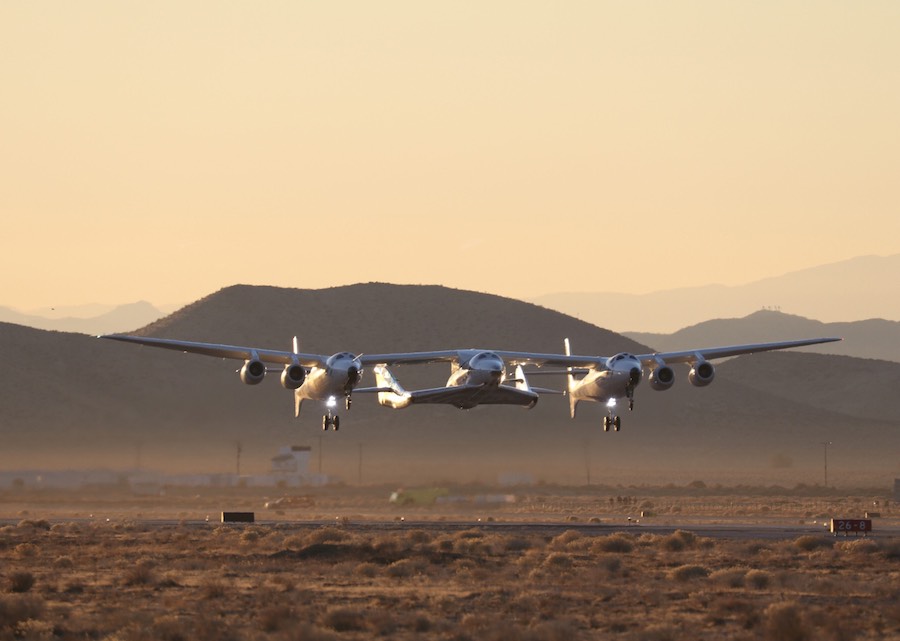
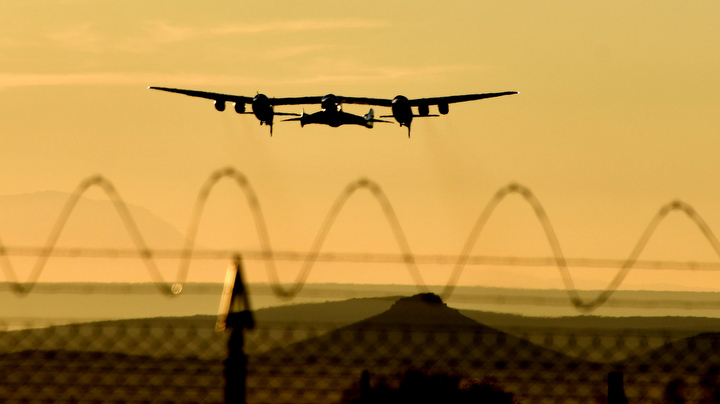
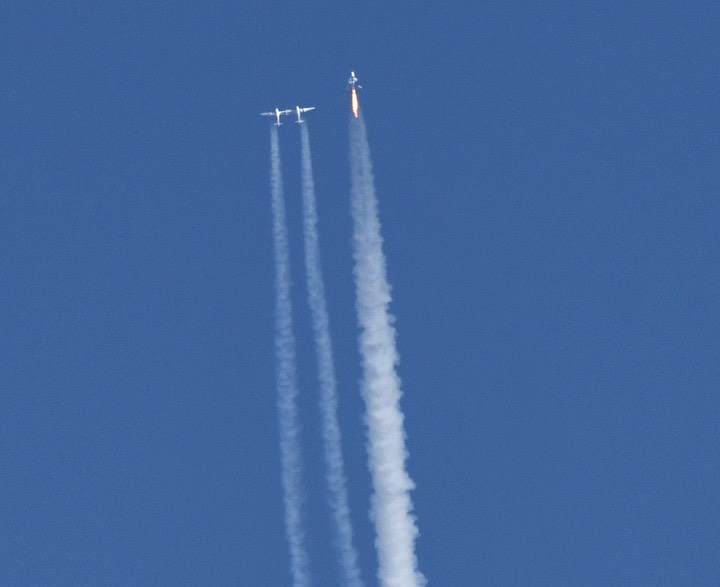
The air-dropped rocket plane took off from Mojave Air and Space Port in California under a four-engine carrier jet shortly after 7 a.m. PST (10 a.m. EST; 1500 GMT) Thursday and climbed to an altitude of 43,000 feet (13,100 meters). Piloted by Mark “Forger” Stucky and Rick “C.J.” Sturckow, the SpaceShipTwo vehicle released from its mothership and fired a hybrid rocket motor nearly 60 seconds to accelerate to Mach 2.9 — nearly three times the speed of sound — and soar to an altitude of 51 miles.
It was the first time Virgin Galactic’s SpaceShipTwo, intended to carry space tourists on brief hops to the edge of space, has flown above the 50-mile mark, a threshold recognized by the U.S. Air Force, NASA and the Federal Aviation Administration as the boundary of space.
Read our full story for details on Thursday’s flight, and what it means for Virgin Galactic and the commercial space industry.
Additional video and photo highlights of Thursday’s flight are posted below.
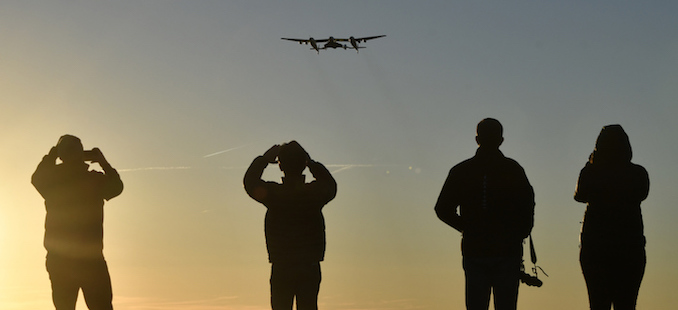
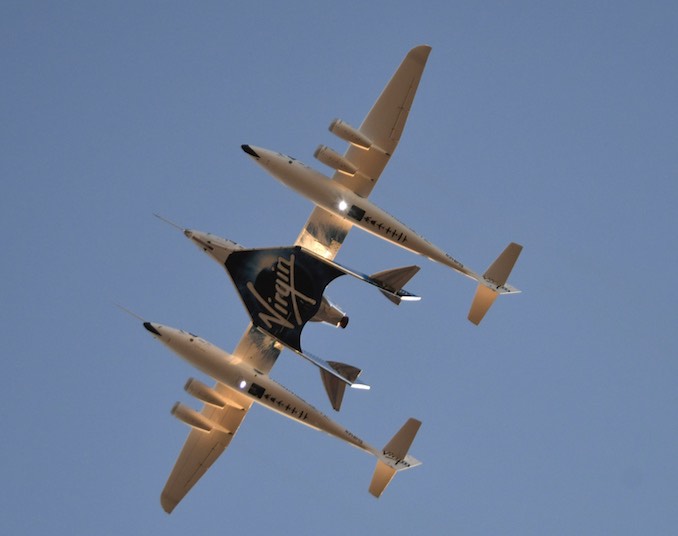
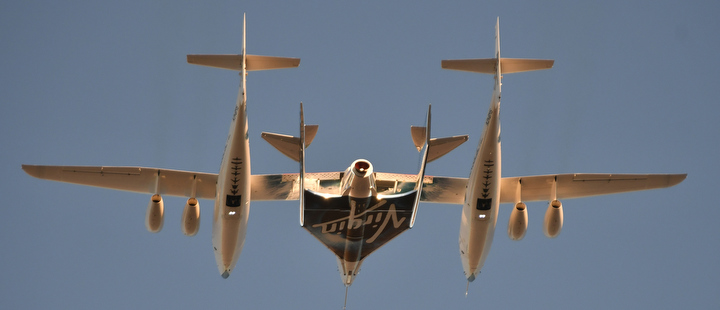
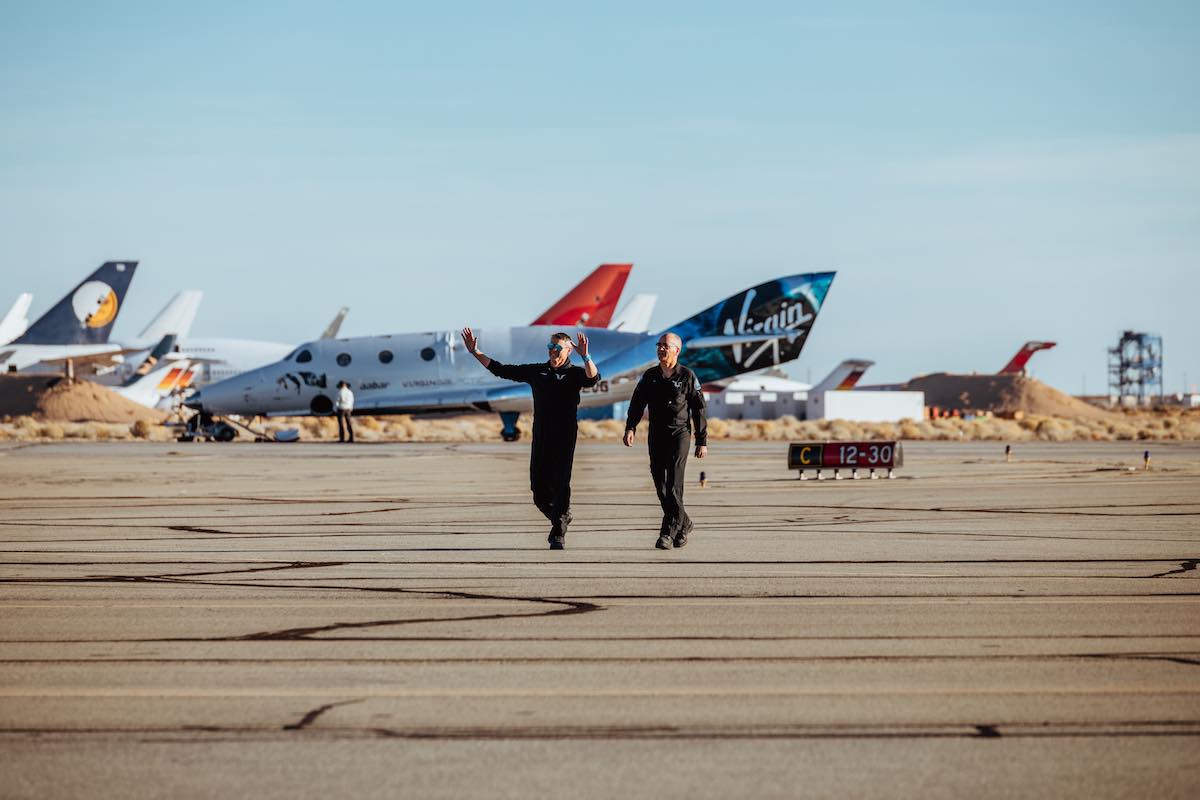
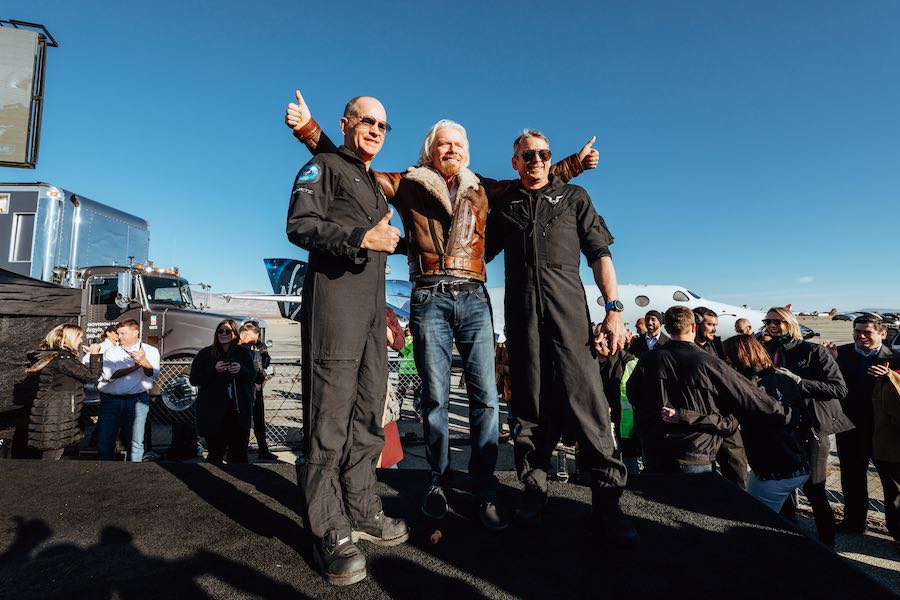
Virgin Galactic test pilot Mark Stucky walks out of the hangar at Mojave Air and Space Port ahead of Thursday’s flight. Credit: Virgin GalacticVirgin Galactic test pilot Rick “C.J.” Sturckow prepares for Thursday’s flight. Credit: Virgin GalacticVirgin Galactic’s carrier aircraft, VMS Eve, takes off from Mojave Air and Space Port, California, with the VSS Unity SpaceShipTwo vehicle underneath. Credit: Virgin GalacticCredit: Gene Blevins/LA Daily News/SCNGCredit: Gene Blevins/LA Daily News/SCNGCredit: Gene Blevins/LA Daily News/SCNGCredit: Gene Blevins/LA Daily News/SCNGCredit: Gene Blevins/LA Daily News/SCNGVirgin Galactic’s SpaceShipTwo rocket plane fires toward space Thursday. Credit: MarsScientific.com & Trumbull Studios / Virgin GalacticThis view of the Sierra Nevada mountain range was captured by a camera on-board SpaceShipTwo. Credit: Virgin GalacticA view from the cockpit of VSS Unity on Thursday’s flight, showing part of Southern California’s Pacific coastline. Credit: Virgin GalacticVSS Unity glides back to Mojave Air and Space Port. Credit: Gene Blevins/LA Daily News/SCNGVirgin Galactic’s VSS Unity rocket plane glides to a landing at Mojave Air and Space Port to conclude Thursday’s test flight. Credit: Gene Blevins/LA Daily News/SCNGVSS Unity glides back to Mojave Air and Space Port. Credit: Gene Blevins/LA Daily News/SCNGVSS Unity glides back to Mojave Air and Space Port. Credit: Virgin GalacticVirgin Galactic’s first two astronauts walk back to greet Richard Branson. Credit: Virgin GalacticRichard Branson and Virgin Galactic’s first two astronauts. Credit: Virgin Galactic
When SpaceX’s Falcon Heavy rocket finally takes off for the first time, a debut now scheduled this fall, there’s a good chance the commercial heavy-lifter will falter short of reaching orbit, company founder and chief designer Elon Musk said last week.
Five months after a frightening launch abort, cosmonaut Alexey Ovchinin and NASA flight engineer Tyler “Nick” Hague, along with first time flier Christina Koch, are set for liftoff Thursday on a six-hour flight to the International Space Station, boosting the lab’s crew back to six.
SpaceX conducted a final Launch Readiness Review on Monday ahead of the scheduled liftoff Wednesday of NASA astronauts Doug Hurley and Bob Behnken on a test flight of the Crew Dragon spacecraft to the International Space Station. Launch remains set for 4:33:33 p.m. EDT (2033:33 GMT) Wednesday, weather permitting.