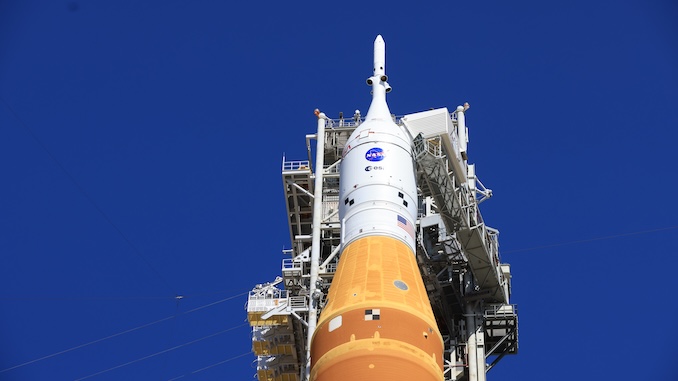
Engineers ran into problems repressurizing the Artemis 2 moon rocket’s upper stage helium tanks overnight Friday, a problem that will require rolling the huge rocket off the launch pad and back to its processing hangar for troubleshooting. The work will push the already delayed mission from March to at least early April, officials said Saturday.
Pressurized helium is used to push propellants to rocket engines for ignition and to purge various fuel lines to clear them out before propellants flow. It’s not yet known what might be preventing helium to flow back into the SLS rocket’s upper stage following a successful countdown rehearsal test that ended Thursday.
“Regardless of the potential fault, accessing and remediating any of these issues can only be performed in the VAB (Vehicle Assembly Building),” NASA Administrator Jared Isaacman said in a post on the social media platform X. “We will begin preparations for rollback, and this will take the March launch window out of consideration.”
As an update to my earlier post.
– The ICPS helium bottles are used to purge the engines, as well as for LH2 and LOX tank pressurization. The systems did work correctly during WDR1 and WDR2.
– Last evening, the team was unable to get helium flow through the vehicle. This… https://t.co/Qte3nEXwQb
— NASA Administrator Jared Isaacman (@NASAAdmin) February 21, 2026
The Artemis 2 mission aims to send four astronauts – Reid Wiseman, Victor Glover, Christina Koch and Canadian astronaut Jeremy Hansen – on a flight around the far side of the moon and back to thoroughly test the agency’s Orion deep space capsule to help clear the way for a lunar landing mission, Artemis 3, in 2028.
Because of the ever-changing positions of the Earth and moon, and associated changes in lighting and other factors, only a handful of launch opportunities are available each month that meet the Artemis 2 mission requirements. The current launch period ends on March 11. The available launch dates next month are April 1, 3, 4, 5 and 6.
Wiseman, Glover, Koch and Hansen originally hoped to launch early this month, but hydrogen leaks detected during an initial “wet dress countdown” rehearsal ultimately pushed the flight to March.
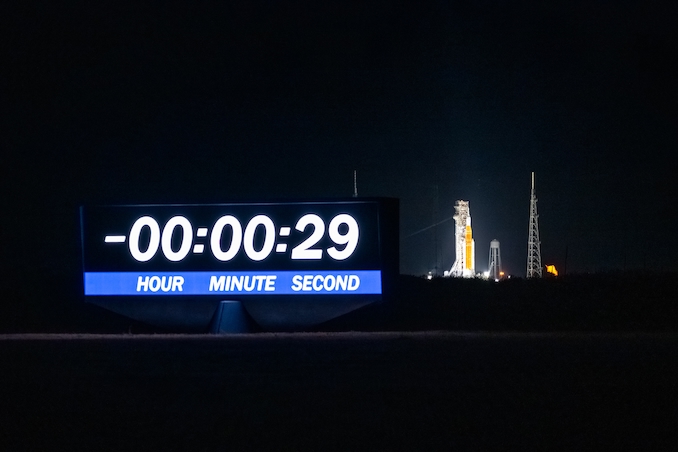
NASA completed a second fueling test and countdown Thursday, loading the Space Launch System rocket with more than 750,000 gallons of liquid oxygen and hydrogen fuel while working through the steps that will be needed to actually launch the huge rocket on the long-awaited mission.
The test went well, there were no fuel leaks like the ones that derailed plans for a launch earlier this month. Managers said Friday the team would press ahead for a launch attempt on March 6 to send Wiseman and his crewmates to the moon.
Hoping for the best, the astronauts went into pre-flight medical quarantine at the Johnson Space Center Friday evening and planned to fly to the Kennedy Space Center on March 1 to prepare for launch. They now will leave quarantine to await developments.
“I understand people are disappointed by this development,” Isaacman said. “That disappointment is felt most by the team at NASA, who have been working tirelessly to prepare for this great endeavor. During the 1960s, when NASA achieved what most thought was impossible, and what has never been repeated since, there were many setbacks.
“There are many differences between the 1960s and today, and expectations should rightfully be high after the time and expense invested in this program.
“I will say again, the President created Artemis as a program that will far surpass what America achieved during Apollo. We will return in the years ahead, we will build a Moon base, and undertake what should be continuous missions to and from the lunar environment. Where we begin with this architecture and flight rate is not where it will end.”