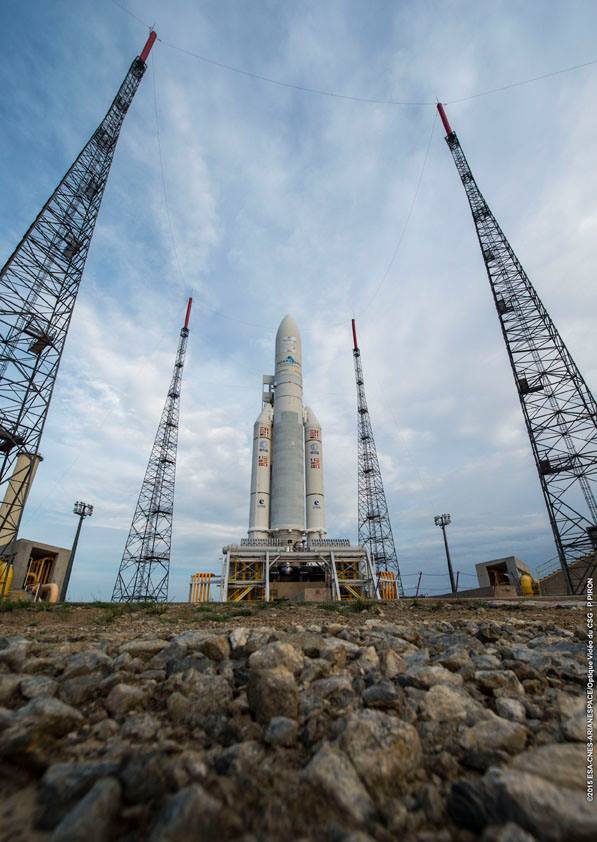
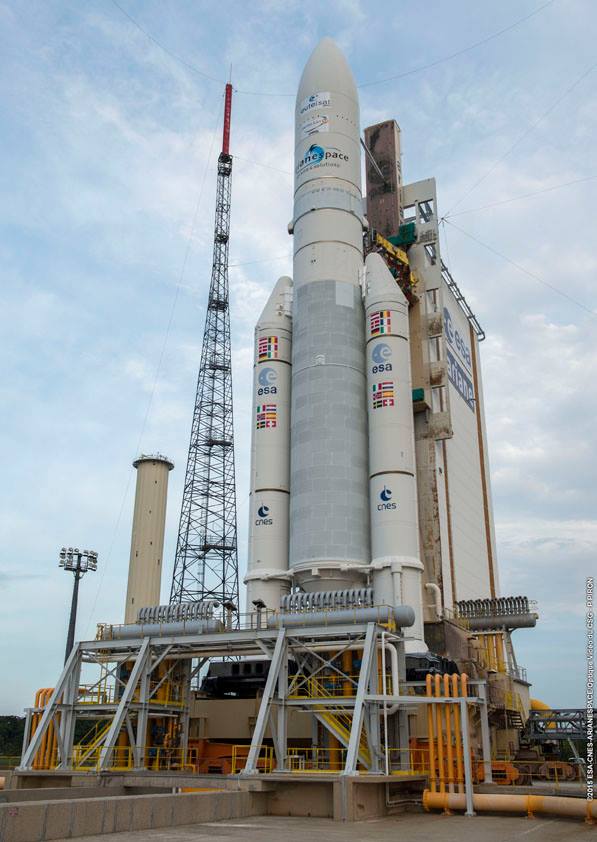
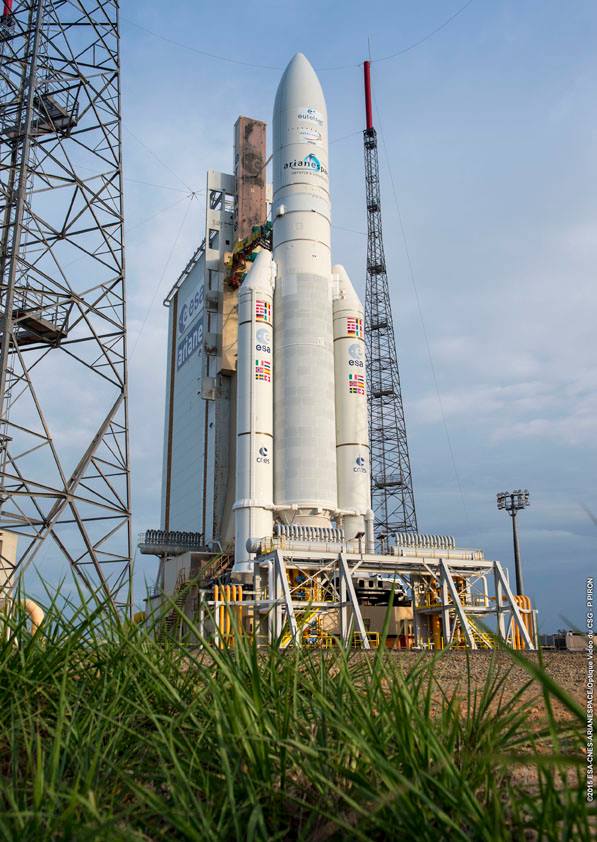
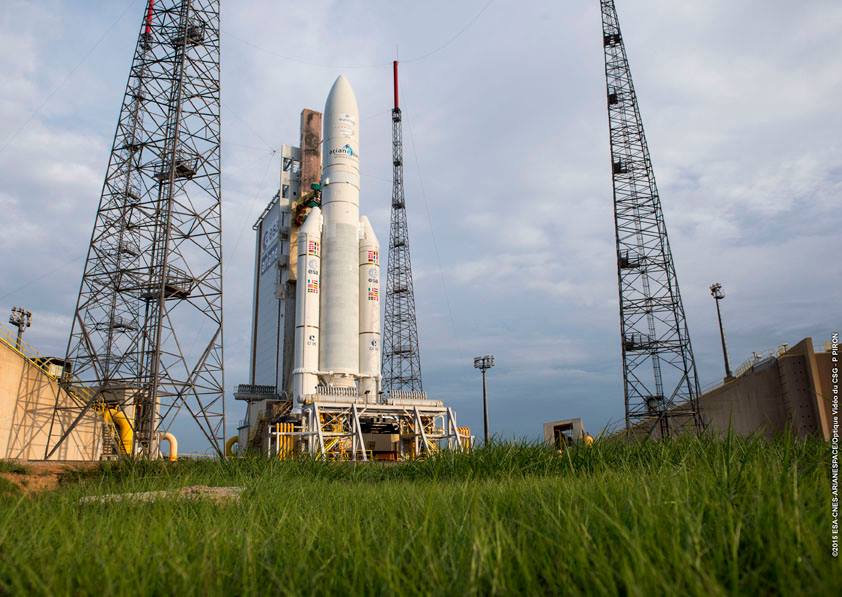
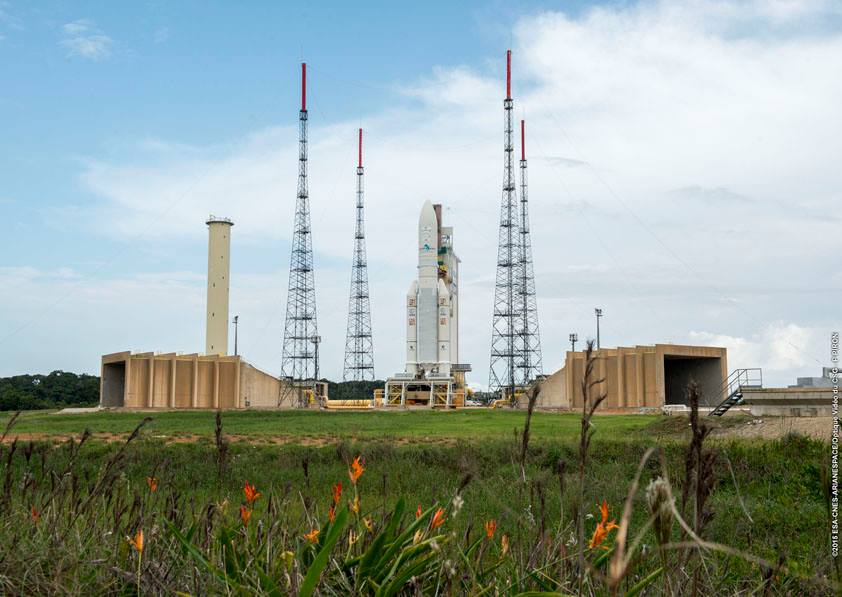
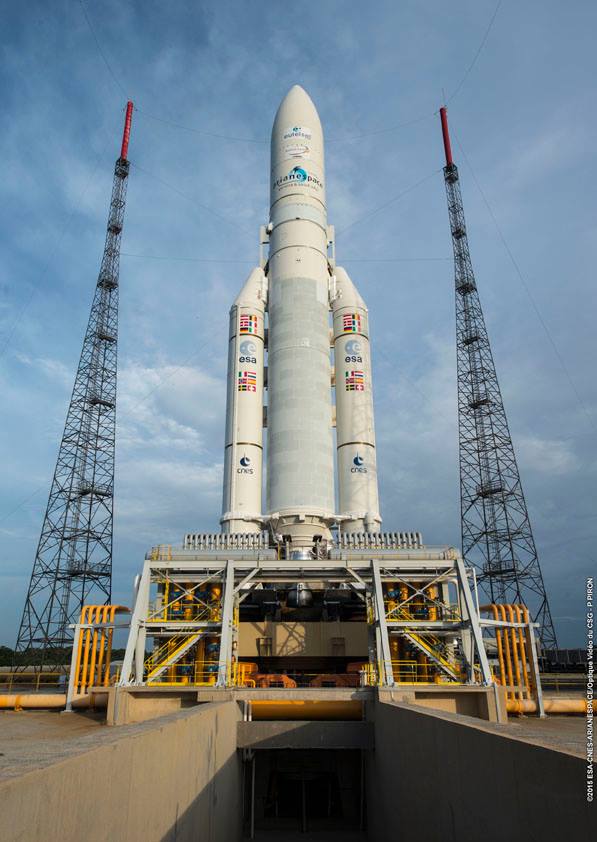
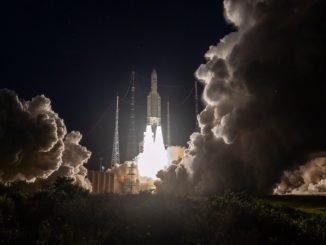
Check out photos of Europe’s Ariane 5 launcher in the starting blocks at its tropical spaceport awaiting liftoff with two commercial television relay stations.
The launch from French Guiana is set for Thursday at 2010 GMT (4:10 p.m. EDT) carrying satellites into orbit for Eutelsat and Intelsat. It will be the 81st flight of an Ariane 5 rocket dating back to 1996.
Photo credit: Credit: ESA/CNES/Arianespace – Optique Video du CSG – P. PironPhoto credit: Credit: ESA/CNES/Arianespace – Optique Video du CSG – P. PironPhoto credit: Credit: ESA/CNES/Arianespace – Optique Video du CSG – P. PironPhoto credit: Credit: ESA/CNES/Arianespace – Optique Video du CSG – P. PironPhoto credit: Credit: ESA/CNES/Arianespace – Optique Video du CSG – P. PironPhoto credit: Credit: ESA/CNES/Arianespace – Optique Video du CSG – P. Piron
Two direct-to-home broadcasting satellites have launched from French Guiana aboard an Ariane 5 rocket. Liftoff with DirecTV 15 and Sky Mexico 1 occurred at 2116 GMT (5:16 p.m. EDT) Wednesday.
European engineers test-fired the world’s most powerful present-day single-segment solid rocket booster Monday in French Guiana, clearing a major development hurdle for the Vega-C and Ariane 6 launchers set for debuts in 2019 and 2020.
Egypt’s first military communications satellite and a powerhouse spacecraft to beam Internet signals to airline passengers and maritime vessels across Europe and the Middle East rocketed into orbit Tuesday on the 250th flight of an Ariane launcher.