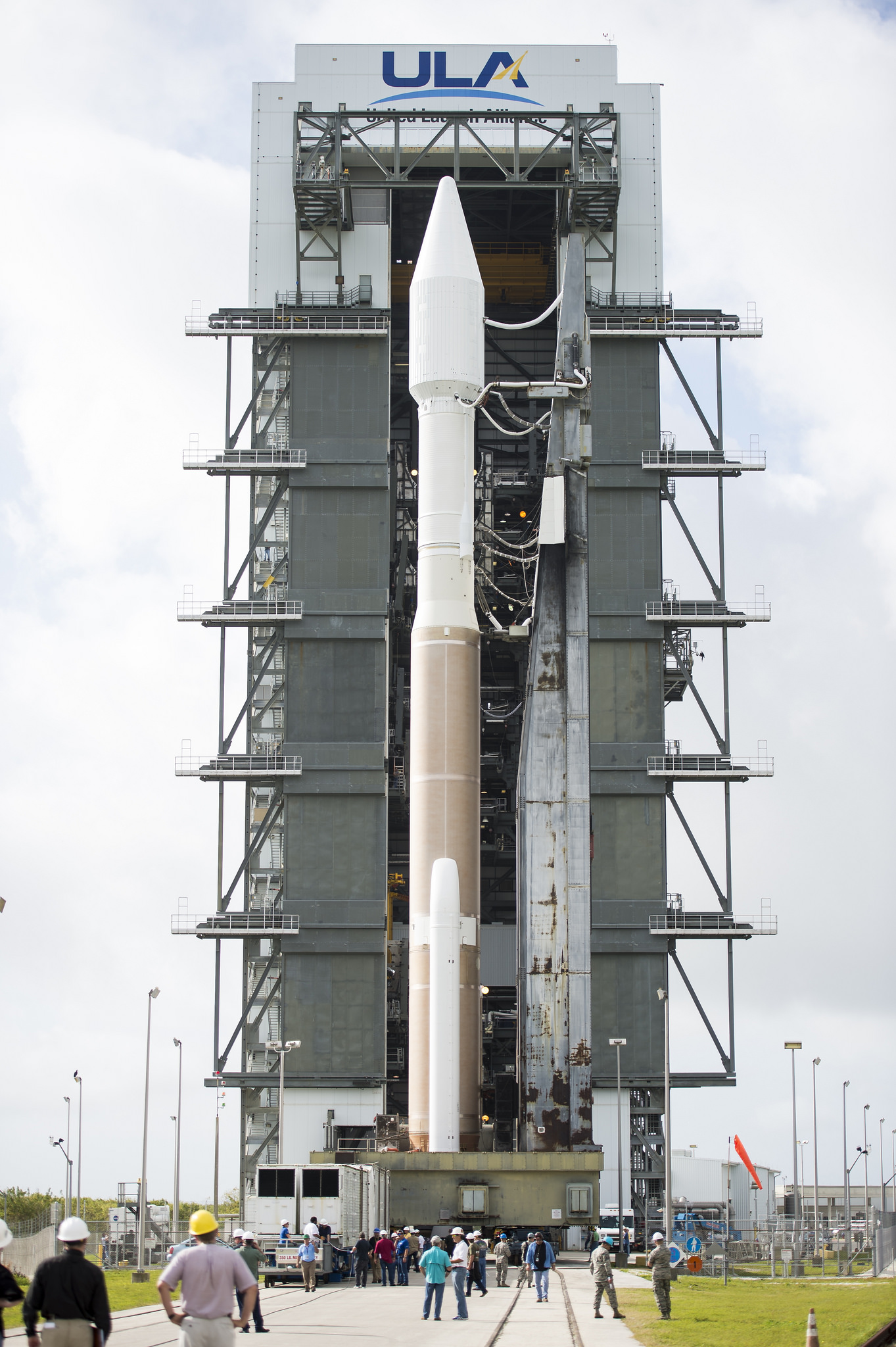
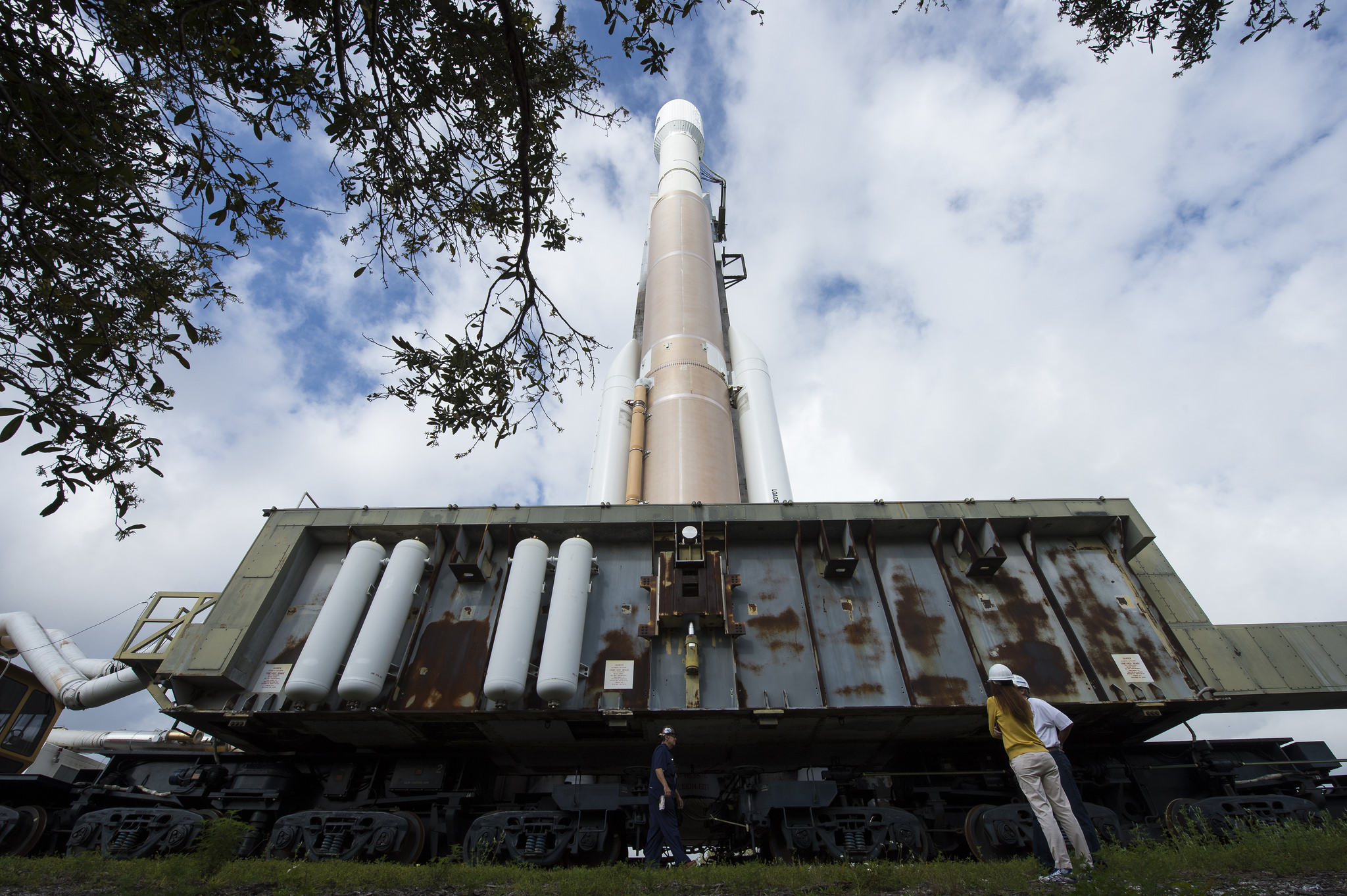
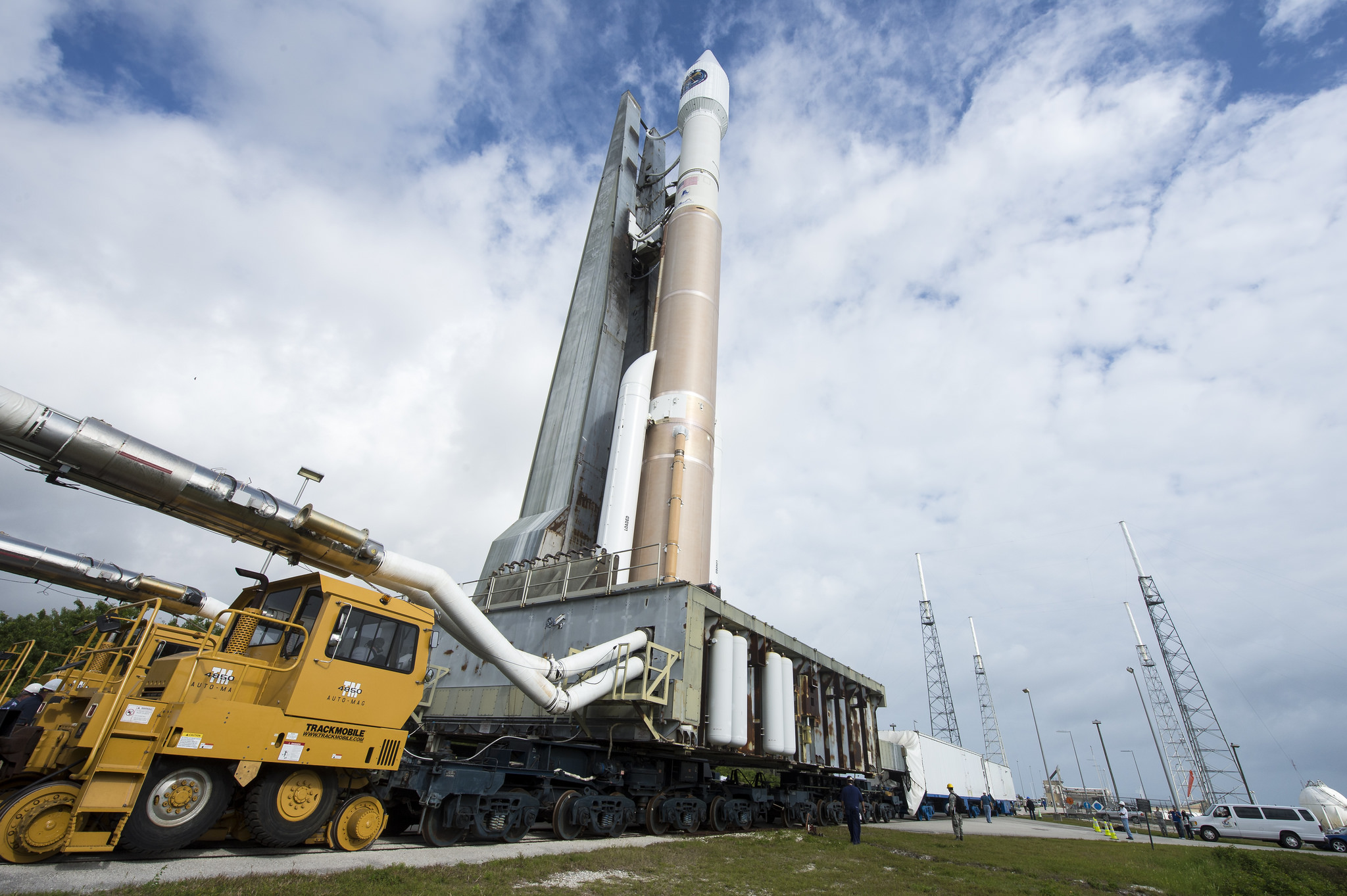
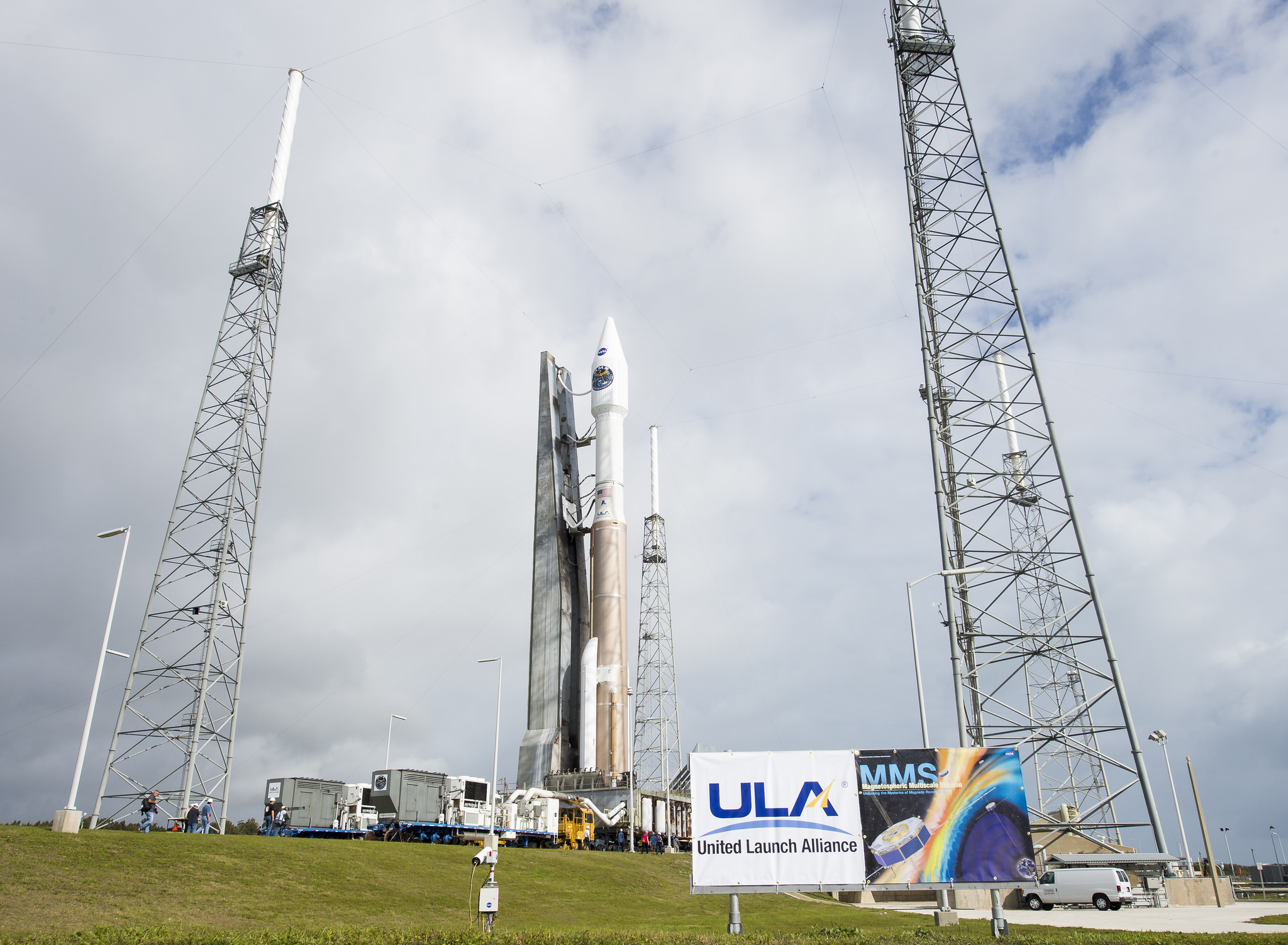
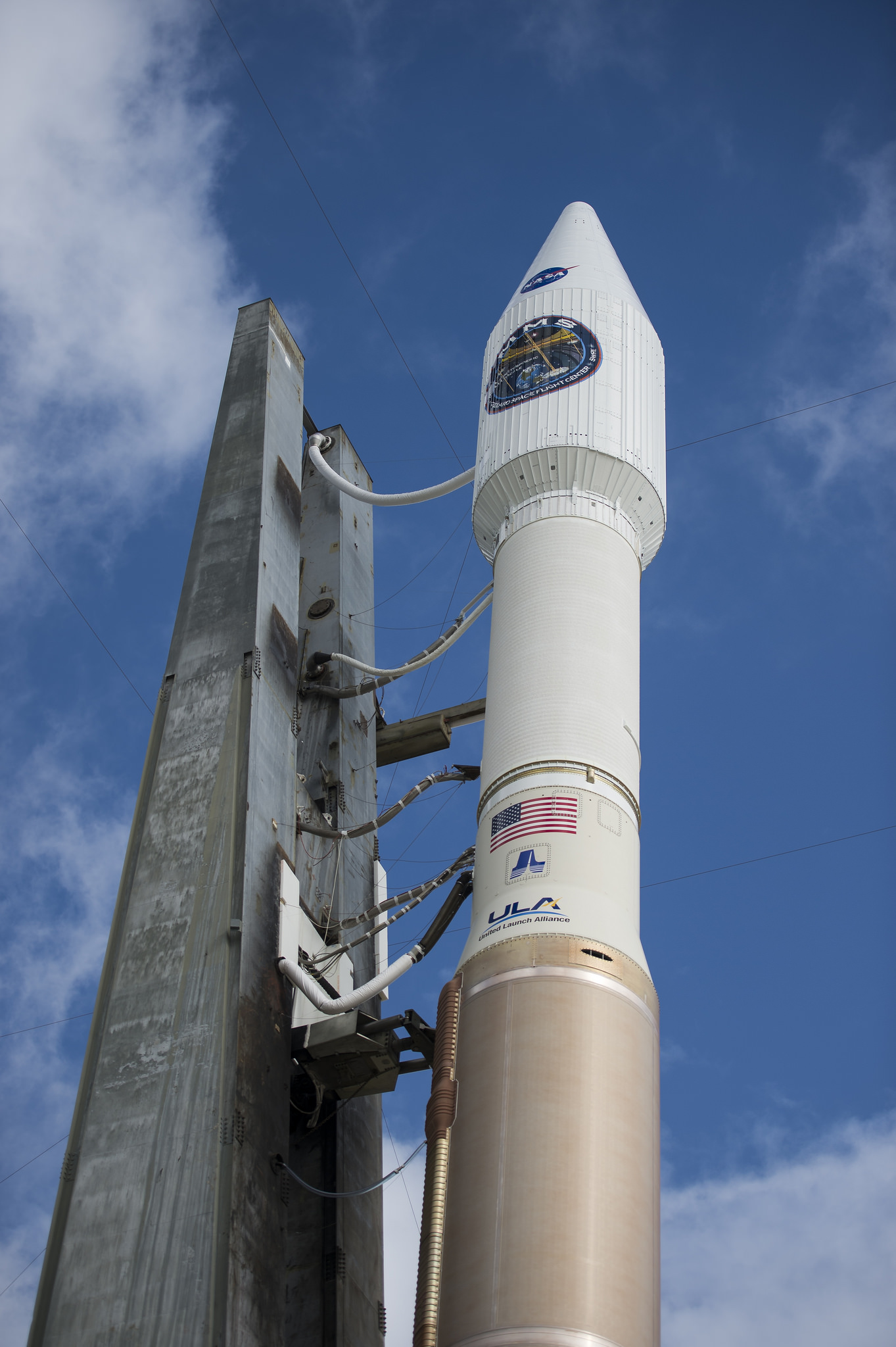
The United Launch Alliance Atlas 5 rocket was rolled out to the launch pad at Cape Canaveral’s Complex 41 on Wednesday morning, emerging from the Vertical Integration Facility assembly hangar where the two-stage rocket was put together.
Credit:
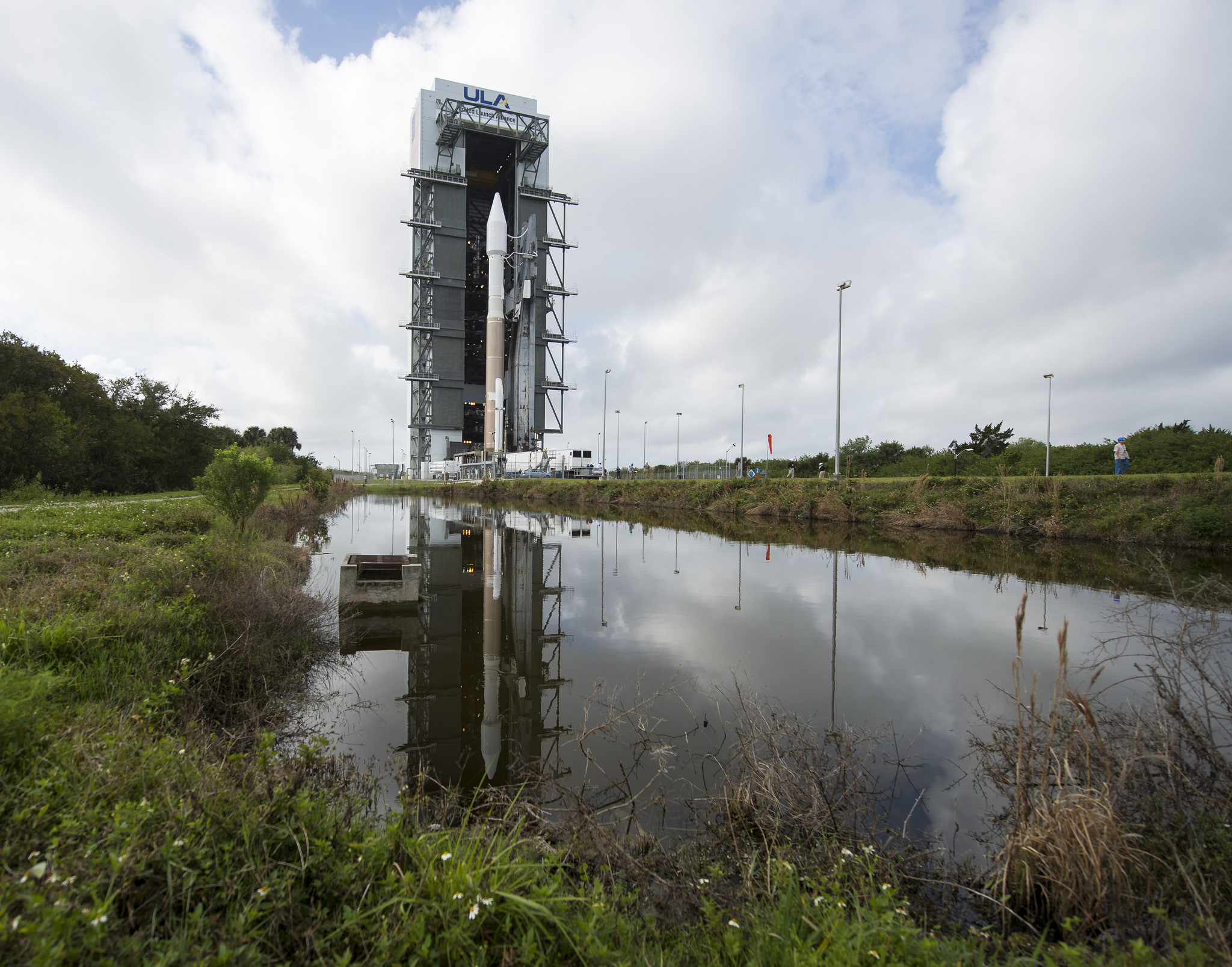
The United Launch Alliance Atlas 5 rocket was rolled out to the launch pad at Cape Canaveral’s Complex 41 on Wednesday morning, emerging from the Vertical Integration Facility assembly hangar where the two-stage rocket was put together.
Credit: NASA/Aubrey Gemignani
NASA officials said Tuesday the weekend test-firing of the Space Launch System moon rocket’s core stage was cut short by an out-of-limits parameter in a hydraulic system for gimbaling, or vectoring, one of its engines. NASA Administrator Jim Bridenstine told Spaceflight Now engineers are “feeling pretty good” about the data gathered during the shortened test-firing, and managers may decide to ship the SLS core stage to the Kennedy Space Center for launch preparations without re-attempting the planned eight-minute hot fire.
A flight demonstration of an inflatable heat shield that could be used to retrieve reusable engines from United Launch Alliance’s next-generation Vulcan rocket, and for the delivery of heavier cargo to the surface of Mars, is planned for launch in late 2021 or early 2022 as a piggyback payload on an Atlas 5 rocket with a NOAA weather satellite.
© 1999-2026 Spaceflight Now Inc