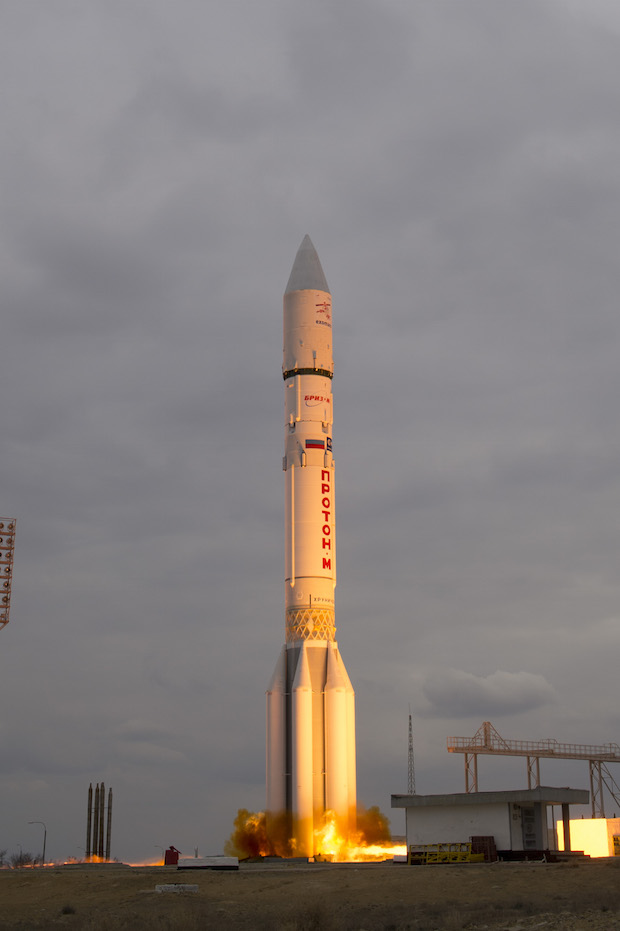
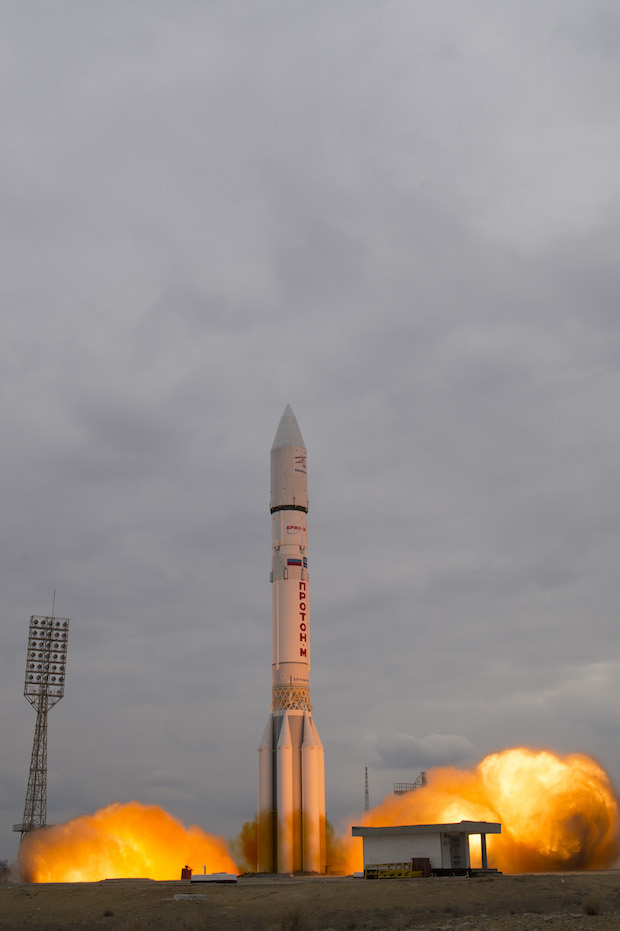
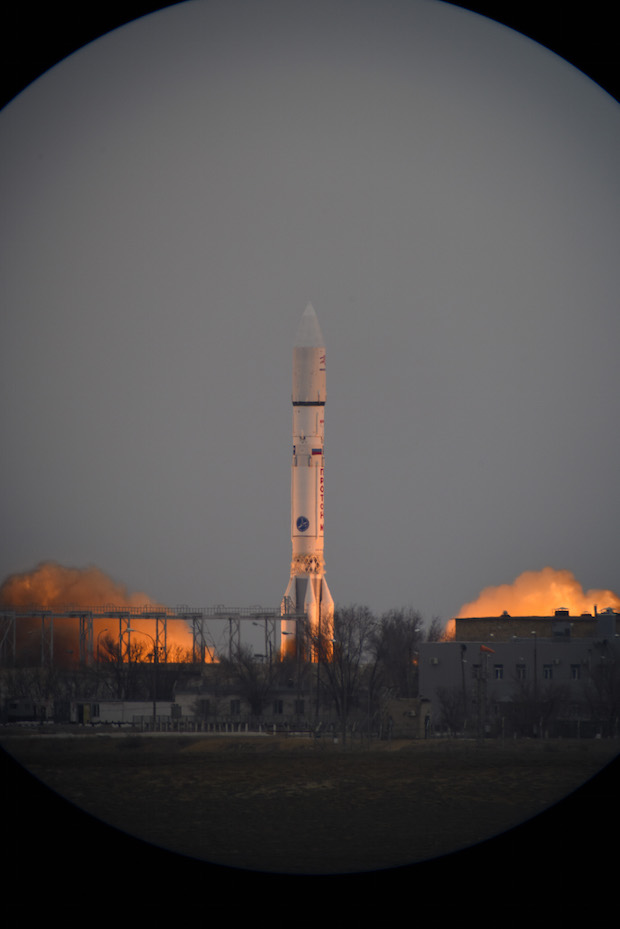
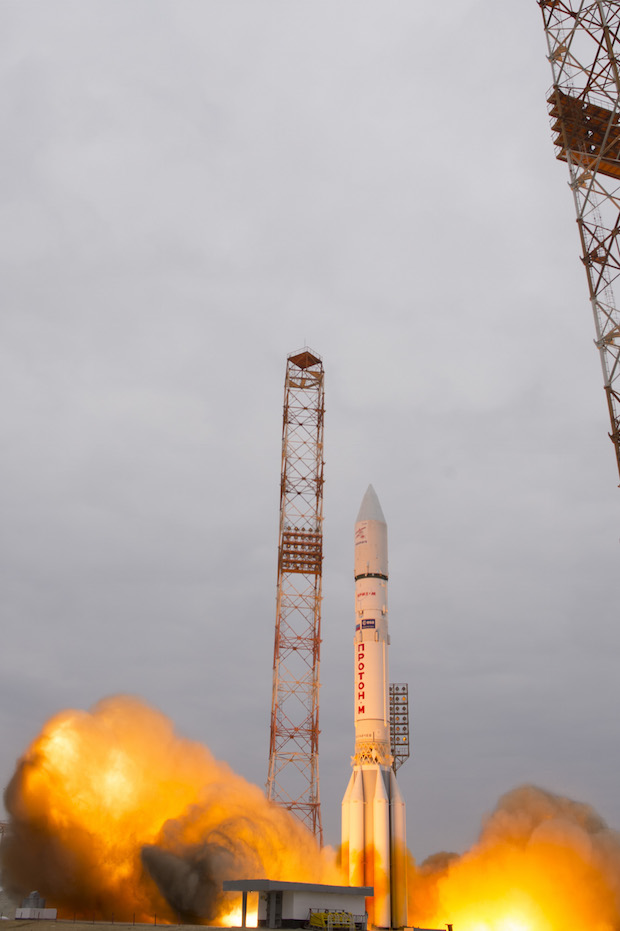
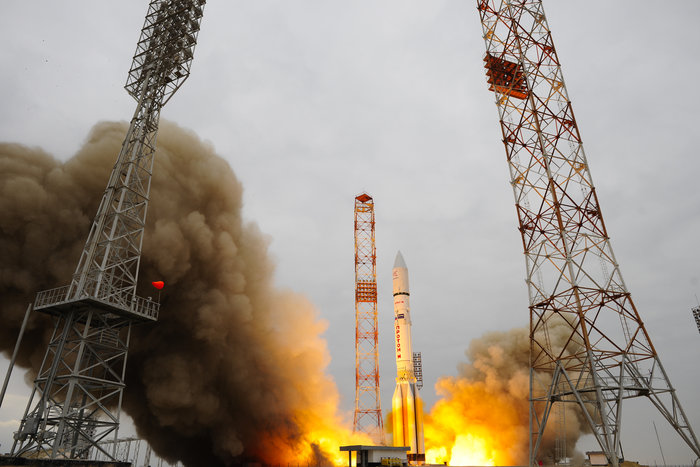
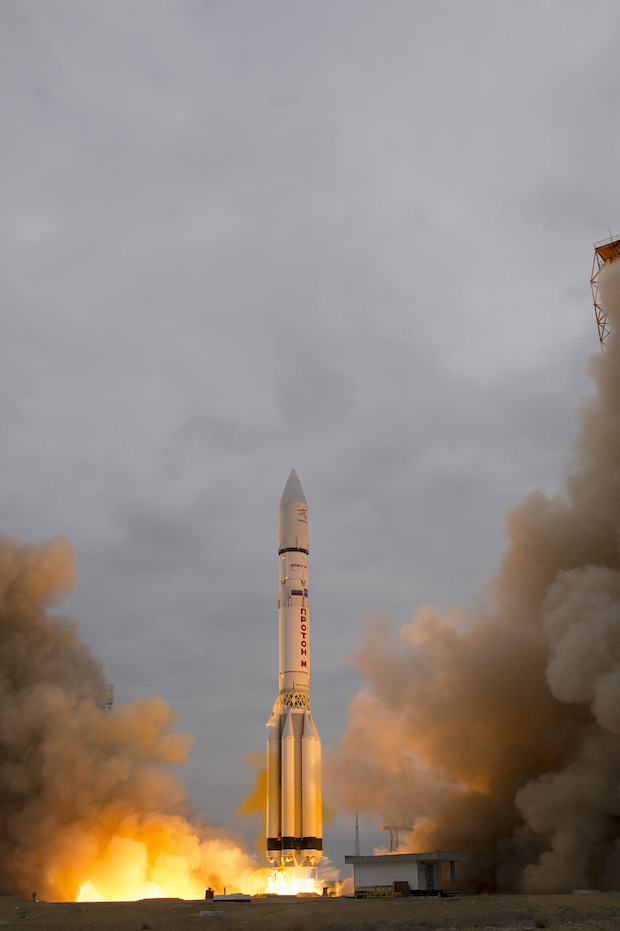
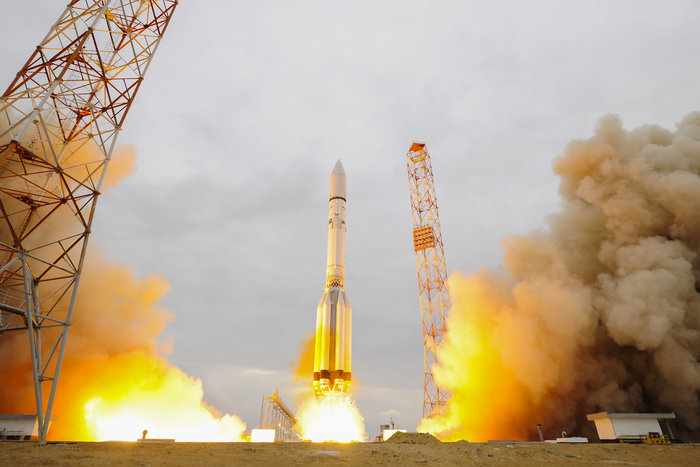
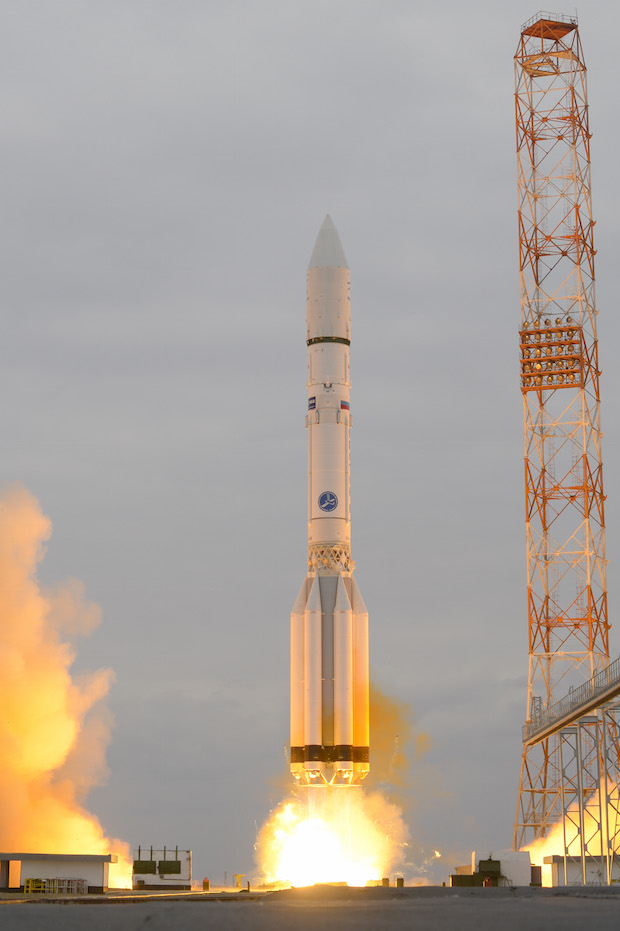
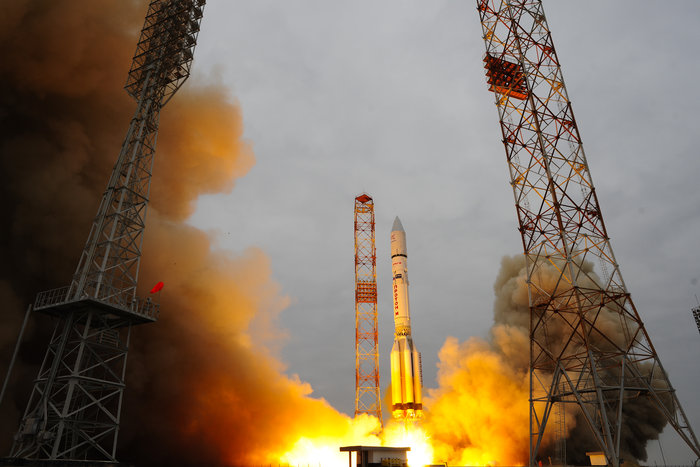
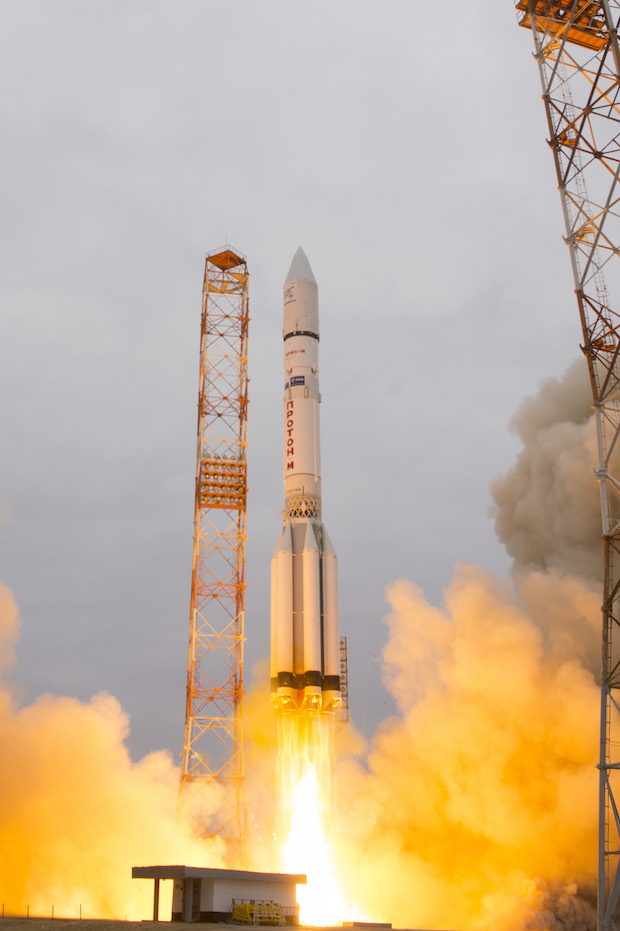
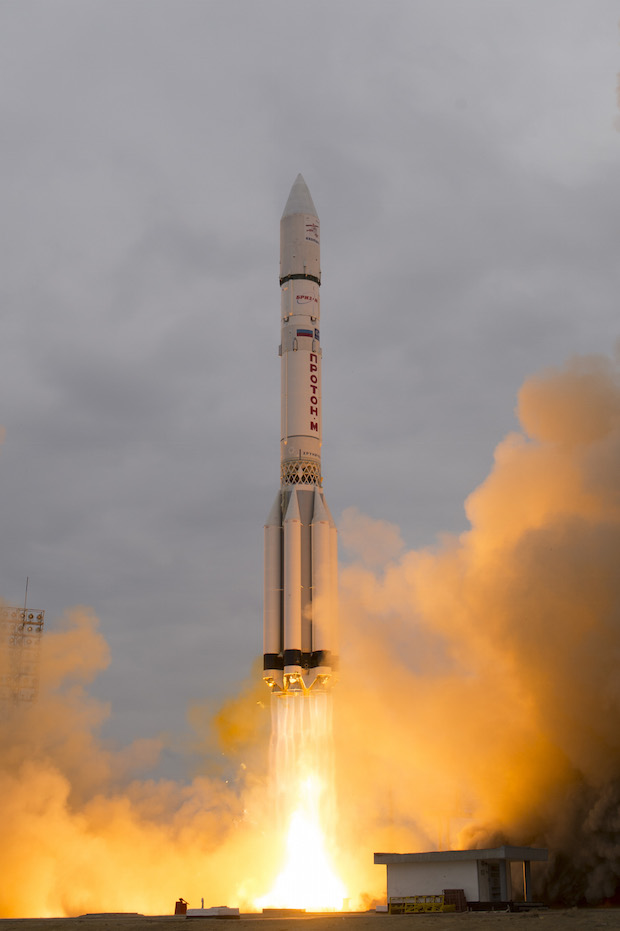
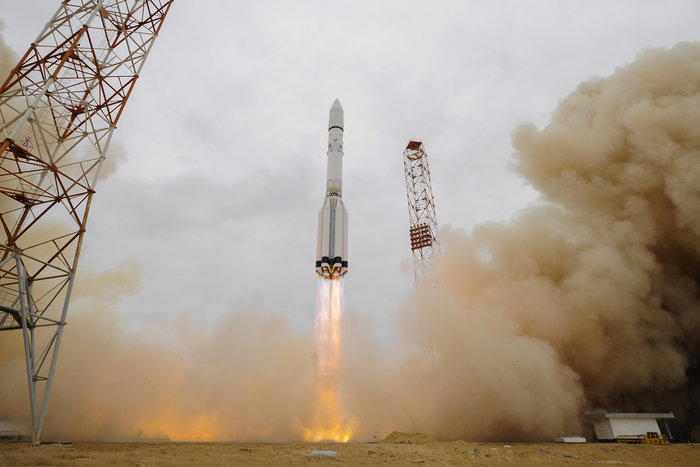
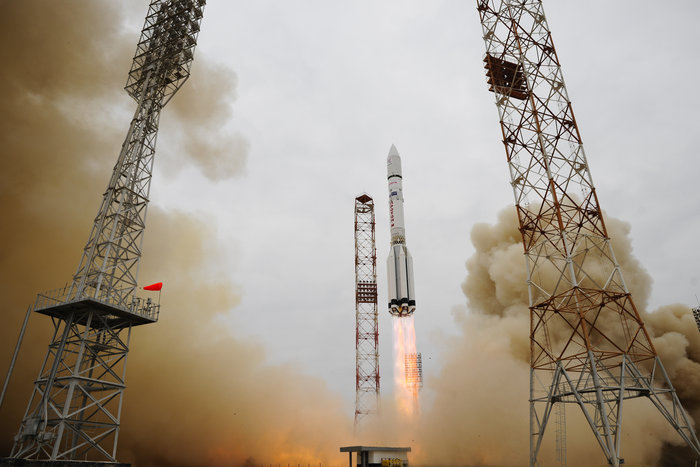
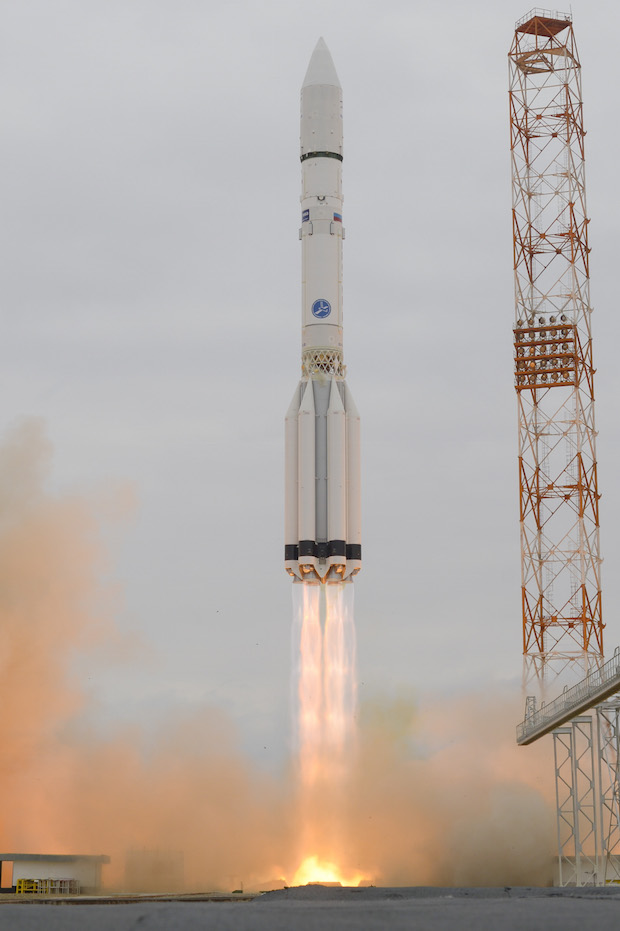
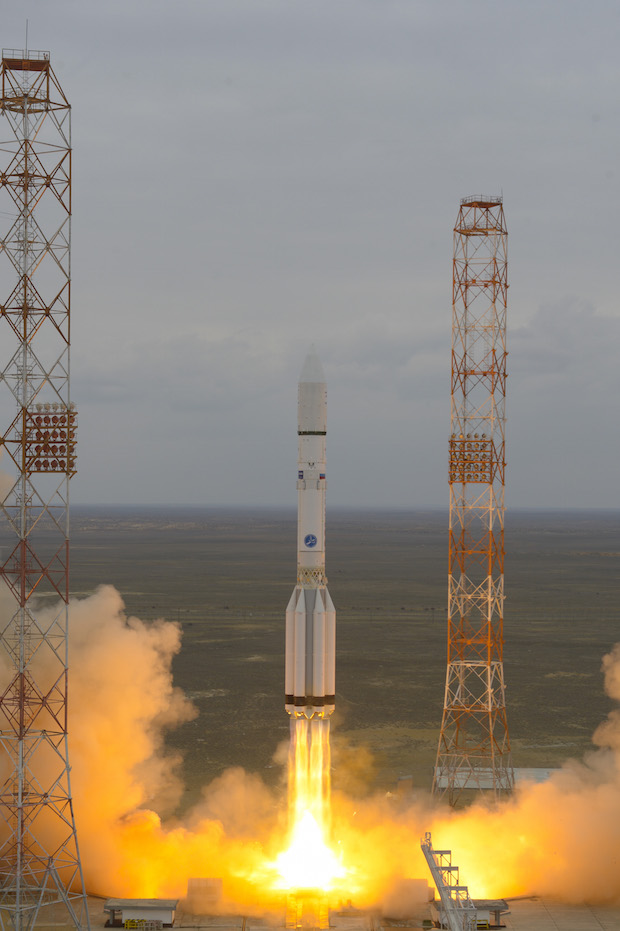
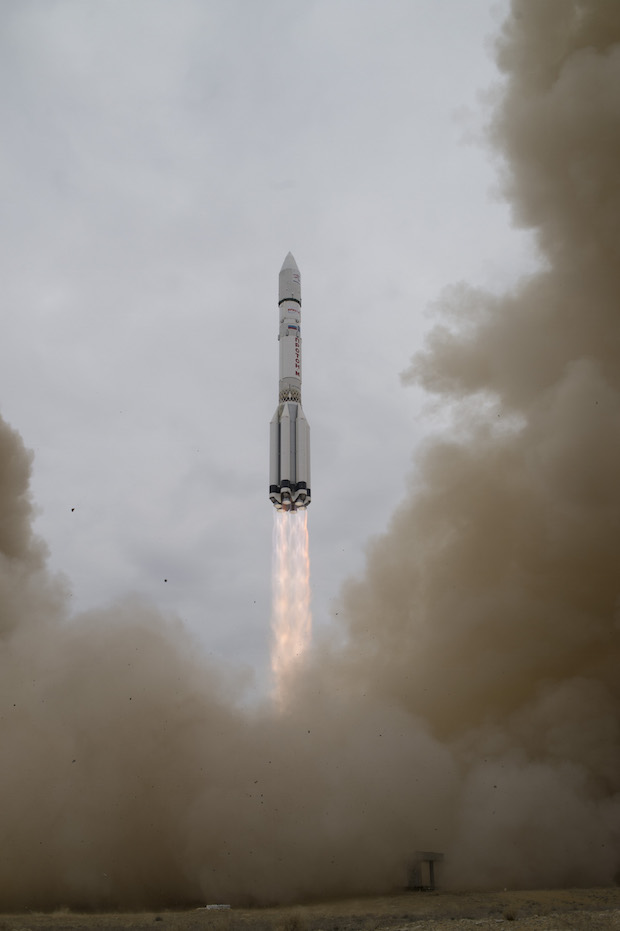
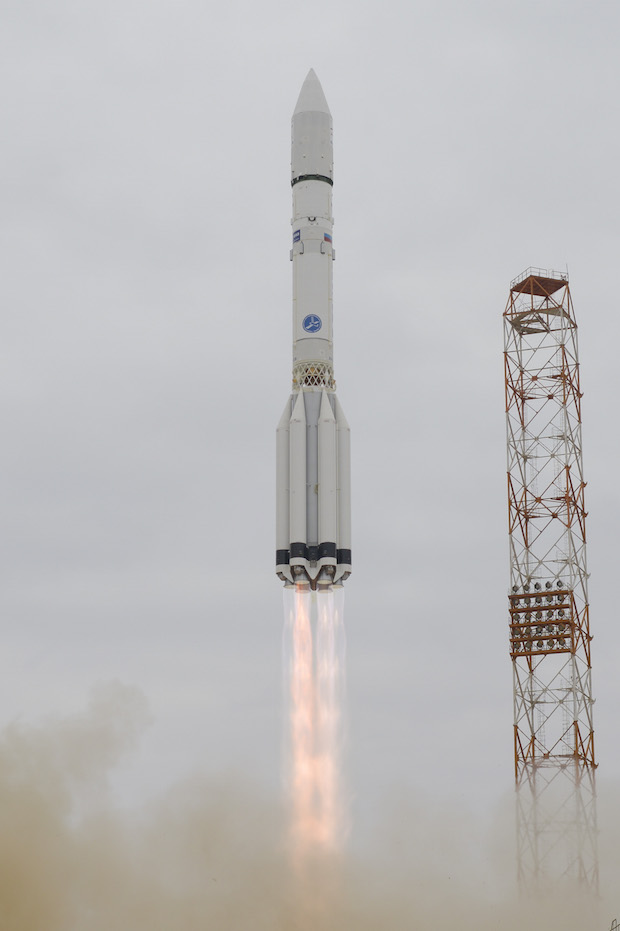
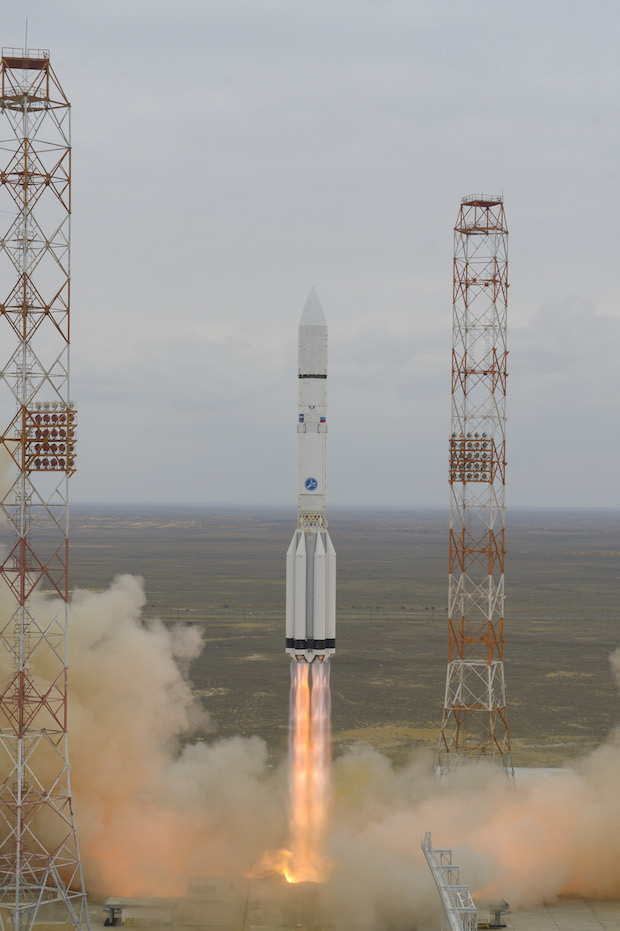
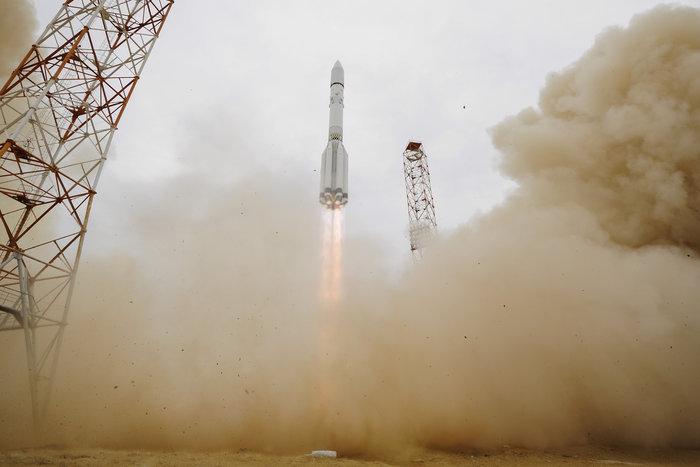
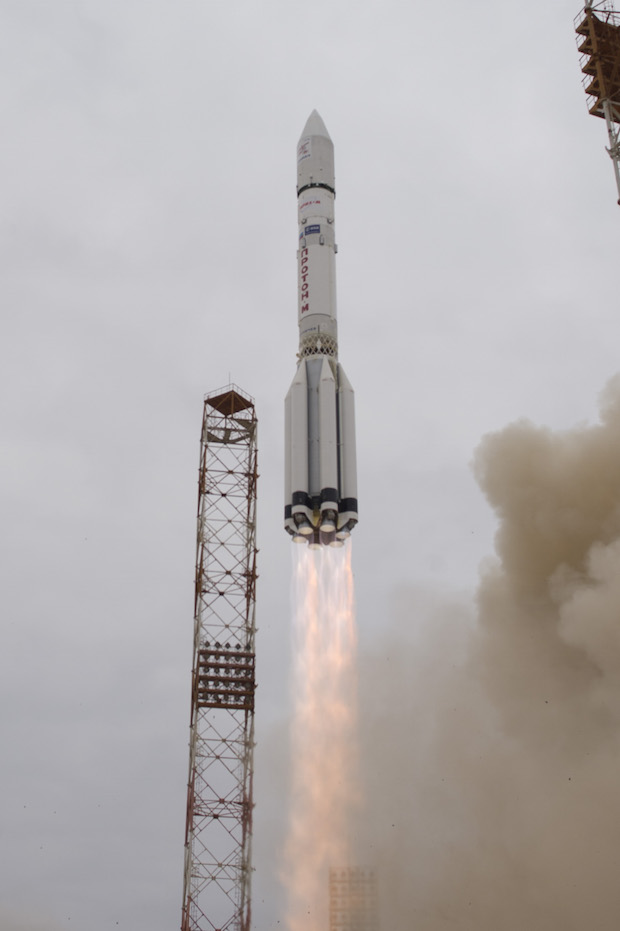
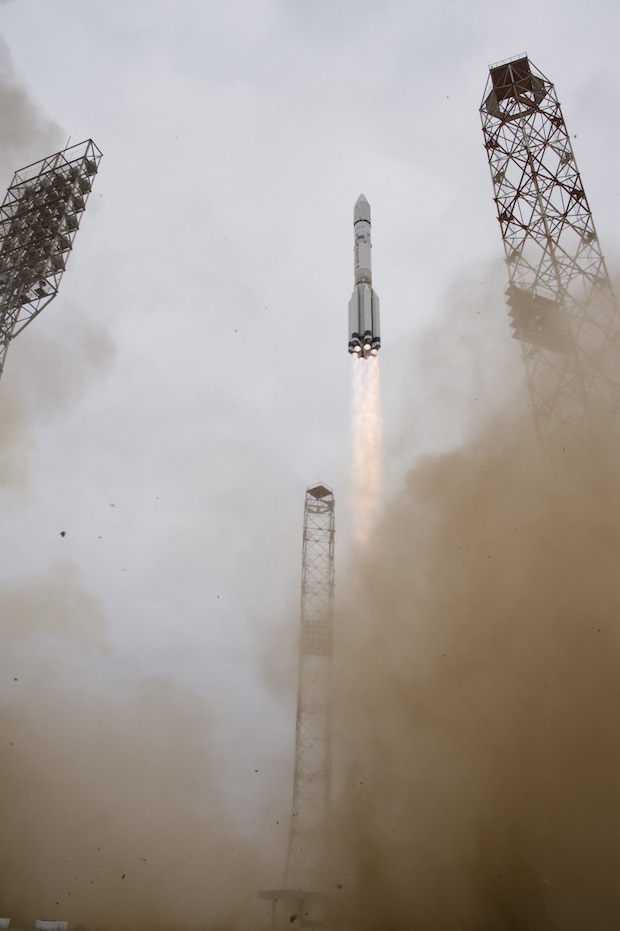
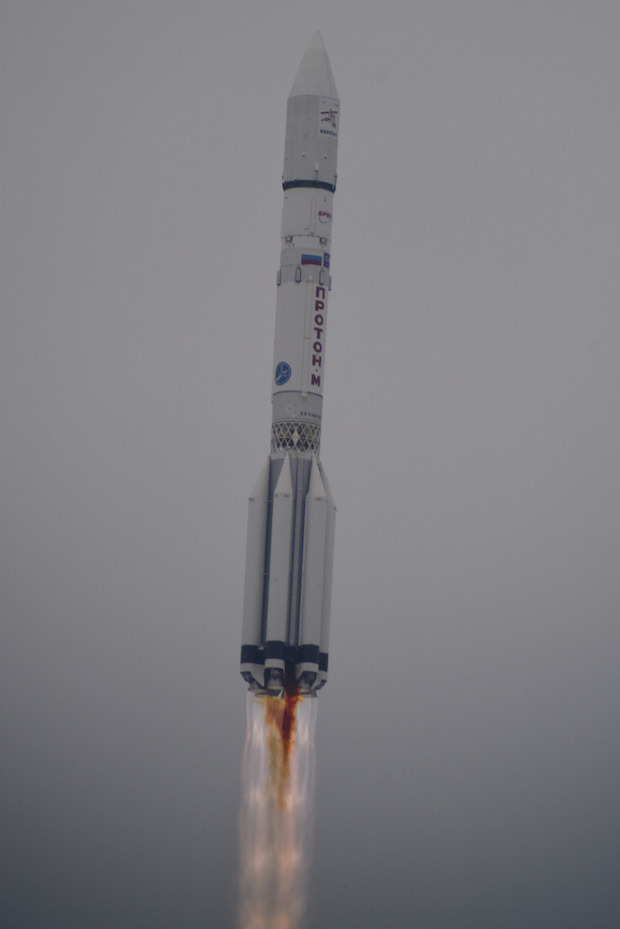
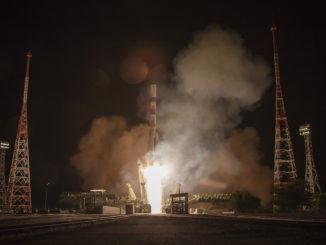
Take a look back at the fiery blastoff of a Russian Proton rocket Monday with the ExoMars 2016 mission to examine the red planet’s atmosphere and test new European entry, descent and landing technologies.
The 191-foot-tall (58-meter) rocket took off from the Baikonur Cosmodrome in Kazakhstan at 0931:42 GMT (5:31:42 a.m. EDT) Monday with the ExoMars Trace Gas Orbiter and Schiaparelli lander.
Nearly 11 hours later, the rocket’s Breeze M upper stage deployed the ExoMars orbiter on a trajectory toward Mars after a series of maneuvers to build up enough energy to escape Earth’s gravity.
The ExoMars mission will arrive at Mars on Oct. 19, making it the European Space Agency’s second probe to explore the red planet.
One job deemed essential by the European Space Agency coronavirus pandemic involves shepherding the BepiColombo spacecraft through a high-speed flyby of planet Earth next month, an immovable event on the $1.8 billion mission’s seven-year journey to Mercury.
Continuing a busy week of comings and goings at the International Space Station, a Russian Progress supply ship is set for liftoff at 0709 GMT (3:09 a.m. EDT) Wednesday from Kazakhstan with nearly 5,200 pounds of food, fuel and supplies for the six-person crew on the International Space Station.
Russia’s Progress MS-09 cargo craft made a 3-hour, 40-minute trip from a launch pad in Kazakhstan to the International Space Station on Monday, setting a record for the quickest journey to the orbiting research laboratory. Look back on the mission’s predawn launch from the Baikonur Cosmodrome and radar-guided docking at the space station with these images and videos.