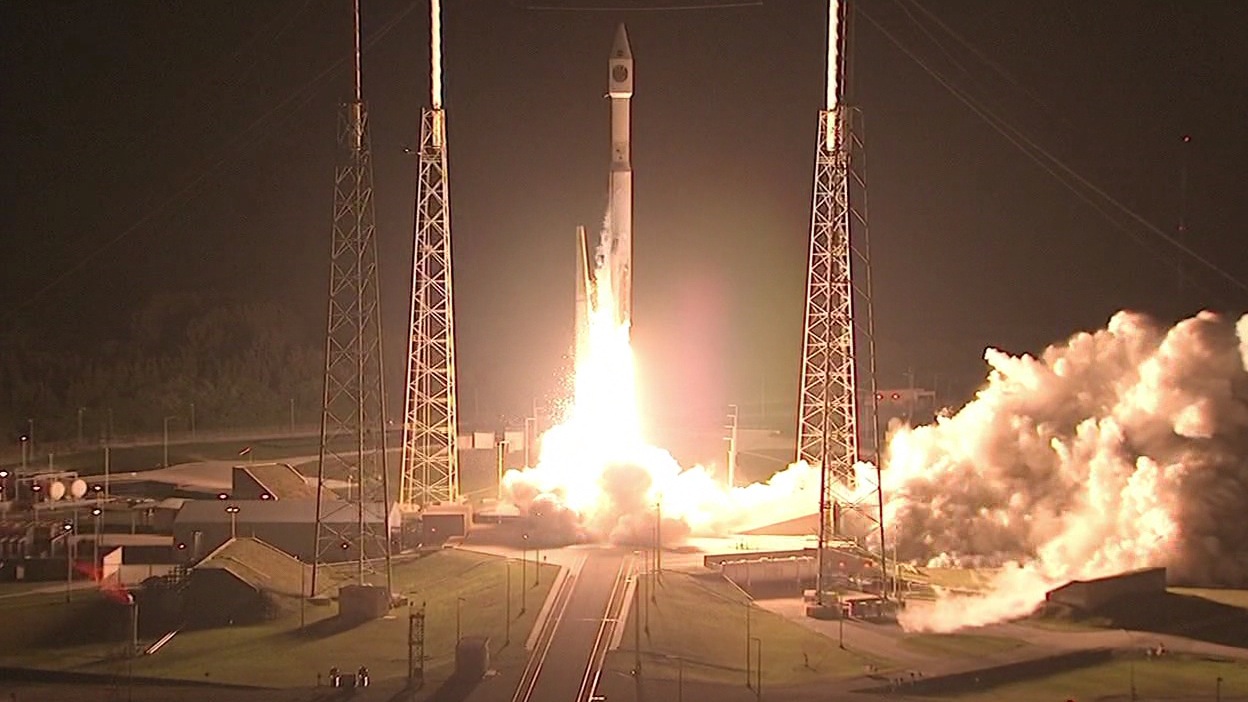
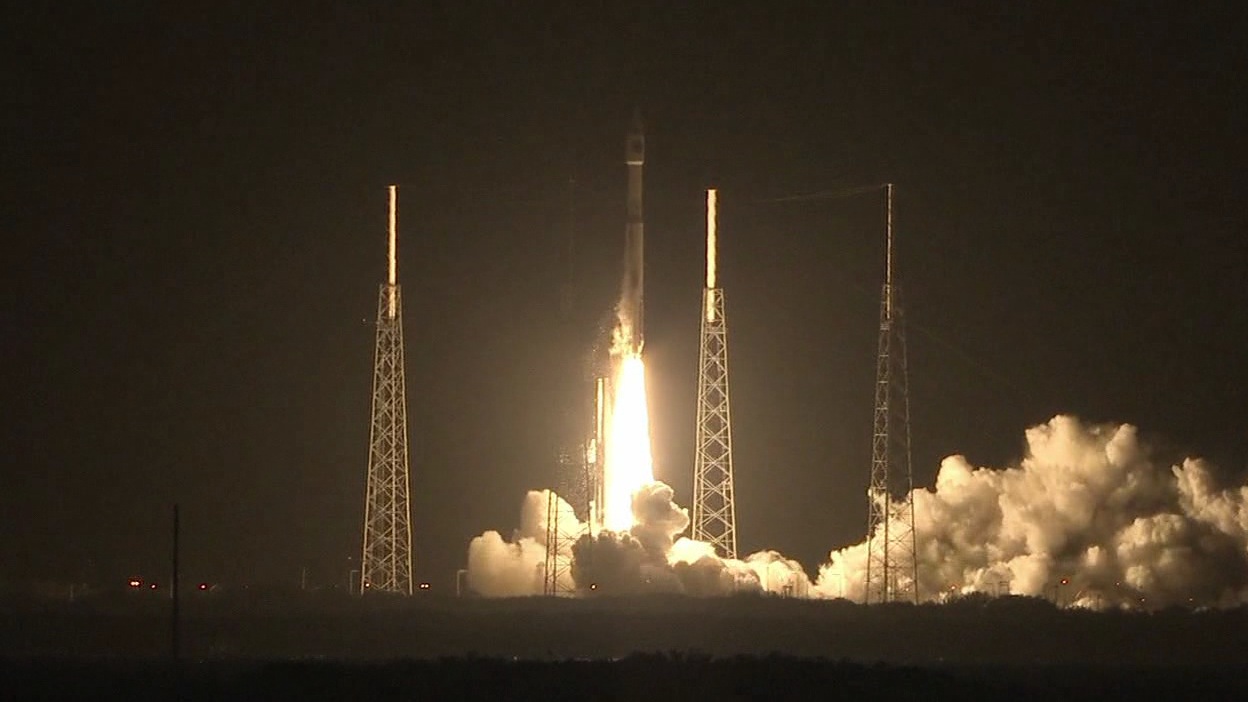
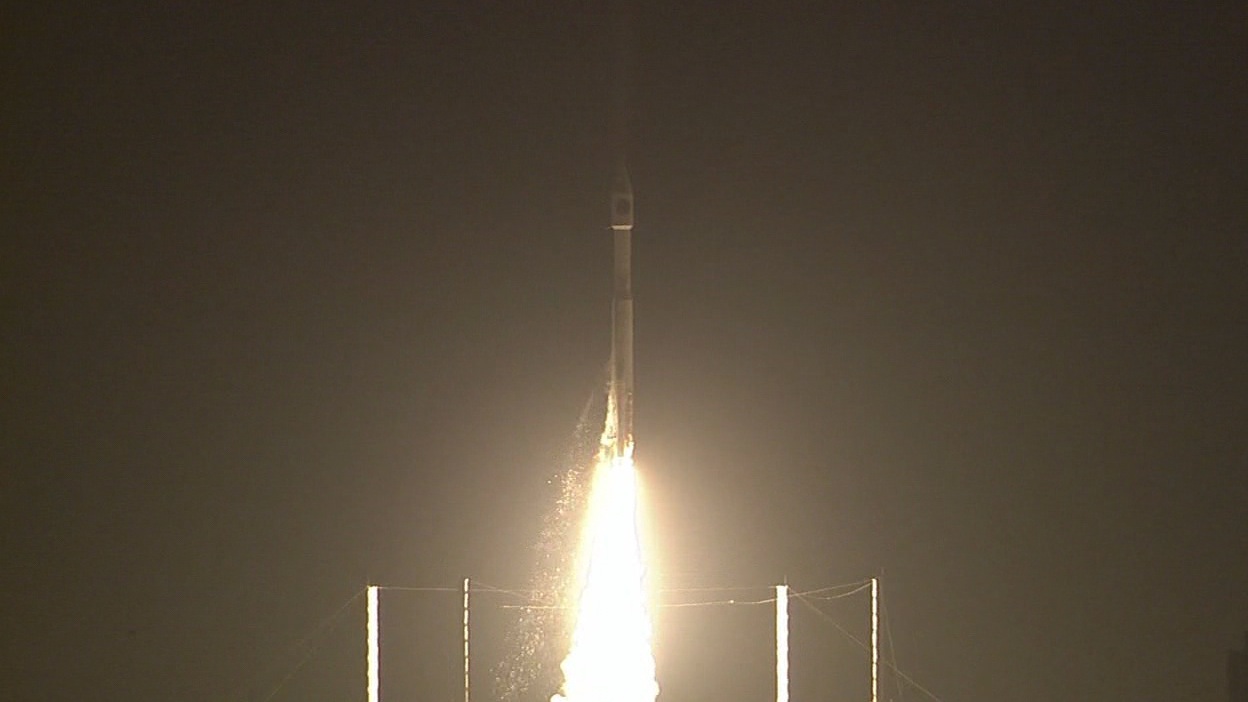
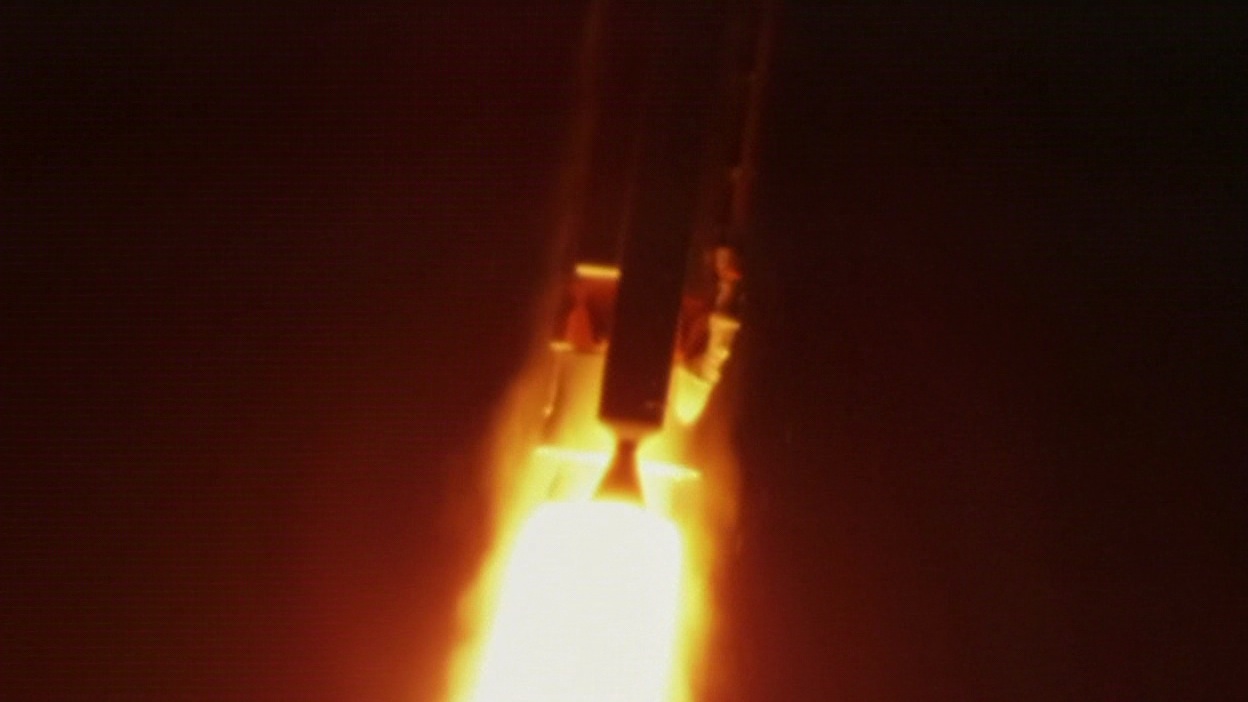
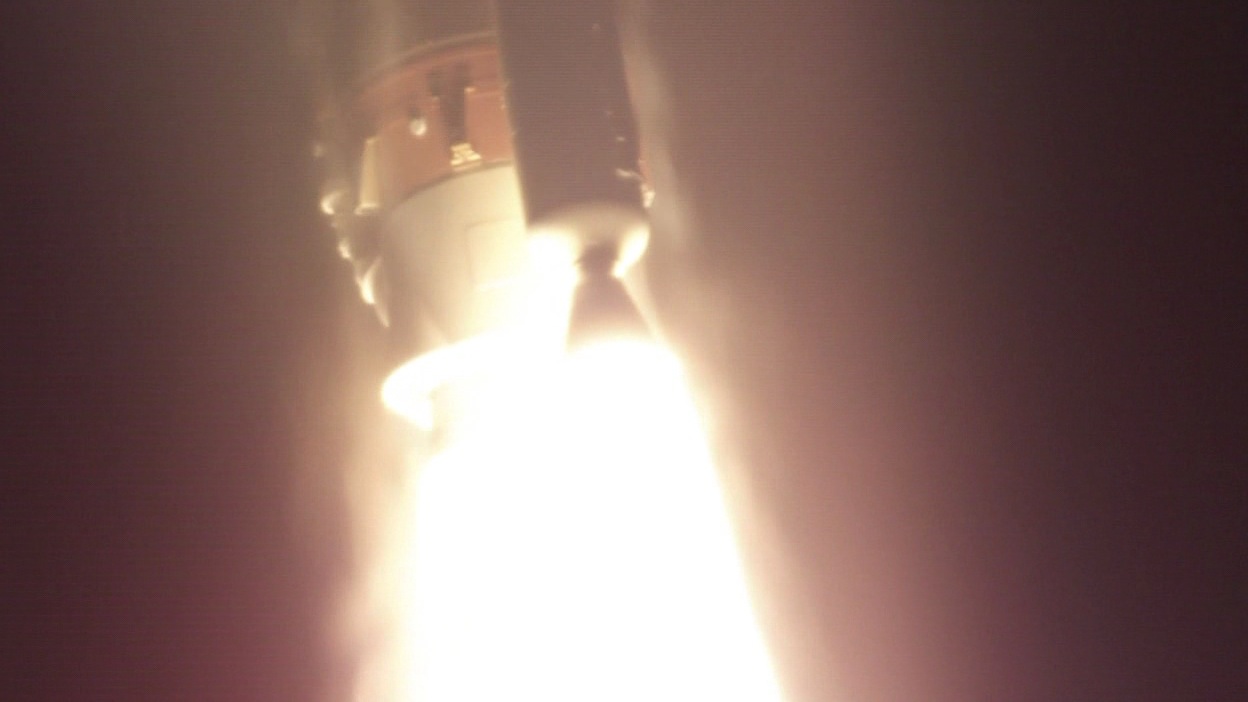
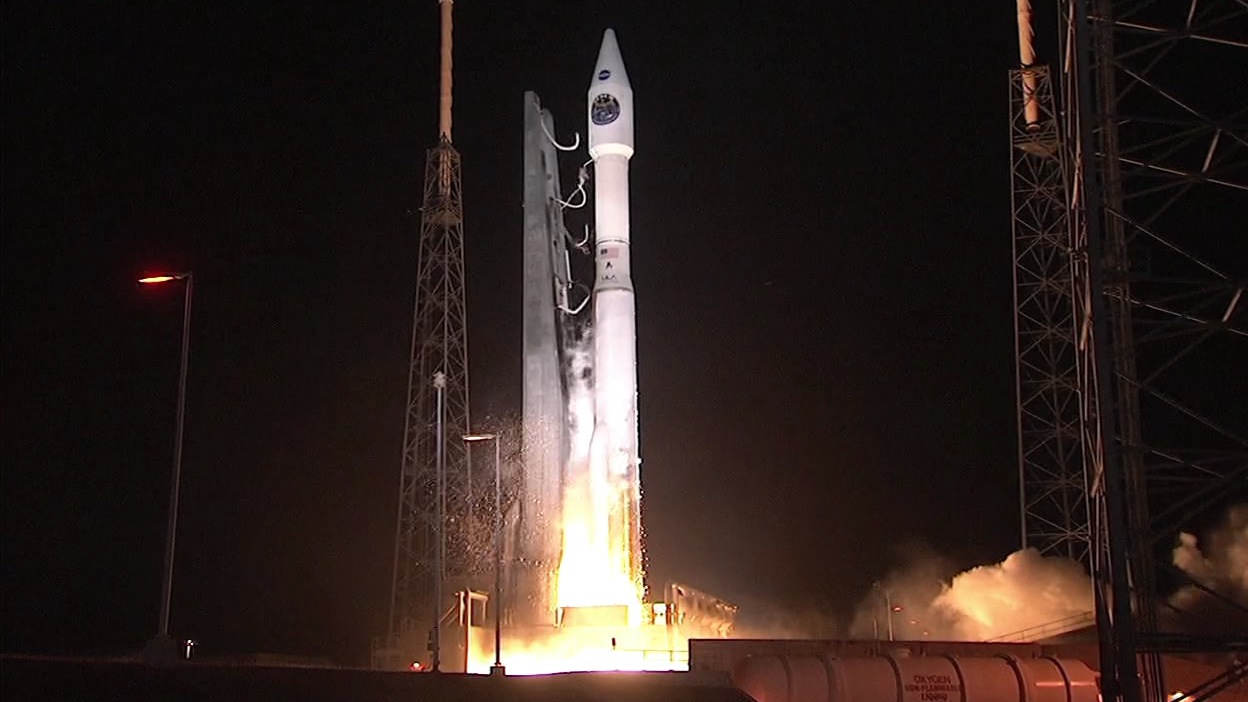
The United Launch Alliance Atlas 5 rocket blasted off Thursday night with NASA’s Magnetospheric Multiscale satellite quartet in a successful flight from Cape Canaveral.
Credit: NASA TV
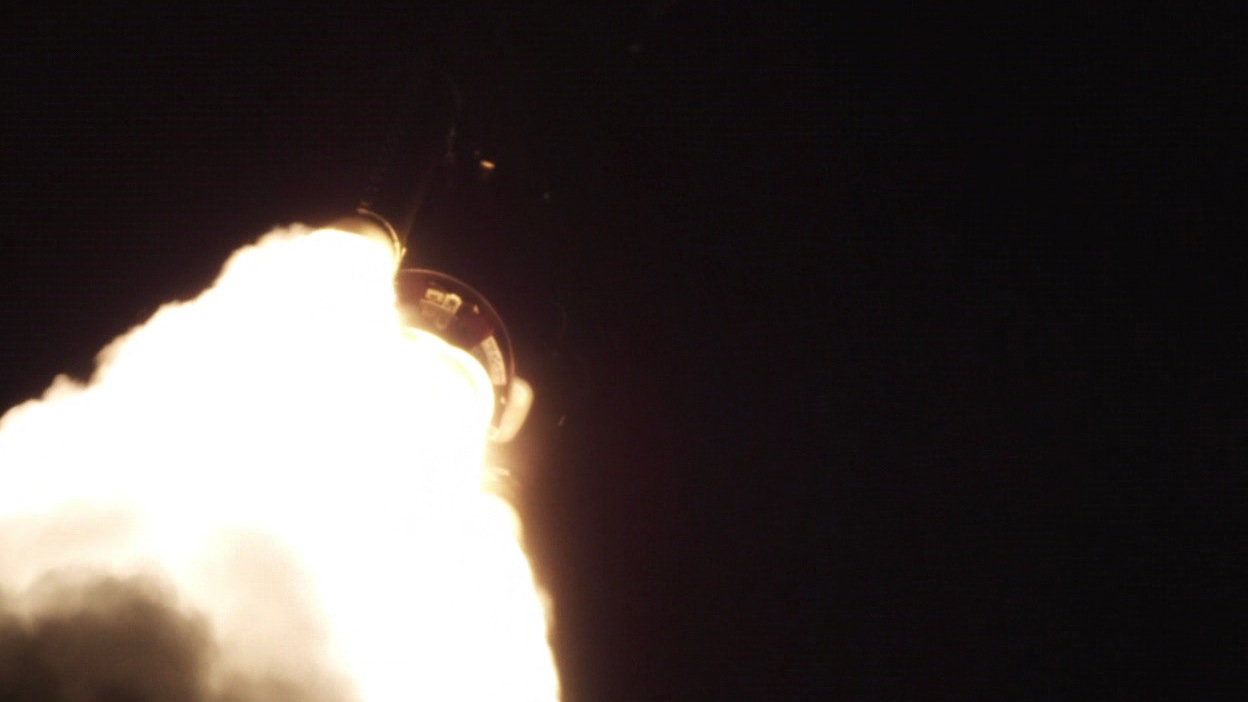
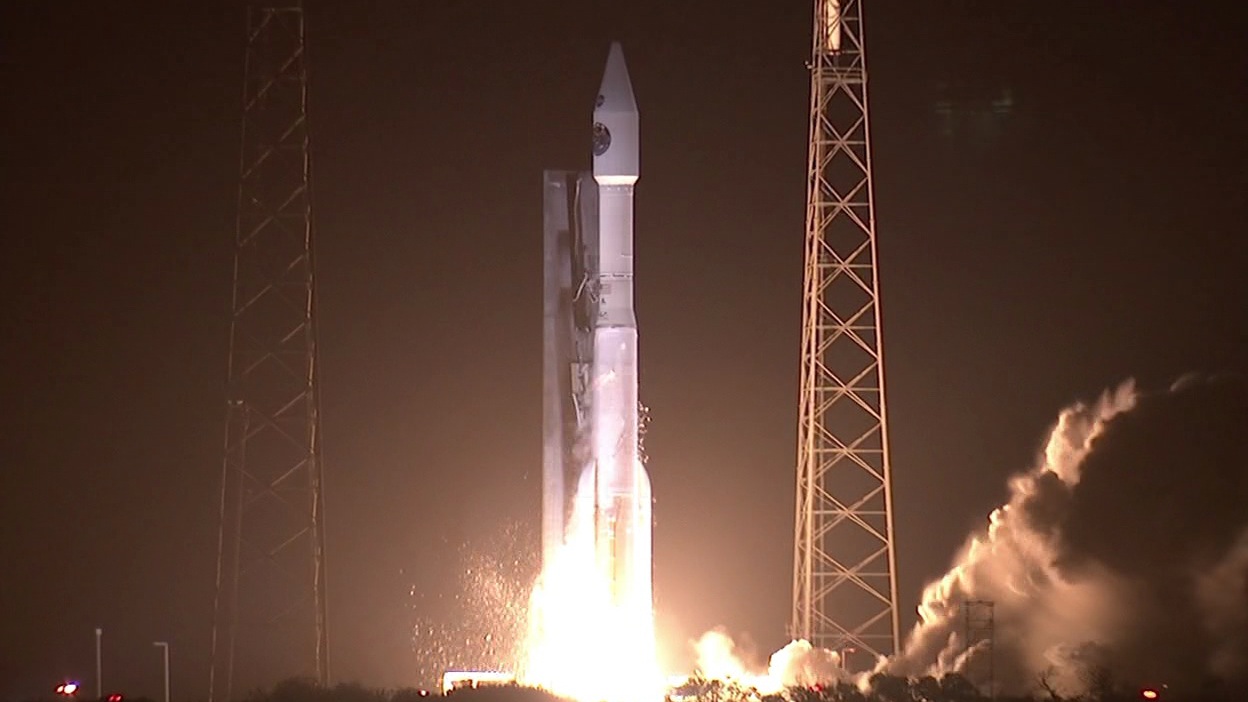
The United Launch Alliance Atlas 5 rocket blasted off Thursday night with NASA’s Magnetospheric Multiscale satellite quartet in a successful flight from Cape Canaveral.
Credit: NASA TV
NOAA’s latest weather satellite, a new-generation geostationary observatory named GOES-S, landed at the Kennedy Space Center’s former space shuttle runway Monday aboard a U.S. Air Force transport jet, ready to begin final preparations for launch March 1 on top of a United Launch Alliance Atlas 5 rocket.
A SpaceX Falcon 9 rocket sporting human-rating upgrades such as new composite pressurant tanks briefly ignited its nine Merlin engines Thursday afternoon on a launch pad at NASA’s Kennedy Space Center in Florida, and SpaceX later declared the pre-launch milestone complete in preparation for a critical test flight with a commercial crew capsule as soon as late February.
United Launch Alliance fired an Atlas 5 rocket into space from Cape Canaveral at 9:14 a.m. EDT (1314 GMT) Sunday with the U.S. Air Force’s X-37B spaceplane, an automated reusable mini-space shuttle designed to host experiments for years in orbit, then return to Earth and land on a runway. A launch attempt Saturday was scrubbed by bad weather.
© 1999-2026 Spaceflight Now Inc