Blue Origin said it will add new launch pads on Florida’s Space Coast to help ramp up the flight rate of its New Glenn rockets, as the company recovers from a catastrophic test fire explosion in May.
In a series of other infrastructure announcements Friday morning, Ian Richardson, the Senior Vice President of Operations at Blue Origin, said the company was serious about launching and landing more rockets.
“These investments are centered on one goal: building the capacity to support more missions, more reliably, and more efficiently,” Richardson said. “As we look ahead, this infrastructure is designed to support multiple flights per week by the end of the decade.”
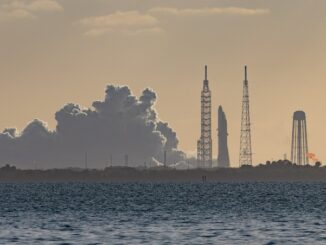
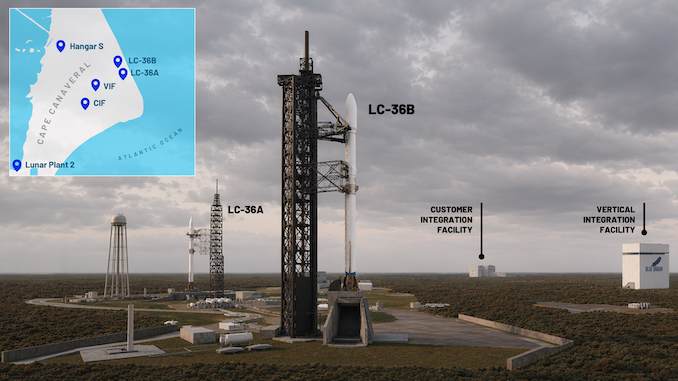
The new pads would be modeled after Blue Origin facilities at Launch Complex 36 at Cape Canaveral Space Force Station. LC-36A, which is being rebuilt after the static test fire explosion, serves the New Glenn 7×2 rocket and LC-36B is under construction to support launches of the 9×4 variant of the rocket, which features nine BE-4 engines on the first stage and four BE-3U engines on the upper stage. The announcement did not reveal the exact locations of the new pad facilities.
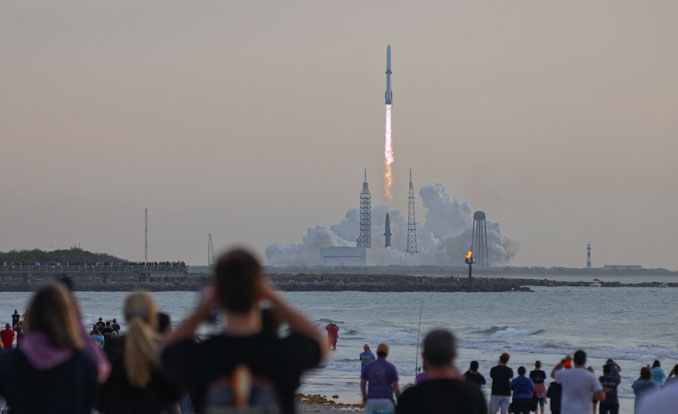
The Federal Aviation Administration (FAA) is in the middle of a 30-day comment period as it seeks public input on Blue Origin’s request to increase its launch cadence at LC-36A from 12 permitted flights up to 50. A virtual public hearing is scheduled for Thursday, Oct. 22, and public comment closes on Oct. 30.
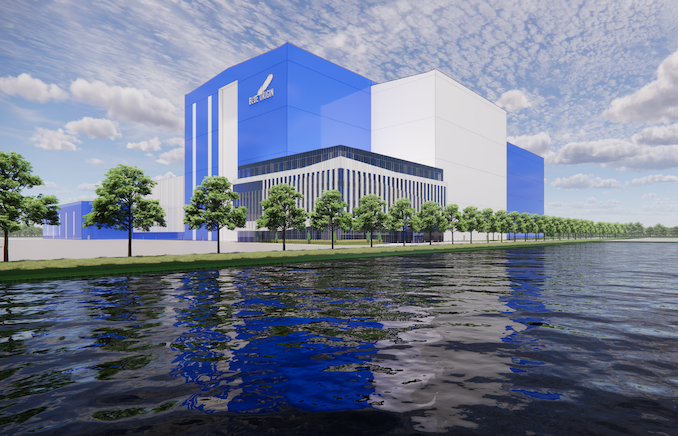
With more pads coming online, Blue Origin said it will also introduce two new landing vessels to its marine fleet. Returned boosters will be serviced at the company’s new vertical integration facility, which is currently under construction just down the road from LC-36.
Simultaneously, a payload processing facility that can be used by both Blue Origin and others is being built in partnership with the U.S. Space Force.
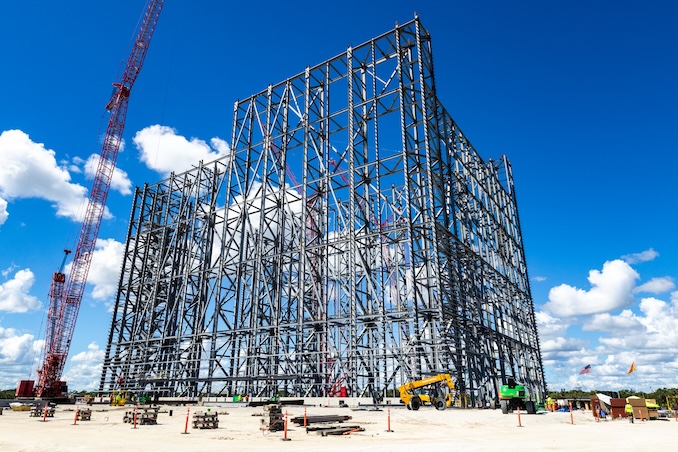
On the manufacturing side, Blue Origin is investing $330 million in an expansion at their Rocket Park site to support the production of upper stages for the New Glenn 9×4 rockets. The 1.37-million-square-foot facility is anticipated to be completed by the summer of 2027 and would support the creation of up to 150 upper stages annually.
“Blue Origin has invested more than $3 billion in facilities and infrastructure across the state. More than 5,000 employees and 500 Florida suppliers support our work today,” Richardson said. “Our manufacturing and operations footprint has more than doubled in the last couple of years, now spanning more than 20 sites across Brevard and Orange Counties.”
Richardson said they have also made investments into the production of payload fairings, which are made in-house. In early May, Blue Origin CEO Dave Limp mentioned on social media that the company was working towards a plan to recover and refurbish its fairings for reuse.
“Our investments also build the capability to bring in raw materials and manufacture nearly all of our components, systems, and products in-house,” Richardson said. “Paired with our network of external supplier partners, this creates a resilient, responsive pipeline designed to keep our factories supplied as we increase our production rate.”
Blue Origin’s founder Jeff Bezos said in an interview with Fox News earlier this month that the company is still pushing to fly its New Glenn 7×2 rocket again before the end of the year.
This New Glenn push comes as Blue Origin is also in the very early stages of bringing New Glenn launch capabilities to the West Coast. Back in April, the U.S. Space Force selected Blue Origin to pursue final discussions on developing Space Launch Complex 14 at the southern end of Vandenberg Space Force Base.
SLC-14 is an undeveloped launch site and would need to go through a full environmental review before significant development moves forward.