NASA’s decision to pivot away from the orbiting Gateway lunar station, a stepping stone to the lunar surface for Artemis astronauts, left many wondering what would become of the hardware, like the HALO (Habitation And Logistics Outpost) module. Now, there’s an answer.
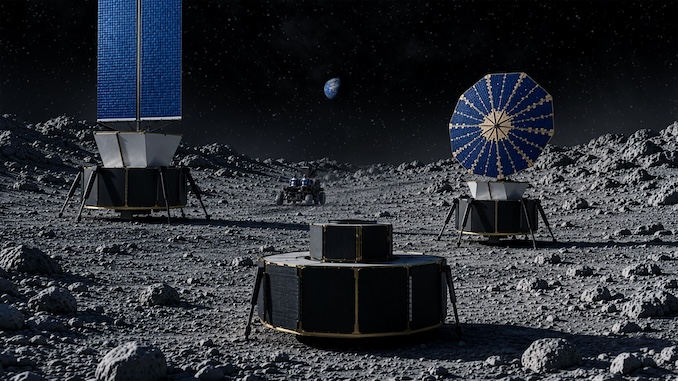
In a series of Moon Base program updates shared on Tuesday, the agency announced that it’s working with Northrop Grumman to transform HALO into a trio of Lunar Infrastructure Demo (LID) missions to test some of the technologies needed for future, long-term crew survival at the Moon’s South Pole.
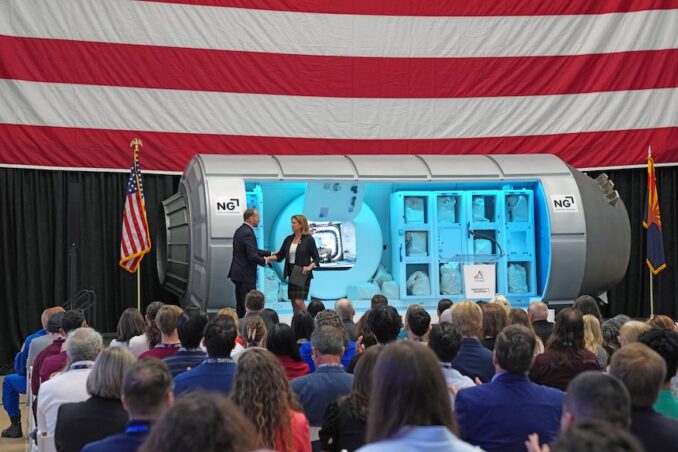
“As America embarks on the next chapter in human space exploration, our Lunar Infrastructure Demos will help turn the Moon into a place where astronauts can stay, work and make discoveries that benefit humanity,” said David Schiller, vice president, civil space and sciences, Northrop Grumman. “Our ready‑to‑fly, reliable HALO technologies allow NASA to move faster, putting in place robust infrastructure that can endure the lunar night and establish a strong blueprint for a future Moon Base.”
The LID-1, -2, and -3 missions are designed in part to explore ways to deal with the harsh temperature swing at the South Pole, which can range from -334 degrees Fahrenheit to 130 degrees Fahrenheit.
NASA didn’t explicitly state when these missions would launch, but said in a video that they would begin in Moon Base Phase One. That era of development runs from now into 2029.
Neither NASA nor Northrop Grumman noted the cost associated with converting the HALO module to the trio of LID missions.
End of Gateway
The Gateway station was originally part of NASA’s Artemis plan to return astronauts to the Moon. Under the previous two administrations, NASA intended to launch Gateway elements in such a way that the Orion spacecraft would be able to dock with the station during the Artemis 4 mission, cross onto the Human Landing System version SpaceX’s Starship rocket, and then descend to the lunar surface.
To support this original ambition, in July 2019, NASA tapped Northrop Grumman to build HALO, awarding the company a $187 million contract to complete the preliminary design.
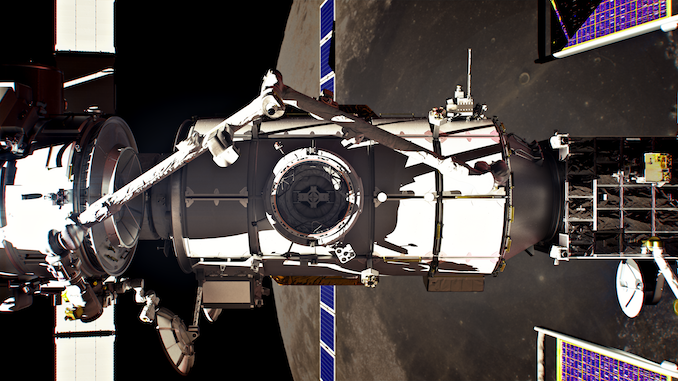
According to June 3 interim draft memo written by Brian Mullins, the deputy assistant inspector general for audits within for NASA Office of Inspector General (OIG), regarding cancelled Artemis Program elements, in 2021 the HALO contract was converted into a firm-fixed price contract with a $1.3 billion value and a due date of May 2025.
But in September 2024, Mullins said the contract was shifted again, this time to a cost-plus-award-fee contract with a price tag of $1.8 billion and a new delivery date of October 2026. Under the new leadership of NASA Administrator Jared Isaacman, in April 2026, NASA issued a stop work order to Northrop Grumman.
“By then, the value of the contract had risen to $1.9 billion and Northrop Grumman was working to address corrosion throughout HALO’s primary structure, which would significantly impact the project’s schedule,” Mullins wrote.
He said that the Artemis launch schedules were creating “unrealistic schedules” for HALO, so much so that “the Gateway Program’s independent Standing Review Board found a 0 percent likelihood of meeting the launch readiness date, which had since slipped to October 2025.”
“The Board noted that the Gateway Program’s ‘lack of schedule realism may be driving suboptimal engineering decisions during development,’” Mullins wrote.
Further, Thales Alenia Space, Northrop Grumman’s subcontractor tapped in December 2020 to design and manufacture the primary structure of the HALO module, “discovered widespread corrosion throughout the module.” Northrop Grumman predicted the delivery date of the module would slip another six months to July 2028.
Mullins and the OIG investigators had a much more lengthy outlook for how soon the HALO module would be ready for handing over to NASA.
“Based on trends in Northrop Grumman’s monthly schedule reporting data over the past 1.5 years since the contract was converted to cost-plus, we project the HALO would not have been delivered to NASA until July 2031, a 6-year delay,” Mullins wrote in his memo. “Moreover, given the additional time to integrate the HALO module with the Power and Propulsion Element pre-launch, as well as the approximately 10 months needed to reach its designated lunar orbit, we estimate that Gateway would not have been operational until at least 2032.”
Responding in a letter dated June 18, Dr. Lori Glaze, NASA’s associate administrator for Exploration Systems Development Mission Directorate, pointed to the agency’s Ignition Day event in March designed to address this and other schedule and cost-challenged parts of the Artemis Program.
“NASA notes that the challenges summarized in the memorandum—cost growth, schedule slips, contractor performance issues, and evolving mission requirements—reinforce the rationale behind the decisions publicly announced during Ignition Day to streamline the Artemis architecture, modernize acquisition practices, and align programs with the Nation’s objectives for sustained lunar presence,” Glaze wrote.
“The Agency looks forward to supporting the OIG’s continued audit work on terminated missions and remains committed to transparency, responsible stewardship, and advancing America’s leadership in lunar exploration.”