
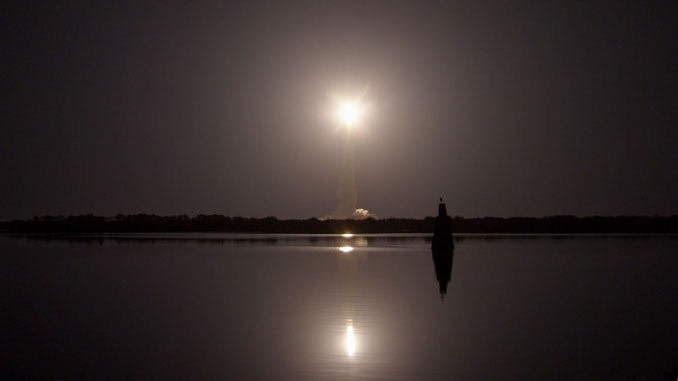
Update Nov. 13, 11 p.m. EST (0400 UTC): ULA launched its Atlas 5 rocket and completed the first two out of three upper stage engine burns.
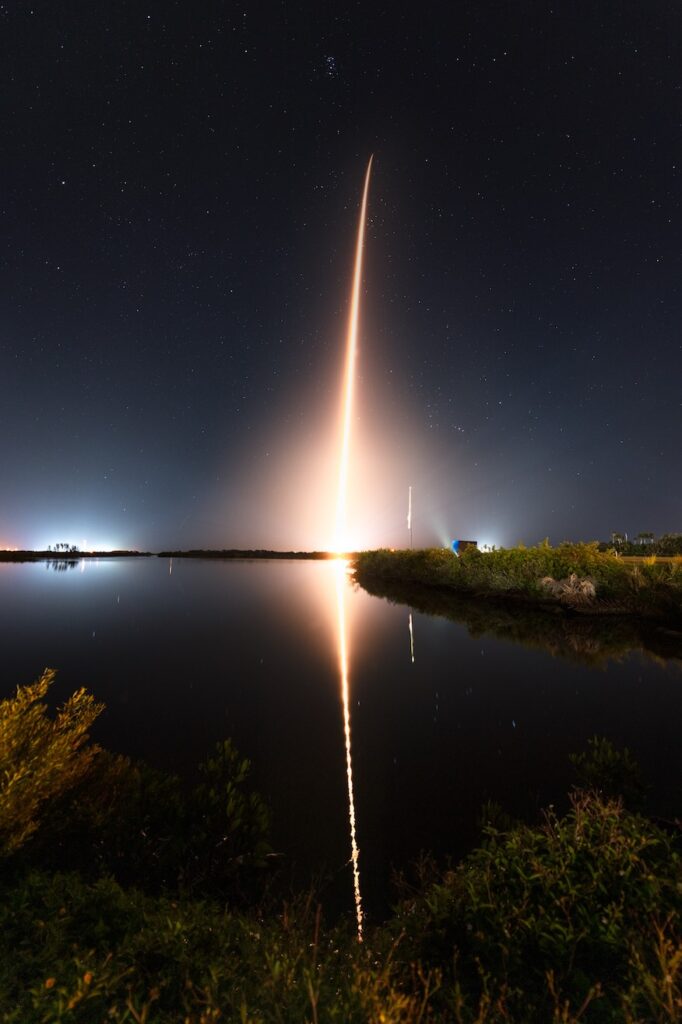
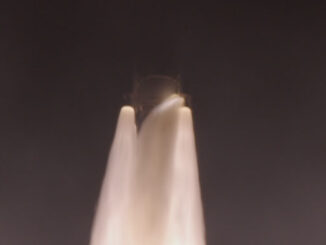
United Launch Alliance launched its Atlas 5 rocket Thursday night, which carried a communications satellite for California-based communications company, Viasat.
The launch came a week after the mission was scrubbed due to a faulty liquid oxygen tank vent valve on the Atlas booster. ULA rolled the rocket back to the Vertical Integration Facility about third of a mile away, replaced it with a new valve and returned the rocket to the pad on Nov. 12.
The 6-metric-ton satellite will be launched to a geosynchronous transfer orbit, deploying nearly 3.5 hours after the rocket lifts off from Cape Canaveral Space Force Station.
Liftoff from Space Launch Complex 41 happened at 10:04 p.m. EST (0304 UTC), the opening of a 44-minute-long window. The rocket headed due east upon leaving Florida’s Space Coast.
ULA launched this mission using an Atlas 5 rocket in its 551 configuration. The 196-foot-tall (59.7 meters) rocket was supported by five solid rocket boosters, which combined with the RD-180 main engine to produce about 2.7 million pounds (12 megaNewtons) of thrust at liftoff.
The SRBs jettisoned less than two minutes into the flight, followed by the payload fairings about a minute and a half later. It will take three separate firings of the RL10C-1-1 engine on the Centaur 3 upper stage to reach the correct orbit to release the ViaSat-3 F2 satellite.
Following release, the upper stage will be placed in a so-called graveyard orbit nearly an hour later.
This rocket had the designation of AV-100 and was the 105th Atlas V rocket launched to date. Following this launch, ULA now has 11 of these rockets remaining before it is officially retired:
- 6 – Boeing’s CST-100 Starliner
- 5 – Amazon’s Project Kuiper
What’s onboard?
This was the second satellite in the ViaSat-3 series that will operate in geostationary Earth orbit, following the launch of the first spacecraft in 2023. After the ViaSat-3 F1 satellite launched on a SpaceX Falcon Heavy rocket, it suffered an issue with its antenna, which both delayed the start of service and resulted in a reduced capacity.
Viasat officials said ahead of the launch that this new satellite will provide needed Ka-band network capabilities, adding more than 1 terabits per second (Tbps) of capacity to the network over the Americas.
Following a months of on-orbit testing at its operating slog of 79 degrees West longitude, the ViaSat-3 F2 spacecraft is expected to enter service in early 2026.
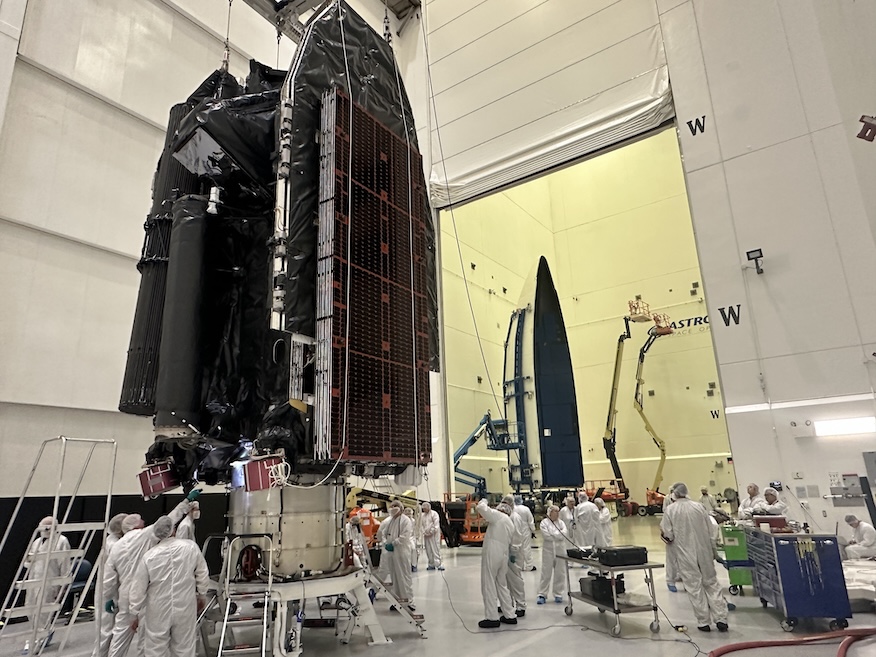
“Beyond an incredible capacity increase, ViaSat-3 F2’s dynamic beam forming capabilities will greatly benefit our customers by efficiently deploying bandwidth to the highest demand places, allowing us to scale performance and the number and density of users,” said Mark Dankberg, Chairman and CEO of Viasat, in a statement. “These capabilities will continue to fuel our successful, multi-orbit service offerings, including service platforms such as Viasat Amara, NexusWave, and a resilient, hybrid SATCOM architecture for government.”
The satellite is built on Boeing’s 702MP+ platform, which uses electric propulsion and solar arrays, the latter of which is from Boeing subsidiary, Spectrolab. Boeing is supporting Viasat in both launch operations and post-deployment checkouts.
“Our goal is to enable missions with reliability and timely delivery,” said Michelle Parker, Vice President of Boeing Space Mission Systems. “With ViaSat‑3 F2, we leveraged proven 702 heritage, advanced power systems and all‑electric propulsion to enable high-speed connectivity for users who rely on it.”

God bless ULA With this launch may all go well with its mission 🙏
I was able to see the launch alll the way up in O’Brien, FL through the first stage! Congrats! Hope tomorrow night goes just as well!
Awesome coverage! Thank you Spaceflight Now
Enjoyed ULA coverage very cool listening to them thru flight!