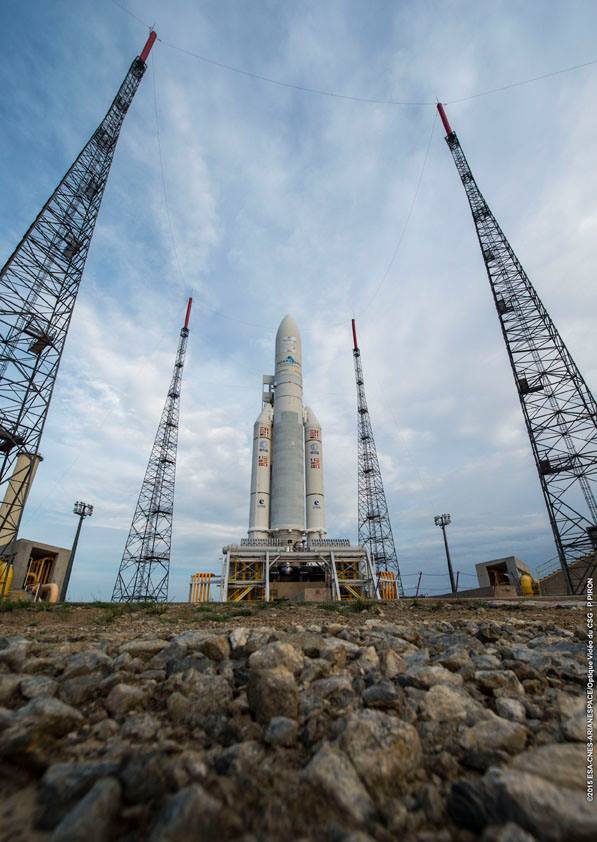
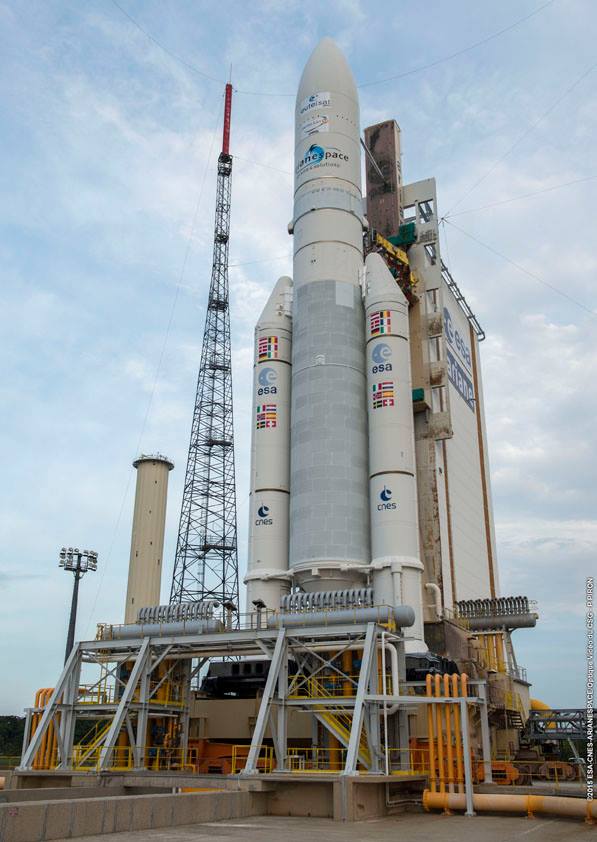
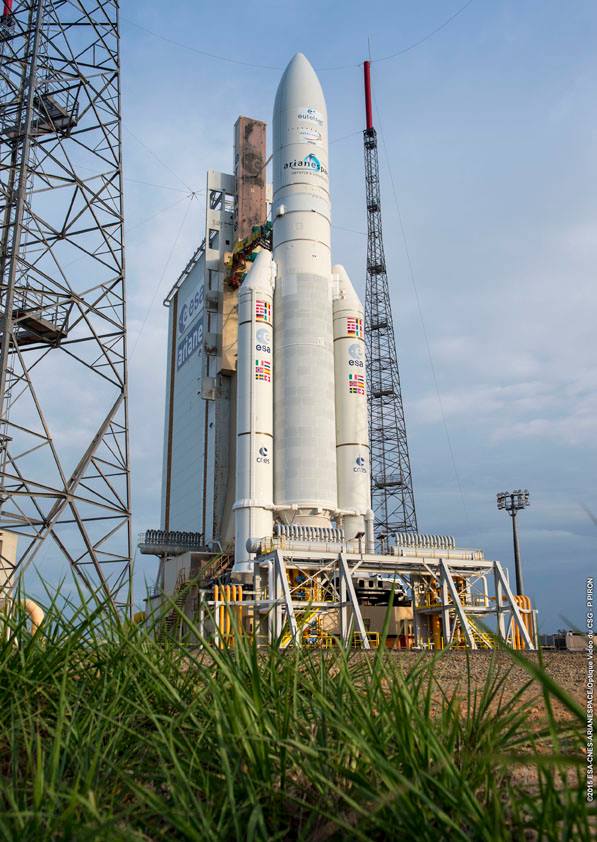
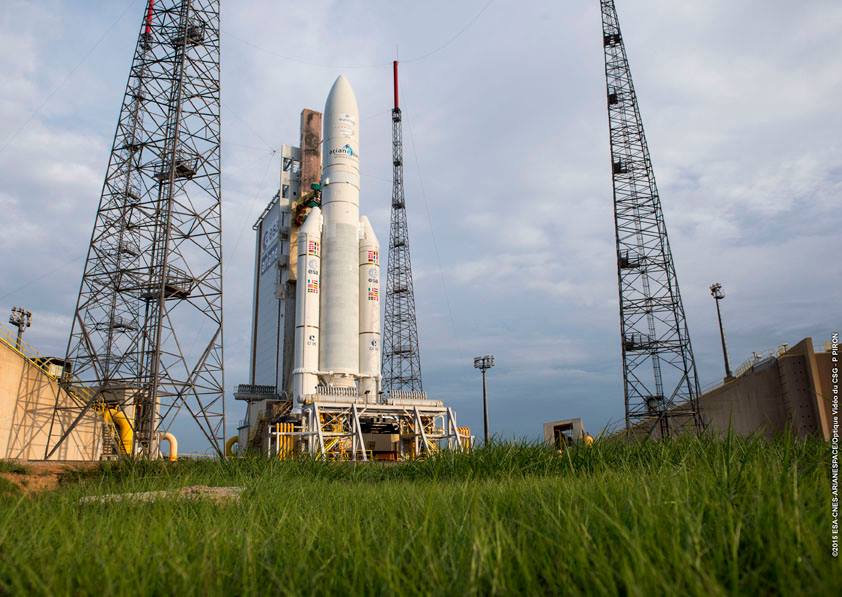
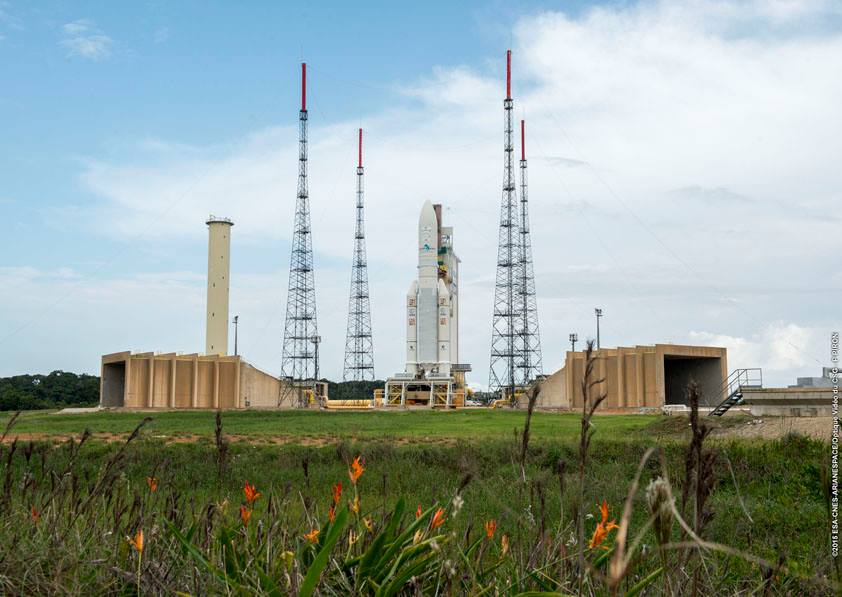
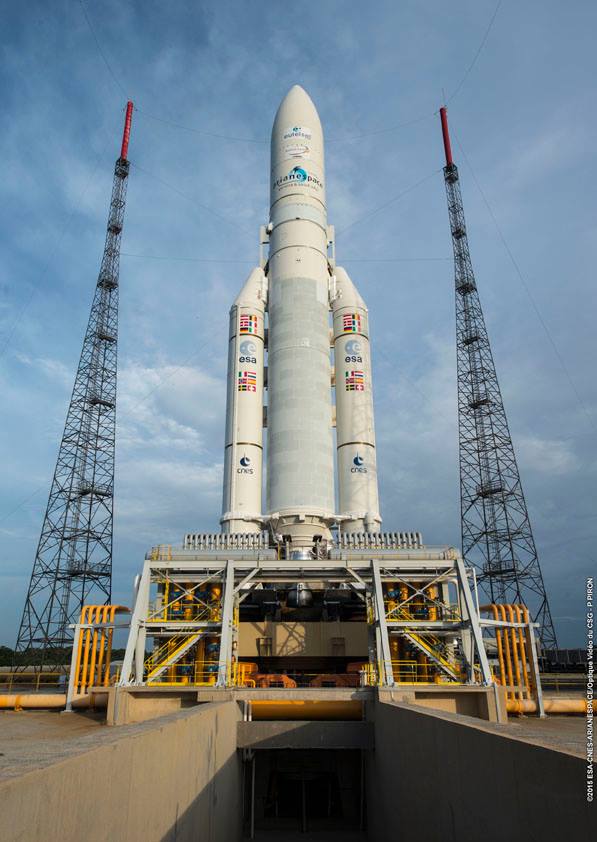
Check out photos of Europe’s Ariane 5 launcher in the starting blocks at its tropical spaceport awaiting liftoff with two commercial television relay stations.
The launch from French Guiana is set for Thursday at 2010 GMT (4:10 p.m. EDT) carrying satellites into orbit for Eutelsat and Intelsat. It will be the 81st flight of an Ariane 5 rocket dating back to 1996.
Photo credit: Credit: ESA/CNES/Arianespace – Optique Video du CSG – P. PironPhoto credit: Credit: ESA/CNES/Arianespace – Optique Video du CSG – P. PironPhoto credit: Credit: ESA/CNES/Arianespace – Optique Video du CSG – P. PironPhoto credit: Credit: ESA/CNES/Arianespace – Optique Video du CSG – P. PironPhoto credit: Credit: ESA/CNES/Arianespace – Optique Video du CSG – P. PironPhoto credit: Credit: ESA/CNES/Arianespace – Optique Video du CSG – P. Piron
The launch of a European Ariane 5 rocket was aborted moments after its main engine ignited Tuesday. The dramatic last-second hold was the first time an Ariane rocket launch was aborted after engine start since March 2011. Arianespace has not set a new target launch date for the mission, which will loft two U.S.-built communications satellites for Intelsat and B-SAT.
The first satellite in a new class of ultra-powerful communications satellites for Intelsat lifted off Wednesday aboard the first Ariane 5 flight of the year. Launch from French Guiana occurred at 2320 GMT (6:20 p.m. EST).
The next batch of 36 OneWeb internet satellites lifted off at 6:14 p.m. EDT (2214 GMT) from the Vostochny Cosmodrome in Russia’s Far East. The Florida-built broadband satellites rode into orbit on a Russian Soyuz rocket procured under a contract with Arianespace.