Mission Reports
Delta 4-Heavy rocket deploys spysat on final planned mission from ‘Slick Six’
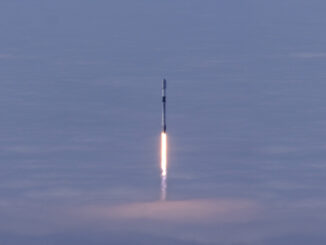
United Launch Alliance sent a triple-core Delta 4-Heavy with a top secret U.S. government spy satellite into orbit Saturday from California’s Central Coast, closing out a chapter in the tangled history of a launch pad originally built to support military astronaut missions on Titan rockets and space shuttles. Two more Delta 4-Heavy rockets are left in ULA’s inventory for launches in 2023 and 2024 from Cape Canaveral.
Live coverage: Delta 4-Heavy rocket launches from California
United Launch Alliance’s Delta 4-Heavy rocket lifted off from Vandenberg Space Force Base in California at 3:25 p.m. PDT (6:25 p.m. EDT; 2225 GMT) Saturday with a classified spacecraft for the National Reconnaissance Office, the U.S. government’s spy satellite agency. The heavy-lifter launched for the final time from California, with two more Delta 4-Heavy flights remaining from Cape Canaveral before the rocket’s retirement.
Photos: Delta 4-Heavy rocket on the launch pad in California
These views show United Launch Alliance’s 233-foot-tall Delta 4-Heavy rocket standing on Space Launch Complex-6 at Vandenberg Space Force Base in California on the eve of liftoff with a classified spy satellite for the National Reconnaissance Office. This will be the final Delta launch from the West Coast.
Historic launch pad faces uncertain future after final West Coast Delta 4 mission
United Launch Alliance will move out of historic Space Launch Complex 6 at Vandenberg Space Force Base in California following the flight of a Delta 4-Heavy rocket set for Saturday, leaving the military to find a new tenant for the launch pad once intended to host space shuttle missions on the West Coast.
JWST shows Neptune’s splendor amid landscape of galaxies
Fresh images from the James Webb Space Telescope show the faraway planet Neptune hung amid a tapestry of even more distant galaxies, the latest view from a now-regular flow of observations from astronomers’ new eye on the universe. Scientists released Webb’s first views of Neptune and Mars this week.
NASA completes cryogenic tanking test on Artemis 1 moon rocket
Engineers filled up the Artemis 1 moon rocket with more than 750,000 gallons of super-cold propellants in a tanking test Wednesday at Kennedy Space Center after successfully troubleshooting another hydrogen leak. NASA’s launch director said she was “extremely encouraged” by the test, but officials have not yet committed to another attempt to launch the uncrewed test flight to the moon at the next opportunity Sept. 27.