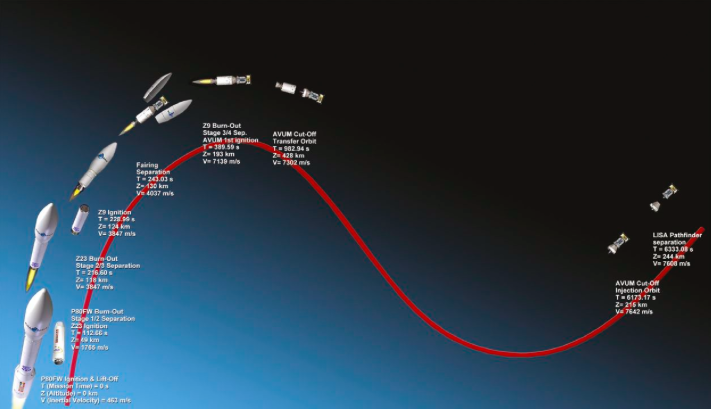
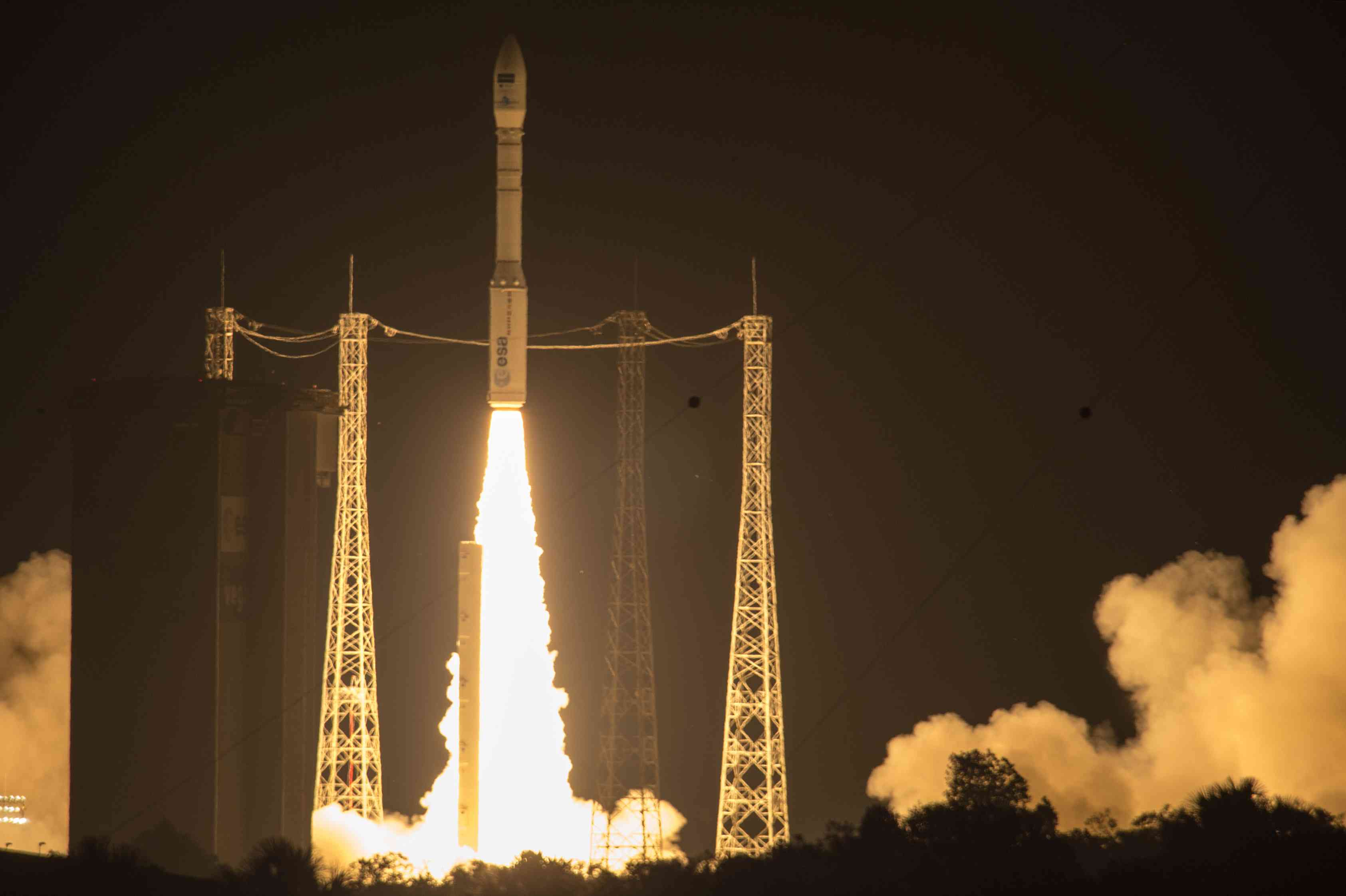
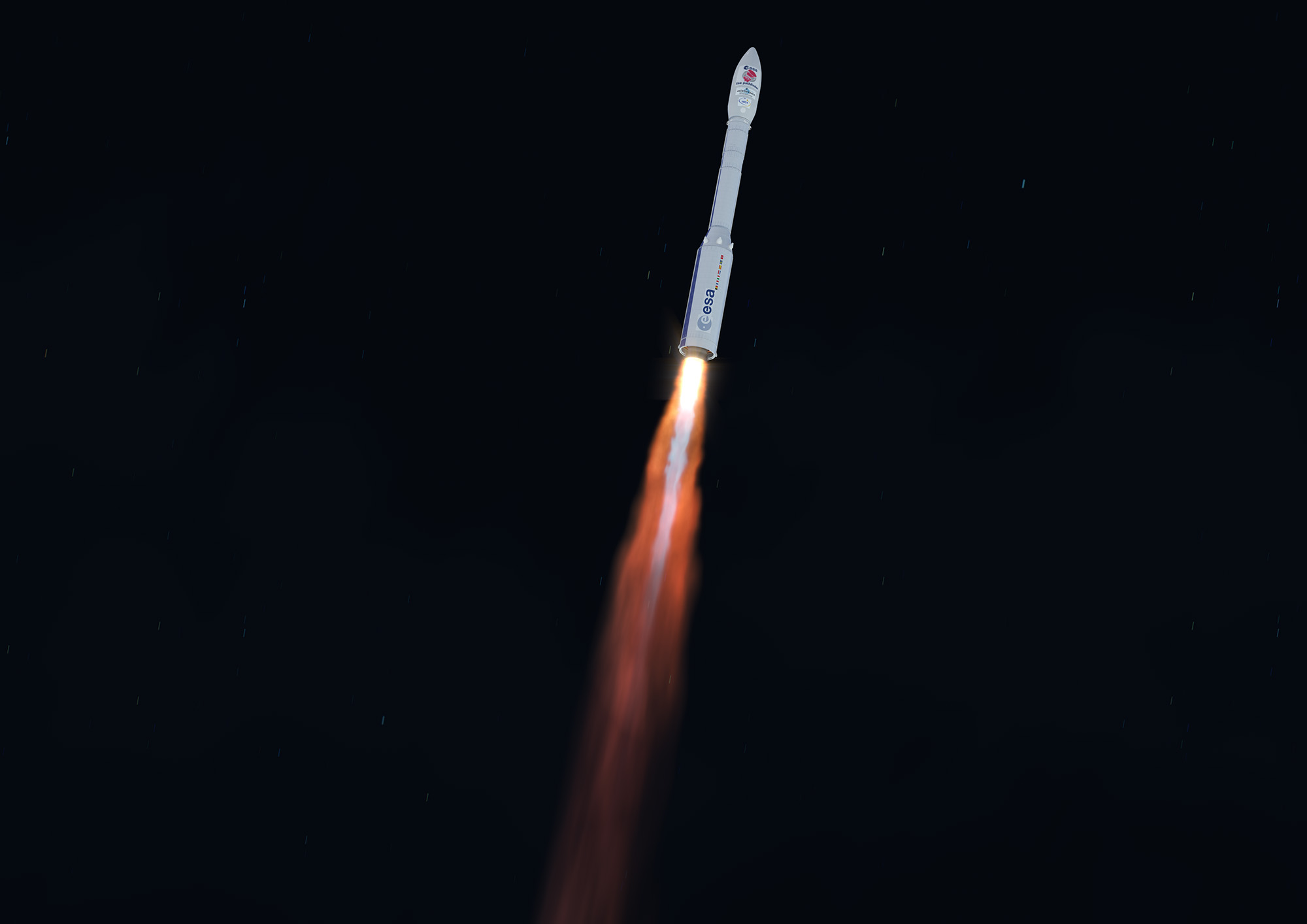
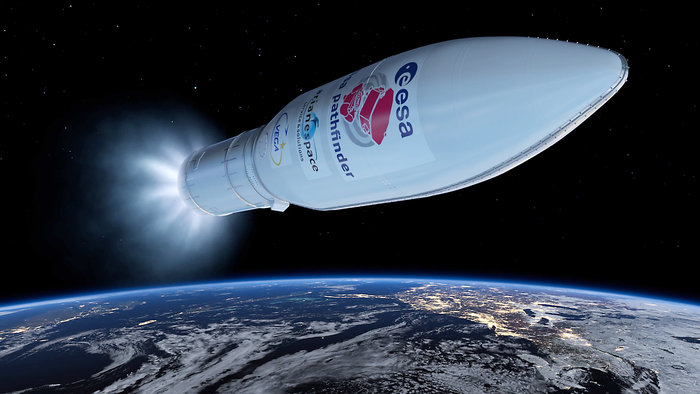
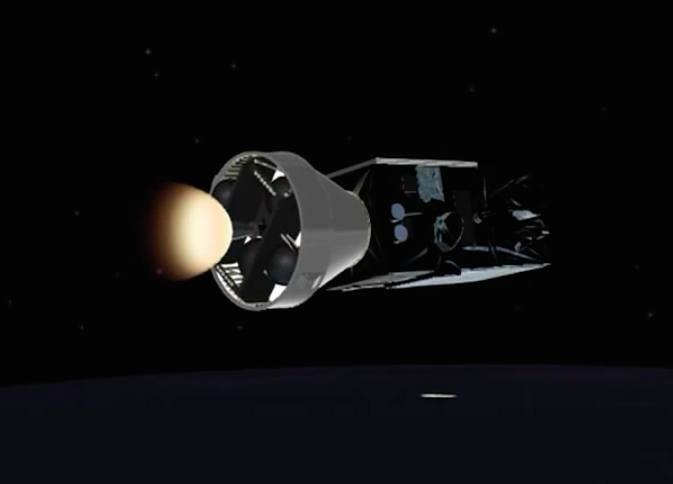
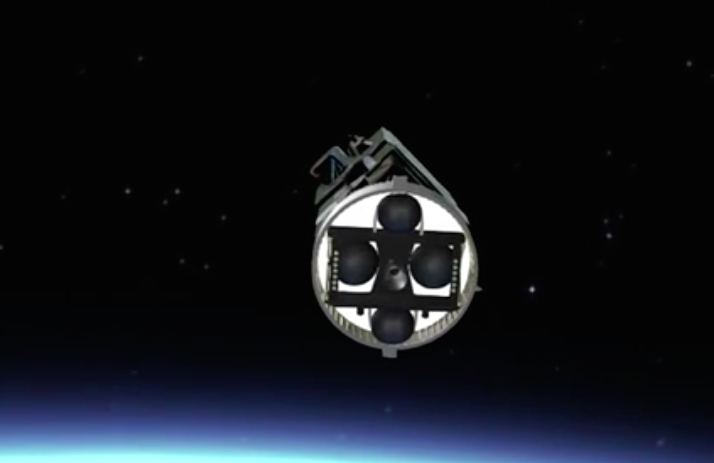
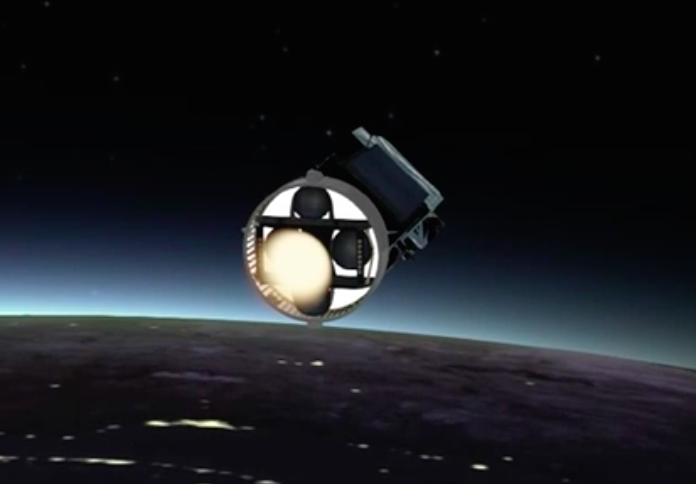
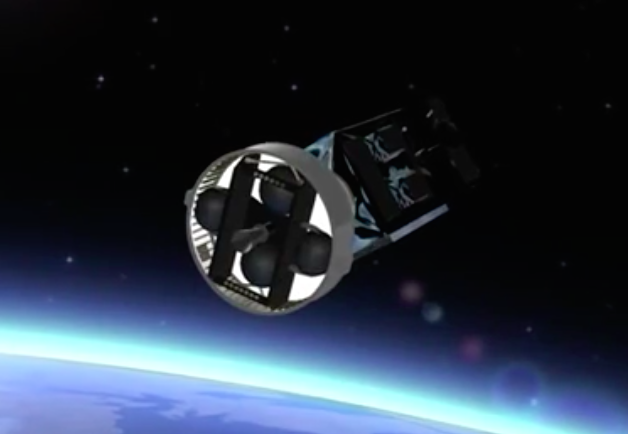
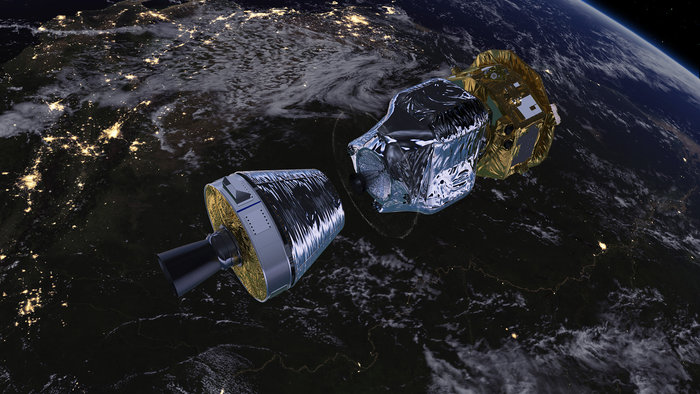
Follow the major events during the launch of Europe’s LISA Pathfinder gravitational probe testbed, from liftoff of its Vega rocket booster from French Guiana through deployment into its initial orbit.
Credit: Arianespace
T+00:00:00 – Liftoff
The Vega rocket’s first stage P80 solid rocket motor ignites and powers the 98-foot-tall booster off the launch pad 0.3 seconds later. The P80 first stage motor generates a maximum of 683,000 pounds of thrust.
T+00:00:31 – Mach 1
The Vega rocket surpasses the speed of sound as it soars on an easterly trajectory from French Guiana. The rocket will reach Max-Q, the point of maximum aerodynamic pressure, at T+plus 53 seconds.
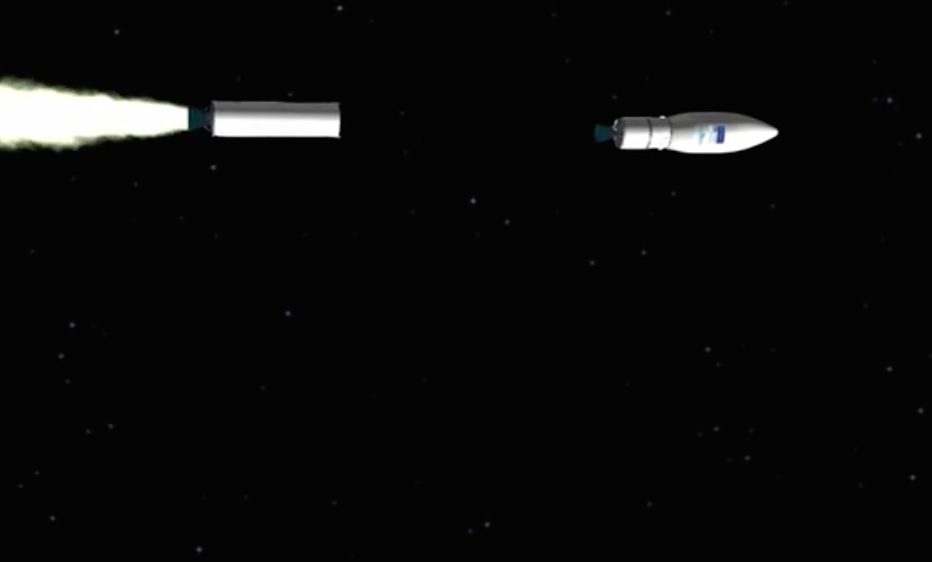
T+00:01:53 – First stage separation
Having consumed its 194,000 pounds (88 metric tons) of solid propellant, the 9.8-foot-diameter (3-meter) P80 first stage motor is jettisoned at an altitude of about 33 miles (53 kilometers). The second stage Zefiro 23 motor will ignite a second later to begin its 103-second firing.
T+00:03:37 – Second stage separation
The Zefiro 23 motor burns out and jettisons.
T+00:03:49 – Third stage ignition
Moving at a velocity of nearly 9,000 mph, or 4 kilometers per second, the Vega rocket’s Zefiro 9 motor ignites for the third stage burn.
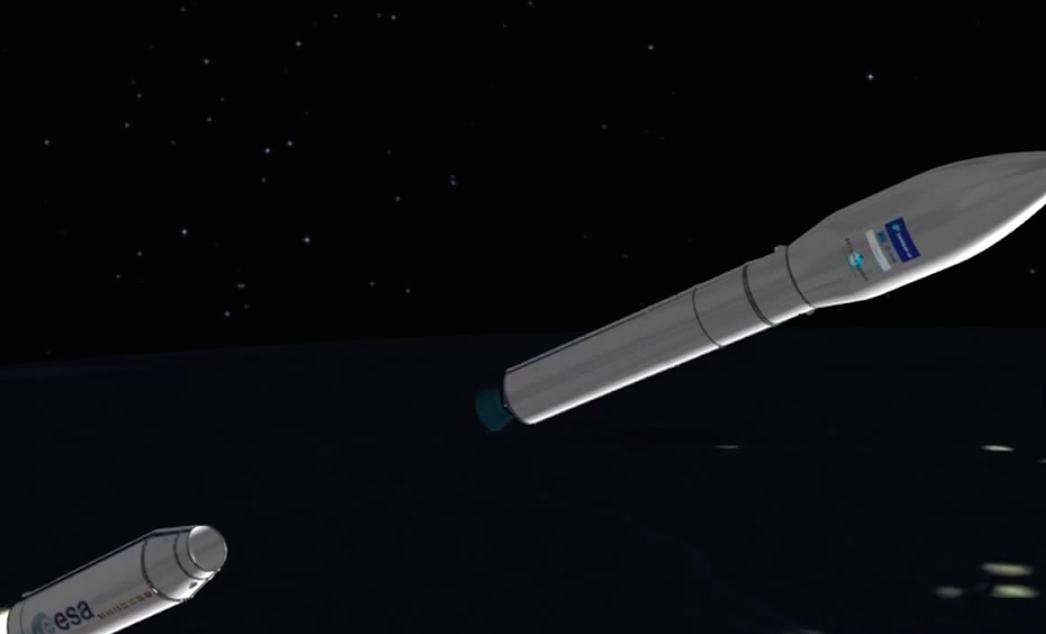
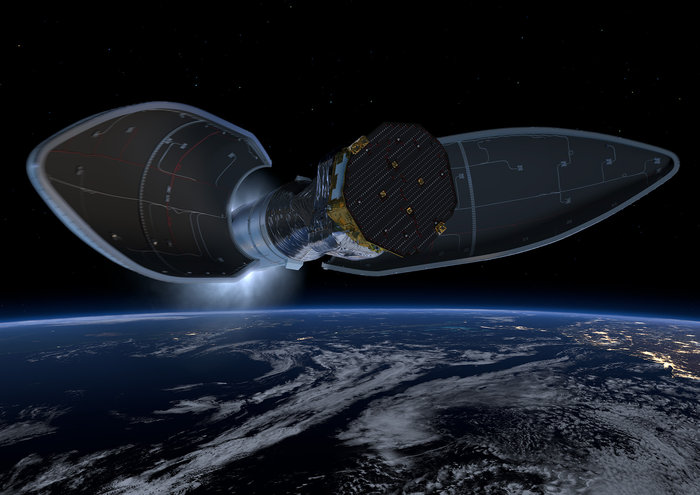
T+00:04:03 – Fairing separation
The Vega’s 8.5-foot-diameter (2.6-meter) payload fairing is released as the rocket ascends into space.
T+00:06:30 – Third stage separation
The Zefiro 9 third stage shuts down and separates, having accelerated the rocket to nearly orbital velocity.
T+00:07:29 – First AVUM ignition
The Vega rocket’s Attitude and Vernier Module, or fourth stage, ignites for the first time. The AVUM burns hydrazine fuel with an RD-869 engine provided by Yuzhnoye of Ukraine.
T+00:16:23 – AVUM first cutoff
The Vega’s AVUM fourth stage is turned off after an 8-minute, 54-second burn, beginning an 85-minute coast until the engine is ignited again. The first AVUM burn places the rocket and its payloads on a ballistic trajectory.
T+01:41:19 – Second AVUM ignition
The AVUM fires a second time for a 94-second burn to put LISA Pathfinder into its preliminary orbit.
T+01:42:53 – AVUM second cutoff
The AVUM engine shuts down after reaching an elliptical orbit with a high point of 957 miles (1,540 kilometers), a low point of 128 miles (207 kilometers), and an inclination of 5.96 degrees.
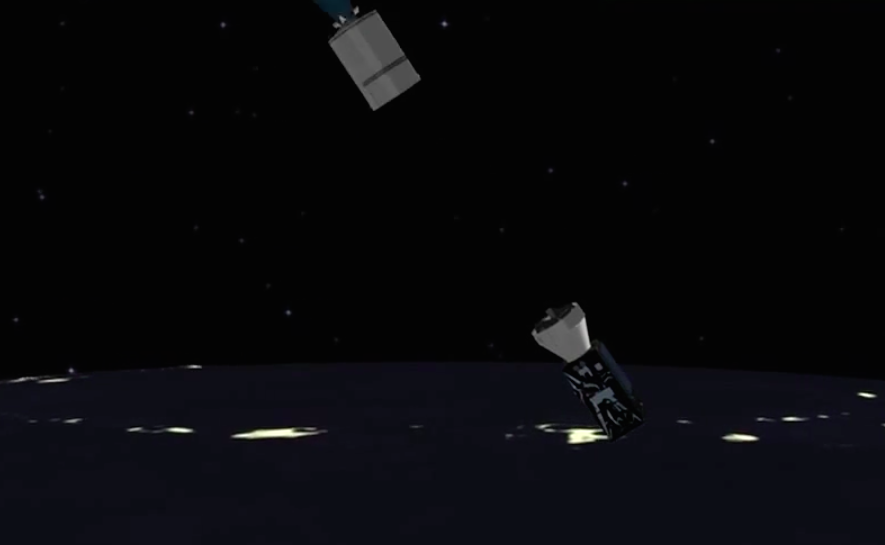
T+01:45:33 – LISA Pathfinder separation
The 4,202-pound (1,906-kilogram) LISA Pathfinder spacecraft deploys from the AVUM fourth stage of the Vega rocket. A ground station in Kourou could acquire the first signals from LISA Pathfinder to confirm its health about two minutes later.
Two communications payloads — one for Intelsat and another for Europe’s data relay satellite system — lifted off from French Guiana aboard an Ariane 5 rocket at 1930 GMT (3:30 p.m. EDT) Tuesday.
A Norwegian communications satellite designed to connect far-flung clients and a Franco-Italian military spacecraft blasted off Sunday aboard an Ariane 5 rocket from French Guiana. Liftoff from the tropical spaceport occurred at 2000 GMT (4 p.m. EDT).
It will take more than 12 hours from liftoff of the European Space Agency’s ExoMars Trace Gas Orbiter until engineers verify the mission is on track for Mars after a series of critical in-space maneuvers by the Proton rocket’s Breeze M upper stage.