Update Feb. 2, 9:30 p.m. EST (0230 UTC): SpaceX announced an anomaly on the upper stage.
SpaceX kicked off the month of February with a Monday morning Falcon 9 rocket launch from Vandenberg Space Force Base. However, the rocket experienced an anomaly near the end of the mission.
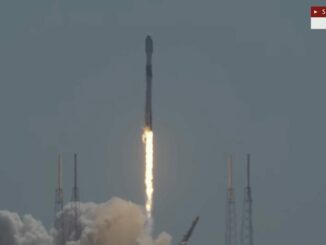
After liftoff from Space Launch Complex 4 East at Vandenberg Space Force Base at 7:47:11 a.m. PST (10:47:11 a.m. EST / 1547:11 UTC), the rocket flew on a south-southwesterly trajectory to deliver 25 Starlink V2 Mini Optimized satellites into low Earth orbit.
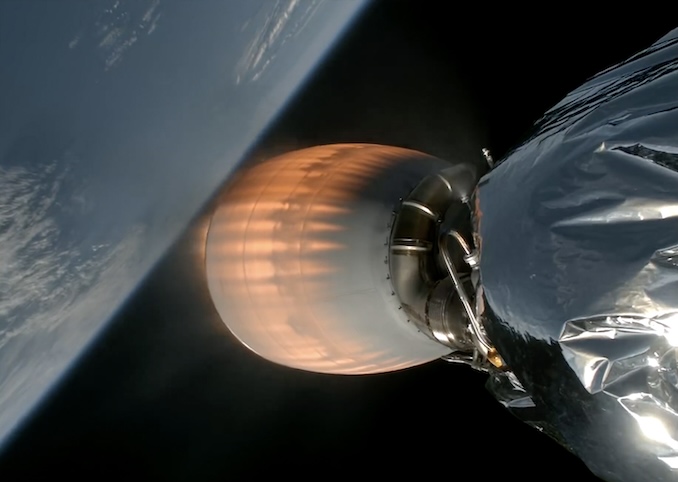
SpaceX confirmed a nominal deployment, but said there was an issue that cropped up prior to the deorbit burn.
“During today’s Falcon 9 launch of Starlink satellites, the second stage experienced an off-nominal condition during preparation for the deorbit burn,” SpaceX wrote in a social media post. “The vehicle then performed as designed to successfully passivate the stage. The first two [Merlin vacuum engine] burns were nominal and safely deployed all 25 Starlink satellites to their intended orbit.”
“Teams are reviewing data to determine root cause and corrective actions before returning to flight.”
SpaceX was scheduled to launch its next Starlink mission, Starlink 6-103, from pad 40 at Cape Canaveral Space Force Station on Tuesday, Jan. 3, but that was moved first to Wednesday and then Thursday. During the tanking test of NASA’s Space Launch System rocket at Launch Complex 39B on Monday night, the Falcon 9 rocket payload fairings carrying the 29 satellites for the Starlink 6-103 mission were spotted heading back from pad 40 and onto the Hangar X site at the Kennedy Space Center.
With the upcoming launch of the Crew-12 mission to the International Space Station also poised to launch no earlier than Feb. 11, NASA will undoubtedly also be interested in learning more about the upper stage anomaly.
SpaceX launched the Starlink 17-32 mission using the Falcon 9 booster with the tail number 1071. This was its 31st flight following launches, like five for the National Reconnaissance Office, five smallsat rideshare missions and NASA’s Surface Water and Ocean Topography (SWOT) mission.
Nearly 8.5 minutes after liftoff, B1071 landed on the drone ship, ‘Of Course I Still Love You,’ positioned in the Pacific Ocean. This was the 175th landing on this vessel and the 567th booster landing to date.