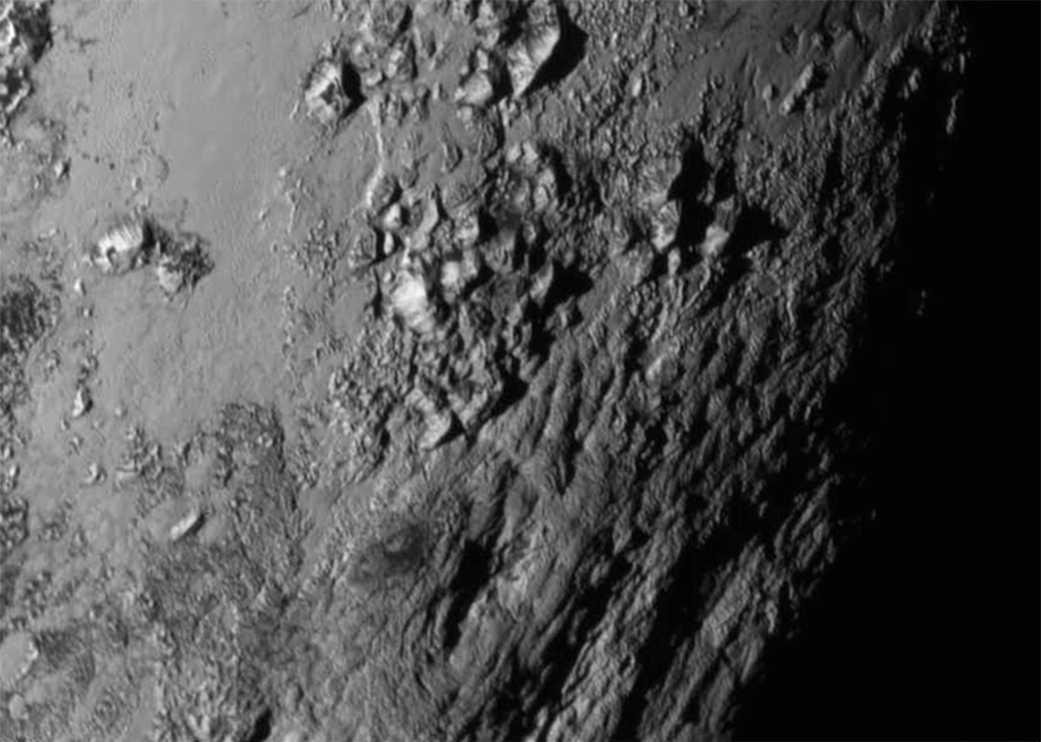
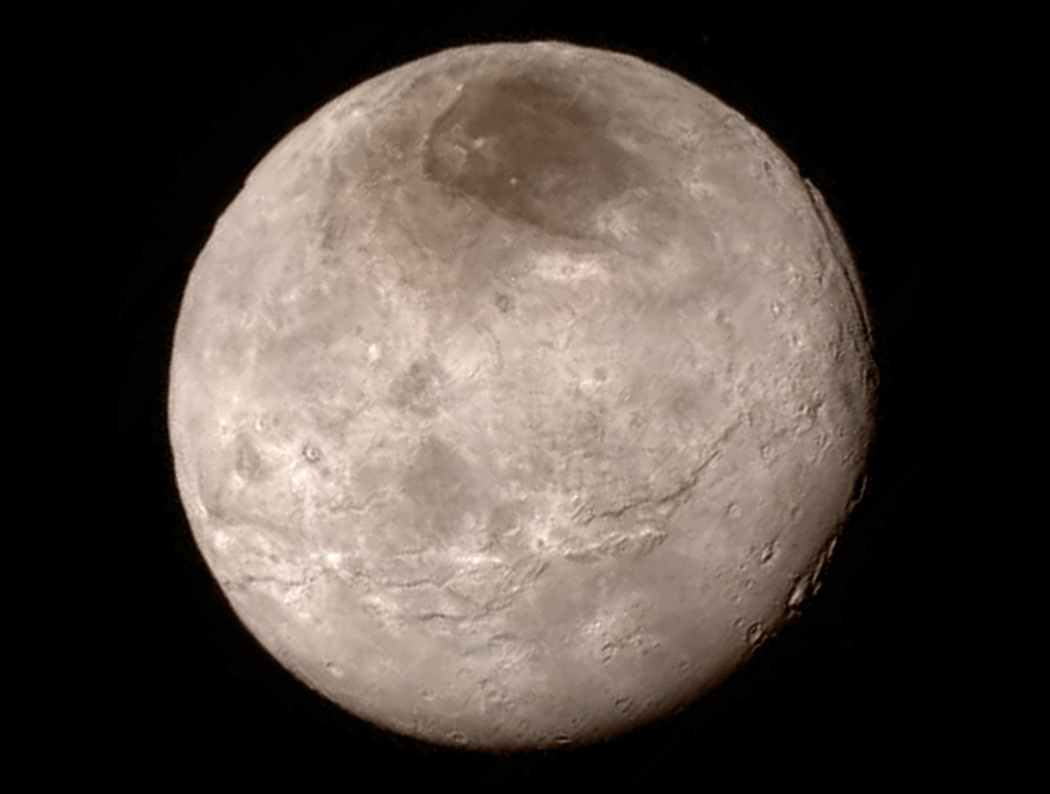
A spectacular sampling of imagery from NASA’s New Horizons spacecraft reveals mountains and water ice bedrock on Pluto, an active crust on its largest moon Charon and the first resolved views of the icy world’s tiny mini-moons.
A snapshot of Pluto shows fresh deposits of water ice bedrock and 11,000-foot mountains, revealing evidence Pluto’s surface is one of the youngest in the solar system. Photo credit: NASA/JHUAPL/SWRINew Horizons found few craters on the surface of Pluto’s Texas-sized moon Charon, evidence of recent geologic activity. Credit: NASA/JHUAPL/SWRITuesday’s New Horizons flyby revealed Pluto’s tiny moon Hydra. The first resolved image of the object shows it to be 28 miles long and 19 miles in diameter, and better images are to come. Credit: NASA/JHUAPL/SWRI
New Horizons project manager Glen Fountain, a veteran of nearly 50 years at the Johns Hopkins University Applied Physics Laboratory, told the Pluto probe’s team to live in the moment for Tuesday’s historic flyby, but look out for last-minute snags.
A fresh image from NASA’s New Horizons spacecraft released Tuesday showed the mission’s distant flyby target a billion miles beyond Pluto — nicknamed Ultima Thule — has an elongated shape like that of a peanut shell or a bowling pin, and the prospect of higher-resolution pictures arriving on Earth later in the day had scientists salivating for more.
The first hints of dramatic cliffs, chasms and craters are showing up in new imagery of Pluto and its Texas-sized moon Charon as NASA’s New Horizons spacecraft prepares to bolt by the icy worlds Tuesday.