
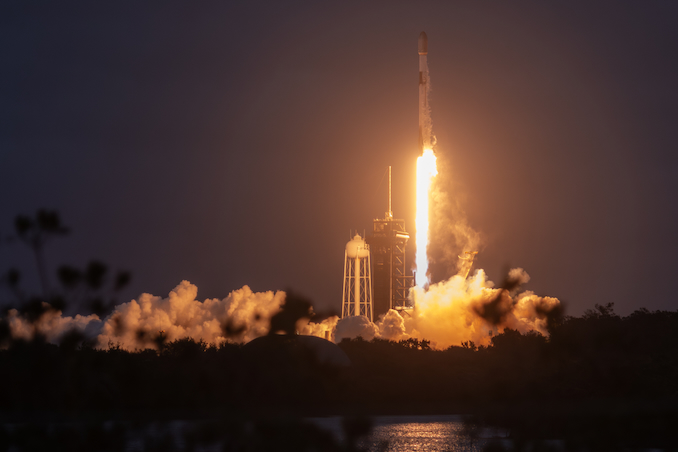
Update Dec. 8, 6:31 p.m. EST (2331 UTC): SpaceX confirms deployment of the 29 Starlink satellites.
Update Dec. 7, 6:32 p.m. EST (2332 UTC): SpaceX scrubbed the launch.
SpaceX achieved a couple notable milestones with its Falcon 9 rocket launch from NASA’s Kennedy Space Center Monday evening.
The mission, dubbed Starlink 6-92, featured the use of the company’s most flown Falcon booster, tail number B1067. On its 32nd flight, it delivered SpaceX’s 3,000th Starlink satellite of the year to low Earth orbit.
Liftoff from historic Launch Complex 39A happened at 5:26 p.m. EST (2226 UTC), following a weather-related scrub on Sunday. The rocket flew on a south-easterly trajectory upon leaving Florida’s Space Coast.
Meteorologists with the 45th Weather Squadron forecast a 90 percent chance for favorable launch on Monday with liftoff winds being a potential concern. Teams also cited a low to moderate risk for impacts from upper-level wind shear and booster recovery weather.
The use of B1067 on this mission brings SpaceX one step closer to its current goal of certifying its Falcon boosters for up to 40 missions a piece. The ultimate number of missions a booster flies will partially depend on the types of missions for which it was used and if it is needed on an expendable flight.
SpaceX is looking to achieve the same level of reuse for the payload fairings on a Falcon rocket’s upper stage, but typically only provides updates on those during the launches of customer missions for the government or from other companies.
This is the 30th flight for the Falcon 9 booster supporting today’s @Starlink mission, now launching the most missions of the Falcon fleet pic.twitter.com/2lWpG8N4oY
— SpaceX (@SpaceX) August 28, 2025
SpaceX couldn’t fly without my help. I try to watch most flights and started doing this May 5, 1961. Some guy named Alan Shepard….
Isn’t it about time we started to REMOVE some of the dead satellite’s and unused ones up there ???? Heck I think Sputnik is still up there floating around.