The European Space Agency’s Aeolus winds observatory is set for liftoff aboard a Vega rocket to kick off a three-year mission to measure global wind profiles from an orbit nearly 200 miles (320 kilometers) above Earth.
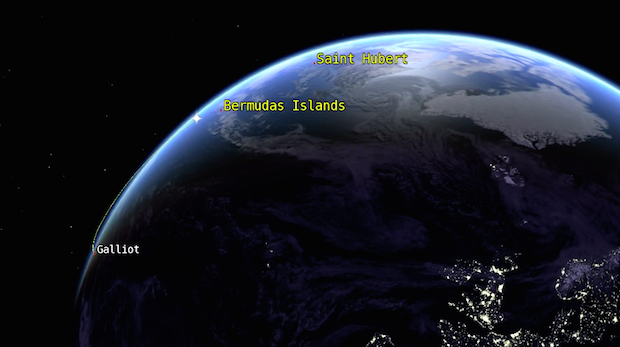
The ascent will take nearly an hour following launch from French Guiana at 2120:09 GMT (5:20:09 p.m. EDT; 6:20:09 p.m. French Guiana time) on Aug. 22.
Credit: Arianespace
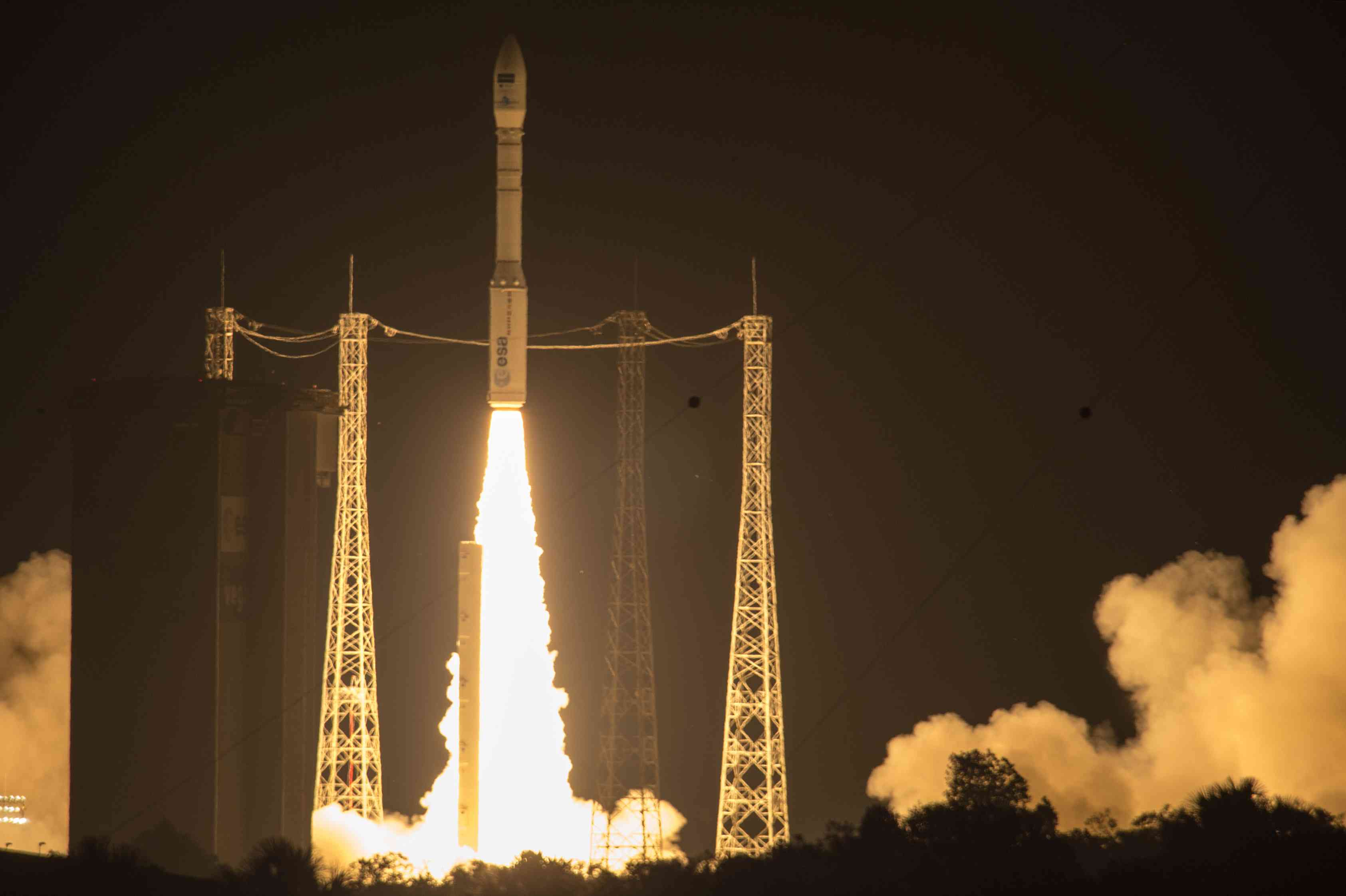
T+00:00:00 – Liftoff
The Vega rocket’s first stage P80 solid rocket motor ignites and powers the 98-foot-tall booster off the launch pad 0.3 seconds later. The P80 first stage motor generates a maximum of 683,000 pounds of thrust.
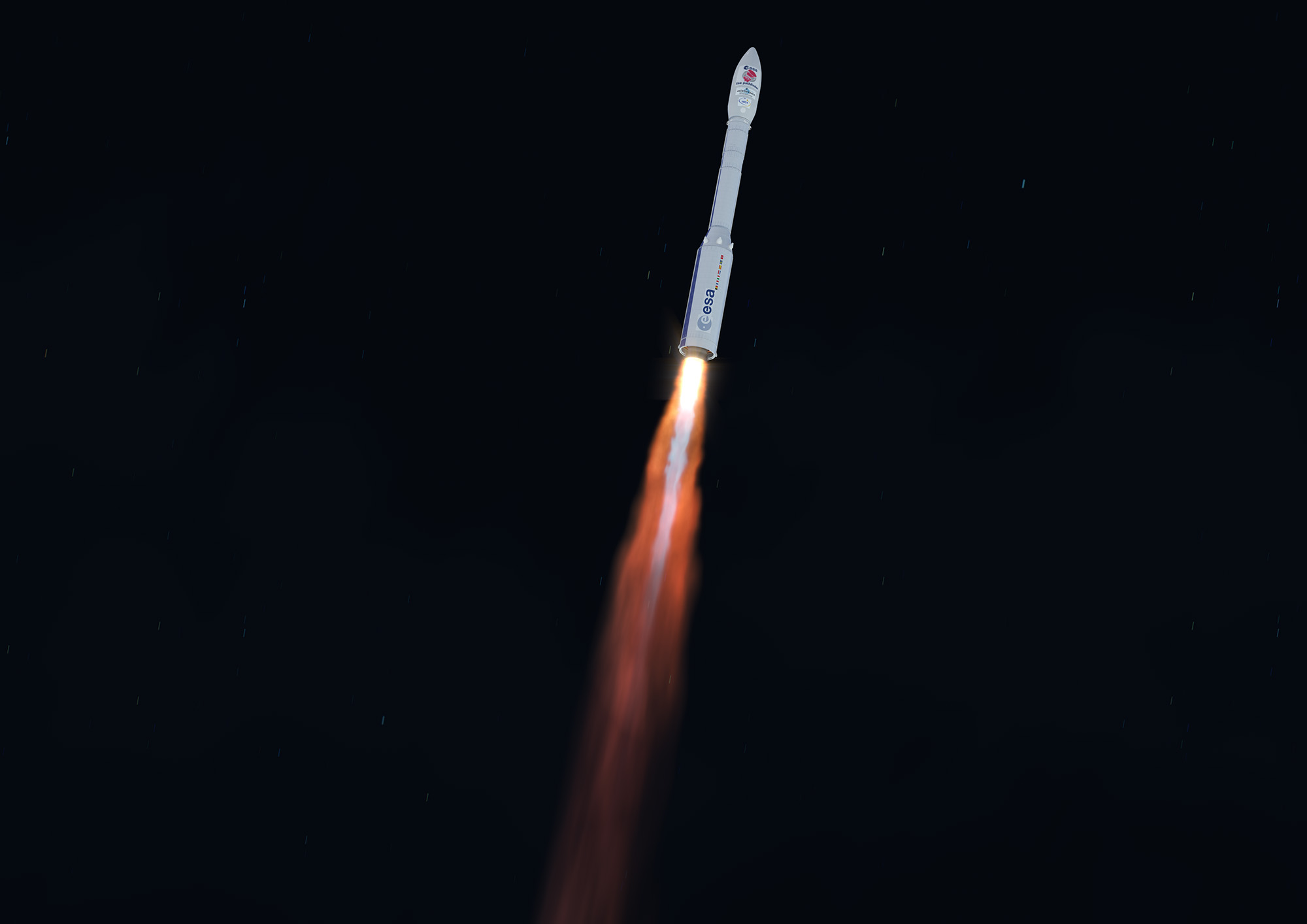
T+00:00:31 – Mach 1
The Vega rocket surpasses the speed of sound as it soars on a northerly trajectory from French Guiana. The rocket will reach Max-Q, the point of maximum aerodynamic pressure, at T+plus 53 seconds.
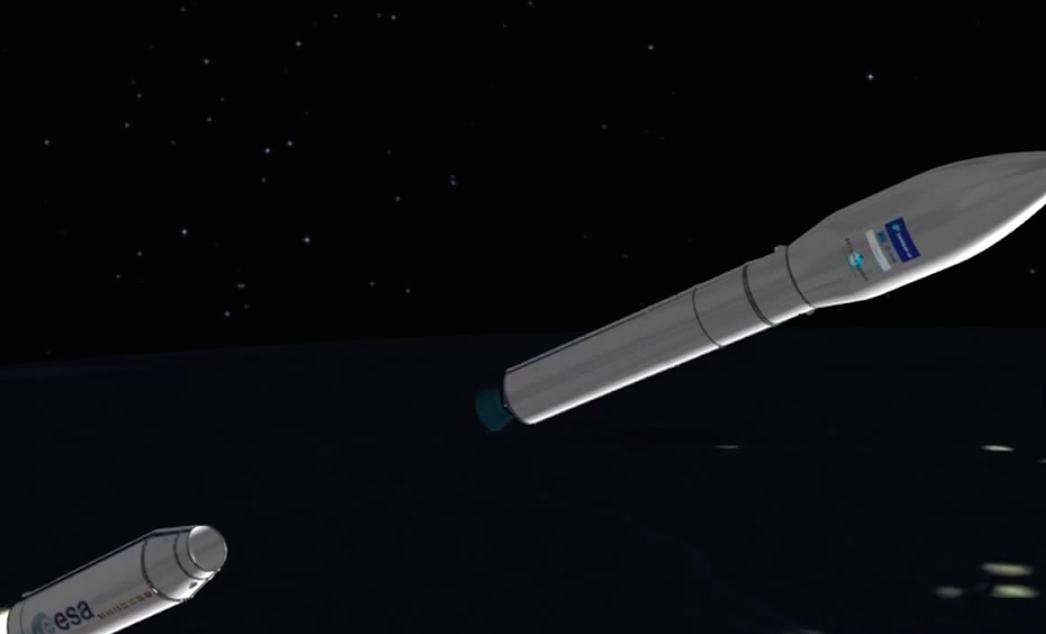
T+00:01:54 – First stage separation
Having consumed its 194,000 pounds (88 metric tons) of solid propellant, the 9.8-foot-diameter (3-meter) P80 first stage motor is jettisoned at an altitude of about 33 miles (53 kilometers). The second stage Zefiro 23 motor will ignite a second later to begin its 103-second firing.
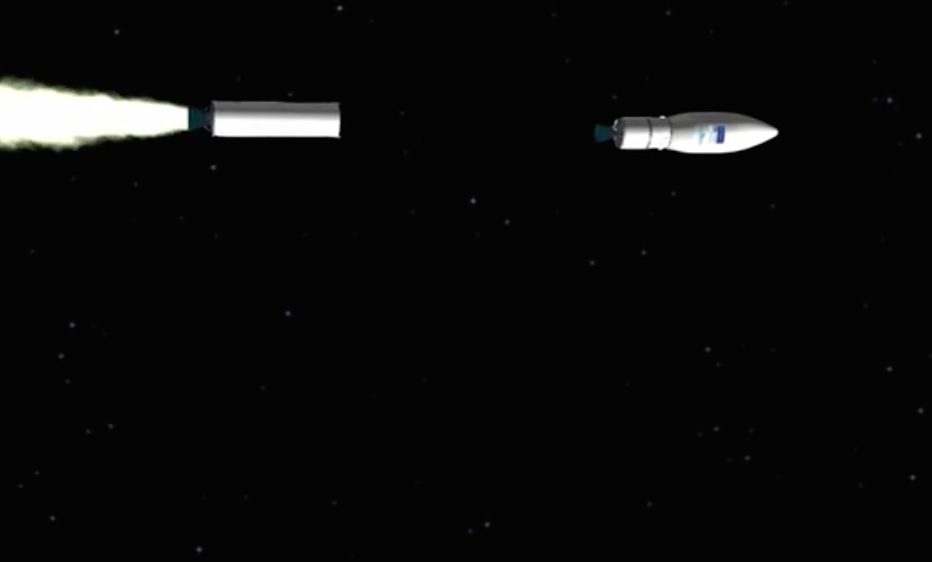
T+00:03:37 – Second stage separation
The Zefiro 23 motor burns out and jettisons.
T+00:03:51 – Third stage ignition
Moving at a velocity of nearly 9,000 mph, or about 3.9 kilometers per second, the Vega rocket’s Zefiro 9 motor ignites for the third stage burn.
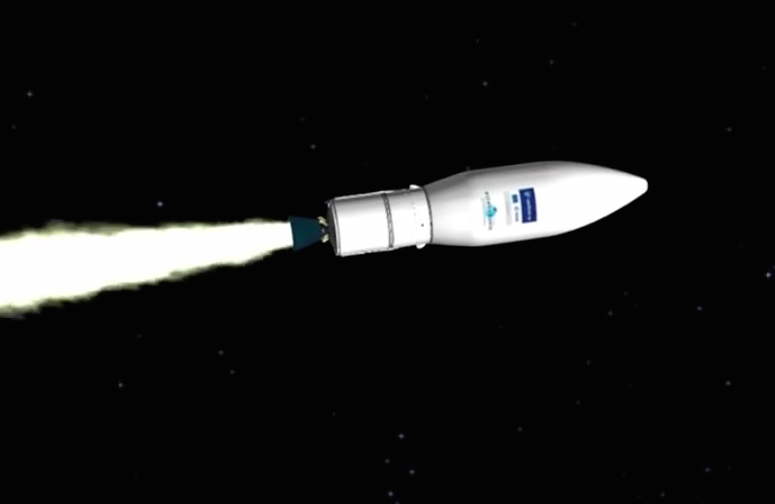
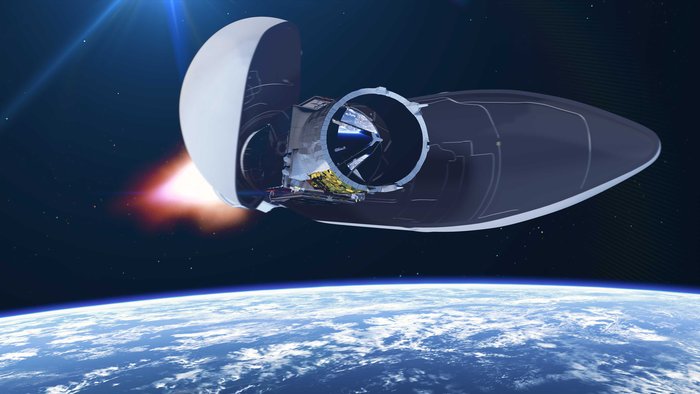
T+00:03:56 – Fairing separation
The Vega’s 8.5-foot-diameter (2.6-meter) payload fairing is released as the rocket ascends into space.
T+00:06:30 – Third stage separation
The Zefiro 9 third stage shuts down and separates, having accelerated the rocket to nearly orbital velocity.
T+00:08:03 – First AVUM ignition
The Vega rocket’s Attitude and Vernier Module, or fourth stage, ignites for the first time. The AVUM burns hydrazine fuel with an RD-843 engine provided by Yuzhnoye of Ukraine.
T+00:16:37 – AVUM first cutoff
The Vega’s AVUM fourth stage is turned off after an 8-minute, 34-second burn, beginning a nearly 37-minute coast until the engine is ignited again.
T+00:53:06 – Second AVUM ignition
The AVUM fires a second time for a 23-second burn to put the Aeolus satellite into its targeted orbit.
T+00:53:29 – AVUM second cutoff
The AVUM engine shuts down after reaching a circular orbit with an altitude of 199 miles (320 kilometers), and an inclination of 96.7 degrees.
T+00:54:57 – Aeolus separation
The European Space Agency’s Aeolus winds observatory separates from the Vega upper stage.
Crew Dragon, meet Falcon 9. SpaceX has released photos showing the Crew Dragon spacecraft and Falcon 9 rocket that will carry NASA astronauts Doug Hurley and Bob Behnken aloft next week.
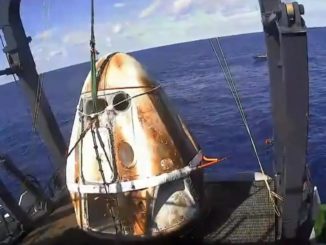
SpaceX’s first Crew Dragon spacecraft wrapped up its five-day stay at the International Space Station at 2:31 a.m. EST (0731 GMT) Friday with a smooth undocking, then nailed an on-target splashdown in the Atlantic Ocean east of Florida at 8:45 a.m. EST (1345 GMT).
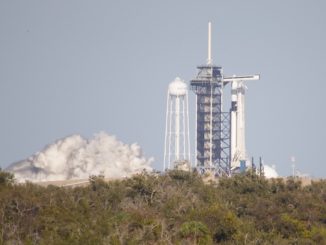
A SpaceX Falcon 9 rocket sporting human-rating upgrades such as new composite pressurant tanks briefly ignited its nine Merlin engines Thursday afternoon on a launch pad at NASA’s Kennedy Space Center in Florida, and SpaceX later declared the pre-launch milestone complete in preparation for a critical test flight with a commercial crew capsule as soon as late February.