News Archive
Browse every article published on Spaceflight Now, from launch reports and mission previews to spacecraft development coverage. Use the filters to narrow by topic or search by keyword.
Matching Articles
692 articles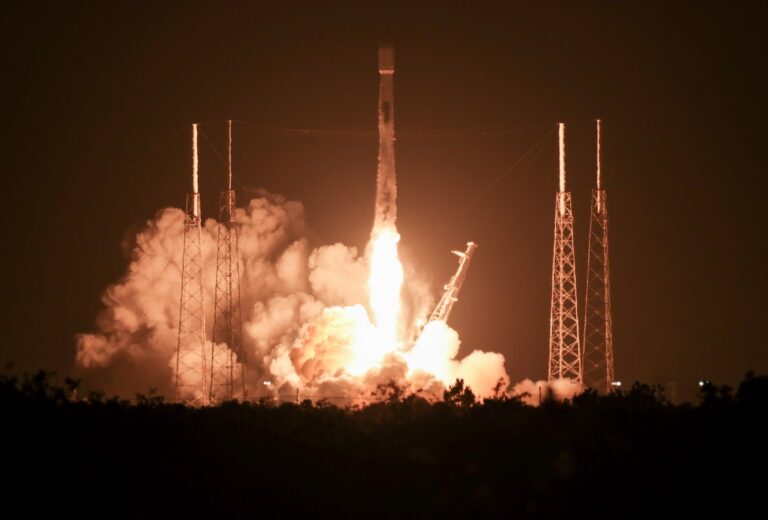 Video
SpaceX launches Intelsat satellite with NASA air quality sensor
A SpaceX Falcon 9 rocket lifted off from Cape Canaveral shortly after midnight Friday with Intelsat 40e, a communications satellite destined to beam broadband internet signals to airplane and cruise ship passengers across North America while hosting a NASA instrument package to monitor air pollution.
 Video
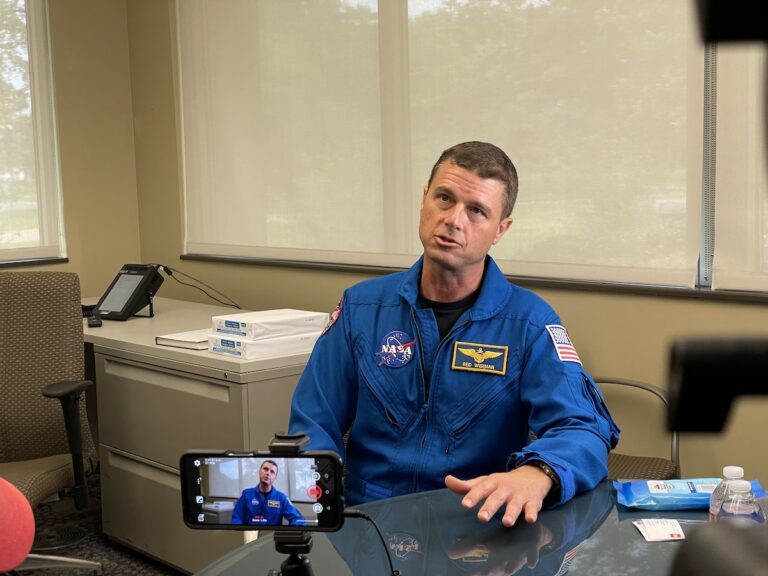
Artemis 2 commander chats with Spaceflight Now
Reid Wiseman, a veteran U.S. Navy test pilot and former chief of NASA's astronaut corps, will lead the four-person crew assigned to the Artemis 2 mission to carry people to the vicinity of the moon for the first time in more than 50 years. Wiseman says he views the crew's job as making sure NASA's Orion spacecraft is ready for more demanding missions later this decade to support moon landings and assembly of a space station called the Gateway in lunar orbit.
 Video
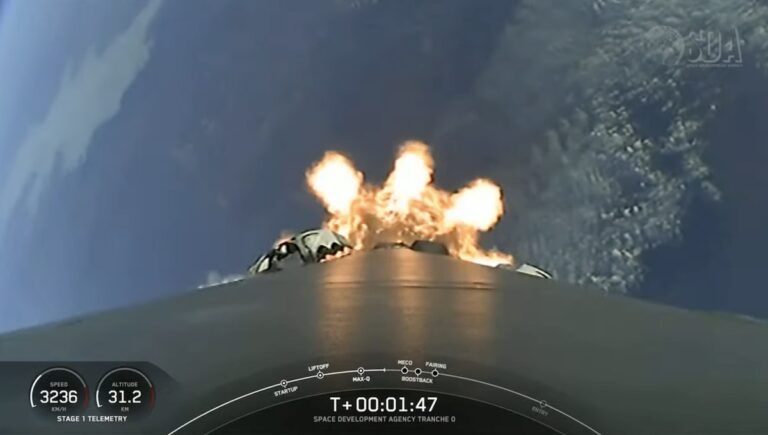
Live coverage: SpaceX Falcon 9 rocket lifts off on first SDA mission
SpaceX launched a Falcon 9 rocket at 7:29 a.m. PDT (10:29 a.m. EDT; 1429 UTC) Sunday from Vandenberg Space Force Base, California with 10 missile tracking and data relay satellites for the U.S. military's Space Development Agency. The launch occurred three days after SpaceX aborted the first launch attempt at T-minus 3 seconds to examine data from one of the Falcon 9's main engines.
 Video
SpaceX launches another bundle of Starlink internet satellites
SpaceX delivered 56 more Starlink internet satellites into the company's global internet constellation after liftoff of a Falcon 9 rocket from Cape Canaveral Wednesday, bringing the total number of Starlinks launched to 4,217 spacecraft.
 Video
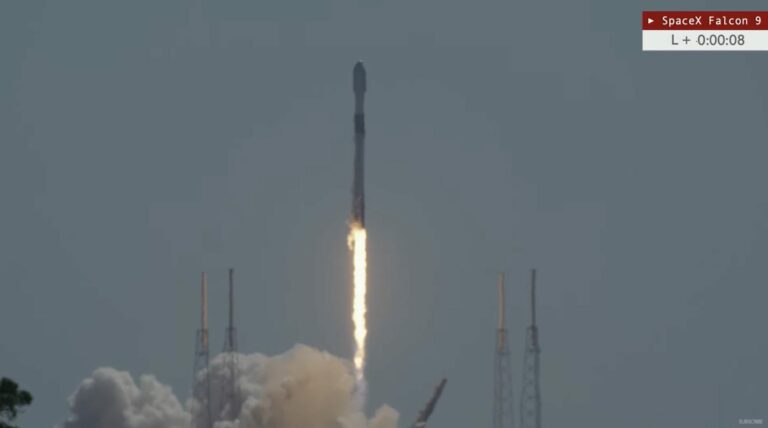
Live coverage: SpaceX launches 56 more Starlink internet satellites
SpaceX launched another Falcon 9 rocket Friday, this time to deliver 56 more Starlink internet satellites into orbit. Liftoff from pad 40 at Cape Canaveral Space Force Station occurred at 11:43 a.m. EDT (1543 UTC). The first stage booster landed on a drone ship in the Atlantic Ocean.
 Video
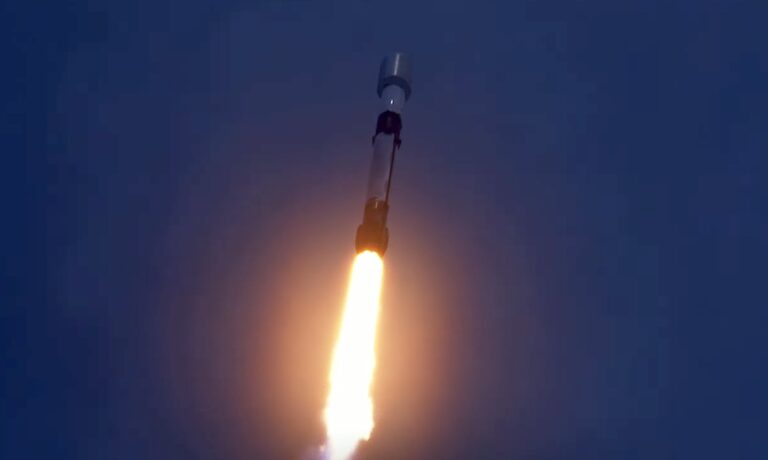
Live coverage: SpaceX launches 52 Starlink satellites from California
A SpaceX Falcon 9 rocket lifted off from Vandenberg Space Force Base in California at 12:26 p.m. PDT (3:26 p.m. EDT; 1926 GMT) Friday with another batch of 52 Starlink internet satellites. The mission is the first of two SpaceX launches scheduled Friday, with another Falcon 9 poised for liftoff from Florida a little more than four hours later.
 Video
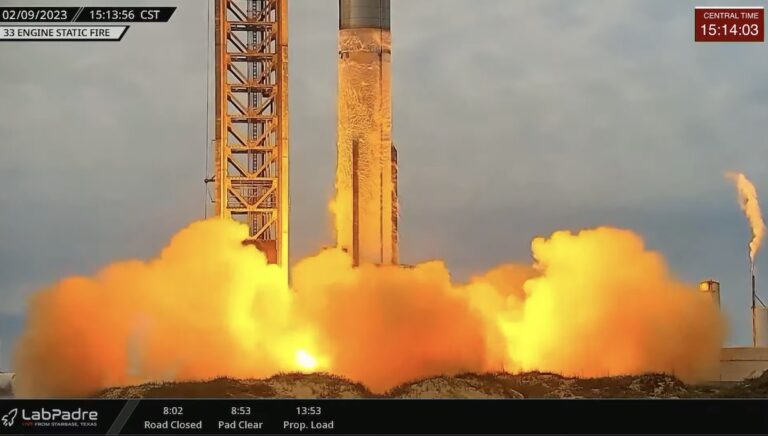
SpaceX test-fires 31 engines on Starship’s gigantic Super Heavy booster
In a significant milestone preparing for liftoff of the world's most powerful rocket, SpaceX test-fired 31 of the booster's 33 methane-fueled engines Thursday in South Texas as the company eyes a launch attempt as soon as March.
 Video
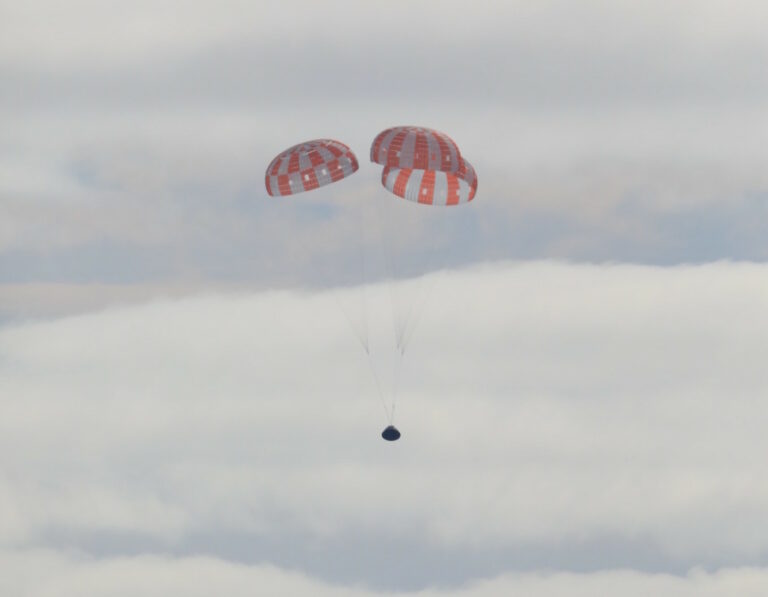
Live coverage: NASA’s Orion spacecraft splashes down after moon mission
NASA's unpiloted Orion spacecraft re-entered Earth's atmosphere at 32 times the speed of sound Sunday, surviving a fiery-hot descent before deploying parachutes and splashing down in the Pacific Ocean west of Baja California at 12:40 p.m. EST (1740 GMT). The Orion capsule successfully completed NASA's Artemis 1 mission, a precursor to future astronaut missions on the spacecraft.
 Video
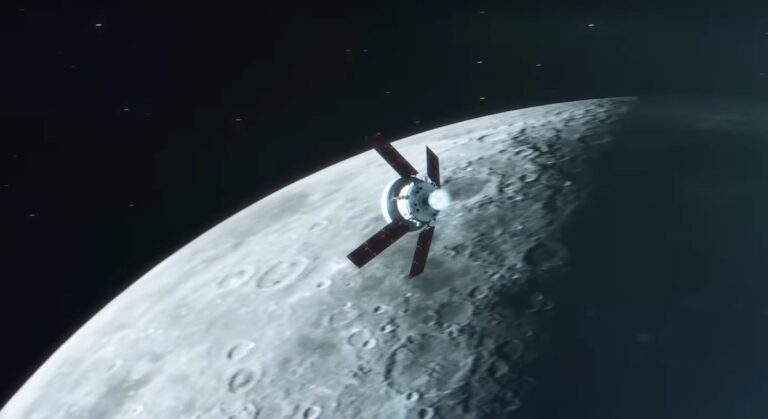
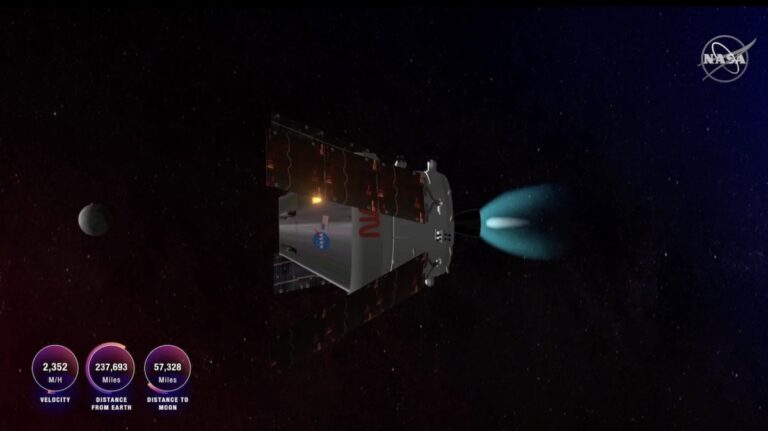
Live coverage: Orion spacecraft completes return powered flyby of the moon
NASA's Orion spacecraft successfully fired its main engine for three-and-a-half minutes at 11:43 a.m. EST (1643 GMT) Monday as it flew 80 miles from the surface of the moon, redirecting the capsule's trajectory for the return trip to Earth to wrap up the Artemis 1 test flight.
 Video
Live coverage: Orion capsule completes distant retrograde orbit insertion burn
Another major engine burn on NASA's Artemis 1 mission placed the Orion spacecraft into a distant retrograde orbit around the moon, where it will spend six days performing more tests and demonstrations before returning to Earth. The 88-second burn by Orion's main engine occurred at 4:52 p.m. EST (2152 GMT) Friday.