News Archive
Browse every article published on Spaceflight Now, from launch reports and mission previews to spacecraft development coverage. Use the filters to narrow by topic or search by keyword.
Matching Articles
511 articles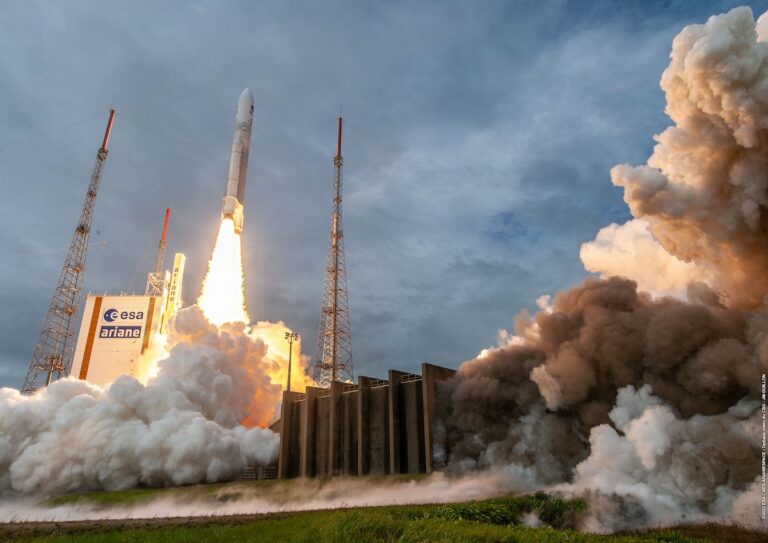 Video
Europe launches spacecraft on eight-year journey to explore Jupiter’s moons
An Ariane 5 rocket took off from French Guiana Friday with the heaviest interplanetary science probe ever launched, kicking off a $1.7 billion European Space Agency mission on a decade-long quest to Jupiter’s icy moons in search of environments that could be habitable for life.
 Video
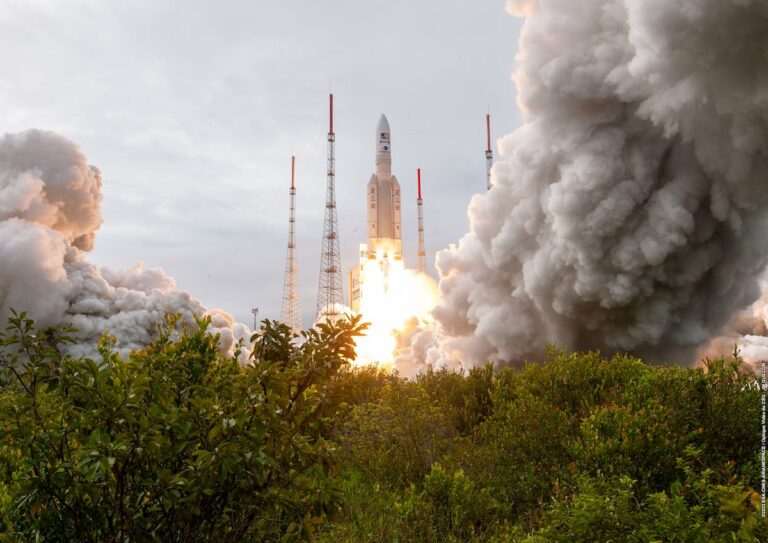
Live coverage: Ariane 5 rocket launches Europe’s first mission to Jupiter
After the threat of lightning kept the mission on the ground Thursday, Arianespace and the European Space Agency successfully launched an Ariane 5 rocket Friday from Kourou, French Guiana, with the Jupiter Icy Moons Explorer mission, a robotic spacecraft embarking on an eight-year journey to the solar system's largest planet. Liftoff with ESA's JUICE spacecraft occurred at 8:14 a.m. EDT (1214 UTC).
 Video
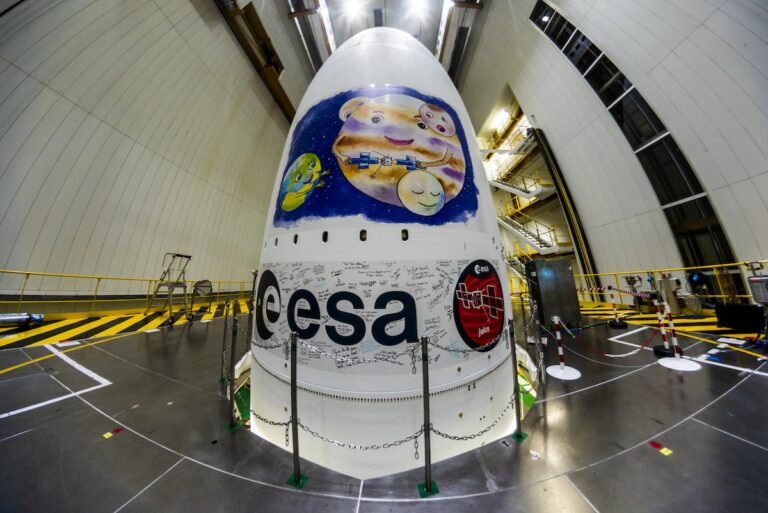
Europe’s first mission to Jupiter poised for launch from South America
The European Space Agency's $1.7 billion robotic Jupiter Icy Moons Explorer mission is ready for liftoff Thursday from French Guiana, beginning an eight-year cruise to the solar system's largest planet before becoming the first-ever spacecraft to orbit one of Jupiter's moons in the 2030s.
 Video
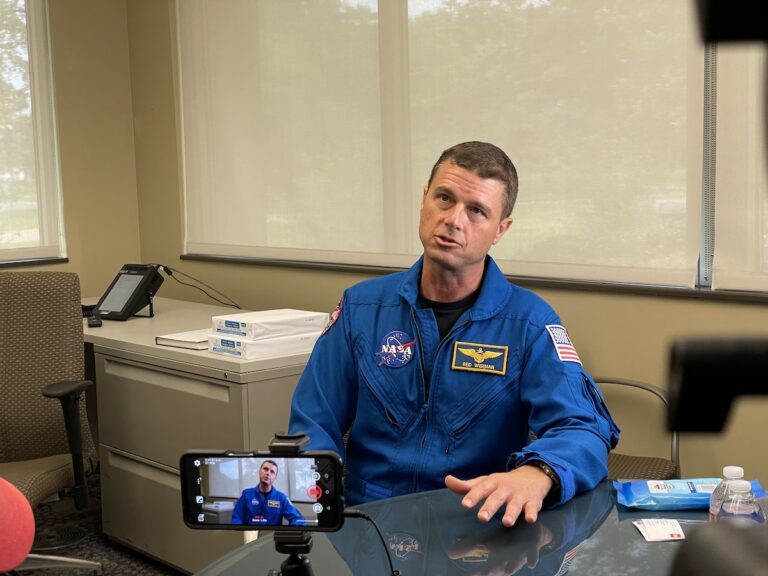
Artemis 2 commander chats with Spaceflight Now
Reid Wiseman, a veteran U.S. Navy test pilot and former chief of NASA's astronaut corps, will lead the four-person crew assigned to the Artemis 2 mission to carry people to the vicinity of the moon for the first time in more than 50 years. Wiseman says he views the crew's job as making sure NASA's Orion spacecraft is ready for more demanding missions later this decade to support moon landings and assembly of a space station called the Gateway in lunar orbit.
 Video
Live coverage: Four-person space station returns to Earth
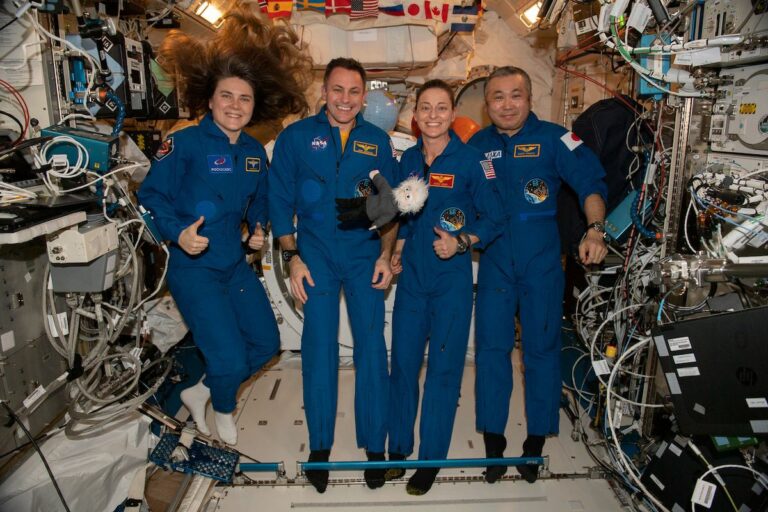
NASA commander Nicole Mann, pilot Josh Cassada, Japanese astronaut Koichi Wakata, and Russian cosmonaut Anna Kikina undocked from the International Space Station at 2:20 a.m. EST (0720 GMT) Saturday aboard SpaceX's Dragon Endurance spacecraft. Wrapping up a five-month mission, the commercial crew capsule splashed down in the Gulf of Mexico off the coast of Florida at 9:02 p.m. EST Saturday (0202 GMT Sunday).
 Video
Live coverage: Four-man crew docks at International Space Station
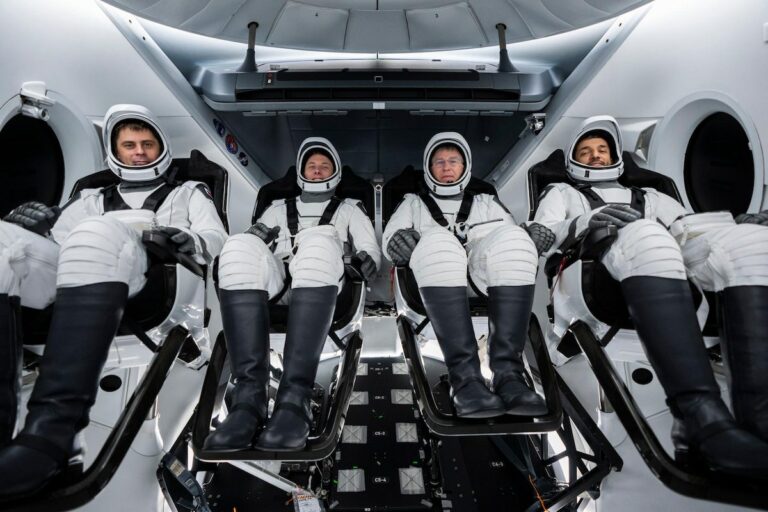
SpaceX and NASA launched the Crew-6 mission to the International Space Station at 12:34 a.m. EST (0534 GMT) Thursday from Kennedy Space Center in Florida. A Falcon 9 rocket blasted off with two NASA astronauts, an astronaut from the United Arab Emirates, and a Russian cosmonaut to begin a six-month expedition in orbit. Docking at the International Space Station occurred at 1:40 a.m. EST (0640 GMT) Friday.
 Video
Officials give ‘go’ for Crew-6 mission after launch readiness review
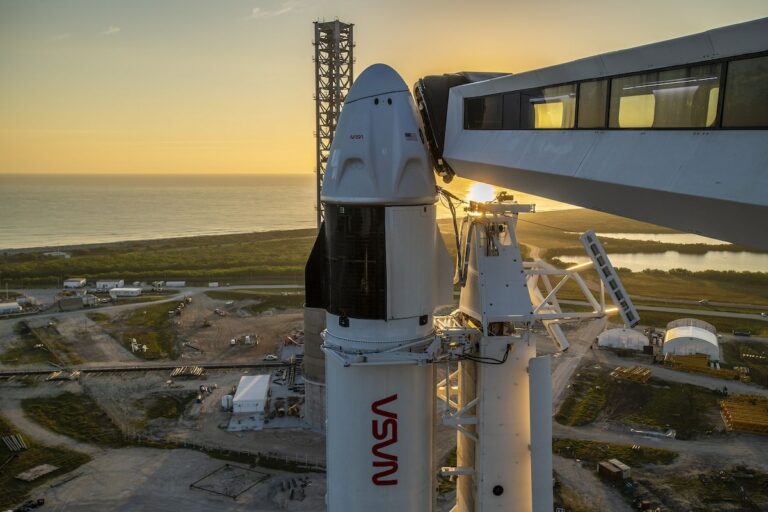
NASA and SpaceX officials gave the green light Saturday night to continue preparations for launch of the next crew mission to the International Space Station Monday from Kennedy Space Center in Florida.
 Video
Live coverage: Replacement Soyuz arrives at space station
Two months after a coolant leak disabled a Soyuz crew ferry spacecraft at the International Space Station, Russia's space agency launched of a replacement vehicle from the Baikonur Cosmodrome in Kazakhstan Thursday, and the craft docked at the station at 7:58 p.m. EST Saturday (0058 GMT Sunday). The Soyuz MS-23 spacecraft launched without any people on-board, and will serve as a lifeboat and ride home for a three-man space station crew later this year.
 Video
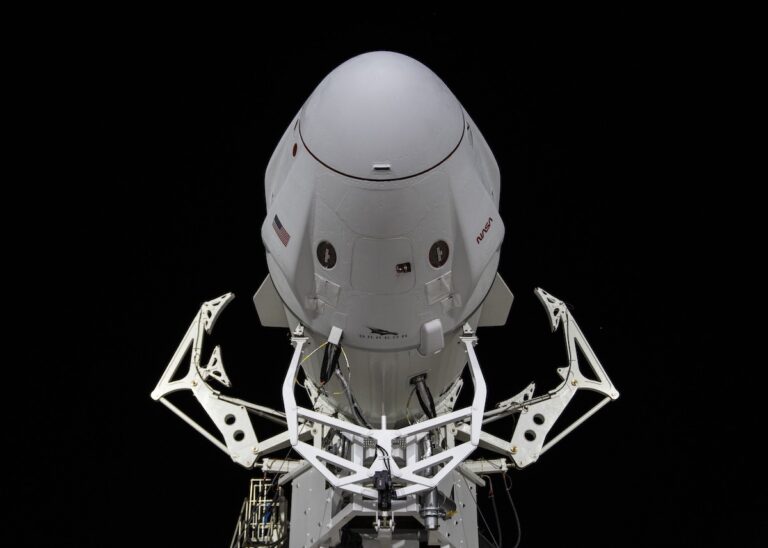
Photos: Falcon 9 and Crew Dragon roll out to pad 39A
SpaceX transported a Falcon 9 rocket with the Crew Dragon Endeavour spacecraft to pad 39A on Wednesday, Feb. 22, for final preparations to carry a four-man crew to the International Space Station on NASA's Crew-6 mission.
 Video
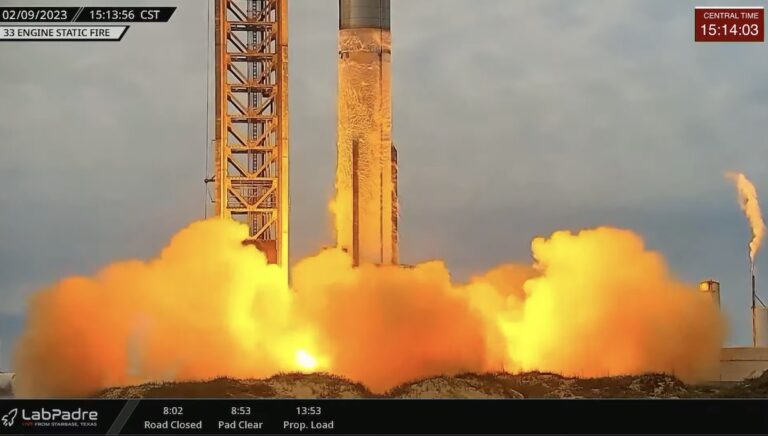
SpaceX test-fires 31 engines on Starship’s gigantic Super Heavy booster
In a significant milestone preparing for liftoff of the world's most powerful rocket, SpaceX test-fired 31 of the booster's 33 methane-fueled engines Thursday in South Texas as the company eyes a launch attempt as soon as March.