News Archive
Browse every article published on Spaceflight Now, from launch reports and mission previews to spacecraft development coverage. Use the filters to narrow by topic or search by keyword.
Matching Articles
12 articles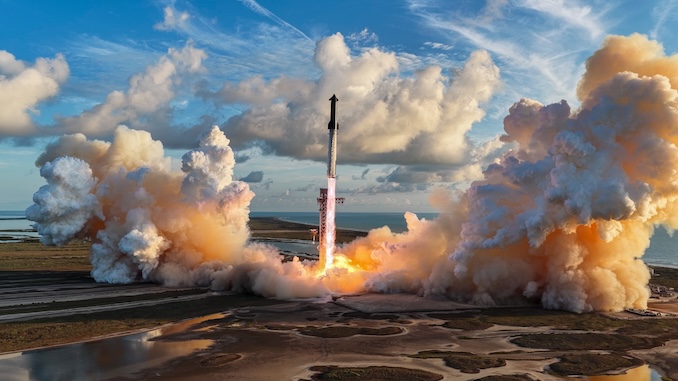
Starship returns to Earth; rocket splashes down north of Hawaii after three-hour flight
The Super Heavy first stage booster, generating some 16 million pounds of thrust — twice the power of NASA's Space Launch System moon rocket — rapidly accelerated as it consumed propellant and lost weight, climbing out of the thick lower atmosphere along a southeasterly trajectory.
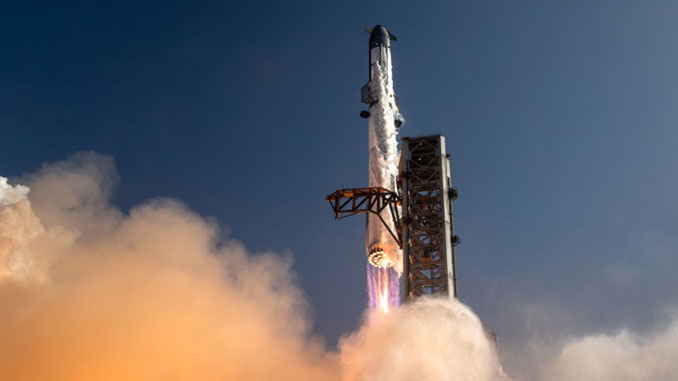
Super Heavy-Starship rocket chalks up mostly successful test flight
Powered by 33 methane-fueled Raptor engines, the 407-foot-tall two-stage rocket blasted off from SpaceX's "Starbase," Texas, launch site at 5:51 p.m. EDT, putting on a spectacular show for area residents and tourists as it climbed away atop some 16 million pounds of thrust.
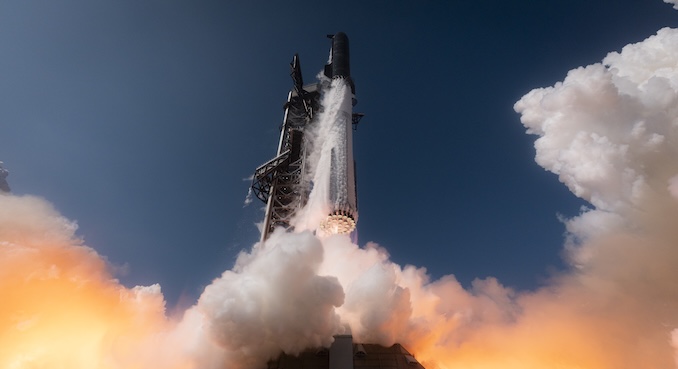
Musk praises “epic” Super Heavy-Starship launch
The Starship upper stage was equipped with six third-generation Raptor engines and one of three optimized for operating in vacuum shut down early during the climb to space. The flight computer kept the other five engines running longer than originally planned to make up for the shortfall, putting the craft on an acceptable sub-orbital trajectory.
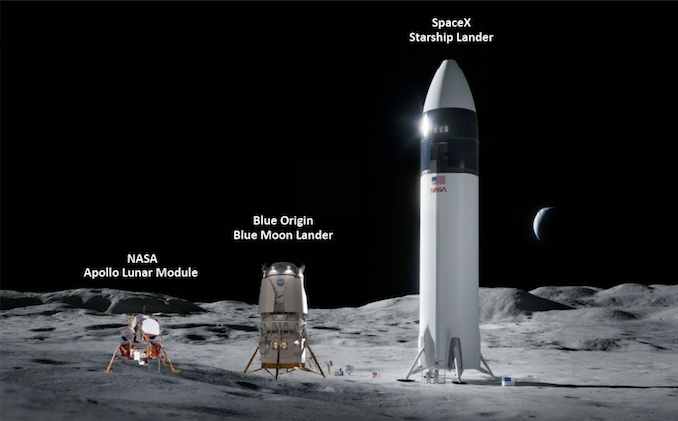
NASA inspector general assesses agency’s management of moon lander risk
NASA's Office of Inspector General said that while NASA is working to "mitigate and prevent hazards" associated with lunar landers being built by SpaceX and Blue Origin, "there are currently gaps in the agency's approach, including in its testing posture and crew survival analyses," including what might happen after a catastrophic but non-fatal event.
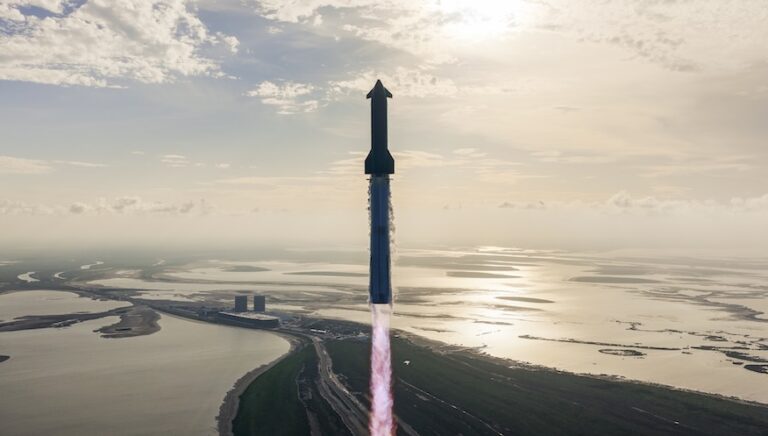
SpaceX successfully launches Super Heavy-Starship on critical test flight
While re-entry heating damaged a protective "skirt" around the the engine bay of the upper stage Starship, along with partially melting a control flap near its hinge, the vehicle remained under control throughout and made it all the way to a powered splashdown in the Indian Ocean as planned.

Starship upper stage lost in second mishap in a row
SpaceX launched its huge Starship rocket on the program's eighth test flight Thursday, but a malfunction of some sort triggered multiple upper stage engine shutdowns and for the second flight in a row, the vehicle failed to reach its planned sub-orbital altitude and broke apart in a shower of debris.
 Video
Super Heavy-Starship climbs high but falls short on second test flight
SpaceX's gargantuan Super Heavy-Starship, the most powerful rocket ever built, blasted off on its second test flight Saturday and while the initial stages of the mission went smoothly, the first stage broke apart moments after separation from the Starship upper stage, which then blew itself up as it neared space.
 Video
FAA clears SpaceX for second Super Heavy-Starship test flight
SpaceX's huge Super Heavy-Starship rocket has been cleared for a second test flight in an attempt to boost the unpiloted Starship upper stage into space for the first time, the company announced Wednesday. On Thursday Elon Musk announced the launch has slipped to Saturday to replace a grid fin actuator.
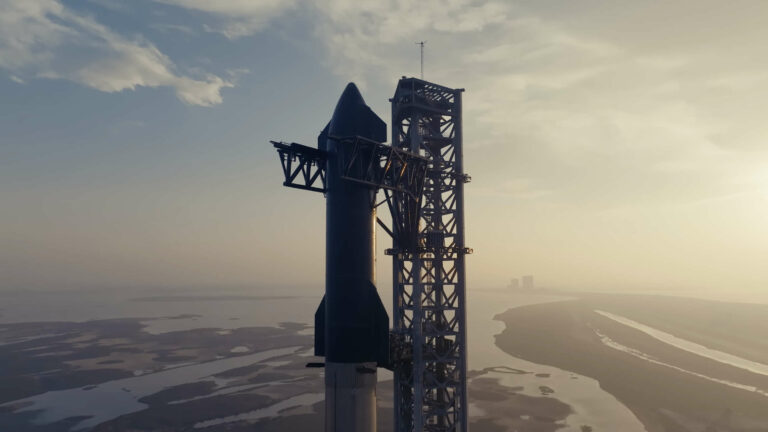
Musk outlines major upgrades for Starship rocket
SpaceX will need another six weeks or so to finish implementing hundreds of changes to its Super Heavy-Starship rocket and the gargantuan booster's Texas launch pad before it will be ready for a second attempt to reach orbit, company founder Elon Musk said Saturday.
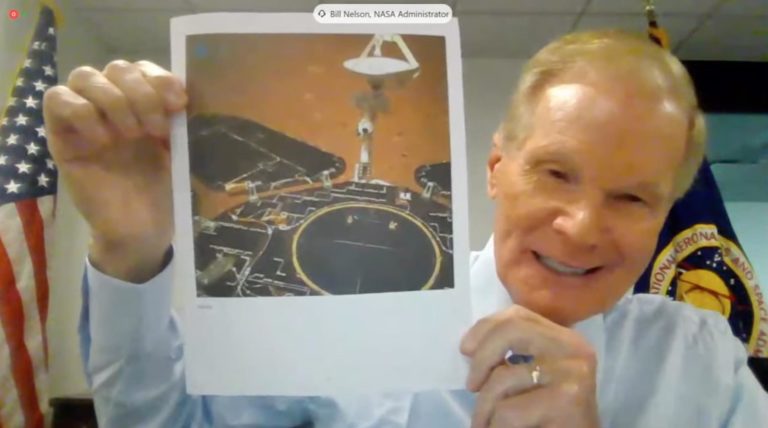
Nelson cites China’s growing space prowess, calls for sustained NASA funding
Holding up a photo taken by China's new Mars lander, NASA Administrator Bill Nelson warned Congress Wednesday that his agency faces increasingly stiff competition on the high frontier and that sustained funding for a new moon lander, infrastructure upgrades and other critical programs is vital for America's space program.