|
Report blasts NASA for Columbia tragedy
The Columbia Accident Investigation Board released its long-awaited report today, blaming the Feb. 1 disaster on bureaucratic inertia, slipshod internal communications and ineffective management at the top levels of NASA.
 FULL STORY FULL STORY
STS-107 STORY ARCHIVE
COVERAGE FROM FEBRUARY 1
| |

|
|

Video coverage for subscribers only:
VIDEO: WATCH TODAY'S COLUMBIA BOARD NEWS CONFERENCE QT
SUBSCRIBE NOW
|
NASA vows to implement recommendations
NASA will use the Columbia Accident Investigation Board's final report as a blueprint for correcting the problems that led to the Feb. 1 shuttle disaster and returning the shuttle safely to flight, Administrator Sean O'Keefe said today.
FULL STORY
| |

|
|
On-orbit tile, RCC repair required to resume flights
NASA must develop the capability to repair damaged heat shield tiles in orbit, as well as cracks or breaches in the reinforced carbon carbon panels making up the shuttle's wing leading edges, before space shuttles return to flight, the Columbia Accident Investigation Board says.
FULL STORY
| |

|
|
Columbia report released
The Columbia Accident Investigation Board, led by Admiral Hal Gehman has published its final report into the loss of the shuttle during reentry on February 1. Spaceflight Now is publishing unedited extracts from the report:
BOARD STATEMENT
EXECUTIVE SUMMARY
| |
|
|
Board issues recommendations
In its final report the Columbia Accident Investigation Board makes 29 recommendations, 15 of which are deemed necessary before the shuttle can return to flight.
RECOMMENDATIONS
FINDINGS
| |
|
|
Decision-making during the flight of STS-107
This lengthy portion of the report details how management decisions made during Columbia's final flight reflect missed opportunities, blocked or ineffective communications channels, flawed analysis, and ineffective leadership.
FULL SECTION
| |
|
|
CAIB addresses fate of Columbia's astronauts
The Columbia Accident Investigation Board, in its final report, provided new insights into how the shuttle broke apart and the fate of the orbiter's crew. For the record, here are those observations.
FULL STORY
| |
|
|
Report looks at possibility of rescue or repair
To put the decisions made during the flight of STS-107 into perspective, the Board asked NASA to determine if there were options for the safe return of the Columbia crew. In this study, NASA was asked to evaluate the possibility of rescuing the crew by launching Atlantis or repairing damage to Columbia's wing on orbit.
FULL STORY
| |
|
|
Statement by the President
President George W. Bush today issued a statement regarding the Columbia Accident Investigation Board's report, pledging that "our journey into space will go on."
READ THE STATEMENT
| |

|
|
NASA administrator accepts Columbia accident report
This morning, NASA Administrator Sean O'Keefe received the report of the Columbia Accident Investigation Board from the chairman, retired U.S. Navy Admiral Harold Gehman. The following is a statement from the NASA Administrator regarding the CAIB report.
READ THE STATEMENT
| |
|
|
Comments from co-chair of Return to Flight Task Group
"Over the coming days and months we will carefully study the board's report and findings, review, digest and assess NASA's plans for implementing the board's recommendations, and provide the NASA Administrator -- and the public -- with our assessments as they pertain to the safety and operational readiness of the STS-114 space shuttle mission."
READ THE STATEMENT
| |
|
|
|

|
NASA mulls changes for next space shuttle flight
The addition of a time-consuming tile inspection on the next shuttle flight, a spacewalk to test new tile repair equipment and techniques and lack of a third space station crew member to assist in equipment transfer work is forcing NASA managers to consider major changes to reduce the crew's workload.
FULL STORY
| |
|
|
Guam school to be renamed in honor of NASA astronaut
Guam South Elementary/Middle School will be renamed after space shuttle Columbia pilot Willie McCool. A former Navy test pilot, McCool had close ties to Guam. He attended two middle and high school there from 1975 to 1977.
FULL STORY
| |

|
|
Sailors recognized for help in Columbia recovery
NASA astronaut Jim Reilly recently presided over an awards ceremony, held at Naval Amphibious Base, that recognized sailors for their search efforts of space shuttle Columbia.
FULL STORY
| |

|
|
Shuttle return-to-flight task group outlines plans
The co-chairman of a panel charged with assessing how well NASA meets the intent of recommendations from the Columbia Accident Investigation Board said Thursday he's not sure the agency will have time to implement critical management changes before shuttle flights resume next year.
FULL STORY
| |
|
|
Coverage for subscribers only:
VIDEO: WATCH ENTIRE DICK COVEY NEWS CONFERENCE QT
AUDIO: LISTEN TO THE TASK GROUP'S FIRST PUBLIC MEETING QT
SUBSCRIBE NOW
|
Asteroids dedicated to fallen Columbia astronauts
The final crew of the Space Shuttle Columbia was memorialized in the cosmos as seven asteroids orbiting the sun between Mars and Jupiter were named in their honor Wednesday.
FULL STORY
| |

|
|
NASA deputy chief declines 'culture' questions
NASA will respond to the Columbia Accident Investigation Board's recommendations "almost to the letter," a senior agency official said Tuesday. But Frederick Gregory, NASA's deputy administrator, downplayed widely publicized criticism of NASA's management culture, saying "it would be difficult for me to define to you what the 'NASA culture' is."
FULL STORY
| |

|
|
Video coverage for subscribers only:
VIDEO: NASA OFFICIALS HOLD NEWS CONFERENCE TUESDAY QT
SUBSCRIBE NOW
|
Columbia board: NASA needs better imaging
The Columbia Accident Investigation Board has issued its fifth preliminary finding and recommendation to the National Aeronautics and Space Administration, in advance of its appearance in the final report.
FULL STORY
| |
|
|
Ham overcome by emotion when describing anguish
In an emotion-charged meeting with reporters, Linda Ham, chairman of NASA's mission management team and a lightning rod for criticism of decisions made - or not made - during the shuttle Columbia's ill-fated voyage, spoke publicly for the first time Tuesday, defending NASA's management practices but agreeing major changes are needed.
FULL STORY
| |

|
|
Management team hardly discussed foam strike
Transcripts of meetings by senior NASA managers during the shuttle Columbia's ill-fated flight show mission management team chairman Linda Ham and other top officials, despite a dearth of technical data, simply did not believe falling insulation from the ship's external fuel tank could cause a catastrophic breach in the ship's left wing.
FULL STORY
| |
|
|
Audio coverage for subscribers only:
AUDIO: STS-107 MMT Meeting January 17 QT
AUDIO: STS-107 MMT Meeting January 21 QT
AUDIO: STS-107 MMT Meeting January 24 QT
AUDIO: STS-107 MMT Meeting January 27 QT
AUDIO: STS-107 MMT Meeting January 30 QT
SUBSCRIBE NOW
|
Crew module likely survived shuttle breakup
The astronauts aboard the shuttle Columbia, strapped into a reinforced module built to withstand extreme forces, likely survived a minute or more beyond the commander's final transmission, sources say. Engineers believe the crew died when the module, buffeted by increasingly extreme aerodynamic forces, finally broke open as it plunged steeply into the thickening atmosphere above Texas.
FULL STORY
| |
|
|
Detailed failure scenario released by Columbia board
The Columbia Accident Investigation Board has released a definitive scenario detailing the doomed shuttle's countdown, launch and re-entry, a scenario that merges all available telemetry from the orbiter, recorded data, debris analysis and complex computer simulations. The result is the most complete picture yet showing how a foam strike during launch punched a catastrophic hole in the shuttle's left wing that led to the ship's destruction during re-entry Feb. 1.
FULL STORY
| |

|
|
Video coverage for subscribers only:
VIDEO: FINAL INVESTIGATION BOARD NEWS CONFERENCE QT
VIDEO: FOAM IMPACT TEST NEWS CONFERENCE QT
SUBSCRIBE NOW
|
Foam impact test blows hole in shuttle wing panel
In a dramatic test that drew startled gasps from onlookers, engineers fired a chunk of foam insulation at a mockup of a shuttle wing leading edge Monday, blowing a gaping 16-inch-wide hole in the carbon composite structure and putting to rest any lingering doubts a launch-day foam strike was responsible for the Columbia disaster.
FULL STORY
| |

|
|
Video coverage for subscribers only:
VIDEO: SLOW MOTION REPLAY OF FOAM IMPACT QT
SUBSCRIBE NOW
|
Shuttle program announces personnel changes
Space Shuttle Program Manager Bill Parsons has announced several key leadership changes within the office as it reorganizes and evolves following the Columbia accident.
FULL STORY
| |

|
|
Board issues launch imaging recommendation
The Columbia Accident Investigation Board on Tuesday issued its fourth preliminary finding and recommendation to NASA. The recommendation calls for an upgrade to the imaging system that tracks space shuttle during launch and requiring that cameras being working before liftoffs can occur.
FULL STORY
| |

|
|
Foam strike email to shuttle commander released
The commander of the shuttle Columbia was informed about the foam strike most believe led to the ship's destruction in a casual email from mission control a full week after liftoff. Even though NASA's internal analysis of the foam incident was not yet complete, the email dismissed any concern about the strike as "not even worth mentioning" and said the only reason it was being brought up was to make sure the astronauts were not surprised by a question from reporters during upcoming interviews.
FULL STORY
| |

|
|
Board issues tile repair recommendation
As expected, the Columbia Accident Investigation Board has released an interim recommendation requiring NASA to develop a capability to inspect the shuttle's heat shield system in orbit and to repair any significant damage that might be found.
FULL STORY
| |
|
|
Foam 'most probable' cause of Columbia disaster
A member of the Columbia Accident Investigation Board said Tuesday, for the first time, that a foam strike during the shuttle's launching is the "most probable cause" of the disaster. He also said analysis of recovered debris indicates a large portion of the ship's left wing broke off in the shuttle's final seconds at the point where the catastrophic breach occurred.
FULL STORY
| |
|
|
Video coverage for subscribers only:
VIDEO: WATCH TUESDAY'S COLUMBIA BOARD NEWS CONFERENCE QT
SUBSCRIBE NOW
|
Space shuttle tile repair options in development
Shuttle engineers believe the tools and techniques needed for spacewalking repair crews to access and patch areas of potentially catastrophic damage to an orbiter's heat-shield tiles should be in place by the end of the year, sources say, assuming upcoming tests go well.
FULL STORY
| |
|
|
Space shuttle flights could restart in December
NASA expects to announce its shuttle return to flight plans soon after the Columbia Accident Investigation Board reports this summer and could realistically resume missions as early as December, a senior space agency official said Wednesday.
FULL STORY
| |

|
|
Engineers assess bi-pod redesign options
NASA is considering five options for redesigning the so-called "bi-pod" ramp system on the shuttle's external fuel tank, the area where a chunk of foam insulation broke away during Columbia's launch, hit the left wing and possibly caused a catastrophic breach. The currently favored option calls for eliminating the use of foam in the area in favor of an exposed fitting equipped with heaters to prevent pre-launch ice buildups.
FULL STORY
| |

|
|
Bolt catcher a possible return to flight issue
Accident investigators have stumbled on a potentially catastrophic shortcoming in the explosive bolt attachment system used to latch a space shuttle's boosters to its external fuel tank. While there is no evidence Columbia was struck by falling debris from a faulty "bolt catcher" during its launching Jan. 16, corrective actions almost certainly will be required before shuttle flights resume.
FULL STORY
| |

|
|
Foam impact cracks wing leading edge panel
In a potentially significant breakthrough, engineers fired a 1.7-pound chunk of foam insulation at shuttle wing mockup Friday, visibly cracking a leading edge panel in a test that strongly supports the widely held hypothesis that a foam strike during Columbia's launch doomed the orbiter and its crew.
FULL STORY
| |

|
|
Test postponed because of weather conditions
Stormy weather in Texas forced the Columbia Accident Investigation Board to delay a critical test designed to find out whether foam debris could have caused the kind of wing leading edge damage that doomed the shuttle and its crew during re-entry.
FULL STORY
PREVIEW STORY
| |

|
|
Galaxy mission honors lost Columbia crew
NASA's Galaxy Evolution Explorer has gathered its first celestial images, a "first light" milestone dedicated to the crew of the space shuttle Columbia. The ultraviolet survey mission, launched on April 28 from Cape Canaveral, made the observations using its onboard telescope.
FULL STORY
| |

|
|
Foam impact test causes significant T-seal movement
Engineers for the first time Thursday fired a large chunk of foam insulation at a Fiberglass wing leading edge panel, knocking a so-called T-seal out of place and leaving a long gap between two panels. Such a gap on a real shuttle wing leading edge would provide an entry point for deadly super-heated gas during the descent from orbit.
FULL STORY - updated
| |
|
|
Demonstration flight not likely for space shuttle
The chairman of the Columbia Accident Investigation Board said Wednesday he has no plans to require NASA to recertify shuttle systems before flights resume or to mount a test flight of some sort to validate recommended design changes or to collect more data.
FULL STORY
| |

|
|
Video coverage for subscribers only:
VIDEO: WATCH WEDNESDAY'S BOARD NEWS CONFERENCE QT
SUBSCRIBE NOW
|
Columbia rescue mission feasible, but unlikely
If NASA managers had realized early on that Columbia had suffered a catastrophic breach in its left wing during launch - either by obtaining satellite imagery or, more likely, by having the astronauts stage an inspection spacewalk - they might have had time to mount a repair spacewalk or even an emergency rescue mission with the shuttle Atlantis, the chairman of the Columbia Accident Investigation Board said Friday.
FULL STORY
| |

|
|
Slag on shuttle debris suggests location of breach
Based on chemical analysis of slag found on the back side of a wing leading edge fragment, investigators now believe the breach that destroyed the shuttle Columbia occurred at or very near the lower inboard corner of reinforced carbon carbon panel No. 8, very close to where a so-called T-seal was mounted between RCC panels 7 and 8.
FULL STORY
| |

|
|
Spaceflight Now Plus: Columbia press briefing
Members of the Columbia Accident Investigation Board held their near-weekly news conference in Houston on Tuesday, updating reporters and the public on the progress of the inquiry.
| |
|
|
Video coverage for subscribers only:
AUDIO: WATCH ENTIRE 62-MINUTE NEWS CONFERENCE QT
SUBSCRIBE NOW
|
NASA chief, CAIB chairman testify at Senate hearing
A Senate hearing held in Washington on Wednesday saw NASA Administrator Sean O'Keefe and Columbia Accident Investigation Board chairman Hal Gehman answer questions about the shuttle tragedy, what could have been done to save the astronauts and the controversy over NASA's decision not to seek spy satellite images of Columbia. The entire hearing is presented here for Spaceflight Now Plus subscribers.
| |

|
|
Video coverage for subscribers only:
VIDEO: SENATORS MAKE OPENING STATEMENTS QT
VIDEO: ADMINISTRATOR SEAN O'KEEFE OPENING STATEMENT QT
VIDEO: CAIB CHAIRMAN HAL GEHMAN OPENING COMMENTS QT
VIDEO: QUESTIONING OF O'KEEFE AND GEHMAN DURING HEARING QT
SUBSCRIBE NOW
|
Clearest video yet of foam strike as tests get underway
The Columbia Accident Investigation Board Tuesday released the clearest video yet showing a tumbling piece of foam insulation slamming into the shuttle's left wing during launch Jan. 16. Investigators say the enhanced video, along with ongoing mathematical modeling, indicates the foam slammed into the wing at some 529 mph with a ton of force.
FULL STORY
| |

|
|
Initial foam tests cause only minor damage to tiles
Researchers have begun initial test runs firing external fuel tank foam insulation at a shuttle landing gear door in a bid to calibrate damage prediction software and to assess how much damage high-speed impacts might actually do to a shuttle's heat-shield tiles. Engineers ultimately plan to fire foam debris at a mockup of the shuttle's wing leading edge system, the location of the breach that doomed Columbia.
FULL STORY
| |
|
|
NASA to name next shuttle program manager
NASA plans to name a new space shuttle program manager Friday to replace Ronald Dittemore, the widely-respected man in charge during the Columbia disaster who announced his retirement late last month, sources say.
FULL STORY
| |

|
|
CAIB accepts, agrees with NASA failure scenario
For the first time, the Columbia Accident Investigation Board has endorsed a detailed failure scenario developed by NASA and contractor engineers that traces the shuttle's destruction to a breach in the ship's left wing at or near leading edge panels 8 and 9.
FULL STORY
| |
|
|
Video coverage for subscribers only:
VIDEO: TESTIMONY ON LAUNCH FILM AND VIDEO ANALYSIS QT
VIDEO: LATEST REVISION OF ACCIDENT TIMELINE PRESENTED QT
VIDEO: HEARING PANEL DISCUSSES 'FLIGHT DAY 2' OBJECT QT
VIDEO: PRESENTATIONS ON DEBRIS SEARCH AND RECOVERY QT
VIDEO: THIS WEEK'S COLUMBIA BOARD NEWS CONFERENCE QT
SUBSCRIBE NOW
|
Columbia could not be saved, NASA study shows
As NASA and independent investigators close in on the root cause of the Columbia disaster, one question lingers in the minds of many armchair analysts: What, if anything, could have been done to save the crew if engineers had known early on that the orbiter had a non-survivable breach in the leading edge of its left wing?
FULL STORY
| |

|
|
Breach moves slightly inboard; key tests on tap
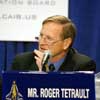
Ongoing analysis of recovered debris from the shuttle Columbia indicates the deadly breach in the ship's left wing may have been centered on a broken leading edge panel and not slightly outboard at a so-called "T-seal" as investigators were thinking last week, the Columbia Accident Investigation Board said Tuesday.
FULL STORY
| |
|
|
Video coverage for subscribers only:
VIDEO: THIS WEEK'S COLUMBIA BOARD NEWS CONFERENCE QT
SUBSCRIBE NOW
|
NASA, CAIB investigators compare notes on disaster
The NASA Accident Investigation Team presented results of the agency's on-going analysis of the Columbia disaster to the independent board charged with finding the root cause of the disaster. That presentation is believed to have included one or more possible "best-fit" scenarios based on telemetry, recorded data and debris recovered to date.
FULL STORY
| |
|
|
Board to revamp NASA management organization
In case there were any doubts, the chairman of the Columbia Accident Investigation Board says that finding the root cause of the shuttle disaster is only part of the panel's charter and that lawmakers in Washington have made it clear they expect broad changes in NASA's organizational structure. And that's exactly what they're going to get.
FULL STORY
| |
|
|
Video coverage for subscribers only:
VIDEO: FORMER OFFICIALS DISCUSS DESIGNING THE SHUTTLE QT
VIDEO: PART 2 OF HEARING WITH SHUTTLE EXPERTS QT
VIDEO: AIRCRAFT AGING AND RELATION TO SHUTTLE PROGRAM QT
VIDEO: AUTHOR OF CHALLENGER BOOK TESTIFIES QT
SUBSCRIBE NOW
|
Dittemore to leave after accident probe complete
Shuttle program manager Ronald Dittemore, the straight-talking "voice of NASA" credited with boosting the agency's image in the immediate aftermath of the Columbia disaster, will leave NASA after an independent accident investigation board completes its work, he told reporters Wednesday.
FULL STORY - updated
EARLIER STORY
| |
|
|
Video coverage for subscribers only:
VIDEO: TUESDAY'S COLUMBIA BOARD NEWS CONFERENCE QT
SUBSCRIBE NOW
|
NASA scenario for loss of Columbia and crew refined
Investigators probing the Columbia disaster are developing an increasingly detailed scenario that explains the sequence of events that led to Columbia's destruction, a scenario that matches up with telemetry and recorded data as well as the damage seen in recovered debris.
FULL STORY
| |

|
|
Dittemore departing NASA, sources say
Shuttle program manager Ronald Dittemore, the clean-cut, straight-talking engineer whose daily briefings in the wake of the Columbia disaster won widespread respect, plans to leave NASA in the near future, sources say, presumably to take a job in private industry.
FULL STORY
| |

|
|
Photo gallery provides glimpse into debris search
On April 16, officials from NASA, the U.S. Department of Agriculture, the U.S. Forest Service and the news media toured a space shuttle Columbia recovery area near Palestine, Texas. Here is a gallery of images taken that day:
ENTER PHOTO GALLERY
| |

|
|
Board issues preliminary recommendations
As expected, the Columbia Accident Investigation Board Thursday released its first two interim recommendations to NASA, calling for routine spy satellite imagery of shuttles in orbit and detailed pre-flight inspections of the protective panels on the leading edges of the shuttle's wings. A breach in a reinforced carbon carbon (RCC) panel on Columbia's left wing is believed to have triggered the shuttle's breakup during re-entry Feb. 1.
FULL STORY
BOARD STATEMENT
| |
|
|
Administrator O'Keefe visits Texas search teams
Senior NASA officials toured parts of the space shuttle Columbia debris field in East Texas Wednesday, thanking searchers for their work as the massive recovery operation enters its final weeks.
FULL STORY
| |
|
|
Suspected Columbia wing breach location moved
Ongoing analysis of sensor data and recovered debris indicate the deadly breach in the shuttle Columbia's left wing was located slightly outboard of the best previous guess, possibly at or near the intersection of leading edge panels 8 and 9, investigators said Tuesday.
FULL STORY
| |

|
|
Video coverage for subscribers only:
VIDEO: TUESDAY'S ACCIDENT BOARD NEWS CONFERENCE QT
VIDEO: LAST WEEK'S COLUMBIA BOARD NEWS BRIEFING QT
SUBSCRIBE NOW
|
No 'privileged' testimony to be made public
Harold Gehman, chairman of the Columbia Accident Investigation Board, said Tuesday two interim recommendations will be released late this week or early next and that the panel likely will write its final report in June. Gehman also said "privileged," or confidential testimony from senior shuttle managers, engineers and technicians, will never be made public, either in a public hearing or in final report transcripts.
FULL STORY
| |
|
|
Experts recount two decades of debris shedding
The shedding of foam insulation from space shuttle external tanks was never considered a safety-of-flight issue, experts told the Columbia Accident Investigation Board this week. But tank engineers have worried for more than 20 years about potentially catastrophic impacts and a top level program requirement held that any shedding of large, potentially dangerous pieces of debris was forbidden.
FULL STORY
| |

|
|
Carrier panel thought to be mystery object in orbit
The radar signature of an object floating away from the shuttle Columbia on the second day of its mission matches up well with a wing leading edge carrier panel, members of the Columbia Accident Investigation Board revealed Tuesday. If Columbia began its ill-fated re-entry with a missing carrier panel, enough heat could have entered the left wing to trigger the catastrophic chain of events that led to the shuttle's destruction.
FULL STORY
| |
|
|
Video coverage for subscribers only:
VIDEO: TUESDAY'S ACCIDENT BOARD NEWS BRIEFING QT
SUBSCRIBE NOW
|
Gehman calls recorder data a 'treasure trove'
Ongoing analysis of a "treasure trove" of data from a recorder recovered in the wreckage of the shuttle Columbia shows a deadly plume of super-heated air first began eating its way into the ship's left wing just five minutes after the orbiter fell into the discernible atmosphere. The sudden temperature increase, in a cavity behind the U-shaped panels making up the leading edge of the left wing, came a full three minutes earlier than previous telemetry indicated the start of unusual heating.
FULL STORY
| |

|
|
More internal NASA emails released to public
NASA has posted nearly 30 megabytes of internal email traffic and attachments regarding the potential threat of foam debris striking the shuttle Columbia's left wing; concerns about corrosion that could interfere with proper operation of the ship's body flap during entry; and discussions regarding Columbia's heavier-than-usual landing weight.
FULL STORY
| |
|
|
Temperature rose in wing earlier than known
A data recorder recovered in the wreckage of the shuttle Columbia shows hot gas entered the leading edge of the spacecraft's left wing within 16 seconds of the point when the orbiter entered the region of maximum aerodynamic heating during re-entry Feb. 1.
FULL STORY
| |

|
|
Plan calls for shuttles to be imaged by spy satellites
The National Imagery and Mapping Agency, one of the government organizations that sets targets for spy satellites, has agreed to routinely inspect space shuttles in orbit for signs of possible damage.
FULL STORY
| |

|
|
Teams studying Columbia data recorder tape
A preliminary review of Columbia's OEX data recorder indicates that potential data may exist as late as 9:00:18 a.m. EST on Feb. 1. That would be several seconds after the last known data received on the ground from Columbia and just moments before the vehicle broke apart.
INVESTIGATION STATUS CENTER
TIMELINE OF COLUMBIA'S FINAL HOUR
| |

|
|
Video coverage for subscribers only:
VIDEO: COLUMBIA DATA RECORDER ARRIVES AT KSC QT
MORE COLUMBIA INVESTIGATION VIDEO
SUBSCRIBE NOW
|
Foam impact centered on panel 6 of wing's edge
Engineers hope to begin analyzing data this weekend from a recovered tape recorder that stored readings from some 721 sensors throughout the shuttle Columbia during its final 45 minutes of flight. Analysts hope the data will help them precisely map out the flow of hot gas through the doomed ship's left wing to confirm and refine - or possibly modify - current theories about where the initial breach occurred and how the deadly plume then worked its way through the interior of the wing.
FULL STORY
| |

|
|
Video coverage for subscribers only:
VIDEO: NASA OFFICIALS TESTIFY ON DEBRIS COLLECTION QT
VIDEO: EXPERTS DISCUSS DEBRIS ANALYSIS, RECONSTRUCTION QT
VIDEO: COLUMBIA ACCIDENT BOARD NEWS CONFERENCE QT
SUBSCRIBE NOW
|
Expert says NASA lost sight of safety margin
An independent aerospace expert told the Columbia Accident Investigation Board Tuesday NASA managers somehow missed the obvious when it came to the potential threat of foam debris falling off the space shuttle's external fuel tank.
FULL STORY
| |

|
|
Video coverage for subscribers only:
VIDEO: DIRECTOR OF KENNEDY SPACE CENTER TESTIFIES QT
VIDEO: CHIEF OF SHUTTLE PROCESSING SAFETY IS QUESTIONED QT
VIDEO: TECHNICAL AND MANAGEMENT CONSULTANT APPEARS QT
SUBSCRIBE NOW
|
Recovered data tape in relatively good condition
Magnetic tape inside a data recorder recovered last week in Texas appears to be in remarkably good shape. Engineers are increasingly optimistic about recovering potentially valuable data from the salvaged tape that could shed additional light on the aerodynamic forces and temperatures the shuttle experienced during its final minutes.
FULL STORY
| |

|
|
NASA's Columbia mishap team reorganized
NASA has announced a revamped management team to oversee the agency's internal investigation of the Columbia disaster in accordance with a request made late last month by the independent Columbia Accident Investigation Board.
FULL STORY
| |

|
|
Data recorder recovered; could hold key insights
Search crews walking a grid near Hemphill, Texas, have found the shuttle Columbia's orbiter experiments recorder, or OEX, a tape recorder that stored key data about the shuttle's performance during re-entry.
FULL STORY
| |

|
|
Hearing shows work to piece together known data
As investigators increasingly focus on a breach at or just behind the leading edge of the shuttle Columbia's left wing as the root cause of the Feb. 1 disaster, engineers poring over telemetry from the doomed ship are zeroing in on exactly where the breach must have occurred - and how it must have propagated - to explain the orbiter's response to the resulting aerodynamic forces that ultimately ripped the ship apart.
FULL STORY
| |

|
|
Hearing focuses on debris, breakup mechanics
A NASA flight director told the Columbia Accident Investigation Board Monday he was amazed the doomed spacecraft was able to continue flying in relatively normal fashion for nearly 10 minutes while shedding multiple pieces of flaming debris as a plume of superheated air burned its way into the stricken ship's left wing.
FULL STORY
INVESTIGATION STATUS CENTER
| |

|
|
Video coverage for subscribers only:
VIDEO: THE BOARD HEARS FROM DR WILLIAM AILOR QT
VIDEO: USA'S DOUG WHITE & NASA'S PAUL HILL TESTIFY QT
SUBSCRIBE NOW
|
Columbia timeline updated
The following timeline was compiled by William Harwood, CBS News, from telemetry data (through revision 15 of NASA's internal timeline) and transcriptions of the NASA-Select commentary, mission control audio loops and portions of an in-cabin video recovered after the accident. The relevant data sources were released by the Columbia Accident Investigation Board.
SEE THE TIMELINE - Updated Friday
| |

|
|
Readdy says 'no rationale' for spy satellite inspection
William Readdy, associate administrator for spaceflight and a former shuttle commander, told the Columbia Accident Investigation Board he did not consider asking for a spy satellite inspection of Columbia's left wing during the doomed ship's mission because the agency had already concluded the shuttle could land safely.
FULL STORY
| |

|
|
Debris may strengthen breach scenario
Investigators have recovered debris from the shuttle Columbia that appears to support the increasingly held belief that the doomed ship's left landing gear door remained in place as a plume of super-heated air entering through a breach near the leading edge of the left wing wreaked havoc inside the wheel well.
FULL STORY
| |

|
|
Board studies wing edge, wind shear, foam repair
The Columbia Accident Investigation Board Tuesday showed video of Columbia's launching that indicates foam debris falling away from the ship's external fuel tank slammed into the lower leading edge of the orbiter's left wing within a few feet of where it merged with the fuselage.
FULL STORY
| |

|
|
Video coverage for subscribers only:
VIDEO: TUESDAY'S INVESTIGATION BOARD NEWS CONFERENCE QT
SUBSCRIBE NOW
|
Team talked foam impact analysis just after disaster
NASA managers meeting 90 minutes after the Columbia disaster Feb. 1 discussed a re-analysis of the potential damage caused by foam debris slamming into the shuttle's left wing during launch. But senior managers decided the public would be told, during an initial press conference, that the debris hit "on the left wing was reviewed and not determined to be safety of flight issue."
FULL STORY
| |
|
|
Email author 'frustrated' by misinterpretation
Robert Daugherty, a senior engineer at NASA's Langley Research Center, said Monday his widely publicized emails outlining various dire scenarios for the shuttle Columbia's re-entry Feb. 1 were misinterpreted by the media.
FULL STORY
| |
|
|
Data shows autopilot on through last transmission
A computer alarm generated in the final two seconds of data from Columbia suggests one of the pilots' joystick hand controllers may have been briefly engaged, but the autopilot was never deactivated before contact was lost.
FULL STORY
| |
|
|
NASA works to eliminate failure scenarios
Working through a process of elimination, NASA engineers are focusing on 10 major failure scenarios - and combinations thereof - to explain what went wrong during the shuttle Columbia's catastrophic re-entry.
FULL STORY
| |
|
|
Plume may have entered wheel well from within wing
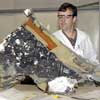
NASA engineers struggling to match up telemetry from the shuttle Columbia's left wing and hot gas flow patterns found in wing debris increasingly suspect a plume of hot gas may have entered the wing from a breach at or near the leading edge area, close to the ship's fuselage, and worked its way into the left main landing gear wheel well.
FULL STORY
| |
|
|
Investigators begin public hearings into accident
Shuttle program manager Ronald Dittemore, testifying Thursday before the Columbia Accident Investigation Board, said safety is the agency's "lifeblood" and that his door is always open to any lower-level engineer who might be worried a safety issue is not being properly addressed.
FULL STORY
INVESTIGATION STATUS CENTER - latest updates
| |
|
|
Video coverage for subscribers only:
VIDEO: JSC DIRECTOR HOWELL QUESTIONED AT HEARING QT
VIDEO: PART 1 OF RON DITTEMORE'S TESTIMONY QT
VIDEO: PART 2 OF RON DITTEMORE'S TESTIMONY QT
VIDEO: FOAM EXPERT FROM BOEING GOES BEFORE THE BOARD QT
VIDEO: AUTHOR OF SHUTTLE PROGRAM REPORT TESTIFIES QT
SUBSCRIBE NOW
|
New members added to Columbia board
Columbia Accident Investigation Board Chairman Admiral Hal Gehman asked NASA Administrator Sean O'Keefe to appoint three new members to the CAIB. The appointments were immediately approved, the agency announced Wednesday.
FULL STORY
| |
|
|
'Slag' suggests extreme heating near front of wing
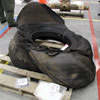
The Columbia board has not yet pinned down the location of catastrophic breach that allowed superheated air to enter the doomed ship's left wing during re-entry Feb. 1. But intriguing deposits of aluminum-and-steel slag behind panels making up the leading edge of Columbia's left wing near where it joins the fuselage suggest the breach may have occurred toward the front of the wing.
FULL STORY
| |
|
|
Video coverage for subscribers only:
VIDEO: TUESDAY'S INVESTIGATION BOARD NEWS CONFERENCE QT
SUBSCRIBE NOW
|
Video shows crew unaware of impending disaster
Minutes before the shuttle Columbia broke apart 207,000 feet above Texas, commander Rick Husband and his crewmates marveled at the hot gas surrounding the spaceplane as it plunged deeper and deeper into the atmosphere.
FULL STORY
| |

|
|
Video coverage for subscribers only:
VIDEO: VETERAN SHUTTLE COMMANDER EXPLAINS THE VIDEO QT
VIDEO: WATCH THE ENTIRE IN-CABIN VIDEO RELEASED BY NASA QT
SUBSCRIBE NOW
|
O'Keefe says station set for two-man caretaker crew
Speaking on Capitol Hill, NASA Administrator Sean O'Keefe said Thursday the space station's international partners have agreed to keep the lab complex manned with rotating two-person crews launched aboard Russian Soyuz ferry craft until space shuttles return to flight.
FULL STORY - updated!
| |

|
|
Photo of debris from area near left gear door released
The Columbia Accident Investigation Board released a photograph Thursday evening showing a heavily damaged, almost melted looking segment of left wing debris from an area near the ship's left main landing gear door.
FULL STORY
INVESTIGATION STATUS CENTER - latest updates
| |

|
|
Flight controllers downplay emails about Columbia
Mechanical systems officer Jeff Kling, the flight controller who first noticed problems in the shuttle Columbia's left wing during re-entry Feb. 1, said Wednesday he had no idea a disaster was about to unfold and that "what-if" discussions he had by email the day before were just that and not an indication of any real concern on his part.
FULL STORY
| |

|
|
Latest release of emails show wing concern lingered
Despite NASA's oft-stated position that no one was overly worried about potentially catastrophic damage to the shuttle Columbia's left wing after launch, engineers and even some flight controllers continued to debate worst-case "what if" scenarios as late as the afternoon before the orbiter's destruction, according to internal emails released today.
FULL STORY
| |
|
|
Cockpit video found; tape ends before problems
A fragment of videotape shot by one of the astronauts on Columbia's flight deck during the early stages of re-entry Feb. 1 has been recovered by NASA. But sources say the heat-damaged tape ends before the onset of problems in the left wing that ultimately led to the orbiter's destruction and the deaths of the ship's crew. As such, the tape provides no insight into the mishap.
FULL STORY
CLOSE-UP VIEW OF DAMAGED TILE
| |
|
|
Video coverage for subscribers only:
VIDEO: TUESDAY'S INVESTIGATION BOARD NEWS CONFERENCE QT
SUBSCRIBE NOW
|
Air Force tracking site viewed orbiting Columbia
NASA has released a series of visible and infrared images of the orbiting space shuttle Columbia were taken by the U.S. Air Force Maui Optical and Supercomputing Site on January 28 as the spacecraft flew above the island of Maui in the Hawaiian Islands.
VISIBLE IMAGES OF COLUMBIA IN ORBIT
INFRARED IMAGES OF COLUMBIA IN ORBIT
| |
|
|
More internal emails show concern over launch impact
A post-launch analysis by Boeing engineers shows three pieces of debris falling off Columbia's external fuel tank 82 seconds after launch slammed into the orbiter's left wing. While the Boeing team concluded Columbia could safely land despite potential damage to the shuttle's fragile heat-shield tiles, internal agency emails released Friday raised potentially troubling questions about how the damage was assessed within NASA and how widespread discussion of its possible impact really was.
FULL STORY
INVESTIGATION STATUS CENTER - latest updates
| |
|
|
New data shows Columbia's state in final moments
The shuttle Columbia's fuselage remained essentially intact for at least a half minute after the commander's final transmission, according to sources familiar with an ongoing analysis of the last 32 seconds of telemetry from the doomed spacecraft. The astronauts almost certainly had some awareness of the unfolding disaster, but there is no insight at this point to indicate what they might have known, or when.
FULL STORY
| |

|
|
1980 NASA contract issued for tile repair kit
In January 1980, NASA announced a contract to develop a kit for astronauts to repair damaged heat shield tiles on the space shuttle. No such kit has been flown on a shuttle in recent memory, but the release makes for interesting reading in light of the shuttle Columbia's catastrophic breakup during re-entry Feb. 1. Here is the text of the Jan. 22, 1980, news release:
FULL STORY
| |
|
|
Crew agrees manned space in 'very serious situation'
The commander of the international space station said today if the shuttle remains grounded for a prolonged period, and if the Russians cannot produce more Progress supply ships, the orbiting laboratory may not be able to support even two-person "caretaker" crews for any extended period.
FULL STORY
INVESTIGATION STATUS CENTER - latest updates
| |

|
|
Video coverage for subscribers only:
VIDEO: CBS RADIO INTERVIEW WITH EXPEDITION 6 CREW QT
VIDEO: NATIONAL PUBLIC RADIO INTERVIEW QT
VIDEO: THURSDAY'S NEWS CONFERENCE WITH SEAN O'KEEFE QT
SUBSCRIBE NOW
|
Progress made pinning down early debris events
The Columbia Accident Investigation Board is making "significant progress" analyzing amateur, military and other video and photography of the shuttle Columbia's descent to more precisely determine where debris shed early in the re-entry might have fallen, the board reported Thursday.
FULL STORY
| |
|
|
NASA reviews science data gained by Columbia mission
Space shuttle Columbia's ill-fated voyage was a 16-day microgravity science research mission. Although some of the 80 experiments were lost, scientists are continuing to assess the status of the data received by others during the flight. Here is the latest update from NASA on the experiment review.
FULL STORY
| |

|
|
Video coverage for subscribers only:
VIDEO: LATEST SHIPMENT OF COLUMBIA DEBRIS ARRIVES AT KSC QT
VIDEO: APACHE HELICOPTER FOOTAGE OF SHUTTLE BREAK-UP QT
VIDEO: INSIDE MISSION CONTROL DURING COLUMBIA'S REENTRY QT
SUBSCRIBE NOW
|
Columbia was shedding debris over West Coast
Engineers dissecting telemetry from the shuttle Columbia and videotape of its fiery re-entry now believe eyewitness accounts of debris falling away from the spacecraft as it passed above California, well before its ultimate breakup high above Texas.
FULL STORY
| |
|
|
Video coverage for subscribers only:
VIDEO: TUESDAY'S INVESTIGATION BOARD NEWS CONFERENCE QT
SUBSCRIBE NOW
|
Entry flight director recalls Columbia's final minutes
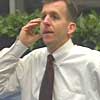
For entry flight director Leroy Cain, struggling to make sense of unexpected telemetry from the shuttle Columbia and still hoping to regain radio contact, it was a moment of reluctant, dawning realization that a day he'd hoped would never come was finally there.
FULL STORY
| |
|
|
Video coverage for subscribers only:
VIDEO: INSIDE MISSION CONTROL DURING COLUMBIA'S REENTRY QT
SUBSCRIBE NOW
|
NASA unveils revised Columbia accident timeline
Just one minute and 24 seconds after reaching the region of maximum aerodynamic heating off the coast of California, telemetry from the shuttle Columbia shows the first sign of unusual heating in the ship's left wing main landing gear wheel well, according to a dramatic new accident timeline released Thursday by NASA.
FULL STORY
| |
|
|
'What-if' email explained; gear signal believed faulty
NASA managers say an engineer's email discussing a worst-case scenario based on the assumption a foam debris impact during the shuttle Columbia's launch did, in fact, seriously damage the ship's heat-shield tiles is an example of normal "what-ifing" and not an expression of real concern that somehow failed to reach upper management.
FULL STORY
| |

|
|
Investigation board vows openness, independence
The chairman of the independent Columbia Accident Investigation Board - AIB - said Tuesday the root cause of the Feb. 1 shuttle disaster may never be known, but he vowed to leave no stone unturned in a herculean effort to nail down exactly what triggered NASA's second shuttle disaster.
FULL STORY
AUDIO: FLIGHT DIRECTOR LOOP RELEASED
| |

|
|
Station crew remembers fallen colleagues
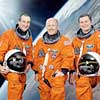
On Saturday morning, Feb. 1, the three-man crew of the international space station was working through its 70th day in orbit, preparing for a daily planning session with flight controllers in Houston and Moscow. Instead of having a routine chat with the astronaut "CAPCOM" in mission control, Johnson Space Center Director Jefferson Howell, a retired Marine Corps general, came on the line.
FULL STORY
| |
|
|
Video coverage for subscribers only:
VIDEO: EXPEDITION 6 IN-FLIGHT NEWS CONFERENCE QT
SUBSCRIBE NOW
|
Part of Columbia's suspect left wing recovered
NASA engineers confirmed the recovery of debris from the shuttle Columbia's left wing Monday amid reports one of the orbiter's four general purpose flight computers - or some sort of avionics box - might have been located.
FULL STORY - posted Monday
| |

|
|
The timeline of shuttle Columbia's final re-entry
This timeline was compiled from telemetry data provided by shuttle program manager Ronald Dittemore and a transcription of the NASA-Select commentary loop from Houston. Dittemore cautions the telemetry timing may well change and readers should take the times listed with a grain of salt. They are strictly preliminary.
SEE THE TIMELINE
| |
|
|
Shuttle chief explains Columbia's final minutes
Using detailed charts, the shuttle program manager shows where sensors are located in the shuttle's left wing either failed or recorded abnormal pressure or temperature readings.
VIDEO: THE PRELIMINARY SEQUENCE
| |

|
|
NASA studies telemetry for signs of orbital impact
A military radar system shows indications that an object might have separated from the shuttle Columbia in orbit, prompting a review of telemetry by NASA flight controllers to look for signs of anything - including impact by high-velocity space debris - that might have contributed to the shuttle's breakup Feb. 1 during re-entry.
FULL STORY - posted Saturday
| |
|
|
Dramatic week ends with Air Force photo release
After a day of media speculation about Air Force imagery reportedly showing clear evidence of structural damage at or near the leading edge of the shuttle Columbia's left wing, NASA released a single blurry frame late Friday that raised more questions than it answered.
FULL STORY - posted Friday
AVIATION WEEK STORY
SECTION OF WING FOUND NEAR FORT WORTH
| |

|
|
'Hail Columbia'
Former astronaut Robert Crippen, pilot of the shuttle Columbia for its maiden voyage in 1981, remembered NASA's oldest orbiter Friday in a moving tribute before a throng of workers gathered on the broad shuttle runway at the Kennedy Space Center.
FULL STORY - posted Friday
VIDEO: CRIPPEN REMEMBERS COLUMBIA
VIDEO: HALSELL PAYS TRIBUTE TO CREW
MISSION STATUS CENTER - latest updates
| |

|
|
Accident board takes over as single authority in probe
Amid congressional concern about NASA's objectivity in the wake of the Columbia disaster Saturday, the quasi-independent Accident Investigation Board, beefed up with non-NASA staff and board members, will assume the mantle of sole authority in determining what caused the crash that claimed the lives of seven astronauts.
FULL STORY - posted Thursday
LAWMAKERS CALL FOR COMMISSION
| |

|
|
NASA mulls space station launch, crew options
International space station planners are debating the possibility of launching a two- or three-man caretaker crew in late April or early May aboard a Russian Soyuz spacecraft to replace the lab's current crew and to keep the outpost occupied until space shuttle flights resume.
FULL STORY - posted Thursday
| |
|
|
Foam may not be single 'root cause' of failure
Shuttle program manager Ronald Dittemore told reporters Wednesday they were, in effect, mistaken if they assumed from previous briefings the Columbia disaster investigation was focused primarily on the possibility foam debris from the ship's external tank triggered the orbiter's destruction during entry Saturday.
FULL STORY - posted Wednesday
| |

|
|
Columbia astronauts gone but not forgotten
President Bush capped an emotional tribute to the lost Columbia astronauts at Johnson Space Center Tuesday. "Their mission was almost complete and we lost them so close to home," Bush said. "All mankind is in their debt."
READ PRESIDENT BUSH'S SPEECH
VIDEO: COMMENTS BY NASA ADMINISTRATOR
VIDEO: MEMORIES OF THE COLUMBIA CREW
VIDEO: SPEECH BY PRESIDENT BUSH
| |
|
|
Russian cargo freighter docks to space station
A fresh load of supplies has arrived at the International Space Station Tuesday, enabling the three-man Expedition 6 crew to remain aboard the complex through late-June or early-July, if necessary.
FULL COVERAGE
| |

|
|
NASA seeks 'missing link' in Columbia investigation
Engineers studying data from the shuttle Columbia before it broke apart Saturday say temperature readings in the ship's left-side landing gear wheel well may be indicating a catastrophic "burn through" in a different part of the wing, not the wheel well itself.
FULL STORY - posted Monday
| |

|
|
Foam impact analysis expected no major damage
A NASA analysis of potential tile damage resulting from the impact of external tank foam insulation during the shuttle Columbia's launch concluded no significant damage would have resulted during re-entry even if multiple tiles were missing.
FULL STORY - posted Monday
STATEMENT FROM ASTRONAUTS' FAMILIES
BRIEFING FROM THE WHITE HOUSE
| |
|
|
NASA's proposed 2004 budget quietly released
NASA released on Monday a proposed $15.5 billion budget for fiscal year 2004 that provides funding for a number of new programs, but the aftermath of the space shuttle Columbia tragedy could greatly alter the budget in the months to come.
FULL STORY - posted Monday
| |
|
|
Engineers focus on left landing gear wheel well
NASA engineers are studying telemetry from the shuttle that indicates a sudden increase in temperature inside the left wing's main landing gear wheel well in the moments before the shuttle's destruction. What might have caused the temperature spikes, along with sensor malfunctions in the same area, is not yet known. But these could be indicators that whatever destroyed the shuttle started in this area.
FULL STORY - posted Sunday
| |

|
|
Columbia & crew lost
In a devastating tragedy that took the lives of seven astronauts, the space shuttle Columbia disintegrated in the skies over Texas on Saturday morning as the ship was heading back to Earth. Mission Control lost contact with the shuttle around 9 a.m. EST (1400 GMT), about 16 minutes before its planned Florida touchdown. Debris from the shuttle fell in north and east areas of Texas.
FULL STORY - posted Saturday
NEWS SUMMARY
NASA ISSUED REPORT
| |
|
|
NASA announces Columbia accident investigation board
NASA Administrator Sean O'Keefe has announced the members of the Space Shuttle Mishap Interagency Investigation Board. Retired U.S. Navy Admiral Harold W. Gehman, Jr., will head the group.
FULL STORY - posted Sunday
| |

|
|
Cargo ship en route to International Space Station
A day after the Columbia disaster, a freighter carrying cargo for the International Space Station was successfully launched from Central Asia aboard a Russian Soyuz rocket Sunday. Officials said the routine resupply mission would go forward as planned despite the shuttle accident.
FULL STORY - posted Sunday
| |

|
|
Break-up appears to have started with left wing
In the final minutes of shuttle Columbia's doomed reentry, flight controllers began to see indications of a major problem in the area of the shuttle's left wing, NASA officials said on Saturday in their first detailed news briefing since the tragedy.
FULL STORY - posted Saturday
| |
|
|
Shuttle's left wing struck during launch
Columbia's left wing was struck by debris during its launch on January 16. Prior to the reentry, flight controllers had said they had no concerns about possible damage to the shuttle's tiles, but following the loss of Columbia the incident will receive more attention.
ANIMATED IMAGE OF LAUNCH INCIDENT
| |

|
|
Space shuttle Columbia's seven-member crew
Aboard shuttle Columbia were Rick Husband, commander, and Willie McCool, pilot. Mission specialists Dave Brown, Laurel Clark, Kalpana Chawla, Mike Anderson (payload commander) and Israeli payload specialist Ilan Ramon.
CREW BIOGRAPHIES
| |
|
|
President Bush makes address on shuttle tragedy
"The Columbia is lost; there are no survivors," President Bush said in an address from the White House. The president vowed the tragedy would not mean the end of the space program: "The cause in which they died will continue."
STATEMENT BY PRESIDENT BUSH
| |

|
|
Statement by NASA chief
"This is indeed a tragic day for the NASA family, for the families of the astronauts who flew on STS-107, and likewise is tragic for the Nation," NASA Administrator Sean O'Keefe said. "The loss of this valued crew is something we will never be able to get over. We have assured the families that we will do everything, everything we can possibly do to guarantee that we work our way through this horrific tragedy."
STATEMENT BY O'KEEFE
| |

|
|
Shuttle debris cloud visible in weather radar
The space shuttle broke up at an altitude of 200,000 feet as it hurtled through the upper atmosphere at 12,500 miles per hour. The resulting debris cloud was visible on weather radar images.
WEATHER RADAR IMAGE
| |

|
|
|
Earlier Stories |
 |
Astonauts in home stretch of ongoing science mission
The Columbia astronauts, in the home stretch of a grueling dual-shift 16-day science mission, told reporters Wednesday their research is proceeding in fine fashion and that scores of scientists on the ground should be pleased with their results.
FULL STORY
MISSION STATUS CENTER
| |

|
|
Crew deals with cooling problem in laboratory
The Columbia astronauts were pressing ahead with a full-slate of orbital research Tuesday, adjusting the shuttle's air conditioner to make up for a loss of cooling in their Spacehab research module. NASA managers describe the problem as an "annoyance," saying it will have no impact on the crew's science agenda.
FULL STORY
NASA TELEVISION SCHEDULE
ASTRONAUTS' MASTER FLIGHT PLAN
| |

|
|
Video coverage for subscribers only:
VIDEO: EVENT WITH ISRAELI PRIME MINISTER QT or RV
VIDEO: TUESDAY'S MISSION STATUS BRIEFING QT or RV
SUBSCRIBE NOW
|
Science research continues
Columbia's astronauts conducted scientific studies ranging from the behavior of granular materials in weightlessness to the effects of microgravity on fungi, and filmed the sprites associated with thunderstorms across the globe as their scientific research flight continued in its fifth day.
MISSION STATUS CENTER
| |

|
|
Astronauts 'batting 1,000' in space research
Two days into one of the most ambitious shuttle science missions in years, the commander of the shuttle Columbia said his dual-shift team has encountered remarkably few problems and that "things are going really well."
FULL STORY
| |

|
|
Video coverage for subscribers only:
VIDEO: WATCH CBS NEWS INTERVIEW WITH ASTRONAUTS QT or RV
VIDEO: CNN'S MILES O'BRIEN CHATS WITH CREW QT or RV
VIDEO: SATURDAY'S MISSION STATUS BRIEFING QT or RV
SUBSCRIBE NOW
|
Experiment activations on track aboard Columbia
While it's not unusual these days to turn on the TV and watch construction projects going on in outer space, it is a bit out of the ordinary when ants - not astronauts - are the ones doing the building.
FULL STORY
| |
|
|
Video coverage for subscribers only:
VIDEO: FRIDAY'S MISSION STATUS BRIEFING QT or RV
SUBSCRIBE NOW
|
Crew shares some of their launch day experiences
Columbia commander Rick Husband on Friday downlinked video footage recorded aboard the shuttle during Thursday's launch, including views inside the cockpit during ascent and the external fuel tank after it was jettisoned. Clips are available to our Spaceflight Now Plus subscribers:
| |

|
|
Video coverage for subscribers only:
VIDEO: IN-CABIN VIEW OF LIFTOFF QT or RV
VIDEO: CREWMEMBERS HEAD TO WINDOWS TO SEE TANK QT or RV
VIDEO: THE JETTISONED EXTERNAL TANK MOVES AWAY QT or RV
VIDEO: ORBITAL MANEUVERING ENGINE FIRING QT or RV
SUBSCRIBE NOW
|
Shuttle Columbia rockets into orbit for science flight
With fighter planes and radars scanning the sky for intruders, the shuttle Columbia thundered away on a marathon 16-day science mission Thursday, carrying a crew of seven - including the first Israeli astronaut - scores of experiments and a menagerie of animal and insect research subjects.
FULL STORY
LAUNCH EVENTS TIMELINE
| |
|
|
Video coverage for subscribers only:
VIDEO: COLUMBIA BLASTS OFF ON ITS SCIENCE MISSION QT or RV
VIDEO: PAD PARAMETER CAMERA REPLAY OF LIFTOFF QT or RV
VIDEO: VIEW ATOP THE VEHICLE ASSEMBLY BUILDING QT or RV
VIDEO: LAUNCH VIEW FROM COMPLEX 39 PRESS SITE QT or RV
VIDEO: ENGINEERING VIEW FROM PAD CAMERA 063 QT or RV
VIDEO: SEE SHUTTLE 'TWANG' DURING IGNITION QT or RV
VIDEO: TRACKING CAMERA IN FRONT OF PAD 39A QT or RV
VIDEO: VIEW FROM CAMERA ATOP WATER TOWER QT or RV
VIDEO: CLOSE-UP OF MAIN ENGINE IGNITION QT or RV
VIDEO: POWERFUL TRACKER AT PATRICK AFB QT or RV
VIDEO: STS-107 POST-LAUNCH NEWS CONFERENCE QT or RV
VIDEO: NASA ADMINISTRATOR NEWS CONFERENCE QT or RV
VIDEO: CREW SEATED FOR PRE-LAUNCH SNACK QT or RV
VIDEO: ASTRONAUTS DEPART THEIR QUARTERS TODAY QT or RV
VIDEO: COMMANDER HUSBAND CLIMBS INTO HIS SEAT QT or RV
VIDEO: FIRST ISRAELI ASTRONAUT BOARDS THE SHUTTLE QT or RV
PANORAMA: 360-DEGREE VIEW OF COLUMBIA ON THE PAD QT
VIDEO: WEDNESDAY'S COUNTDOWN STATUS BRIEFING QT or RV
VIDEO: TUESDAY'S COUNTDOWN STATUS BRIEFING QT or RV
VIDEO: MONDAY'S COUNTDOWN STATUS BRIEFING QT or RV
VIDEO: DETAILED OVERVIEW OF COLUMBIA'S MISSION QT or RV
VIDEO: MEET THE SEVEN COLUMBIA ASTRONAUTS QT or RV
SUBSCRIBE NOW
|
Mission preview: Columbia's research flight
The shuttle Columbia is poised for blastoff Thursday on a marathon 16-day microgravity research mission, carrying scores of experiments and a menagerie of animal, plant, insect and human research subjects, including the first Israeli astronaut.
FULL STORY
| |

|
|
Experiment stowage begins
Technicians at the Kennedy Space Center were spending Tuesday loading experiment samples, subjects and hardware into a Spacehab module in the shuttle Columbia's cargo bay in preparation for launch Thursday on a microgravity research mission. With no technical problems at pad 39A, forecasters continue to predict a 95 percent chance of good weather during Columbia's launch window.
FULL STORY
| |

|
|
Video coverage for subscribers only:
VIDEO: TUESDAY'S COUNTDOWN STATUS BRIEFING QT or RV
VIDEO: MONDAY'S COUNTDOWN STATUS BRIEFING QT or RV
SUBSCRIBE NOW
|
NASA starts counting down to Thursday's shuttle launch
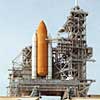
Countdown clocks began ticking late Sunday for launch of the shuttle Columbia Thursday on a 16-day microgravity research mission featuring dozens of high-tech experiments and a seven-member crew that includes the first Israeli astronaut.
FULL STORY
| |
|
|
|
Earlier Stories |
|
Shuttle repair approved; next launch Sept. 28
As expected, NASA managers meeting Wednesday to review shuttle fuel line repair options tentatively agreed to implement a welding/polishing technique to fix tiny cracks in space shuttle fuel lines, sources say. They also agreed on a previously proposed shuttle launch sequence, delaying the shuttle Columbia's 16-day science mission until after two back-to-back space station assembly flights.
FULL STORY [Posted: Aug. 1]
| |

|
|
Columbia expected to leapfrog station flights
Confident shuttle fuel line cracks can be fixed, if necessary, by welding, NASA managers are converging on a plan to resume shuttle launches in late September or early October with the first of two back-to-back space station assembly missions. Under that preferred scenario, launch of the shuttle Columbia, originally scheduled for July 19, would slip to around Dec. 3.
FULL STORY [Posted: July 26]
| |

|
|
NASA mulls space shuttle launch options
NASA managers are converging on a repair plan to fix small cracks in space shuttle fuel lines that could lead to a resumption of shuttle flights by late September or early October. While no final decisions were made, the most favored option calls for delaying the shuttle Columbia's flight on a 16-day science mission until at least early December, after two space station assembly flights.
FULL STORY [Posted: July 18]
| |

|
|
Space shuttle flights off until at least September
NASA's shuttle fleet will remain "grounded" until at least mid September and possibly longer because of small but potentially dangerous cracks in hydrogen feed lines in all four of the agency's orbiters. But shuttle program manager Ronald Dittemore says he is optimistic that in the next few weeks engineers will either clear the shuttle fleet to resume flying as is or develop relatively straight forward repairs that will minimize the down time.
FULL STORY [Posted: July 12]
| |

|
|
Next space shuttle mission faces extended delay
NASA's next shuttle mission - the planned July 19 launch of Columbia on a science mission featuring the first Israeli astronaut - will be delayed at least "a few weeks" because of potentially dangerous cracks found in the propulsion systems of two other orbiters.
FULL STORY [Posted: June 24]
| |

|
|
|
Past Missions |
|
Endeavour mounts P1 truss, rotates station crews
Delivering a 14.5-ton solar array truss segment and a fresh three-man crew to the orbiting international space station, space shuttle Endeavour blasted off November 23 for a mission that was ultimately extended a record three days by bad weather at the landing site.
FULL COVERAGE
| |

|
|
Station backbone grows
Space shuttle Atlantis launched the outward expansion of the space station's truss backbone with delivery of the S1 segment in October during a successful 11-day mission that spanned 4.5-million miles.
FULL COVERAGE
| |
|
|
Shuttle Endeavour returns station crew to Earth
Endeavour's June mission to the International Space Station upgraded the lab's robot arm and fixed what amounted to a broken wrist. The shuttle also exchanged the outpost's resident crews, bringing a trio of weary space station fliers home after a U.S. record 196 days in space.
FULL COVERAGE
| |
|
|
Space station grows with addition of new truss
The 27,000-pound S0 truss -- the central section of the station's backbone structure -- was delivered to the International Space Station and brought to life during the April flight of shuttle Atlantis.
FULL COVERAGE
| |

|
|
Columbia services Hubble Space Telescope
Space shuttle Columbia and her crew of seven astronauts flew in March on a highly successful mission to service and extend the scientific reach of the NASA's Hubble Space Telescope.
FULL COVERAGE
| |
|
|
Endeavour shuttles station crew back to Earth
The shuttle Endeavour glided back to Earth December 17, bringing three space station astronauts back to a starkly different post Sept. 11 world and leaving a fresh crew behind in orbit for a nearly six-month tour of duty.
FULL COVERAGE
| |

|
|
Changing of the guard aboard space station Alpha
The Expedition Two astronauts capped their 167-day stay in space and left the international space station in the hands of Expedition Three during shuttle Discovery's crew exchange mission in August.
FULL COVERAGE
| |

|
|
Quest airlock added to international space station
The Joint Airlock Quest was delivered to the international space station in July by space shuttle Atlantis, giving the outpost a new doorway for American and Russian spacewalkers.
FULL COVERAGE
| |

|
|
Station gets an arm and first tourist
The crew of space shuttle Endeavour delivered the Canadian-built robotic arm to the international space station in April. The shuttle visit was immediately followed by Dennis Tito's historic joyride to the outpost.
FULL COVERAGE
| |

|
|
Station pioneers back on Earth after historic voyage
After a dramatic reversal of fortune, the shuttle Discovery dropped out of orbit and glided to a pre-dawn landing at the Kennedy Space Center on March 21, bringing the international space station's first full-time crew back to Earth after a 141-day space odyssey.
FULL COVERAGE
| |

|
|
2001 began with flawless lab delivery
The shuttle Atlantis delivered the $1.4 billion U.S. Destiny laboratory module to the international space station in February during a highly successful mission.
FULL COVERAGE
| |

|
|
Station's power-generating solar wings spread
In December the astronauts of space shuttle Endeavour bolted a $600 million solar power tower to the international space station and unfurled the most powerful solar wings ever launched.
FULL COVERAGE
| |

|
|
Building a space outpost
The crew of space shuttle Discovery carried out a complex four-spacewalk construction mission in October to mount a truss structure with gyroscopes and communications gear to the international space station and add another docking port.
FULL COVERAGE
| |

|
|