Q&A with Tim Ellis, CEO and co-founder of Relativity Space (members only)
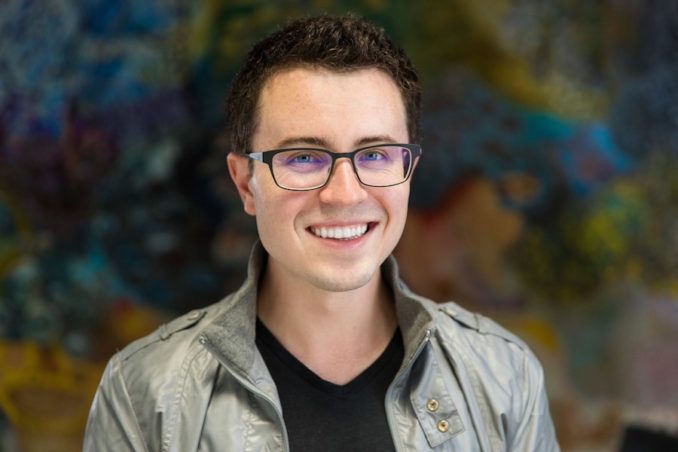
Tim Ellis, Relativity Space's co-founder and CEO. Credit: Relativity Space
Relativity Space’s co-founder and chief executive says his company is working on innovations in manufacturing and rocket technology, and plans to use 3D printing at unprecedented scale in the space industry to ease access to space for a range of satellite operators, joining a fray of smallsat launchers saturating the market.
But Tim Ellis, a 3D printing guru who previously worked at Jeff Bezos’s Blue Origin space company, is optimistic Relativity has the right stuff to gain ground in the launch business.
Relativity announced Jan. 17 it has won approval from the U.S. Air Force to base launch operations of its Terran 1 methane-fueled rocket at Launch Complex 16, a long-disused facility at Cape Canaveral Air Force Station in Florida once used by Titan and Pershing missile tests.
Complex 16 was last used for a launch in 1988, and Relativity intends to move in to the facility and build payload and rocket processing hangars, lightning masts, and propellant holding tanks, among other infrastructure to ready for the maiden flight of the Terran 1 rocket by the end of 2020.
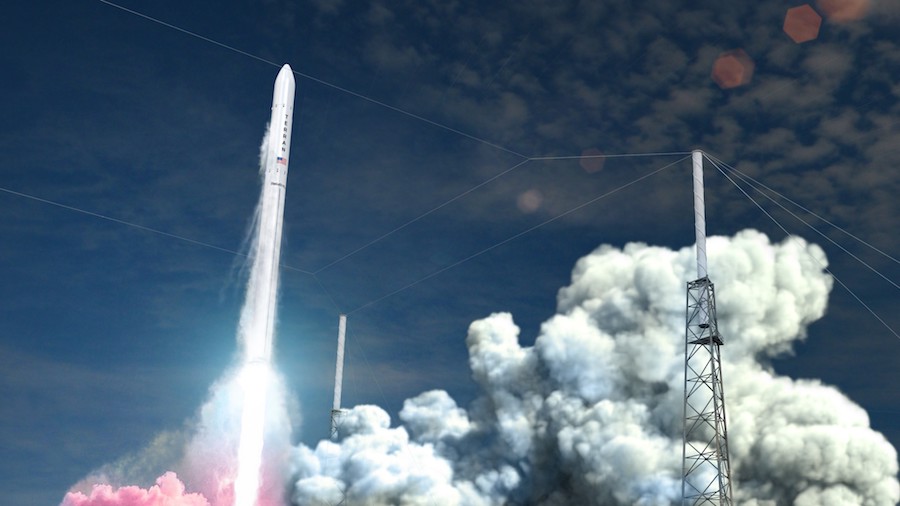
The two-stage Terran 1 rocket, powered by Relativity’s own Aeon engines, will stand around 100 feet (33 meters) tall, and will be capable of carrying up to 2,750 pounds (1,250 kilograms) to low Earth orbit. The Terran 1’s carrying capacity to a more useful sun-synchronous orbit at an altitude of around 300 miles (500 kilometers) is roughly 2,000 pounds (900 kilograms).
Relativity expects to charge customers around $10 million per launch.
Ellis also sits on the Users’ Advisory Group of the National Space Council, a panel of industry leaders, former astronauts, politicians and retired military officers chartered to help space national space policy. The National Space Council was re-constituted last year by the Trump administration, and is chaired by Vice President Mike Pence.
He spoke with Spaceflight Now this week about the new launch complex at Cape Canaveral, and provided an update on Relativity’s progress.
Q: What’s the news you’re announcing?
A: “We are announcing tomorrow that we have won the first venture-backed approval for a launch site at the Cape with the U.S. Air Force. So this is the first venture-backed company that has won approval for a site, LC-16, approval to start designing and building our launch facility at the Cape. We are only the fourth company after SpaceX, ULA and Blue Origin to have an operational site, so really joining an elite group of other launch companies out at the Cape. We’re really excited about it.”
Q: What is different about this launch site agreement?
A: “We went directly to the Air Force. We met with the 45th Space Wing directly. That’s really important for a few reasons. First and foremost, having a direct agreement means that there is a clear path, as we build the launch site and actually fly Terran 1 by the end of 2020, that then executing successful launches means we have a path toward a future exclusive agreement, which would then allow us exclusive use of this site for 20 years. Really, it’s in our hands now to deliver on actually launching versus, I know some of the sites that Space Florida has are more multi-user sites where there could be more scheduling conflicts, uncertainty about what kind of frequency is possible with those sites just because there may be multiple tenants.”
Q: So a successful launch will trigger Relativity’s exclusive use of LC-16?
A: “It’s not an automatic trigger. The Air Force still controls the site, so we have to get their blessing, but it does effectively. It’s in our hands.”
Q: What drove you to choose this specific launch site?
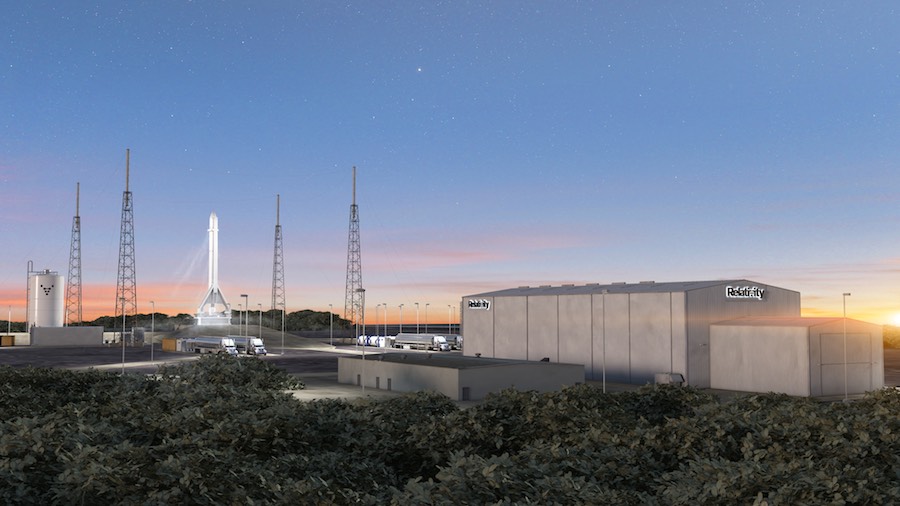
A: “The process of looking for a launch site started three years ago when the company started. I think any launch company, obviously, needs an orbital launch site. We looked at every single launch site in the United States, either currently operating or planned, and the Cape was our first choice for the lower inclination launches from the East Coast. The reason for that is our customers are already used to launching out of the Cape, so there’s significant history, not just for the rockets themselves but also where satellite companies are used to operating. We thought that was, by far, the most convenient and prestigious location for launching those payloads. Also, LC-16 is specifically sized not just for Terran 1, but since our rockets are 3D-printed with no fixed tooling, that means we can change the design very quickly, so the site will also support future increases in payload capacity or other advanced features that we would add to our launch vehicle.”
Q: What’s at the pad today, and what work is needed to outfit it for the Terran 1?
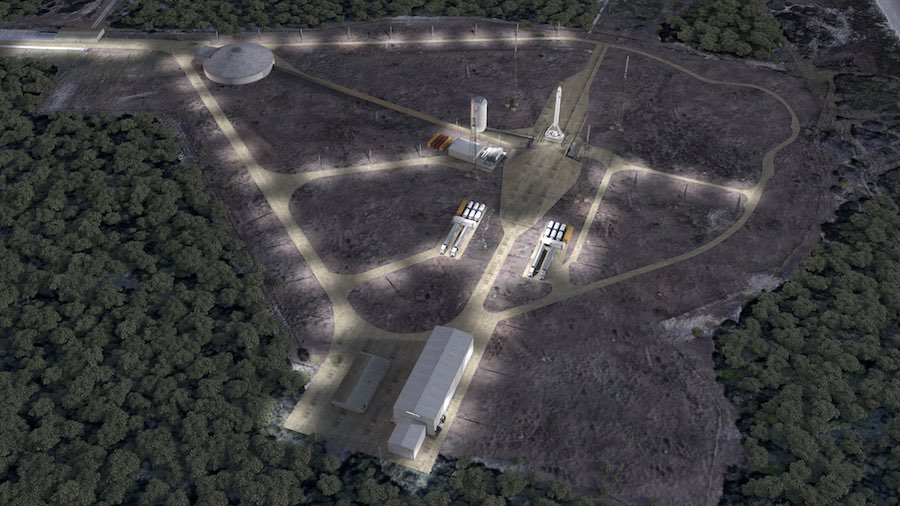
A: “There’s well over a million pounds of concrete currently there. A lot of the roads, the launch mount, and the launch base and pedestal itself, some of the flame ducts and acoustic dampening are all there. It’s a historic site. It was originally used for Titan missile launches. It was also used during the Gemini program, and the Apollo lunar program as well. More recently, it was a Pershing missile launch site, so national security uses plus also exploration. We will have to go in and build and renovate some of that infrastructure. We will be building a payload processing facility, a horizontal integration hangar for the rocket and payloads. We’ll also be installing propellant tanks and loading systems, lightning protection towers, really everything that’s required to make it a launch site. Since we’ve signed this agreement now, and we’re presented with this statement of capability, we’re going to be on track to actually complete the site ahead of the end-of-2020 orbital launch.
“In the rendering, you can see in the upper left there’s a circular, sort of cone-shaped building. That currently exists. It’s an old bunker blockhouse. Believe it or not, back in the day they used to actually sit there and launch the rockets from that point. They had copper wire, so they had to be close to the site. That is way closer than they will ever let anyone sit now. But that facility is there. There are also a few other smaller buildings that are around. Power is at the site. There’s still some pretty significant head-starts. Our estimates are that, in the U.S., it would take about four years to go from a green field site to a new launch site, just with the current regulatory environment, and how long it would take a start-up to do something like that. So taking over this existing site really does save us a significant amount of money and time.”
Q: Do you have a groundbreaking planned? When will construction begin?
A: “No groundbreaking tomorrow. We’ll probably do that officially at a later date and invite officials, politicians, and make it a day. This is being award approval for the site. We still have to get through environmental steps, and then that will allow us to start actually doing the build and construction. But we’re able to do all the design and planning now.”
Q: Do you have numbers for the total jobs you’ll be creating on the Space Coast? What’s the value of the investment?
A: “We don’t have hard numbers we can quote. What we can say is that it’s going to be well over $10 million invested to get the site operational. That’s probably quite low. It’s going to be a significant capital investment. On the jobs side, we will be starting to hire full-time people down in Florida probably close to immediately. We also have a launch team here in Los Angeles. A lot of our current core and existing launch team was some of the original teams that acquired other launch pads out at the Cape for prominent private space companies. So there’s a lot of the same core people and leadership that we have here at Relativity, so we intend to benefit from their experience and hopefully come up with a much more streamlined and even more lightweight way to streamline launch operations and pad build-up.”
Q: Tim Buzza joined your team last year as an advisor, after leading SpaceX’s launch operations in the early Falcon 1 and Falcon 9 days. What’s his role?
A: “I’m looking at Tim right now. He’s actually here in the office a lot. He was in most every meeting we had to get this launch facility. Chris Newton is leading up our launch efforts internally as well. He actually helped build up the Vandenberg launch pad and pad 39A for SpaceX, and he worked a little bit on the BFR, Mr. Steven and the landing barge. So we have some pretty heavy firepower for building up facilities like this.
“Last March, only nine months ago, we were at 14 people, and now we just reached 60 full-time people. Adding consultants and advisors, it’s well over 70. So significant team growth. Also, we have 12 members of former senior leadership teams from other private space companies. So 12 is a pretty big number, and that’s across avionics, launch, propulsion, operations. It’s been awesome to just see how many people are jumping on-board with 3D printing and automation as the next big thing in building rockets.”
Q: What’s it like to lead a rocket company?
A: “That’s interesting because we’re not just a rocket company. Sometimes, I feel like we’re Tesla plus SpaceX put together. I feel like we really have two products. One is the rocket, and the other is this totally new process for building rockets — the factory itself. We have to not just figure out to get the rocket to work, but how to get 3D printing to work and reinvent a lot of the processes for what parts look like, how they’re designed, and how you qualify and test the parts, how you analyze them. What kinds of things are different now? That is just as big of an endeavor as anything else. It’s been quite exciting in three years. We really truly are a venture-backed company in the sense that we were just two guys in a garage with absolutely nothing, and everything we’ve built has been from scratch. After I left Blue Origin, in their 3D printing group with the BE-4, my co-founder was working on Crew Dragon at SpaceX. Seeing this dream come to light has been exciting. 2018 was a big year, and 2019 is shaping up to be even bigger.”
Q: Can you give an update on some of the technical progress you’ve made in the last few months, both with the engine, and with the factory?
A: “We just completed our 124th engine test. This engine is closer to the flight version than we’ve ever been, so we’ve made significant engine progress. We’ve also received our first flight avionics components, so the avionics system is significantly maturing as well. That’s also a case where I’m 100 percent confidence that we have a third generation avionics system, and that’s because the guy — Brandon Pearce — that we hired to be lead of that time actually built up all of the avionics hardware systems at SpaceX, from Falcon 1 to Falcon 9, Cargo Dragon to Crew Dragon, and all the reusable variants of Falcon 9, and was also the avionics team lead at Virgin Orbit. He has that experience, and said (we have a) blank sheet of paper, what comes next? I’m really excited, once we can talk a bit more about that system that we’re developing, because it is pretty unique on the avionics side.
“We have a contract we got from NASA, which is the Announcement of Collaborative Opportunity. That is delayed a little bit by the government shutdown, but we’re testing at the E-3 test cell down at Stennis Space Center, where we have full-scale second stage tank structure mounted on top of an engine, and we’re going to be collecting environments, dynamics, loads, acoustics data, and then assessing the printed materials to make sure that they withstood that. That will be coming up here in the next one or two months.”
Q: Are you looking for another launch pad for high-inclination missions?
A: “We are actively looking now, and have ran a concurrent process for that. That trade is still open. Of course, we’re chatting with Vandenberg and also Kodiak, those are the two most prominent options. After talking with (Tim) Buzza, it seemed like Kwajalein was maybe not the thing we wanted to do first.”
Q: There are logistics challenges there, right?
A: “Yes, exactly. There really has been significant streamlining. It’s been fascinating talking to Tim and the team, as we’ve acquired the pad. It just seems like a really dynamic environment. The difference now is that SpaceX has significant real estate, and Blue Origin is also getting quite significant infrastructure, Orbital ATK/Northrop Grumman has their new program coming online, and there’s 100 launch startups all vying to become operational. So the competition for some of these facilities is so high now. It’s just a very different environment.
“At the same time, the Air Force is a lot more experienced working with commercial companies, seeing it can be successful, and they were quite fun and easy to work with, from my perspective, which is not some of the tunes we’ve heard from smaller launch companies that really want to go to commercial launch sites, and they think the federal range might have launch cadence limitations, or are difficult to work with. We’ve seen things like Autonomous Flight Safety Systems, or AFSS, and some of the new regulatory reforms. In the defense reauthorization act, there was recently a requirement that said the range can’t levy requirements above what AST can over at the FAA. That’s pretty significant to get the Air Force and ranges be more commercially-friendly places to operate, to get to more performance-based requirements instead of prescription-based requirements.”
Q: Where are you with selling launches? Any contracts?
A: “I’ll probably be calling you up here very shortly to talk more about that.”
Q: Do you see high demand from the U.S. military for your launch vehicle?
A: “Certainly. I think that was also one of the big considerations being on an Air Force range. I think it’s a huge honor, first of all, but also really important, we thought, to be in that ecosystem because launch, I view, as a national security consideration. There is somewhat limited infrastructure, and being granted a pad is really important. We see an interest because of the technology approach we’re taking. Flexibility is one big one. That ability to change payload fairing dimensions because we don’t have fixed tooling has been really interesting, and also getting toward a very rapid production cadence. Our stated goal is to go from raw materials to flight in less than 60 days from a standing start. It will take a little bit to get there. The first rocket won’t be printed in 60 days, but we do see a really clear technical path toward that. We’re already printing entire structures of the rocket in a timeframe that would support that kind of speed. That is really an enabler as well.”
Q: The Terran 1 is still designed to be expendable, correct?
A: “That’s right. Terran 1 will be expendable. That one will always be expendable. But LC-16 supports a significant range of products, and with 3D printing we’ll be able to iterate faster than anyone else.”
Q: How big is the Terran 1?
A: “It’s on the order of 7 feet in diameter, 100 feet tall, it’s liquid oxygen and liquid methane, with an open expander cycle for the engine. The vacuum engine has about 21,000 pounds of thrust. We have one engine on the upper stage, nine engines on the first stage.”
Q: It’s fun to talk about the technical progress, and the innovations you’re working on. But how are you doing with financing?
A: “We are still significantly capitalized as a company. We’re always looking for opportunities to go faster, and getting to orbital flight and getting to our production cadence. We still have plenty of dry powder, but rockets certainly are expensive, and we have huge ambitions as a company, so we’re always looking to talk to more people.”