Sign up for our NewsAlert service and have the latest news in astronomy and space e-mailed direct to your desktop.
Privacy note: your e-mail address will not be used for any other purpose.
News Archive: April 2014-June 2014
Photos: NASA's test of a future Mars entry vehicle
NASA engineers launched a giant helium balloon into the upper fringes of the atmosphere Saturday to test technologies that could lead to future landings of larger rovers, cargo and humans on the surface of Mars. IMAGES:LAUNCH AND RECOVERY
French satellite in orbit after launch from India
A commercial imaging satellite blasted off on top of an Indian rocket Monday, reaching orbit a few minutes later to punctuate the deployment of a fleet of French spacecraft designed to monitor Earth with regularity and precision. FULL STORY PREVIEW STORY LAUNCH TIMELINE IMAGES:LAUNCH GALLERY IMAGES:PSLV READY FOR LIFTOFF LAUNCH BROCHURE - (.pdf download)
Return of the workhorse
A quarter-century since its first launch, preparations are underway to end a hiatus and return next Tuesday to the business of launching Delta 2 rockets, if only for a little while longer. FULL STORY IMAGES:DELTA STACKING GALLERY
ESA plans to build world's biggest X-ray telescope
A half-year after the European Space Agency formally prioritized high-energy astrophysics for its next flagship-class science mission, officials announced Friday the selection of a European-led X-ray observatory named Athena for launch in 2028.
FULL STORY
'Flying saucer' test vehicle, parachute recovered
Despite the failure of a huge supersonic parachute to fully inflate during a test flight at the edge of space Saturday, project engineers said Sunday they were elated with the otherwise near-flawless performance of the flying saucer-shaped research craft, designed to test atmospheric braking systems for future Mars landers.
FULL STORY
NASA: Mars entry test a success despite chute snag
A giant helium balloon lifted a 3.5-ton flying saucer-shaped research vehicle to an altitude of more than 23 miles Saturday and released it for a dramatic rocket-powered boost through the extreme upper atmosphere to test an inflatable doughnut-like braking system and a huge supersonic parachute needed for future missions to Mars.
FULL STORY PREVIEW STORY
Next Falcon 9 launch attempt set for July 14
Officials are targeting July 14 for the next launch attempt for SpaceX's Falcon 9 rocket with six Orbcomm machine-to-machine communications satellites after the booster missed launch opportunities in June.
MISSION STATUS CENTER
Russia calls off first launch of new Angara rocket
The first flight of Russia's new Angara launcher was postponed Friday after engineers discovered a technical problem in the final minutes of the countdown.
FULL STORY
World Cup match leads to close shave in space
Two NASA astronauts aboard the International Space Station paid up after the U.S. men's soccer team's loss to Germany at the World Cup, allowing their German crewmate to shave their heads after a friendly wager on the final frontier.
FULL STORY - with images!
Orion passes final full-up parachute test before flight
NASA dropped a test version of the Orion crew capsule from the back of a U.S. Air Force cargo plane Wednesday in a final full test of the spaceship's parachutes before Orion's first space mission in December.
FULL STORY
Curiosity rover meets mission success milestone
Scientists promised fresh discoveries and engineers redoubled efforts to minimize wear and tear on the Curiosity rover's banged-up wheels as the $2.5 billion mission this week marked one Martian year since landing on the red planet in August 2012.
FULL STORY
Additional coverage for subscribers: AUDIO: JIM ERICKSON ON HOW CURIOSITY IS COMMANDED DOWNLOAD SUBSCRIBE NOW
French exoplanet mission ends after seven years
French officials have declared the end of a pioneering science mission after radiation zapped the satellite's instrument, rendering the craft unable to detect the signatures of rocky planets around other stars.
FULL STORY
Engine inspections on tap for next Antares rocket
Technicians plan to inspect two AJ26 rocket engines mounted on the next Orbital Sciences Corp. Antares launcher this week to ensure the Russian-built engines are not stricken with the same fault that resulted in a dramatic mishap during a ground test last month, officials said Monday.
FULL STORY
SpaceX delays Falcon 9 launch to early July
SpaceX and Orbcomm announced Monday they have pushed back the launch of a Falcon 9 rocket from Cape Canaveral with six commercial communications satellites until at least the first week of July.
FULL STORY SUNDAY SCRUB STORY FRIDAY SCRUB STORY PREVIEW STORY IMAGES:FALCON 9 ON THE PAD
NASA climate observatory readied for launch Tuesday
Installation of the Delta 2 rocket's nose cone was completed over the weekend in the cleanroom of Vandenberg's Space Launch Complex 2 gantry.
MISSION STATUS CENTER - live coverage! EARLIER STORY
Record group of satellites launched by Dnepr rocket
A cluster of 37 satellites launched out of an underground silo on a remote Russian military base Thursday, rocketing into orbit on top of a Soviet-era ballistic missile modified to haul spacecraft instead of nuclear bombs.
FULL STORY IMAGE:GET TO KNOW THE SATELLITES
Two Russians complete successful spacewalk
Cosmonauts Alexander Skvortsov and Oleg Artemyev conducted an extended seven-hour 23-minute spacewalk outside the International Space Station Thursday, installing a telemetry antenna, repositioning an experiment and jettisoning a mounting fixture after moving another experiment to a recently installed payload boom.
FULL STORY PREVIEW STORY
ULA details engine plan, fires back at SpaceX
United Launch Alliance, criticized by would-be competitor SpaceX for high costs and reliance on Russian rocket engines, ratcheted up its counter offensive Wednesday, detailing a company initiative to explore potential U.S. engine replacement options and unveiling a new ad campaign to "illuminate the contrast between ULA and SpaceX" and counter "an enormous amount of misinformation."
FULL STORY
Russia eyes Soyuz upgrades for flight around the moon
Space tourism firm Space Adventures says two customers have paid deposits for a flight around the moon on a Soyuz spacecraft, but the trip requires major changes to the Russian crew capsule, a vehicle that has seen only incremental upgrades in recent decades.
FULL STORY
SFN+ video coverage
The unveiling of the new Dragon capsule, a Soyuz launch to the International Space Station and the pre-flight introduction to the Orbiting Carbon Observatory 2 are presented here for download by Spaceflight Now Plus subscribers.
Additional coverage for subscribers: VIDEO:
PREVIEW OF THURSDAY'S RUSSIAN SPACEWALK DOWNLOAD VIDEO:
ORION FLIGHT TEST PROGRESS UPDATE DOWNLOAD VIDEO:
DRAGON V2 CAPSULE UNVEILED TO THE WORLD DOWNLOAD VIDEO:
EXPEDITION 40 LAUNCHED TO SPACE STATION DOWNLOAD VIDEO:
SOYUZ ROCKET ROLLED TO LAUNCH PAD DOWNLOAD VIDEO:
FINAL ASSEMBLY OF SOYUZ ROCKET DOWNLOAD VIDEO:
OCO 2 PRE-FLIGHT BRIEFING DOWNLOAD SUBSCRIBE NOW
Europe's rocket builders announce consolidation plan
Signaling a recognition of the changing landscape of the global space business, two European aerospace contractors say they will combine forces in a joint venture to cut the cost of Ariane launchers for commercial satellites and European government missions.
FULL STORY
Hubble tasked to find target for New Horizons probe
NASA has directed the Hubble Space Telescope to scan the outer frontier of the solar system for a second destination for the New Horizons space probe after it records historic first-time views of Pluto on a flyby next year.
FULL STORY
ULA begins search for new American rocket engine
United Launch Alliance announced Monday it has signed contracts with multiple U.S. companies to mature next-generation rocket engine concepts that officials say could replace the Atlas 5 booster's Russian-built RD-180 engine by 2019.
FULL STORY
Glonass navigation satellite launched by Soyuz rocket
Russia launched a Glonass navigation satellite Saturday on top of a Soyuz rocket, releasing the spacecraft into orbit about 12,000 miles above Earth three-and-a-half hours later.
FULL STORY
Payload problem prompts SpaceX launch delay
The need for additional analysis of an issue with one of the six Orbcomm communications satellites set for liftoff on the next SpaceX Falcon 9 rocket has delayed the booster's launch from Cape Canaveral past Sunday, officials said Friday.
FULL STORY
World Cup through the eyes of orbiting satellites
If you're among the more than 3 billion people expected to watch at least some of this year's World Cup in Brazil, you can thank space technology for bringing the excitement of the football spectacle into your home. Satellites have also tracked the construction of 12 stadiums for the 2014 tournament across Brazil.
VIDEO:SATELLITES AND THE WORLD CUP IMAGES:STADIUMS VIEWED FROM SPACE
DigitalGlobe cleared to sell sharpest imagery openly
U.S. government regulators have approved DigitalGlobe's request to sell its highest-resolution satellite imagery to commercial clients, easing restrictions that limited the sale of the most detailed imagery to intelligence agencies, DigitalGlobe announced Wednesday.
FULL STORY
Critical anomaly ends long-lived NOAA satellite mission
NOAA retired an aging polar-orbiting weather satellite this week that functioned a decade longer than planned, leaving three spacecraft to bridge a gap before the agency's next-generation weather observatory launches in 2017.
FULL STORY
Google buys startup Skybox Imaging for $500 million
Google has agreed to purchase Skybox Imaging, a Silicon Valley startup specializing in collecting Earth imagery from space, for $500 million in a deal that could springboard Google into a new business beaming broadband Internet from orbit with a proposed network of up to 180 satellites.
FULL STORY
Crew safe after reporting smoke inside space station
The crew aboard the International Space Station reported smoke inside the research lab's Zvezda service module Tuesday, but fast-acting ground controllers resolved the problem before it endangered the outpost's six astronauts and cosmonauts, according to NASA.
FULL STORY
Next SpaceX launch rescheduled for Sunday
The launch of SpaceX's next Falcon 9 rocket has been delayed from Thursday to Sunday to accommodate additional work on one of the mission's six Orbcomm data relay satellites, officials said Tuesday.
MISSION STATUS CENTER
Launch of next Antares rocket slips to July
An inquiry into a rocket engine failure during a May 22 ground test will keep the next Orbital Sciences Corp. cargo resupply flight to the International Space Station from launching until at least July 1, the company announced Monday.
FULL STORY
New experiments to fly on Europe's last ATV cargo ship
Designed for a dual mission to deliver cargo to the International Space Station and conduct technological experiments for future space projects, Europe's final automated resupply spacecraft is set for liftoff the last week of July after a previous commercial Ariane 5 rocket launch was postponed by a problem with an Australian telecommunications satellite.
FULL STORY
SpaceX to balance business realities, rocket innovation
Striving to be ready for an onslaught of launches under contract over the next few years, SpaceX plans to double the launcher production rate in its Southern California factory before the end of the year without compromising its commitments to develop a human-rated commercial spaceship, demonstrate rocket reusability, and further cut the cost of space transportation.
FULL STORY
Additional coverage for subscribers: VIDEO:
DRAGON V2 CAPSULE UNVEILED TO THE WORLD DOWNLOAD SUBSCRIBE NOW
NASA would get funding hike under budget bills
NASA would receive $17.9 billion next year under budget bills proposed by the House and Senate, which call for additional funding for the space agency's Orion crew capsule and Space Launch System and reducing investments in commercial spaceflight compared to the Obama administration's request.
FULL STORY
ULA's common upper stage engine to fly this year
United Launch Alliance plans to debut a new version of the venerable RL10 upper stage engine on an Atlas 5 rocket flight in December in a step toward the development of a common upper stage across the company's Atlas and Delta launcher fleets, a move officials say will reduce costs and increase performance.
FULL STORY
Expert report casts doubt on NASA's pathway to Mars
Without a substantial, long-term increase in funding, sustained political support across multiple administrations and extensive international participation, the United States will not be able to send humans to Mars before the middle of the century and possibly not even then, according to a National Research Council report released Wednesday.
FULL STORY
Planet-hunting Kepler telescope back in action
NASA's planet-hunting Kepler space telescope, given a new lease on life after an endorsement by a science review panel last month, has resumed scanning the cosmos for the tell-tale signatures of alien worlds lurking around distant stars.
FULL STORY
Astronaut shares the thrill of his first week in space
One week into a 166-day expedition aboard the International Space Station, astronaut Reid Wiseman has kept an active social media profile, enthusiastically sharing images and impressions of his first days in space.
IMAGES:ASTRONAUT'S FIRST WEEK IN SPACE
Ground crews near end of first Orion launch campaign
Technicians have bolted an ablative heat shield to NASA's first space-rated Orion spacecraft for an unmanned orbital test flight later this year, setting the stage for the attachment of the spaceship's pressurized crew module with a mock service module.
FULL STORY
Lockheed Martin wins contract for Space Fence
Lockheed Martin won a $915 million contract Monday to build a "space fence" for the U.S. Air Force to monitor hundreds of thousands of objects in orbit, allowing the military to detect and track ten times more space junk than possible with existing decades-old technology.
FULL STORY
Stakeholders rally behind new U.S. rocket engine
An independent review panel commissioned by the Secretary of Defense, a top Air Force general and lawmakers in both houses of Congress have thrown their support behind the development of a new U.S.-built hydrocarbon-fueled engine to wrestle America's space launchers free of reliance on Russian rocket propulsion.
FULL STORY
ICESat 2 mission facing $200 million budget overrun
NASA officials estimate the ICESat 2 mission is facing a $200 million budget overrun and a one- or two-year launch delay after difficulties with the satellite's laser altimeter designed to track changes in Earth's polar ice sheets.
FULL STORY
Climb aboard the SpaceX Dragon V2 passenger spacecraft with Spaceflight Now's Stephen Clark.
SpaceX reveals new-look passenger spacecraft
Eyeing the next step beyond launching satellites and supplies, SpaceX dropped the curtain Thursday on the design of an upgraded Dragon spacecraft, replete with 3D printed rocket engines, leather seats, and touchscreen cockpit controls for up to seven astronauts.
FULL STORY - with video! IMAGES:DRAGON V2 UNVEILED
U.S.-German-Russian crew arrives at space station
A Soyuz spacecraft carrying a veteran Russian cosmonaut, a U.S. test pilot-astronaut and a German volcanologist rocketed into orbit Wednesday and chased down the International Space Station, gliding to a picture-perfect docking to boost the lab's crew back to six.
FULL STORY PREVIEW STORY MISSION STATUS CENTER IMAGES:LAUNCH DAY ACTIVITIES IMAGES:SOYUZ ARRIVES AT LAUNCH PAD
Space station cargo delivery delayed after engine failure
Orbital Sciences Corp. has delayed the launch of an Antares rocket on the next commercial resupply mission to the International Space Station by at least one week until June 17, giving engineers more time to investigate a test mishap that damaged a rocket engine last week.
FULL STORY
NASA's latest Soyuz seat procurement may be its last
NASA's recent purchase of six more round-trip seats on Russian Soyuz spacecraft, a deal worth $458 million, could be the last time the space agency sends a check abroad to ferry U.S. astronauts to and from International Space Station as rampant Russian inflation pushes the price of crew transportation higher, officials said.
FULL STORY
Sea Launch returns to flight with Eutelsat satellite
Sea Launch delivered a 6.6-ton European telecommunications satellite to orbit Monday after a dazzling liftoff of a Ukrainian-built Zenit 3SL rocket, marking the commercial launch company's first mission since February 2013.
FULL STORY MISSION STATUS CENTER LAUNCH TIMELINE GROUND TRACK MAP
Three satellites rocket into orbit to link Russian forces
Russia put a trio of military communications satellites into orbit Friday aboard a Rockot launch vehicle, a decommissioned ballistic missile modified for space launches.
FULL STORY
Antares rocket engine damaged in test mishap
A Russian-built rocket engine assigned to launch an Orbital Sciences Corp. commercial resupply flight to the International Space Station in early 2015 was damaged Thursday during a test mishap at NASA's Stennis Space Center in Mississippi.
FULL STORY
This is the United Launch Alliance highlights film from Thursday's Atlas 5 rocket flight from Florida.
Additional coverage for subscribers: VIDEO:
LAUNCH OF THE ATLAS 5 ROCKET DOWNLOAD TIMELAPSE VIDEO:
ATLAS 5 ROLL OUT TO PAD DOWNLOAD SUBSCRIBE NOW
Dragon cargo capsule encounters water seepage
Sea water seeped into SpaceX's Dragon supply capsule when it parachuted into the Pacific Ocean on Sunday, the second such occurrence since the cargo carrier began flying to the International Space Station in 2012, but a NASA space station manager said Wednesday there is no indication the incident damaged any of the sensitive research samples stowed inside.
FULL STORY
Top general says reliability trumps rocket costs
The head of U.S. Air Force Space Command pushed back Tuesday against accusations the service was excluding SpaceX from competing for lucrative military satellite launches, saying the Air Force was committing $60 million and scores of engineers to certify the commercial rocket company to put critical and costly national security payloads into orbit.
FULL STORY
SpaceX investigating Falcon 9 first stage helium leak
SpaceX and Orbcomm officials say they are targeting liftoff of the next Falcon 9 rocket for no sooner than June 11 to give more time for engineers to trace the cause of a helium leak that squandered a launch opportunity in early May.
FULL STORY
Dragon returns to port with space station cargo
Two days after splashdown in the Pacific Ocean with more than 3,500 pounds of cargo from the International Space Station, SpaceX's Dragon supply ship returned to the Port of Long Beach in Southern California on Tuesday.
IMAGES:DRAGON RETURNS TO EARTH, PORT
ULA speeds up Delta 4 rocket production
United Launch Alliance chief executive Michael Gass said Monday the rocket builder is accelerating production of the Delta 4 launcher to ensure U.S. national security satellites can get to space in case imports of Russian rocket engines are halted.
FULL STORY
Spitzer in the crosshairs of budget-constrained NASA
Challenged by a lean budget withered by the development of the multibillion-dollar James Webb Space Telescope, NASA will likely have to shut down the infrared Spitzer telescope, one of the agency's famed Great Observatories, after an independent panel of scientists concluded there was not enough money to extend the mission.
FULL STORY
Dragon mission ends with splashdown in Pacific Ocean
Packed with refrigerated science samples, spacesuit hardware and other gear from the International Space Station, a commercial Dragon cargo craft owned and operated by SpaceX concluded a 30-day mission Sunday with a parachute-assisted splashdown in the Pacific Ocean.
FULL STORY MISSION STATUS CENTER - live coverage! DRAGON RETURN TIMELINE CARGO MANIFEST - (.pdf download) DRAGON FACT SHEET
Rockets leap into the 21st century with GPS upgrade
Signaling a new chapter in the long-sought modernization of the U.S. Air Force's launch ranges, Friday night's flight of a Delta 4 rocket was tracked via satellite instead of by radar in a move officials say is a money-saving upgrade to the military's aging range infrastructure.
FULL STORY
Additional coverage for subscribers: VIDEO:
DELTA LAUNCHES GPS 2F-6 DOWNLOAD VIDEO:
WATERSIDE VIEW OF SUNSET LAUNCH DOWNLOAD VIDEO:
FULL FRAME VIDEO OPTION DOWNLOAD VIDEO:
PRESS SITE VIEW OF LAUNCH DOWNLOAD VIDEO:
ALTERNATE ANGLE OF LIFTOFF DOWNLOAD SUBSCRIBE NOW
This is the United Launch Alliance highlights film from Friday's Delta 4 rocket flight from Florida.
Telecom satellite lost after Proton launch failure
An advanced Russian communications satellite was destroyed Thursday when its Proton rocket booster failed minutes after liftoff from the Baikonur Cosmodrome in Kazakhstan.
FULL STORY
International space crew lands safely in Kazakhstan
A Japanese astronaut, a veteran Russian cosmonaut and a NASA flight engineer strapped into a Soyuz ferry craft, undocked from the International Space Station and fell back to Earth Tuesday, plunging back through the atmosphere for a jarring rocket-assisted landing on the steppe of Kazakhstan to close out a 188-day stay in orbit.
FULL STORY IMAGES:SOYUZ RETURNS TO EARTH MISSION STATUS CENTER PREVIEW STORY
Rogozin hurls salvo against U.S. space program
Russian deputy prime minster Dmitry Rogozin fired back against U.S. sanctions Tuesday, spurning NASA's proposed life extension of the International Space Station to 2024 and announcing plans to block exports of Russian rocket engines to launch U.S. military spacecraft.
FULL STORY
Rocket-carrying Odyssey platform leaves port
Sea Launch's mobile Odyssey launch platform has departed the company's Southern California home port bound for the equatorial Pacific Ocean for liftoff of the Eutelsat 3B communications satellite in late May, officials said Monday.
FULL STORY
Satellite firms see little impact from sanctions
Satellite industry executives say U.S. government sanctions restricting the export of defense articles to Russia, a broad category which includes satellite components, are unlikely to disrupt near-term plans to launch spacecraft on Russian rockets.
FULL STORY
NASA spacecraft snaps view of Earthrise from the moon
Earlier this year, NASA's Lunar Reconnaissance Orbiter turned away from the moon and recorded an image of Earth looming above the lunar horizon, a modern version of the iconic "Earthrise" photograph taken by the Apollo 8 astronauts 45 years ago.
FULL STORY - with images!
SpaceX launch delayed
SpaceX has delayed the launch of a Falcon 9 rocket and six communications satellite scheduled for Saturday after engineers encountered a problem during fueling of the two-stage booster Friday for a preflight engine firing.
FULL STORY MISSION STATUS CENTER
Judge rules Russian engine purchases can continue
A federal judge ruled Thursday that United Launch Alliance could resume Russian engine purchases, lifting an injunction prohibiting the rocket-maker from buying engines from Russia for the Atlas 5 rocket.
FULL STORY
Government asks to lift ban on buying Russian engine
The Treasury and State departments have concluded that United Launch Alliance's Russian engine purchases do not appear to violate sanctions levied against a senior Russian government official, prompting U.S. government lawyers to ask a federal judge to reverse an order blocking the company from buying Atlas 5 rocket engines.
FULL STORY
Curiosity rover drills into Martian sandstone
NASA's Curiosity Mars rover, stationed at a site selected for closer scientific scrutiny, has drilled into a sandstone outcrop to collect its first sample of rock powder in a year for delivery into the mobile robot's internal instruments to conduct a thorough analysis.
FULL STORY
Russian spy satellite launched by Soyuz rocket
A Soyuz rocket launched Tuesday from the Plesetsk Cosmodrome in northern Russia with a clandestine reconnaissance payload, likely a Kobalt-class imaging satellite for the Russian military.
FULL STORY
SpaceX spaceship unloaded by robots and astronauts
The International Space Station's Dextre robot plucked a high-tech laser communications terminal from the trunk of a Dragon commercial cargo craft Monday, completing two weeks of unpacking the SpaceX supply ship's 4,600 pounds of experiments and provisions.
FULL STORY
Time is running out for diminutive space mission
An experimental space mission launched last month has hit trouble, and the project's team is worried the crowd-funded spacecraft will burn up in Earth's atmosphere before releasing a swarm of tiny satellites the size of poker chips.
FULL STORY
NASA, CNES sign deal for ocean altimetry satellite
NASA and the French space agency, CNES, on Friday signed an agreement to develop, launch and operate the Surface Water and Ocean Topography satellite scheduled for launch in 2020 to continue a series of U.S.-French missions monitoring the world's oceans.
FULL STORY
Orbital, SpaceX gain repeat customer with Thaicom
Replicating a teaming arrangement that achieved success in the January launch of the Thaicom 6 communications craft, the Bangkok-based telecom operator says it will select Orbital Sciences Corp. and SpaceX to build and launch another television broadcasting satellite.
FULL STORY
2014 class inducted into Astronaut Hall of Fame
With the spaceship that carried them on a combined eight trips to orbit and back perched overhead, accomplished former NASA astronauts Shannon Lucid and Jerry Ross were inducted into the U.S. Astronaut Hall of Fame as the 2014 class Saturday.
FULL STORY - with video!
Photos of last week's 260-mile-high spacewalk
Astronauts Rick Mastracchio and Steve Swanson took cameras on their April 23 excursion to replace a faulty computer outside the International Space Station, capitalizing on the opportunity to capture the thrill of a spacewalk.
IMAGES:EVA PHOTO GALLERY
Lawmakers propose substitute to Russian engine
A draft bill proposed by House lawmakers would direct the Pentagon to develop a U.S.-built rocket engine as a domestic alternative for the Russian RD-180 engine used on the Atlas 5 rocket.
FULL STORY
Next Falcon 9 launch scheduled for May 10
Two weeks after launching a Falcon 9 rocket with supplies bound for the International Space Station, SpaceX engineers are racing to prepare another launcher for liftoff from Cape Canaveral as soon as May 10 with six asset tracking satellites for Orbcomm.
MISSION STATUS CENTER
Injunction bars ULA from buying Russian engines
The U.S. Court of Federal Appeals has issued a temporary injunction barring United Launch Alliance from purchasing Russian engines and hardware for its venerable Atlas 5 rocket following a complaint by SpaceX alleging such sales violate U.S. sanctions imposed in the wake of Russia's actions in Ukraine.
FULL STORY
Climate change research craft arrives at Vandenberg
A NASA satellite dedicated to monitoring carbon dioxide in Earth's atmosphere arrived at Vandenberg Air Force Base in California on Wednesday, ready to begin a two-month launch campaign leading to liftoff July 1 on a Delta 2 rocket.
FULL STORY
SpaceX to recover stages when customers allow
Encouraged by the soft landing of a Falcon 9 rocket's first stage in the Atlantic Ocean after liftoff April 18, SpaceX plans a series of stage retrieval tests over the next few months, but only on missions where the launcher has enough leftover fuel to accomplish the complicated re-entry maneuvers required to safely return a rocket to Earth.
FULL STORY - with video!
Orbital to merge with ATK space and defense units
Officials announced Tuesday plans to merge ATK's aerospace and defense division with Orbital Sciences Corp., combining the top U.S. supplier of solid rocket motors with a leading launch and satellite contractor tasked with delivering cargo to the International Space Station.
FULL STORY
ULA defends Air Force's "block buy" rocket contract
Responding to claims by aerospace newcomer SpaceX that it was unfairly blocked from competing for lucrative military missions, United Launch Alliance, winner of a sole-source Air Force contract for 27 rockets, said it was the only U.S. company that met stringent Pentagon mission requirements using boosters with a proven track record.
FULL STORY
Proton rocket deploys satellite duo into orbit
A Proton rocket delivered two communications satellites to orbit Monday after a nine-hour ascent from the Baikonur Cosmodrome, achieving a successful launch with payloads for Russia and Kazakhstan.
FULL STORY IMAGES:PROTON LIFTS OFF FROM BAIKONUR
SpaceX files suit over U.S. Air Force launch contracts
SpaceX founder and chief designer Elon Musk said Friday his company is filing a lawsuit to protest what he said were unjustified, sole-source Air Force contracts with United Launch Alliance for Delta 4 and Atlas 5 rockets used to boost high-priority military satellites into orbit.
FULL STORY
Antares engine hinges on supply chain, performance
Orbital Sciences Corp., faced with an uncertain supply of rocket engines for its Antares rocket beyond 2016, is considering two Russian liquid-fueled engines and one U.S.-produced propulsion system as the long-term solution for the launcher, according to the company's chief executive.
FULL STORY
O3b satellites next in Soyuz queue in French Guiana
After correcting a defect discovered on four spacecraft already in orbit, Thales Alenia Space has shipped the second group of four O3b Networks Ltd. broadband communications satellites to French Guiana for final launch preparations and fueling ahead of liftoff in June, officials announced Thursday.
FULL STORY
Astronauts swap out failed computer on space station
Astronauts Rick Mastracchio and Steve Swanson replaced a failed computer on the International Space Station's power truss Wednesday, efficiently racing through a short spacewalk to restore full functionality to a critical control network.
FULL STORY MISSION STATUS CENTER
Orbital Sciences resupply mission slips to June
The second space station resupply run by Orbital Sciences Corp. has been reset for June after NASA officials juggled the outpost's visiting vehicle manifest to accommodate delays in launching a SpaceX cargo craft, the company announced Monday.
FULL STORY
NASA's relationship with Russia mostly unchanged
A U.S. government directive for NASA to curtail cooperation with Russia will have little impact on the space agency's existing engagements with Russian space institutions, with the International Space Station and a few minor partnerships on robotic science missions exempt from the policy.
FULL STORY
Launch unlocks manifest for Orbcomm, AsiaSat
Friday's liftoff of a Falcon 9 rocket cleared a bottleneck in SpaceX's Florida launch schedule that forced two commercial customers, Orbcomm and AsiaSat, to keep their completed satellites at their factories to wait out launch delays.
FULL STORY
Additional coverage for subscribers: VIDEO:
DRAGON IS CAPTURED BY SPACE STATION'S ARM DOWNLOAD VIDEO:
LAUNCH OF THE FALCON 9 ROCKET WITH DRAGON DOWNLOAD SUBSCRIBE NOW
SpaceX achieves controlled landing of Falcon first stage
SpaceX says it made two key strides toward the eventual reusability of the Falcon 9 rocket this week with the controlled splashdown of the rocket's first stage in the Atlantic Ocean on Friday and the successful first flight of a booster prototype from the company's Central Texas test facility.
FULL STORY EARLIER STORY ON REUSABILITY
LADEE ends mission with planned impact on the moon
Closing out a trailblazing six-month mission at the moon, NASA's LADEE spacecraft impacted the lunar surface early Friday as designed after surveying the moon's tenuous atmosphere, measuring dust particles and demonstrating a breakthrough laser communications system.
FULL STORY
SpaceX supply ship begins journey to space station
SpaceX's commercial Dragon supply ship thundered into orbit Friday to begin a two-day pursuit of the International Space Station, setting up the delivery of 2.4 tons of fresh supplies and experimental cargo to the 450-ton research complex Sunday.
FULL STORY COUNTDOWN TIMELINE LAUNCH TIMELINE OUR FALCON ARCHIVE
Additional coverage for subscribers: VIDEO:
MONDAY'S LAUNCH ATTEMPT SCRUBBED DOWNLOAD SUBSCRIBE NOW
Power system failure detected on Amazonas 4A
Engineers are studying an unspecified power subsystem anomaly on the recently-launched Amazonas 4A communications satellite that will likely reduce the spacecraft's transponder capacity unless it can be fixed, officials said this week.
FULL STORY
Earth's 'cousin' planet lies 500 light-years away
Astronomers using NASA's Kepler space telescope have found the first Earth-sized planet around another star that might harbor life-sustaining liquid water, raising hopes for detecting more rocky Earth-like worlds closer to home.
FULL STORY
Space station's Robonaut awaits delivery of legs
A humanoid "Robonaut" launched to the International Space Station in 2011 will finally receive its space legs when SpaceX's Dragon cargo carrier arrives at the complex, allowing engineers to experiment with the full breadth of the robot's capabilities.
FULL STORY
SpaceX's mega-rocket to debut next year at pad 39A
SpaceX signed a 20-year lease Monday to operate and maintain one of Kennedy Space Center's historic launch pads, and the California-based company plans to debut the world's most powerful rocket at the facility next year.
FULL STORY
Egyptian reconnaissance satellite launched by Soyuz
A Russian-built imaging satellite launched Wednesday aboard a Soyuz rocket to supply Egyptian authorities with high-resolution views of Earth for environmental, scientific and military applications.
FULL STORY VIDEO:WATCH A LAUNCH REPLAY
SpaceX presses ahead for Friday launch attempt
SpaceX is pressing ahead for another attempt Friday to launch a Falcon 9 rocket carrying a commercial cargo craft bound for the International Space Station, setting up an Easter Sunday rendezvous and berthing.
FULL STORY
Curiosity's priority switches from driving to science
Beginning its most extensive scientific survey in a year, the Curiosity Mars rover is employing cameras, mineral-sniffing spectrometers, a rock-zapping laser and potentially its impact drill at a study site named "the Kimberley" on the robot's trek toward Mount Sharp.
FULL STORY
SpaceX resupply launch scrubbed by helium leak
The launch of a SpaceX's Dragon supply ship from Cape Canaveral was scrubbed Monday due to a helium leak in the Falcon 9 rocket's first stage. The next launch attempt will be no earlier than Friday.
FULL STORY PREVIEW STORY
Crowd-funded stowaway to deploy 104 tiny satellites
In a self-admitted act of desperation, Cornell University graduate student Zac Manchester in 2011 turned to Kickstarter, the online crowd-funding platform, to finance his money-starved project to deploy more than 100 thumbnail-sized satellites in orbit hundreds of miles above Earth.
FULL STORY
NASA clears SpaceX for Monday cargo launch
NASA managers Sunday cleared SpaceX to press ahead with launch of a Falcon 9 rocket and Dragon cargo ship Monday on a two-day flight to the International Space Station, concluding the lab can be safely operated until a faulty computer can be replaced during a contingency spacewalk next week.
FULL STORY SATURDAY STORY FRIDAY STORY
History flashback: The first space shuttle mission
This video retrospective captures the first space shuttle flight from Columbia's delivery to Kennedy Space Center in 1979, assembly and rollout to the launch pad, its safe ascent to orbit in 1981 and return to Earth two days later.
VIDEO REPORT
Sentinel craft's first day in space was unusually tense
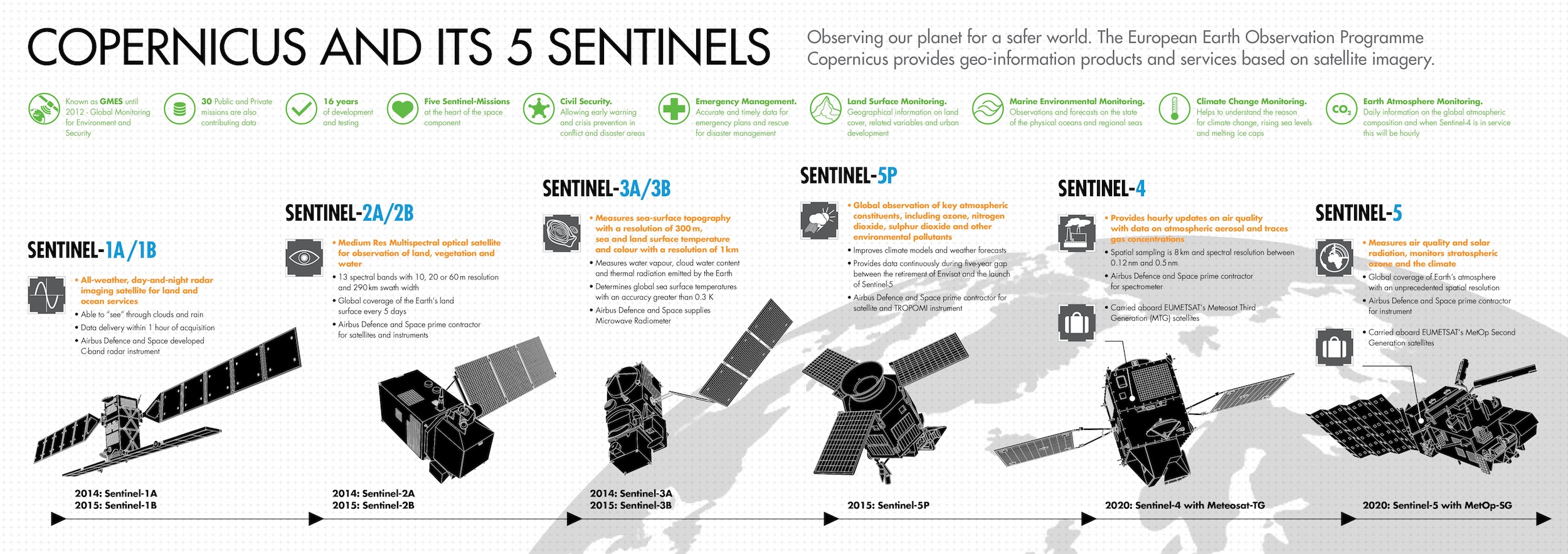
Europe's newest Earth-watching satellite had to dodge an uncontrolled NASA spacecraft just after reaching orbit last week, putting engineers on edge until they could safely maneuver the nearly $400 million Sentinel 1A satellite out of the way.
FULL STORY
Solar array issue will have little impact on DMSP 19
U.S. Air Force officials say a partially deployed solar array boom on a new military weather satellite will have "negligible" impact on the $518 million spacecraft's planned five-year mission.
FULL STORY
This is the United Launch Alliance highlights film from Thursday's Atlas 5 rocket flight from Florida.
All-weather surveillance satellite orbited by Israel
Israel launched a reconnaissance satellite Wednesday, adding a radar-equipped imaging platform to the country's intelligence-gathering network to monitor Iran's nuclear program and neighboring territories.
FULL STORY - with video!
A look back to last week's California Atlas launch
Took a look back to last week's launch of an Atlas 5 rocket from California through the camera lenses of United Launch Alliance photographer Bill Hartenstein.
IMAGES:TOWER ROLLBACK PHOTO GALLERY IMAGES:LAUNCH PHOTO PAGE
Russian Progress cargo craft docks at space station
A Soyuz rocket lifted off from the Baikonur Cosmodrome in Kazakhstan on Wednesday with a Russian Progress resupply spacecraft, kicking off a expedited flight to the International Space Station with 2.9 tons of fuel, water and supplies. The Progress completed a smooth docking with the outpost six hours after liftoff.
FULL STORY PREVIEW STORY - with images!
Sporty sendoff planned for NASA's LADEE moon mission
NASA's LADEE space probe is in the final weeks of its $280 million lunar research mission as engineers put the diminutive spacecraft through a series of tricky maneuvers to test its limits and maximize its scientific return.
FULL STORY
NASA eyes June launch for next Cygnus cargo mission
Preparations for the next Orbital Sciences Corp. cargo delivery mission to the International Space Station are on track for launch in early May, but NASA plans to ask the company to reschedule its resupply run for some time in mid-June after delays in launching a SpaceX Dragon spacecraft to the complex, sources said.
FULL STORY
Solar array snag on Air Force weather satellite
Engineers are studying a problem that caused the power-generating solar array on a newly-launched U.S. military weather satellite to only partially deploy, but officials said Friday the anomaly has so far not affected operations of the polar-orbiting spacecraft.
FULL STORY
Arianespace's Soyuz order to cover market until 2019
Arianespace has finalized an agreement to order a batch of seven Soyuz rockets from Russia, covering the French launch service provider's demand for medium-lift missions until 2019, the company's chief executive announced last week.
FULL STORY
Rocketcams trace Soyuz launch from French Guiana
A suite of on-board cameras recorded dazzling views of Thursday's successful Soyuz launch from the Guiana Space Center, supplying an unprecedented look at the workings of the venerable Russian rocket in flight.
VIDEO:DAZZLING ROCKETCAM FOOTAGE IMAGES:SOYUZ LAUNCH PHOTOS
Sea Launch mission for Eutelsat delayed
Sea Launch has delayed its next mission after a rocket component was damaged during preflight testing at the company's home port in Southern California, officials announced last week.
FULL STORY
ULA, SpaceX reschedule launches after radar outage
After a two-week delay to wait for the U.S. Air Force to restore a critical radar tracker, United Launch Alliance and SpaceX have rescheduled their next rocket missions from Cape Canaveral for April 10 and April 14.
FULL STORY ATLAS 5 MISSION STATUS CENTER FALCON 9 MISSION STATUS CENTER
Indian navigation satellite launched on PSLV
India launched its second navigation spacecraft aboard a Polar Satellite Launch Vehicle on Friday to continue building an independent space-based system to provide positioning services over Indian territory.
FULL STORY
NASA space assets detect ocean inside Saturn moon
NASA's Cassini spacecraft and Deep Space Network have uncovered evidence Saturn's moon Enceladus harbors a large underground ocean of liquid water, furthering scientific interest in the moon as a potential home to extraterrestrial microbes.
FULL STORY
This is the United Launch Alliance highlights film from Thursday's Atlas 5 rocket flight from California.
Station exempt from policy to limit contact with Russia
NASA has been told to suspend contact with Russian government officials because of Russia's "ongoing violation of Ukraine's sovereignty and territorial integrity," according to an agency memo circulated Wednesday. The International Space Station, which is jointly operated by NASA, Russia, the European Space Agency, Japan and Canada, is exempt and not directly impacted by the new guidelines.
FULL STORY
Rosetta's pioneering Philae comet lander reactivated
Europe's Rosetta spacecraft has returned an image of its distant comet target as ground controllers received the first signals from probe's piggyback Philae lander Friday after hibernating nearly three years in a power-saving sleep mode.
FULL STORY
Pegasus selected for launch of cyclone forecasting fleet
NASA has awarded Orbital Sciences Corp. a contract to boost eight small tropical cyclone research satellites into orbit on an air-launched Pegasus XL rocket in 2016.
FULL STORY
NASA officials to disclose space shuttle orbiter mix-up
NASA will later today admit to an embarrassing paperwork error in the 1990s that led the agency to fly two of its space shuttle orbiters with the wrong names for almost two decades.
READ OUR APRIL FOOLS' PRANK





 IMAGES:



 AUDIO: JIM ERICKSON ON HOW CURIOSITY IS COMMANDED