Rejuvenated Hubble ready to leave the shuttle today
BY WILLIAM HARWOOD
STORY WRITTEN FOR CBS NEWS "SPACE PLACE" & USED WITH PERMISSION
Posted: May 19, 2009
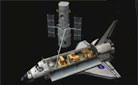
Astronaut Megan McArthur, operating the shuttle Atlantis' robot arm, locked onto the 24,500-pound Hubble Space Telescope at 6:45 a.m. today as the crew geared up to unberth and release the upgraded observatory following a dramatic five-spacewalk overhaul, the telescope's fifth and final shuttle servicing.

Hubble will be released from the shuttle today. Credit: NASA
|
With astronauts Michael Massimino and Michael Good standing by for an emergency spacewalk if anything goes wrong, McArthur planned to lift Hubble off its service platform at the back of the shuttle's cargo bay shortly after 7 a.m. and release it into open space around 8:53 a.m.
A half hour later, around 9:30 a.m., shuttle commander Scott Altman plans to fire Atlantis' maneuvering rockets, leaving NASA's most successful science satellite behind for the last time.
For Atlantis' crew, flight controllers, Hubble scientists and engineers and uncounted fans of the space observatory around the world, release will make a bittersweet moment as the telescope recedes from view for the last time. With the shuttle program facing retirement after eight more space station assembly flights, no more Hubble visits are currently planned and no one will set eyes on the telescope again until a final mission, presumably robotic, sometime in the late teens or 2020s to drive it out of orbit.
"Certainly it's going to be for me, a very touching moment," said astronomer-astronaut John Grunsfeld, making his third Hubble house call. "When I first went to Hubble (in 1999), at the end of our three spacewalks, we deployed Hubble on Christmas Day, and I had very mixed feelings. I'd been working for a number of years on the Hubble project, had gone and done two spacewalks on that mission and felt like I'd just barely gotten to know the Hubble before we had to send it on its way. But it was a glorious Christmas present to everybody on planet Earth. It was a wonderful sight to watch it slowly drifting off on the Earth's horizon.
"I was privileged to go back again (in 2002) and I felt like I was visiting an old friend. I was convinced at the end of the last mission, as it floated away, that I would never get a chance to see the Hubble again but I knew somebody would. And of course that got thrown into disarray with the cancellation of the servicing mission on the shuttle, and so here I am, going back to visit an old friend, to give it a new life along with a team of some Hubble repeats, other Hubble huggers, and a new team.
"So I'm looking forward to that moment with some mixed emotions," he said. "But when we've successfully serviced the Hubble, with all of the things that we have on our plate, a very challenging mission and a very complex mission, when Hubble flies away I'm going to be very proud of the shuttle team that allowed us to go there and of the Hubble team that has come up with all of these fixes that will make Hubble just an incredible discovery machine."
Faced with certain doom in the wake of the 2003 Columbia disaster, when a final shuttle servicing flight was canceled because of safety concerns, Hubble won a new lease on life when former Administrator Mike Griffin reinstated Atlantis' mission after development of heat shield inspection and repair techniques.
Over the course of five back-to-back spacewalks, the Atlantis astronauts equipped Hubble with a powerful new $132 million camera, a new $88 million spectrograph, six new stabilizing gyroscopes, six fresh batteries, a refurbished fine guidance sensor and a new science data computer. The astronauts also pulled off two unprecedented repairs, bringing another camera and an imaging spectrograph back to life after failures in 2004 and 2007.
Hubble is now more scientifically powerful than at any point since launch in 1990 and with new gyros and batteries, it should remain operational for at least five more years and possibly more.
"I don't want to be provincial, but I truly believe this is a very important moment in human history and I think it's an important moment for science," said Hubble Project Scientist David Leckrone. "Just using what Hubble's already done as a starting point, it's unimaginable that we won't dramatically go further than that."
After Hubble is released, the astronauts will face a busy day of work inspecting the shuttle's reinforced carbon carbon nose cap, wing leading edge panels and heat shield tiles to make sure no damage has occurred from micrometeoroids or space debris since a similar inspection the day after launch.
The odds of a catastrophic impact from space debris are higher at Hubble's 350-mile-high altitude, on average about 1-in-229 compared to less than 1-in-300 for a typical space station flight at the lab's lower 220-mile-high altitude.
With Hubble safely on its way, Altman and pilot Gregory C. Johnson plan to carry out a rocket firing later this morning to lower one side of the shuttle's orbit to around 184 statute miles, reducing the risk of impact by about 15 percent.
Because Hubble operates in a different orbit from the International Space Station, the astronauts cannot seek "safe haven" aboard the lab complex if any major problems occur that might prevent a safe re-entry. As a result, the shuttle Endeavour is poised on pad 39B at the Kennedy Space Center, already prepped for an emergency rescue mission if any non-repairable problems are found.
But the kind of damage that might require a rescue mission is more likely during launch than it is from impacts with small, albeit dangerous, pieces of space debris. Today's heat shield inspection is designed to spot any such damage. With post-Columbia repair tools on board, mission managers are confident any relatively minor damage could be repaired without needing a rescue flight.
The heat shield passed its initial inspections after launch, although a sensor behind wing leading edge panel No. 11 on the ship's right wing recorded a presumed impact during the early hours of the mission. But the data indicate the event was below the damage threshold requiring repairs.
Assuming no problems are found today, the astronauts will enjoy a day off Wednesday before packing up Thursday for the trip home.
Along with lowering the odds of debris impacts, today's orbit adjustment also will make it possible to bring Atlantis home one orbit earlier than originally planned, giving the crew three shots at a Florida landing Friday and improving the odds of getting home ahead of potentially threatening weather. The first landing opportunity will come 10:03 a.m. Friday.
Here is an updated timeline of today's activity (in EDT and mission elapsed time; includes revision H of the NASA television schedule):
EDT........DD...HH...MM...EVENT

05/19/09
03:26 AM...07...13...25...HST: SSR engineering playback
04:31 AM...07...14...30...Crew wakeup
06:01 AM...07...16...00...Group B computer powerup
06:16 AM...07...16...15...SRMS grapples HST
06:51 AM...07...16...50...HST power umbilical disconnect
07:11 AM...07...17...10...HST unberthing maneuver
07:36 AM...07...17...35...EVA prep
07:56 AM...07...17...55...HST release prep
08:11 AM...07...18...10...HST: Aperture door open
08:53 AM...07...18...52...HST release
08:54 AM...07...18...53...Separation burn No. 1
09:27 AM...07...19...26...Separation burn No. 2
09:51 AM...07...19...50...FSS stow
10:11 AM...07...20...10...Crew meals begin
11:02 AM...07...21...01...Orbit adjust rocket firing
11:11 AM...07...21...10...Group B computer powerdown
11:11 AM...07...21...10...SRMS unberths OBSS
12:51 PM...07...22...50...Starboard wing RCC survey
02:30 PM...08...00...29...Mission status briefing on NTV
02:31 PM...08...00...30...EVA tools stowed
02:41 PM...08...00...40...Nose cap survey
03:31 PM...08...01...30...Port wing RCC survey
05:46 PM...08...03...45...HST: 1st alignment
05:51 PM...08...03...50...OBSS ICC RCC survey
06:31 PM...08...04...30...LDRI downlinkn
08:31 PM...08...06...30...Crew sleep begins
09:00 PM...08...06...59...Daily highlights reel on NTV

Additional coverage for subscribers:
 VIDEO:
PREVIEW OF HST DEPLOY AND ATLANTIS INSPECTIONS PLAY VIDEO:
PREVIEW OF HST DEPLOY AND ATLANTIS INSPECTIONS PLAY

VIDEO:
FLIGHT DAY 8 HIGHLIGHTS MOVIE PLAY
VIDEO:
MONDAY NIGHT UPDATE FROM HST CONTROL CENTER PLAY
VIDEO:
MONDAY'S MISSION STATUS BRIEFING PLAY
VIDEO:
HUBBLE'S HIGH-GAIN ANTENNA BOOMS UNFOLDED PLAY
VIDEO:
COVER PUT ON HUBBLE ANTENNA AS EVA CONCLUDES PLAY
VIDEO:
REFLECTING ON THE MISSION AS SPACEWALK NEARS END PLAY
VIDEO:
SHEET OF THERMAL COVERING ADDED TO BAY 7 DOOR PLAY
VIDEO:
NEW THERMAL SHIELDING PANEL PUT ON BAY 8 DOOR PLAY
VIDEO:
DEGRADED THERMAL BLANKET PEELED OFF BAY 5 DOOR PLAY
VIDEO:
THE OLD FINE GUIDANCE SENSOR STOWED FOR LANDING PLAY
VIDEO:
UPGRADED FINE GUIDANCE SENSOR INSTALLED IN HUBBLE PLAY
VIDEO:
OLD FINE GUIDANCE SENSOR REMOVED FROM TELESCOPE PLAY
VIDEO:
SPACEWALKERS STRUGGLE WITH BOLTS AND LATCHES PLAY
VIDEO:
REPLACEMENT OF HUBBLE'S 19-YEAR-OLD BATTERIES PLAY
VIDEO:
SPACEWALKERS EMERGE FROM AIRLOCK TO START EVA PLAY
VIDEO:
NARRATED PREVIEW OF SPACEWALK NO. 5 PLAY
VIDEO:
FLIGHT DAY 7 HIGHLIGHTS MOVIE PLAY
VIDEO:
SUNDAY NIGHT UPDATE FROM HST CONTROL CENTER PLAY
VIDEO:
SUNDAY'S MISSION STATUS BRIEFING PLAY
VIDEO:
SPACE TELESCOPE IMAGING SPECTROGRAPH WORK DONE PLAY
VIDEO:
OPENING COVER ON THE ELECTRONICS MODULE ON STIS PLAY
VIDEO:
SPACEWALKER MIKE MASSIMINO REMOVES TINY SCREWS PLAY
VIDEO:
TRIP FROM AIRLOCK BACK WITH SPARE POWER TOOL PLAY
VIDEO:
CAPTURE PLATE MOUNTED ONTO STIS POWER MODULE PLAY
VIDEO:
MASSIMINO FIGHTS WITH STUCK BOLT ON HANDRAIL PLAY
VIDEO:
SPACEWALKERS GET ORGANIZED FOR STIS REPAIR PLAY
VIDEO:
NARRATED PREVIEW OF SPACEWALK NO. 4 PLAY
VIDEO:
FLIGHT DIRECTOR'S PREVIEW OF MISSION'S DAY 7 PLAY
VIDEO:
FLIGHT DAY 6 HIGHLIGHTS MOVIE PLAY
VIDEO:
SATURDAY NIGHT UPDATE FROM HST CONTROL CENTER PLAY
VIDEO:
SATURDAY'S MISSION STATUS BRIEFING PLAY
VIDEO:
REPAIR OF ADVANCED CAMERA FOR SURVEYS FINISHED PLAY
VIDEO:
WATCH AS GRUNSFELD REPAIRS HUBBLE CAMERA PLAY
VIDEO:
COSTAR STOWED IN ATLANTIS' PAYLOAD BAY PLAY
VIDEO:
UMBILICALS HOOKED UP TO NEW INSTRUMENT PLAY
VIDEO:
COSMIC ORIGINS SPECTROGRAPH INSTALLED PLAY
VIDEO:
SPECTROGRAPH PREPPED IN LAUNCH CARRIER PLAY
VIDEO:
COSTAR OPTICS PACKAGE REMOVED FROM HUBBLE PLAY
VIDEO:
SPACEWALKERS OPEN SHROUD DOORS ON TELESCOPE PLAY
VIDEO:
NARRATED PREVIEW OF SPACEWALK NO. 3 PLAY
VIDEO:
FLIGHT DIRECTOR'S PREVIEW OF MISSION'S DAY 6 PLAY
VIDEO:
FLIGHT DAY 5 HIGHLIGHTS MOVIE PLAY
VIDEO:
FRIDAY NIGHT UPDATE FROM HST CONTROL CENTER PLAY
VIDEO:
FRIDAY'S MISSION STATUS BRIEFING PLAY
VIDEO:
SPARE GYRO UNIT INSTALLED INTO THIRD POSITION PLAY
VIDEO:
ANOTHER GYROSCOPE UNIT PUT INTO SECOND SLOT PLAY
VIDEO:
TROUBLE INSTALLING SECOND GYROSCOPE PACKAGE PLAY
VIDEO:
REMOVAL OF SECOND GYROSCOPE PACKAGE FROM HUBBLE PLAY
VIDEO:
INSTALLATION OF FIRST GYROSCOPE INTO HUBBLE PLAY
VIDEO:
REMOVAL OF FIRST GYROSCOPE PACKAGE FROM HUBBLE PLAY
VIDEO:
NARRATED PREVIEW OF SPACEWALK NO. 2 PLAY
VIDEO:
FLIGHT DIRECTOR'S PREVIEW OF MISSION'S DAY 5 PLAY
VIDEO:
FLIGHT DAY 4 HIGHLIGHTS MOVIE PLAY
VIDEO:
THURSDAY NIGHT UPDATE FROM HST CONTROL CENTER PLAY
VIDEO:
THURSDAY'S MISSION STATUS BRIEFING PLAY
VIDEO:
SOFT CAPTURE MECHANISM PUT ON HUBBLE PLAY
VIDEO:
SCIENCE INSTRUMENT COMMAND & DATA HANDLING UNIT PLAY
VIDEO:
PARTIALLY FAILED SIC&DH UNIT REMOVED FROM HST PLAY
VIDEO:
WFPC2 CAMERA STOWED IN ATLANTIS FOR RETURN PLAY
VIDEO:
OVERVIEW OF WIDE FIELD CAMERA 3 INSTRUMENT PLAY
VIDEO:
SPACEWALKERS INSTALL THE WIDE FIELD CAMERA 3 PLAY
VIDEO:
NEW WIDE FIELD CAMERA 3 PREPPED FOR INSTALLATION PLAY
VIDEO:
16-YEAR-OLD WFPC2 CAMERA REMOVED FROM HUBBLE PLAY
VIDEO:
LATCHING BOLT ON WPFC2 FINALLY RELEASED PLAY
VIDEO:
FIGHTING WITH TROUBLESOME BOLT ON WPFC2 PLAY
VIDEO:
FEUSTEL INSTALLS HANDLE ONTO WPFC2 FOR REMOVAL PLAY
VIDEO:
HANDLING FIXTURE DEPLOYED TO HOLD OLD CAMERA PLAY
VIDEO:
GRUNSFELD INSTALLS SUPPORT POSTS UNDER HST PLAY
VIDEO:
FEUSTEL OPENS LATCHES ON INSTRUMENT CARRIER PLAY
VIDEO:
ASTRONAUTS EXIT AIRLOCK TO START EVA NO. 1 PLAY
VIDEO:
NARRATED PREVIEW OF SPACEWALK NO. 1 PLAY
VIDEO:
FLIGHT DAY 3 HIGHLIGHTS MOVIE PLAY
VIDEO:
WEDNESDAY NIGHT UPDATE FROM HST CONTROL CENTER PLAY
VIDEO:
WEDNESDAY'S MISSION MANAGEMENT TEAM UPDATE PLAY
VIDEO:
WEDNESDAY'S MISSION STATUS BRIEFING PLAY
VIDEO:
TIME-LAPSE OF MOVING HUBBLE INTO PAYLOAD BAY PLAY
VIDEO:
SHUTTLE ATLANTIS' ROBOT ARM CAPTURES HUBBLE PLAY
VIDEO:
FIRST UP CLOSE VIEWS OF HUBBLE IN 7 YEARS PLAY
VIDEO:
SHUTTLE ENGINE FIRING TO CIRCULARIZE ORBIT PLAY
VIDEO:
INSIGHTFUL OVERVIEW OF ATLANTIS' MISSION PLAY
VIDEO:
NARRATED PREVIEW ANIMATION OF HUBBLE RENDEZVOUS PLAY
VIDEO:
FLIGHT DAY 2 HIGHLIGHTS MOVIE PLAY
VIDEO:
TUESDAY NIGHT UPDATE FROM HST CONTROL CENTER PLAY
VIDEO:
TUESDAY'S MISSION MANAGEMENT TEAM UPDATE PLAY
VIDEO:
SLOW-MOTION OF DEBRIS THAT APPARENTLY HIT TILES PLAY
VIDEO:
TILE DAMAGE FOUND DURING INSPECTIONS PLAY
VIDEO:
CAPCOM CALLS CREW ABOUT MINOR DAMAGE PLAY
VIDEO:
TUESDAY'S MISSION STATUS BRIEFING PLAY
VIDEO:
PREVIEW ANIMATION OF HEAT SHIELD INSPECTIONS PLAY
VIDEO:
FLIGHT DAY 1 HIGHLIGHTS MOVIE PLAY
VIDEO:
THE FULL STS-125 LAUNCH EXPERIENCE PLAY
VIDEO:
LAUNCH REPLAY: EXTERNAL TANK CAMERA PLAY
VIDEO:
FOOTAGE OF FUEL TANK AFTER JETTISON PLAY
VIDEO:
LAUNCH REPLAY: FRONT CAMERA PLAY
VIDEO:
LAUNCH REPLAY: BEACH TRACKER PLAY
VIDEO:
LAUNCH REPLAY: PAD PERIMETER PLAY | HI-DEF
VIDEO:
LAUNCH REPLAY: UCS-23 TRACKER PLAY
VIDEO:
LAUNCH REPLAY: CAMERA CS-1 PLAY
VIDEO:
LAUNCH REPLAY: CAMERA CS-2 PLAY
VIDEO:
LAUNCH REPLAY: CAMERA CS-6 PLAY
VIDEO:
LAUNCH REPLAY: VAB ROOF PLAY
VIDEO:
LAUNCH REPLAY: PRESS SITE PLAY
VIDEO:
LAUNCH REPLAY: WEST TOWER PLAY
VIDEO:
LAUNCH REPLAY: CAMERA 009 PLAY
VIDEO:
LAUNCH REPLAY: CAMERA 041 PLAY
VIDEO:
LAUNCH REPLAY: CAMERA 049 PLAY
VIDEO:
LAUNCH REPLAY: CAMERA 050 PLAY
VIDEO:
LAUNCH REPLAY: CAMERA 051 PLAY
VIDEO:
LAUNCH REPLAY: CAMERA 060 PLAY
VIDEO:
LAUNCH REPLAY: CAMERA 061 PLAY
VIDEO:
LAUNCH REPLAY: CAMERA 063 PLAY
VIDEO:
LAUNCH REPLAY: CAMERA 070 PLAY
VIDEO:
LAUNCH REPLAY: CAMERA 071 PLAY
VIDEO:
SPACE SHUTTLE ATLANTIS BLASTS OFF! PLAY | HI-DEF
VIDEO:
STS-125 POST-LAUNCH NEWS CONFERENCE PLAY
VIDEO:
INSIDE MISSION CONTROL DURING LAUNCH PLAY
VIDEO:
NARRATED ANIMATION OF DAY 1 INSPECTIONS PLAY
VIDEO:
FINAL PRE-LAUNCH READINESS POLLS CONDUCTED PLAY
VIDEO:
SHUTTLE'S CREW MODULE HATCH CLOSED FOR FLIGHT PLAY
VIDEO:
MISSION SPECIALIST MEGAN MCARTHUR BOARDS PLAY
VIDEO:
PILOT GREG JOHNSON BOARDS ATLANTIS PLAY
VIDEO:
MISSION SPECIALIST JOHN GRUNSFELD BOARDS PLAY
VIDEO:
SHUTTLE COMMANDER SCOTT ALTMAN BOARDS PLAY
VIDEO:
CREW DEPARTS QUARTERS FOR LAUNCH PAD PART 1 | PART 2
VIDEO:
ASTRONAUTS DON SPACESUITS FOR LAUNCH PLAY
VIDEO:
TIME-LAPSE OF LAUNCH PAD GANTRY ROLLBACK PLAY
VIDEO:
HUBBLE'S FUTURE AFTER ATLANTIS SERVICING PLAY
VIDEO:
TOP DISCOVERIES MADE BY HUBBLE TELESCOPE PLAY
VIDEO:
THE ROLLERCOASTER LIFE OF HUBBLE PLAY
VIDEO:
WHAT IS HUBBLE'S PLACE IN HISTORY? PLAY
VIDEO:
ENTERTAINING LOOK AT ATLANTIS' CREW PLAY
VIDEO:
HUBBLE SPACE TELESCOPE HISTORY MOVIE PLAY
VIDEO:
A TRIBUTE TO THE CAMERA THAT SAVED HUBBLE PLAY
VIDEO:
HUBBLE TELESCOPE PROGRAM BRIEFING FROM SUNDAY PLAY
VIDEO:
SUNDAY'S COUNTDOWN STATUS AND WEATHER UPDATE PLAY
VIDEO:
THE STS-125 PRE-LAUNCH NEWS CONFERENCE PLAY
VIDEO:
SATURDAY'S COUNTDOWN STATUS AND WEATHER UPDATE PLAY
VIDEO:
ASTRONAUTS ARRIVE AT THE CAPE FOR LAUNCH PLAY
VIDEO:
FRIDAY'S COUNTDOWN STATUS AND WEATHER UPDATE PLAY
VIDEO:
NEWS BRIEFING FOLLOWING FLIGHT READINESS REVIEW PLAY
VIDEO:
REFRESHER BRIEFING: THE STS-125 MISSION PLAY
VIDEO:
REFRESHER BRIEFING: HUBBLE SPACE TELESCOPE PLAY
VIDEO:
REFRESHER BRIEFING: THE SEVEN ASTRONAUTS PLAY
VIDEO:
BIOGRAPHY MOVIE OF ATLANTIS' CREW PLAY
VIDEO:
INTERVIEW WITH COMMANDER SCOTT ALTMAN PLAY | '09 UPDATE
VIDEO:
INTERVIEW WITH PILOT GREG JOHNSON PLAY
VIDEO:
INTERVIEW WITH MS1 MIKE GOOD PLAY
VIDEO:
INTERVIEW WITH MS2 MEGAN MCARTHUR PLAY
VIDEO:
INTERVIEW WITH MS3 JOHN GRUNSFELD PLAY | '09 UPDATE
VIDEO:
INTERVIEW WITH MS4 MIKE MASSIMINO PLAY | '09 UPDATE
VIDEO:
INTERVIEW WITH MS5 DREW FEUSTEL PLAY | '09 UPDATE
VIDEO:
SHUTTLE ATLANTIS ARRIVES AT LAUNCH PAD 39A PLAY | HI-DEF
VIDEO:
THE SUN RISES ON ATLANTIS DURING ROLLOUT PLAY | HI-DEF
VIDEO:
ATLANTIS EMERGES FROM ASSEMBLY BUILDING PLAY | HI-DEF
VIDEO:
ORBITER VERTICAL FOR MATING TO FUEL TANK PLAY | HI-DEF
VIDEO:
ATLANTIS MOVES BACK TO ASSEMBLY BUILDING PLAY | HI-DEF
VIDEO:
ATLANTIS LEAVES LAUNCH PAD 39A IN OCT. PLAY
VIDEO:
TIMELAPSE OF THE ROLLBACK GETTING UNDERWAY PLAY
VIDEO:
ASTRONAUTS REHEARSE QUICK SHUTTLE EXIT PLAY
VIDEO:
CREW BOARDS ATLANTIS FOR MOCK COUNTDOWN PLAY
VIDEO:
ASTRONAUTS DON SUITS FOR PRACTICE COUNTDOWN PLAY
VIDEO:
CREW'S TRAINING ON ESCAPE BASKETS AND BUNKER PLAY
VIDEO:
ASTRONAUTS CHAT WITH PRESS AT LAUNCH PAD PLAY
VIDEO:
CREW TEST DRIVES EMERGENCY PAD ESCAPE VEHICLE PLAY
VIDEO:
COMMANDER AND PILOT PRACTICE LANDING APPROACHES PLAY
VIDEO:
CREW ARRIVES AT CAPE FOR PRACTICE COUNTDOWN PLAY
VIDEO:
COMMENTS FROM COMMANDER AFTER ARRIVING PLAY
VIDEO:
AERIAL VIEWS OF ATLANTIS AND ENDEAVOUR PLAY | HI-DEF
VIDEO:
PRE-FLIGHT BRIEFING: THE STS-125 MISSION PLAY
VIDEO:
PRE-FLIGHT BRIEFING: THE FIVE SPACEWALKS PLAY
VIDEO:
PRE-FLIGHT BRIEFING: THE SEVEN ASTRONAUTS PLAY
VIDEO:
PRE-FLIGHT BRIEFING: NASA LEADERSHIP PLAY
VIDEO:
PRE-FLIGHT BRIEFING: SHUTTLE PROGRAM BOSS PLAY
VIDEO:
PRE-FLIGHT BRIEFING: HUBBLE OVERVIEW PLAY
VIDEO:
PRE-FLIGHT BRIEFING: HUBBLE SCIENCE PLAY
VIDEO:
SHUTTLE ARRIVES ATOP PAD 39A PLAY
VIDEO:
ATLANTIS EMERGES FROM VEHICLE ASSEMBLY BUILDING PLAY
VIDEO:
TIME-LAPSE MOVIE OF ATLANTIS' ROLLOUT TO LAUNCH PAD PLAY
VIDEO:
ATLANTIS ROLLS FROM HANGAR TO VAB PLAY
VIDEO:
ATLANTIS LIFTED INTO PLACE FOR ATTACHMENT PLAY
MORE:
STS-125 VIDEO COVERAGE
NEW!
HIGH DEFINITION VIDEO
SUBSCRIBE NOW
|