Spaceflight Now Home


The Mission


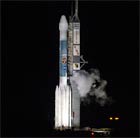
Rocket: Delta 2 (7925H)
Payload: MESSENGER
Date: August 3, 2004
Time: 0615:56 GMT (2:15:56 a.m. EDT)
Site: SLC-17B, Cape Canaveral, Florida
Satellite feed: AMC 6, Transponder 5, C-band

Mission preview story

Launch events timeline

Daily launch windows

Ground track map


The Payload


NASA's MESSENGER probe will become the first reconnaissance spacecraft to orbit our solar system's innermost planet -- Mercury.

Mercury fast facts

MESSENGER instruments and systems

Overview of science objectives


The Launcher


Boeing's workhorse Delta 2 rocket has flown more than 100 times, launching military, scientific and commercial satellites.

Delta 2 fact sheet

Archived Delta coverage


The Venue


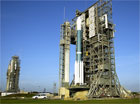
Cape Canaveral's Launch Complex 17 is the East Coast home of Delta 2.

Learn more


Spaceflight Now +


Premium video content for our Spaceflight Now Plus subscribers.

MESSENGER preview
Mission officials and scientists preview the flight of NASA's MESSENGER space probe to orbit the planet Mercury during this news conference. (41min 36sec file)
 Play video

Become a subscriber
More video


NewsAlert


Sign up for our NewsAlert service and have the latest news in astronomy and space e-mailed direct to your desktop.

Enter your e-mail address:

Privacy note: your e-mail address will not be used for any other purpose.


BY JUSTIN RAY

Follow the countdown and launch of the Boeing Delta 2-Heavy rocket with NASA's MESSENGER probe that will orbit Mercury. Reload this page for the very latest on the mission.

TUESDAY, AUGUST 3, 2004

A Boeing Delta 2 rocket roared to life early Tuesday and climbed into space, launching NASA's ambitious MESSENGER probe on a round-about six-and-a-half-year voyage to Mercury, a $427 million quest to fill in one of the most glaring blanks in planetary exploration. Read our full launch story.

Spaceflight Now Plus
Additional coverage for subscribers:
VIDEO: DELTA 2 ROCKET BLASTS OFF WITH MESSENGER QT
VIDEO: CLOSE-UP VIEW OF MAIN ENGINE IGNITION QT
VIDEO: UMBILICAL TOWER CAMERA VIDEO OF LIFTOFF QT
VIDEO: FIERY BLASTOFF AS CAPTURED BY PAD CAMERA QT
VIDEO: LIFTOFF AS SEEN FROM PLAYALINDA BEACH QT
VIDEO: LAUNCH AS SEEN FROM CAPE'S PRESS SITE 1 QT
VIDEO: COCOA BEACH TRACKING CAMERA LAUNCH VIDEO QT
VIDEO: VIEW FROM ALTERNATE PRESS VIEWING LOCATION QT
VIDEO: POWERFUL TRACKING CAMERA OFFERS THIS ANGLE QT
VIDEO: CLOSE-UP VIEW OF BOOSTER NOZZLES DURING ASCENT QT
VIDEO: POST-FLIGHT INTERVIEW WITH NASA LAUNCH MANAGER QT

VIDEO: SERVICE TOWER ROLLED BACK FOR SECOND COUNTDOWN QT
VIDEO: BAD WEATHER SCRUBS MONDAY'S LAUNCH ATTEMPT QT
VIDEO: WEATHER OFFICER GIVES FORECAST FOR TUESDAY QT
VIDEO: MESSENGER'S LAUNCH CAMPAIGN SHOWN WITH NARRATION QT
VIDEO: DELTA 2 ROCKET IS ASSEMBLED ON THE LAUNCH PAD QT
VIDEO: MOBILE SERVICE TOWER IS ROLLED BACK SUNDAY EVENING QT

VIDEO: SATURDAY'S PRE-LAUNCH NEWS CONFERENCE QT
VIDEO: MESSENGER PRE-LAUNCH SCIENCE BRIEFING QT
VIDEO: WATCH THE MESSENGER OVERVIEW NEWS CONFERENCE QT
SUBSCRIBE NOW

0731 GMT (3:31 a.m. EDT)

Contact with MESSENGER has been established. The two single-sided solar panels have been deployed and the craft's battery system is being charged, NASA says.

"To run MESSENGER's systems and charge its 23-ampere-hour nickel-hydrogen battery, the panels, each about 5 feet by 5.5 feet, will support between 385-485 watts of spacecraft load power during the cruise phase and 640 watts during the orbit at Mercury," according to the project.

"The panels could produce more than two kilowatts of power near Mercury, but to prevent stress on MESSENGER's electronics, onboard power processors take in only what the spacecraft actually needs. The custom-developed panels are 67 percent mirrors (called optical solar reflectors) and 33 percent triplejunction solar cells, which convert 28 percent of the sunlight hitting them into electricity. Each panel has two rows of mirrors for every row of cells; the small mirrors reflect the Sun's energy and keep the panel cooler.

"The panels also rotate, so MESSENGER's flight computer will tilt the panels away from the Sun, positioning them to get the required power while maintaining a normal surface operating temperature of about 150 degrees Celsius, or 302 degrees Fahrenheit."

0720 GMT (3:20 a.m. EDT)

NASA says that MESSENGER appears to have been delivered on the proper trajectory. Mission control hopes to confirm deployment of the craft's power-generating solar panels within the next few minutes. In addition to the Hawaii tracking site, the Deep Space Network station in Goldstone, California, will be acquiring MESSENGER shortly.

News of MESSENGER's state of health and solar array deployment won't be announced by NASA in real-time. We will post that information as soon as it becomes available.

0716 GMT (3:16 a.m. EDT)

Controllers expect to receive their first signals from MESSENGER in about five minutes through a tracking station in South Point, Hawaii. That will confirm the craft is operating following its launch into space.

0715 GMT (3:15 a.m. EDT)

"That looked wonderful," NASA launch manager Chuck Dovale says of today's Delta rocket flight.

0714 GMT (3:14 a.m. EDT)

This marks the 113th successful Delta 2 rocket launch out of 115 flights since 1989 and extends the string of consecutive successes to 60 dating back to 1997. It was the fifth Delta 2 launch in 2004. The next is scheduled for September 22 from Cape Canaveral when another Global Positioning System military navigation satellite is launched for the U.S. Air Force.

0712 GMT (3:12 a.m. EDT)

T+plus 56 minutes, 50 seconds. SPACECRAFT SEPARATION! NASA's MESSENGER space probe has been released from the Boeing Delta 2 rocket's third stage to complete today's launch from Cape Canaveral.

MESSENGER has embarked on its seven-year, five-billion-mile voyage from the Earth to Mercury. The craft will use gravity-assisted sling-shot maneuvers during encounters with Earth, Venus and even Mercury over the next several years before arriving in orbit around its destination -- the innermost planet of our solar system -- in March 2011.

0711 GMT (3:11 a.m. EDT)

T+plus 55 minutes, 30 seconds. The U.S. Navy tracking station in Dongara, Australia, is now relaying live data from the Delta rocket.

0707 GMT (3:07 a.m. EDT)

T+plus 51 minutes, 42 seconds. The third stage has burned out of its solid fuel, ending the Delta 2 rocket's powered flight for this morning's launch of the MESSENGER spacecraft. Separation of the payload is about five minutes away.

0707 GMT (3:07 a.m. EDT)

T+plus 51 minutes. The third stage motor continues to fire with no problems reported.

0706 GMT (3:06 a.m. EDT)

T+plus 50 minutes, 20 seconds. Third stage ignition! The Thiokol Star 48B motor is firing to propel MESSENGER on its trek away from Earth.

0706 GMT (3:06 a.m. EDT)

T+plus 50 minutes. The solid-fueled third stage has separated from the Delta 2's second stage.

0705 GMT (3:05 a.m. EDT)

T+plus 49 minutes, 42 seconds. Spin up has begun.

0705 GMT (3:05 a.m. EDT)

T+plus 49 minutes, 30 seconds. The orbit achieved at SECO 2 is on target.

0705 GMT (3:05 a.m. EDT)

T+plus 49 minutes, 3 seconds. SECO 2. The second stage has completed its second burn of this launch. In the next minute, tiny thrusters on the side of the rocket will be fired to spin up the vehicle in preparation for jettison of the second stage.

0703 GMT (3:03 a.m. EDT)

T+plus 47 minutes, 40 seconds. Engine chamber pressures look good as the engine remains in operation.

0703 GMT (3:03 a.m. EDT)

T+plus 47 minutes, 20 seconds. The second stage engine burn is smooth, Boeing says.

0702 GMT (3:02 a.m. EDT)

T+plus 46 minutes, 30 seconds. The stage is stable as the firing continues.

0702 GMT (3:02 a.m. EDT)

T+plus 46 minutes, 5 seconds. Engine ignition! The Delta 2 rocket's second stage engine has restarted to boost the rocket into a higher orbit. This firing is expected to last nearly three minutes.

0701 GMT (3:01 a.m. EDT)

T+plus 45 minutes, 20 seconds. The Air Force's OTTR shipboard telemetry receiving station located in the southeast Indian Ocean is now picking up data from the Delta 2 rocket as it passes overhead. Second stage restart is about one-minute away.

0656 GMT (2:56 a.m. EDT)

T+plus 40 minutes. The OTTR telemetry ship should acquire the rocket's signal in about five minutes. Ignition of the second stage engine is expected just moments later.

0649 GMT (2:49 a.m. EDT)

T+plus 33 minutes. The rocket is now soaring above the southern tip of Africa.

0642 GMT (2:42 a.m. EDT)

T+plus 26 minutes, 10 seconds. The Ascension Island data pass is now complete. The Delta rocket has flown over the horizon from that tracking station. The next telemetry will be available via an instrumented ship located in the Indian Ocean beginning about 20 minutes from now. That ship will receive data on the rocket's second stage engine restart for relay back to Cape Canaveral.

0635 GMT (2:35 a.m. EDT)

T+plus 19 minutes, 50 seconds. Data through Ascension confirms that the rocket is stable during its orbital coast.

0635 GMT (2:35 a.m. EDT)

T+plus 19 minutes, 15 seconds. The Ascension island tracking station in the central Atlantic Ocean is receiving telemetry from the rocket as the vehicle soars overhead.

0633 GMT (2:33 a.m. EDT)

T+plus 17 minutes. As this coast phase of the launch continues, you can see a map of the rocket's planned track here.

0631 GMT (2:31 a.m. EDT)

T+plus 15 minutes. The official liftoff time was 2:15:56.537 a.m. EDT.

0628 GMT (2:28 a.m. EDT)

T+plus 12 minutes, 30 seconds. The rocket has passed out of range from the Antigua tracking site. This begins an expected telemetry blackout while the vehicle coasts in the parking orbit. The Ascension island station should acquire signal in a few minutes.

0627 GMT (2:27 a.m. EDT)

T+plus 11 minutes. Restart of second stage engine is expected at T+plus 46 minutes. The stage will fire for nearly three minutes to raise the orbit's high point, or apogee, by 4,000 miles. That will be followed by separation between the second and third stages. The upper stage will burn to propel MESSENGER on the first leg of its trek to Mercury. Deployment of the payload to complete the launch is expected at T+plus 56 minutes, 43 seconds.

0626 GMT (2:26 a.m. EDT)

T+plus 10 minutes, 30 seconds. Boeing reports that the orbit achieved at second stage engine cutoff is right on the mark. The orbit was targeted to be 90 miles circular with an inclination of 32.44 degrees to the equator.

0624 GMT (2:24 a.m. EDT)

T+plus 8 minutes, 54 seconds. SECO 1. The second stage engine cutoff has occurred, completing the motor's first firing of the day. The Delta 2 rocket with MESSENGER has arrived in a preliminary orbit around Earth following launch from Cape Canaveral. The vehicle will coast for more than a half-hour before the second stage is re-ignited.

0624 GMT (2:24 a.m. EDT)

T+plus 8 minutes, 30 seconds. Coming up on engine cutoff. Altitude 92.3 miles, downrange distance 1,192 miles, traveling at 16,451 mph.

0624 GMT (2:24 a.m. EDT)

T+plus 8 minutes. The second stage engine is still firing, consuming a hydrazine propellant mixture and nitrogen tetroxide oxidizer. This burn is needed to achieve a parking orbit around Earth.

0623 GMT (2:23 a.m. EDT)

T+plus 7 minutes, 40 seconds. The second stage engine continue to fire. Altitude 89 miles, downrange distance 974 miles, traveling at 15,687 mph.

0623 GMT (2:23 a.m. EDT)

T+plus 7 minutes, 10 seconds. Chamber pressures look good on the second stage engine.

0622 GMT (2:22 a.m. EDT)

T+plus 6 minutes, 35 seconds. The downrange tracking station on Antiqua island has acquired the rocket's signal.

0621 GMT (2:21 a.m. EDT)

T+plus 5 minutes, 40 seconds. The second stage engine continue to fire. Altitude 77 miles, downrange distance 610 miles, traveling over 14,534 mph.

0621 GMT (2:21 a.m. EDT)

T+plus 5 minutes. The 9.5-foot diameter protective payload fairing enclosing MESSENGER spacecraft atop the rocket has jettisoned in two halves.

0620 GMT (2:20 a.m. EDT)

T+plus 4 minutes, 50 seconds. The Aerojet AJ10-118K engine of the Delta 2 rocket's second stage engine has ignited! This is the first of two critical firings that the second stage must perform to deliver the MESSENGER satellite space.

0620 GMT (2:20 a.m. EDT)

T+plus 4 minutes, 38 seconds. MECO! Main engine cutoff. The Rocketdyne RS-27A first stage main engine has shut down to complete its firing during today's launch. The twin vernier steering thrusters fired a few additional seconds before they cut off. Then the spent stage was jettisoned to fall into the Atlantic.

0619 GMT (2:19 a.m. EDT)

T+plus 3 minutes, 30 seconds. The first stage continues to fire normally. Engine positioning is reported smooth.

0618 GMT (2:18 a.m. EDT)

T+plus 2 minutes, 40 seconds. The three air-ignited solid rocket boosters have burned out and separated. The rocket is now flying solely on the power generated by the liquid-fueled first stage main engine.

0618 GMT (2:18 a.m. EDT)

T+plus 2 minutes. A beautiful liftoff of the third Delta 2-Heavy rocket!

0617 GMT (2:17 a.m. EDT)

T+plus 1 minute, 25 seconds. All six ground-start solid rocket boosters have burned out of propellant and separated from the Delta 2's first stage. A moment before the jettison occurred, the three remaining motors strapped to rocket ignited to continue assisting the rocket's RS-27A main engine on the push to space.

0616 GMT (2:16 a.m. EDT)

T+plus 30 seconds. The six Alliant Techsystems-made solid rocket motors ignited on the launch pad are burning normally.

0616 GMT (2:16 a.m. EDT)

T+plus 20 seconds. The Boeing Delta 2-Heavy rocket has cleared the tower at Cape Canaveral's Complex 17B and begun maneuvering to the correct eastward trajectory from Florida's coastline for the flight over the open waters of the Atlantic Ocean.

0615:56 GMT (2:15:56 a.m. EDT)

LIFTOFF! NASA's MESSENGER spacecraft is departing for an unprecedented reconnaissance mission to Mercury -- our solar system's innermost planet.

0615 GMT (2:15 a.m. EDT)

T-minus 30 seconds.

The launch ignition sequence will begin at T-minus 2 seconds when a Boeing engineer triggers the engine start switch. The process begins with ignition of the two vernier engines and first stage main engine start. The six ground-lit solid rocket motors then light at T-0 for liftoff.

0614:56 GMT (2:14:56 a.m. EDT)

T-minus 1 minute. The Delta 2 rocket's second stage hydraulic pump has gone to internal power after its pressures were verified acceptable.

0614 GMT (2:14 a.m. EDT)

T-minus 70 seconds. The Range has issued its final clear-to-launch.

0614 GMT (2:14 a.m. EDT)

T-minus 90 seconds. Boeing mission director Rich Murphy has given his final approval to launch.

0613:56 GMT (2:13:56 a.m. EDT)

T-minus 2 minutes. The first stage liquid oxygen vents are being closed so the LOX tank can be pressurized for launch. Puffs of vapor from a relief valve on the rocket will be seen in the remainder of the countdown as the tank pressure stabilizes.

0613 GMT (2:13 a.m. EDT)

T-minus 2 minutes, 26 seconds. The MESSENGER spacecraft has been declared "go" for launch.

0612:56 GMT (2:12:56 a.m. EDT)

T-minus 3 minutes and counting. The rocket's third stage safe and arm devices are being armed.

0612 GMT (2:12 a.m. EDT)

T-minus 3 minutes, 45 seconds and counting. The Delta 2 rocket's systems are now transferring to internal power for launch.

0611:56 GMT (2:11:56 a.m. EDT)

T-minus 4 minutes and counting. The final phase of the countdown is underway for launch of the Delta 2-Heavy rocket and the MESSENGER space probe at 2:15:56 a.m. EDT from pad 17B at Cape Canaveral Air Force Station in Florida.

0611 GMT (2:11 a.m. EDT)

The "go" has been given to restart the countdown clock in one minute.

0610 GMT (2:10 a.m. EDT)

MESSENGER has successfully transitioned to internal power.

0610 GMT (2:10 a.m. EDT)

The MESSENGER spacecraft is switching to internal battery power for launch.

0608 GMT (2:08 a.m. EDT)

The launch team is now receiving final instructions on countdown procedures.

0607 GMT (2:07 a.m. EDT)

With five minutes remaining in this built-in hold, the launch team readiness poll is being performed by Boeing.

0606 GMT (2:06 a.m. EDT)

Liftoff is now 10 minutes away.

0605 GMT (2:05 a.m. EDT)

NASA launch manager Chuck Dovale just conducted a final launch readiness poll for team. The space agency is ready to proceed with the countdown.

"The NASA team is ready to proceed with launch," Dovale said.

0601:56 GMT (2:01:56 a.m. EDT)

T-minus 4 minutes and holding. The countdown has entered the final planned hold point for this morning's launch. During this planned 10-minute hold, final polls will be conducted to ensure everything is in readiness for liftoff at 2:15:56 a.m. EDT.

0600 GMT (2:00 a.m. EDT)

Launch weather officer Joel Tumbiolo has declared conditions "go" for liftoff.

0559 GMT (1:59 a.m. EDT)

The facility water tanks are being pressurized.

0559 GMT (1:59 a.m. EDT)

Liquid oxygen topping to 100 percent is beginning.

0556 GMT (1:56 a.m. EDT)

The start of MESSENGER's seven-year, five-billion mile trek to Mercury is now just 20 minutes away.

"Launching is only the beginning of the journey," says Orlando Figueroa, director of the Solar System Exploration Division at NASA Headquarters. "We still have seven years ahead of us that to many, it will seem like an eternity before we get to our destination. As reliable as the Delta 2 rockets have been over the decades, launching and sending anything into space remains an inherently high-risk endeavor. And therefore we must always celebrate one step at a time."

0552 GMT (1:52 a.m. EDT)

Inhibited checks are now beginning for the Range Safety command destruct receivers that would be used in destroying the Delta rocket should the vehicle veer off course or malfunction during the launch.

0546 GMT (1:46 a.m. EDT)

T-minus 20 minutes and counting. Clocks are ticking again after the planned 20-minute hold. The countdown will proceed to T-minus 4 minutes where the final hold is scheduled.

0541 GMT (1:41 a.m. EDT)

The Boeing launch team was just polled to confirm everyone is "ready" to continue the countdown. No problems were reported.

0539 GMT (1:39 a.m. EDT)

NASA launch manager Chuck Dovale just polled his team. There are no technical issues being addressed. Weather conditions and the upper level winds are favorable, too.

0536 GMT (1:36 a.m. EDT)

Now half-way through this built-in hold at T-minus 20 minutes. Once the countdown resumes, clocks will tick down to the T-minus 4 minute mark where a 10-minute hold is planned.

Liftoff is still targeted for the precise moment of 2:15:56 a.m. EDT (0615:56 GMT), the opening of today's 12-second launch window.

0528 GMT (1:28 a.m. EDT)

The launch weather officer just provided another briefing to management. All weather rules are currently "go." The cloud cover overhead is continuing to thin and dissipate.

There is an area of storms to the northeast. However, the anvil clouds are not predicted to move within 20 miles of the pad by launch time.

So at this point, the weather situation appears to be favorable for liftoff at 2:16 a.m. EDT.

0526 GMT (1:26 a.m. EDT)

T-minus 20 minutes and holding. A 20-minute built-in hold in the countdown has started. These holds are designed to give the launch team a chance to work any problems or catch up on activities that might be running behind schedule. Engineers will also have time to examine all the data from the just-completed steering tests.

0522 GMT (1:22 a.m. EDT)

The first stage engine steering checks are complete.

0521 GMT (1:21 a.m. EDT)

T-minus 25 minutes and counting. The countdown is nearing a planned 20-minute built-in hold at the T-minus 20 minute mark. Another hold is scheduled at T-minus 4 minutes. Launch is still set to occur at 2:16 a.m. EDT this morning.

0518 GMT (1:18 a.m. EDT)

The second stage engine slews are complete. First stage tests are starting.

0516 GMT (1:16 a.m. EDT)

With one hour remaining in the countdown to liftoff, the launch team is beginning the "slew" or steering checks of the first and second stage engines. These are gimbal tests of the nozzles on the first stage main engine and twin vernier engines and second stage engine to ensure the rocket will be able to steer itself during launch.

0509 GMT (1:09 a.m. EDT)

Weather remains "go" at this time.

0506 GMT (1:06 a.m. EDT)

Next up in the countdown will be engine steering checks starting about 10 minutes from now.

0502 GMT (1:02 a.m. EDT)

The launch team reports the loading of the Delta 2 rocket's first stage liquid oxygen tank was completed at 1:02:31 a.m. EDT. The operation took 28 minutes and 20 seconds today. The tank will be replenished through the countdown to replace the super-cold liquid oxygen that naturally boils away.

The rocket is now fully fueled for launch. The vehicle's first stage was successfully loaded with RP-1 kerosene fuel along with the liquid oxygen tonight. The second stage was filled with its storable nitrogen tetroxide and Aerozine 50 fuels last week. The nine strap-on boosters and third stage are solid-propellant.

0454 GMT (12:54 a.m. EDT)

Now 20 minutes into the liquid oxygen loading. Once the first stage tank is 95 percent full, the "rapid load" valve will be closed and the slower "fine load" phase will continue to fill the rocket.

Meanwhile, the latest weather balloon has reached the proper altitude. NASA was reporting problems with earlier balloons not rising to the necessary altitude. The new data will be analyzed to verify wind conditions aloft are acceptable for flight.

0453 GMT (12:53 a.m. EDT)

Pressurization of the second stage fuel and oxidizer tanks, plus the nitrogen and helium systems, has been completed.

0446 GMT (12:46 a.m. EDT)

Launch is now 90 minutes away. There are no technical issues being addressed with the Delta 2 rocket, MESSENGER spacecraft, Range assets or ground support equipment. And the weather constraints have just been updated to a "go" status.

0444 GMT (12:44 a.m. EDT)

Loading of liquid oxgen is passing the 10-minute point. It will take about 25 minutes to fill the rocket's tank.

0441 GMT (12:41 a.m. EDT)

All weather rules are now go! The anvil and thick cloud rules are no longer being broken.

0438 GMT (12:38 a.m. EDT)

The current weather balloon has reached 75,000 feet. It needs to rise to 90,000 feet to get all of the data needed, NASA says.

0436 GMT (12:36 a.m. EDT)

The latest forecast for launch time is calling for scattered clouds at 2,000 feet, overcast at 20,000 feet, a temperature between 78 and 80 degrees F and an overall probability of acceptable weather of 70 percent.

0434 GMT (12:34 a.m. EDT)

LOX loading begins. Super-cold liquid oxygen is starting to flow into the first stage of the Boeing Delta 2 rocket as the countdown continues for today's 2:16 a.m. EDT launch.

The liquid oxygen, chilled to Minus-298 degrees F, is being pumped from a launch pad storage tank, through plumbing and into the bottom of the rocket. The LOX and the RP-1 kerosene fuel -- loaded aboard the vehicle a little while ago -- will be consumed by the first stage main engine.

0429 GMT (12:29 a.m. EDT)

Engineers are working a problem with the weather balloons not rising to the desired altitude tonight. Those balloons are sent up to collect data on the direction and speed of upper level winds to ensure conditions aloft are safe for the Delta 2 rocket. A NASA spokesman says the situation is being assessed.

0426 GMT (12:26 a.m. EDT)

The launch team has been given a "go" to start the preparations for loading the rocket's first stage liquid oxygen tank.

0425 GMT (12:25 a.m. EDT)

Work to activate the Delta rocket's guidance system has been completed.

0421 GMT (12:21 a.m. EDT)

The cloud cover is definitely thinning. The moon can be seen shining over the Cape now.

0420 GMT (12:20 a.m. EDT)

NASA launch manager Chuck Dovale has verified that the space agency team is "go" for loading the first stage liquid oxygen tank as scheduled. That operation is expected to begin in about 15 minutes.

0414 GMT (12:14 a.m. EDT)

Clouds seem to be thinning and dissipating over Cape Canaveral, the launch weather officer is telling mission managers. If that trend continues, conditions should be improved by launch time about two hours from now.

The weather reconnaissance aircraft took off a few minutes ago to begin its work of examining the clouds. Until meteorologists get more conclusive information about the clouds, the anvil and thick cloud rules will remain "no go."

0402 GMT (12:02 a.m. EDT)

The Delta 2 rocket's first stage propellant tank is now fully filled for tonight's launch. The tank was loaded with a highly refined kerosene, called RP-1, during process that just concluded.

The first stage liquid oxygen will be loaded later in the countdown.

0355 GMT (11:55 p.m. EDT Mon.)

The launch team has computed that the full load for the first stage fuel tank is 9,945 gallons. Once the tank is filled to 98 percent, or 9,750 gallons, the "rapid load" valve will be closed and the slower "fine load" phase will continue top off the tank.

0351 GMT (11:51 p.m. EDT Mon.)

Propellant loading has been underway for 10 minutes. About 6,000 gallons are aboard the Delta 2 rocket first stage.

0341 GMT (11:41 p.m. EDT Mon.)

Fueling is now underway. About 10,000 gallons of a highly refined kerosene propellant, called RP-1, are being pumped into the rocket from a launch pad storage tank.

0340 GMT (11:40 p.m. EDT Mon.)

The latest check of the weather shows the anvil cloud and thick clouds rules are currently being violated. A full briefing by the launch weather officer is coming up around 12:11 a.m. EDT.

0336 GMT (11:36 p.m. EDT Mon.)

The first stage helium and nitrogen system pressurization has been completed.

Fueling of the first stage is upcoming in the next few minutes. After verifying valves, sensors, flow meters and equipment are ready, the highly refined kerosene fuel will start flowing into the vehicle.

0319 GMT (11:19 p.m. EDT Mon.)

Engineers are starting work to pressurize the helium and nitrogen storage tanks inside the rocket's first and second stages, along with the second stage fuel and oxidizer tanks.

0318 GMT (11:18 p.m. EDT Mon.)

Activation of the rocket's guidance control system is starting.

0316 GMT (11:16 p.m. EDT Mon.)

The Terminal Countdown has commenced for tonight's launch of the Delta 2 rocket and the MESSENGER satellite at 2:16 a.m. EDT from pad 17B at Cape Canaveral Air Force Station, Florida.

The countdown currently stands at T-minus 150 minutes. However, there are a pair of holds -- totaling 30 minutes in duration -- planned at T-minus 20 minutes and T-minus 4 minutes.

Weather conditions are currently "no go" due to thick clouds over the Cape. But the Air Force weather officer says there is a 70 percent chance of acceptable conditions at launch time three hours from now.

There are no technical issues being worked on the Delta rocket or MESSENGER.

0307 GMT (11:07 p.m. EDT Mon.)

A poll of the launch team has verified everyone is "ready" to begin Terminal Count at 11:16 p.m. EDT as planned.

0250 GMT (10:50 p.m. EDT Mon.)

Launch pad 17B is being cleared of all workers for the hazardous operations ahead in the final three-and-a-half hours of the countdown for the overnight blastoff of MESSENGER atop a Delta 2 rocket.

The skies around the Cape have been aglow with lightning flashes this evening as storms push through the region.

Activities remain on track for liftoff at 2:16 a.m. EDT, weather permitting.

0030 GMT (8:30 p.m. EDT Mon.)

With less than six hours remaining until the scheduled launch time, the countdown is ticking along at Cape Canaveral. A band of showers and storms is currently passing over the launch site, dumping rain at pad 17B. Virtually all of the launch weather rules are being violated at the moment. However, the storms appear to be moving out rather quickly.

MONDAY, AUGUST 2, 2004
2120 GMT (5:20 p.m. EDT)


The mobile service tower is slowly backing away from the Boeing Delta 2-Heavy rocket in preparation for tonight's second try to launch NASA's MESSENGER spacecraft for its five-billion-mile trip to Mercury.

Following Monday morning's early morning launch scrub, the rocket was safed and its first stage fuel and liquid oxygen drained. The protective mobile service tower was returned to its position enclosing the rocket. Now, the tower is being retracted once again as the second countdown gets underway at Cape Canaveral.

Launch remains scheduled for 2:16 a.m. EDT (0616 GMT) Tuesday. There are just 12 seconds for the rocket to lift off pad 17B or else delay another day.

NASA has until August 14 to launch MESSENGER. If the probe hasn't departed Earth by then, scientists must wait until next summer before the planets are properly aligned again.

1645 GMT (12:45 p.m. EDT)

The full weather forecast for Tuesday morning's launch opportunity is available here.

0705 GMT (3:05 a.m. EDT)

The outer fringes of Tropical Storm Alex, the year's first named system in the Atlantic Ocean that is swirling off the southeast United States, thwarted this morning's attempt to launch NASA's MESSENGER space probe on its seven-year journey to the planet Mercury.

The Delta 2-Heavy rocket was fully fueled and ready for blastoff following a smooth countdown at Cape Canaveral, Florida. But clouds extending from Alex first violated the anvil cloud rule, then the thick cloud rule. The rules ensure a rocket isn't launched into weather that could spark so-called "triggered lightning" as the vehicle climbs into the sky.

After tracking the clouds and evaluating them, it was clear there was no hope that the weather would clear for MESSENGER's launch to proceed today.

"We are standing down for the evening. Please go ahead and execute the scrub checklist," the Boeing launch team was instructed at 2:09 a.m. EDT, seven minutes before the scheduled liftoff time.

Another shot at launch will be made in 24 hours. The weather outlook for early Tuesday calls for improving conditions.

"Tropical Storm Alex is forecast to move to the northeast. So the whole area that scrubbed us for tonight in terms of anvil and thunderstorms should be moving off to the northeast as well. I do not anticipate the large area of thunderstorms off to our northeast tomorrow night as we saw this evening," launch weather officer Joel Tumbiolo told mission managers just after the delay was announced.

"Right now (Alex) is stationary. That is what the problem was. But the forecasts and all of the model guidance has it picking up speed and moving to the northeast," Tumbiolo added.

0619 GMT (2:19 a.m. EDT)

Officials have formally approved a 24-hour recycle of the countdown. That will lead to another liftoff attempt at 2:15:56 a.m. EDT (0615:56 GMT) Tuesday.

0614 GMT (2:14 a.m. EDT)

The weather officer says the forecast for a Tuesday morning launch attempt calls for a 70 percent chance of acceptable weather. Tropical Storm Alex is predicted to move northward over the next 24 hours, easing concerns for anvil clouds over the pad.

0609 GMT (2:09 a.m. EDT)

SCRUB! Clouds streaming off Tropical Storm Alex will keep NASA's MESSENGER probe grounded on the launch pad today.

Anvil clouds over the Cape Canaveral launch site were deemed unsafe for the Boeing Delta 2 rocket to ascend through due to triggered lightning concerns, forcing officials to postpone the launch just minutes before the scheduled 2:16 a.m. liftoff.

With only 12 seconds to launch MESSENGER on the properly trajectory this morning, there is no time to wait on the weather to improve.

Tuesday's launch time is 2:15:56 a.m. EDT, the opening of another 12-second window.

Read our earlier status center coverage.

Ares 1-X Patch
The official embroidered patch for the Ares 1-X rocket test flight, is available for purchase.
 U.S. STORE
 WORLDWIDE STORE

Apollo Collage
This beautiful one piece set features the Apollo program emblem surrounded by the individual mission logos.
 U.S. STORE

Expedition 21
The official embroidered patch for the International Space Station Expedition 21 crew is now available from our stores.
 U.S. STORE
 WORLDWIDE STORE

Hubble Patch
The official embroidered patch for mission STS-125, the space shuttle's last planned service call to the Hubble Space Telescope, is available for purchase.
 U.S. STORE
 WORLDWIDE STORE

INDEX | PLUS | NEWS ARCHIVE | LAUNCH SCHEDULE
ASTRONOMY NOW | STORE

ADVERTISE

© 2012 Spaceflight Now Inc.