Spaceflight Now Home


Spaceflight Now +


Premium video content for our Spaceflight Now Plus subscribers.

Countdown hold
The first launch attempt is halted when an alarm is sounded less than a minute before liftoff. (58sec file)
 PLAY

Liftoff
A short video clip showing the liftoff and initial seconds of flight for the Delta 2 rocket and GPS 2R-11 satellite. (1min 26sec file)
 PLAY

Extended launch
The Boeing Delta 2 rocket launches the Global Positioning System 2R-11 military navigation satellite from Cape Canaveral, Florida. (3min 01sec file)
 PLAY

Spacecraft separation
Successful deployment of the GPS 2R-11 spacecraft is annoucned about 68 minutes after liftoff. (46sec file)
 PLAY

Become a subscriber
More video


The Mission


Rocket: Delta 2 (7925)
Payload: GPS 2R-11
Date: March 20, 2004
Window: 12:39-12:53 p.m. EST (1739-1753 GMT)
Site: SLC-17B, Cape Canaveral, Florida
Satellite feed: AMC 9, Transponder 6, C-band

Mission preview story

Launch events timeline

Ground track map time

Launch hazard area


Mission Status


The Boeing Delta 2 rocket launched at 12:53 p.m. EST (1753 GMT) from Cape Canaveral, Florida.

The GPS 2R-11 spacecraft was successfully deployed from the third stage about 68 minutes into flight.

Check the status center for complete coverage.


The Payload


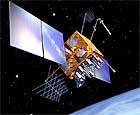
The Global Positioning System 2R-11 satellite, built by Lockheed martin, will replace an older craft in the U.S. military's navigation network.

Learn more


The Launcher


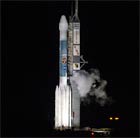
Boeing's workhorse Delta 2 rocket has flown more than 100 times, launching military, scientific and commercial satellites.

Delta 2 fact sheet

The pre-launch process

Archived Delta coverage


The Venue


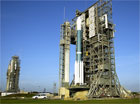
Cape Canaveral's Launch Complex 17 is the East Coast home of Delta 2.

Learn more


NewsAlert


Sign up for our NewsAlert service and have the latest news in astronomy and space e-mailed direct to your desktop.

Enter your e-mail address:

Privacy note: your e-mail address will not be used for any other purpose.


BY JUSTIN RAY

Follow the countdown and launch of the Boeing Delta 2 rocket with the U.S. Air Force's GPS 2R-11 navigation spacecraft. Reload this page for the very latest on the mission.

Spaceflight Now Plus
Video coverage for subscribers only:
   VIDEO: DELTA 2 ROCKET BLASTS OFF WITH GPS 2R-11 QT
   VIDEO: LONGER LENGTH LAUNCH MOVIE QT
   VIDEO: SPACECRAFT SEPARATION ANNOUNCED QT
   VIDEO: FIRST COUNTDOWN HALTED BY ALARM QT
   SUBSCRIBE NOW

SATURDAY, MARCH 20, 2004

As the 50th Global Positioning System satellite rose to space Saturday, it celebrated the man who championed the concept of orbiting spacecraft serving as "lighthouses in the sky" to guide mankind with precision navigation information. Read our full story.

For the Delta launch team at Cape Canaveral, there is little time to spare following Saturday's successful mission as workers refurbish pad 17B for its next mission. Read our full story.

1901 GMT (2:01 p.m. EST)

T+plus 68 minutes, 14 seconds. SPACECRAFT SEPARATION! The U.S. Air Force's NAVSTAR Global Positioning System Block 2R-11 spacecraft has been released from the Delta rocket's third stage following launch today from Cape Canaveral.

The GPS satellite will boost itself into the GPS constellation in the coming days to begin checkout period by ground controllers. The $45 million craft will fill the Plane C, Slot 3 position in the GPS network. After on-orbit testing, GPS 2R-11, also known as SVN-59, is expected to enter service in mid-April.

The new satellite replaces the GPS 2A-19 craft launched 11 years ago this month.

This concludes our live play-by-play coverage of today's mission. Check back later for a wrap-up story, pictures and more movie clips of the launch.

1859 GMT (1:59 p.m. EST)

T+plus 66 minutes, 9 seconds. The solid-fueled third stage has burned out, concluding the powered phase of launch for GPS 2R-11 aboard the Delta 2 rocket. Separation of the payload is about two minutes away.

1858 GMT (1:58 p.m. EST)

T+plus 65 minutes, 50 seconds. The quality of data via the Guam tracking station is good. The chamber pressure on the third stage is reported normal.

1857 GMT (1:57 p.m. EST)

T+plus 64 minutes, 45 seconds. Third stage ignition! The motor is firing to boost GPS into its desired orbit at the completion of this launch.

1857 GMT (1:57 p.m. EST)

T+plus 64 minutes, 14 seconds. The solid-fueled Star 48B third stage has separated from the Delta 2's second stage.

1857 GMT (1:57 p.m. EST)

T+plus 64 minutes, 7 seconds. Spin up has begun.

1856 GMT (1:56 p.m. EST)

T+plus 63 minutes, 15 seconds. SECO 2. The liquid-fueled Aerojet AJ10-118K engine has fired, raising the orbital altitude as GPS continues its ride on the Boeing Delta 2 rocket.

1855 GMT (1:55 p.m. EST)

T+plus 62 minutes, 59 seconds. Engine chamber pressures and vehicle body rates look good as the engine continues to fire.

1855 GMT (1:55 p.m. EST)

T+plus 62 minutes, 38 seconds. The Delta 2 rocket's second stage engine is up and firing again, boosting the vehicle into a higher orbit than the parking orbit achieved earlier in the launch sequence.

1855 GMT (1:55 p.m. EST)

T+plus 62 minutes. The second stage's thrusters should be firing to settle propellants in the vehicle for engine ignition.

1853 GMT (1:53 p.m. EST)

T+plus 60 minutes. Standing by for ignition of the second stage in a couple of minutes. This will be a 40-second burn.

1843 GMT (1:43 p.m. EST)

T+plus 50 minutes. Second stage restart is now about 12 minutes away. That will be followed by stage separation and ignition of the third stage to propel GPS 2R-11 into its intended orbit today. Separation of the satellite from the launch vehicle is expected about 68 minutes after liftoff.

1828 GMT (1:28 p.m. EST)

T+plus 35 minutes. The vehicle is presently out of range from any ground tracking station as it flies over the southern tip of Africa before crossing the Indian Ocean on a northeasterly track. Second stage engine restart occurs once the rocket is within view of the Guam tracking site.

1818 GMT (1:18 p.m. EST)

T+plus 25 minutes. As the Delta 2 rocket and GPS payload continue to quietly coast in the parking orbit, you can see a map of the rocket's track here.

1814 GMT (1:14 p.m. EST)

T+plus 21 minutes. Data from the rocket shows the vehicle has entered the thermal-conditioning roll as planned. The live telemetry is coming via the Ascension Island tracking station in the central Atlantic.

1809 GMT (1:09 p.m. EST)

T+plus 16 minutes. The official liftoff time was 12:53:00.409 p.m. EST.

1807 GMT (1:07 p.m. EST)

T+plus 14 minutes. The rocket has successfully achieved a good parking orbit with an apogee of 107.53 miles, perigee of 93.97 miles and inclination of 36.85 degrees

1804 GMT (1:04 p.m. EST)

T+plus 11 minutes. The rocket is coasting until the second stage restarts at about T+plus 62 minutes for a brief firing to raise the orbit. That will be followed by separation between the second and third stages. The upper stage will burn to inject GPS into the intended transfer orbit. Deployment of the payload to complete the launch is expected at T+plus 68 minutes.

1803 GMT (1:03 p.m. EST)

T+plus 10 minutes, 55 seconds. SECO 1. Confirmation that the second stage engine has shut down as planned. The Delta 2 rocket with GPS 2R-11 has arrived in a preliminary orbit around Earth following launch this morning.

1802 GMT (1:02 p.m. EST)

T+plus 9 minutes, 50 seconds. Second stage engine engine chamber pressures are normal. Altitude is 97 miles, downrange distance 1,300 miles and velocity has increased to 15,800 mph.

1801 GMT (1:01 p.m. EST)

T+plus 8 minutes, 40 seconds. The Delta remains on course and experiencing a very smooth flight. The second stage has about two minutes remaining in this burn.

1800 GMT (1:00 p.m. EST)

T+plus 7 minutes, 40 seconds. Second stage engine confirms to burn to achieve a low-altitude parking orbit around Earth. The rocket is now 94 miles in altitude, 890 miles downrange from the launch site, traveling at 14,000 mph.

1759 GMT (12:59 p.m. EST)

T+plus 6 minutes, 15 seconds. The second stage engine continues to burn as expected. The vehicle is 83 miles in altitude, 600 miles east of the launch pad, traveling at 13,000 mph.

1758 GMT (12:58 p.m. EST)

T+plus 5 minutes, 5 seconds. The protective payload fairing enclosing the GPS satellite atop the rocket has separated.

1757 GMT (12:57 p.m. EST)

T+plus 4 minutes, 55 seconds. Chamber pressures look good on the second stage engine

1757 GMT (12:57 p.m. EST)

T+plus 4 minutes, 41 seconds. The Delta's second stage engine has ignited!

1757 GMT (12:57 p.m. EST)

T+plus 4 minutes, 38 seconds. MECO. The first stage main engine cutoff confirmed, and the spent stage has been jettisoned.

1756 GMT (12:56 p.m. EST)

T+plus 3 minutes, 55 seconds. The rocket remains on the proper trajectory. Altitude 50 miles, downrange distance 200 miles, nearing 10,000 mph.

1755 GMT (12:55 p.m. EST)

T+plus 2 minute, 50 seconds. The first stage continues to fire normally. The vehicle is 37 miles in altitude, 95 miles east of the launch pad, traveling at 6,000 mph.

1755 GMT (12:55 p.m. EST)

T+plus 2 minutes, 15 seconds. The three air-start solid rocket boosters have burned out and separated. The rocket continues its trek to orbit on the power of the first stage liquid-fueled main engine.

1754 GMT (12:54 p.m. EST)

T+plus 1 minute, 50 seconds. The Delta 2 rocket is 19 miles in altitude, 25 miles east of the launch pad, traveling at 3,400 mph.

1754 GMT (12:54 p.m. EST)

T+plus 1 minute, 10 seconds. All six ground-start solid rocket boosters have burned out and separated. The three remaining motors strapped to first stage have ignited to continue assisting the rocket's RS-27A main engine on the climb to space.

1753 GMT (12:53 p.m. EST)

T+plus 56 seconds. Vehicle has passed maximum dynamic pressure. The rocket is 7.5 miles in altitude, traveling at 1,400 miles per hour.

1753 GMT (12:53 p.m. EST)

T+plus 35 seconds. Vehicle is now traveling faster than the speed of sound.

1753 GMT (12:53 p.m. EST)

T+plus 30 seconds. Solid rocket motors have passed the period of maximum thrust.

1753 GMT (12:53 p.m. EST)

T+plus 20 seconds. The rocket is currently maneuvering to the proper heading -- an eastward trajectory with a flight azimuth of 110 degrees.

1753 GMT (12:53 p.m. EST)

LIFTOFF! Liftoff of the Boeing Delta 2 rocket launching the 50th Global Positioning System spacecraft -- the newest lighthouse in the sky to provide precision navigation to U.S. military forces and civilians around the globe. And the vehicle has cleared the tower at Cape Canaveral's Complex 17B!

1752 GMT (12:52 p.m. EST)

T-minus 30 seconds. Hydraulics and electronics status checks are reported "go."

The launch ignition sequence will begin at T-minus 2 seconds when a Boeing engineer triggers the engine start switch. The process begins with ignition of the two vernier engines and first stage main engine start. The six ground-lit solid rocket motors then light at T-0 for liftoff.

1752 GMT (12:52 p.m. EST)

T-minus 1 minute. The Delta 2 rocket's second stage hydraulic pump has gone to internal power after its pressures were verified acceptable.

1751 GMT (12:51 p.m. EST)

T-minus 75 seconds. The Range has given its final clear-to-launch.

1751 GMT (12:51 p.m. EST)

T-minus 90 seconds. LOX topping to 100 percent is underway.

1751 GMT (12:51 p.m. EST)

T-minus 2 minutes. The first stage liquid oxygen vents are being closed so the LOX tank can be pressurized for launch. Puffs of vapor from a relief valve on the rocket will be seen in the remainder of the countdown as the tank pressure stabilizes.

1750 GMT (12:50 p.m. EST)

T-minus 2 minutes, 24 seconds. The GPS 2R-11 spacecraft has been declared "go" for launch.

1750 GMT (12:50 p.m. EST)

T-minus 3 minutes and counting. The rocket's third stage safe and arm devices are being armed again.

1749 GMT (12:49 p.m. EST)

T-minus 3 minutes, 30 seconds. The Delta 2 rocket's systems are switching back to internal power for launch.

1749 GMT (12:49 p.m. EST)

T-minus 4 minutes and counting. The countdown is ticking again for a second shot at launching the Delta 2 rocket today. Officials cleared the earlier alarm that halted the count during the first attempt. Liftoff is set for 12:53 p.m. EST from pad 17B at Cape Canaveral Air Force Station in Florida.

1746 GMT (12:46 p.m. EST)

The launch team is verifying its readiness for resuming the countdown from T-minus 4 minutes.

1746 GMT (12:46 p.m. EST)

The countdown is holding at T-minus 4 minutes again. Clocks will resume ticking at 12:49 p.m.

1744 GMT (12:44 p.m. EST)

NEW LAUNCH TIME. The countdown is being retargeted for a second liftoff attempt at 12:53 p.m. EST (1753 GMT) -- the very last moment that launch can occur today.

1744 GMT (12:44 p.m. EST)

Boeing says the alarm was triggered due to a momentary increase in pressure within the rocket's first stage nitrogen system. Countdown recycling to the T-minus 4 minute point continues.

1741 GMT (12:41 p.m. EST)

The countdown will be reset to the T-minus 4 minute mark. If the issue can be resolved, another liftoff attempt is possible before the end of today's launch opportunity at 12:53 p.m. EST.

1740 GMT (12:40 p.m. EST)

A launch team member called a hold in the countdown after an alarm sounded. Clocks were stopped at T-minus 43 seconds. Safing is underway.

1740 GMT (12:40 p.m. EST)

HOLD! The countdown has been halted due to a problem.

1740 GMT (12:40 p.m. EST)

T-minus 1 minute.

1739 GMT (12:39 p.m. EST)

T-minus 75 seconds. The Range has given its final clear-to-launch.

1739 GMT (12:39 p.m. EST)

T-minus 2 minutes. The first stage liquid oxygen vents are now being closed so the LOX tank can be pressurized for launch. Puffs of vapor from a relief valve on the rocket will be seen in the remainder of the countdown as the tank pressure stabilizes.

1738 GMT (12:38 p.m. EST)

T-minus 2 minutes, 30 seconds. The GPS 2R-11 spacecraft has been declared "go" for launch.

1738 GMT (12:38 p.m. EST)

T-minus 3 minutes and counting. The rocket's third stage safe and arm devices are being armed.

1737 GMT (12:37 p.m. EST)

T-minus 3 minutes, 45 seconds and counting. The Delta 2 rocket's systems are now transferring to internal power for launch.

1737 GMT (12:37 p.m. EST)

T-minus 4 minutes and counting. The final phase of the countdown is now underway for the launch of the Delta 2 rocket and the GPS 2R-11 military navigation satellite at 12:41 p.m. EST from pad 17B at Cape Canaveral Air Force Station in Florida.

1736 GMT (12:36 p.m. EST)

Now five minutes from launch! Standing by for release of the hold in one minute.

1735 GMT (12:35 p.m. EST)

The final Air Force poll of management has been performed without any constraints voiced. Liftoff still set for 12:41 p.m. EST.

1733 GMT (12:33 p.m. EST)

Boeing Mission Director Rich Murphy has completed his management poll.

1733 GMT (12:33 p.m. EST)

The launch team has been polled by the Boeing launch conductor for a "go" to proceed with the countdown. No problems were reported. The team is now receiving final instructions on countdown procedures.

1731 GMT (12:31 p.m. EST)

Now 10 minutes to launch of the 303rd Delta rocket and the GPS 2R-11 spacecraft. The countdown is half-way through this built-in hold. Boeing says there are no issues being addressed.

1725 GMT (12:25 p.m. EST)

T-minus 4 minutes and holding. The countdown has entered the final planned hold point for today's launch attempt. During this planned 12-minute hold, officials will poll the various team members in the soft blockhouse, Range Operations Control Center and Mission Directors Center. If all systems are "go," the countdown will resume for liftoff at 12:41 p.m. EST (1741 GMT).

1724 GMT (12:24 p.m. EST)

Launch Weather Officer Joel Tumbiolo has declared that conditions are "go" for liftoff today.

1723 GMT (12:23 p.m. EST)

The facility water tanks are now being pressurized.

1721 GMT (12:21 p.m. EST)

Now 20 minutes until launch. The spacecraft safe and arm devices have been armed.

1720 GMT (12:20 p.m. EST)

The first stage fuel tank vent is being closed and the tank is being pressurized for launch.

1719 GMT (12:19 p.m. EST)

T-minus 10 minutes and counting. GPS 2R-11 is now confirmed to be on internal battery power for flight.

1716 GMT (12:16 p.m. EST)

Inhibited checks are now beginning for the Range Safety command destruct receivers that would be used in destroying the Delta rocket should the vehicle veer off course and malfunction during the launch.

1714 GMT (12:14 p.m. EST)

The GPS 2R-11 spacecraft cargo atop the Delta 2 rocket is now switching to internal power for launch.

1709 GMT (12:09 p.m. EST)

T-minus 20 minutes and counting. The planned hold in the countdown has been released. Clocks will now tick down to T-minus 4 minutes where the final hold is planned.

1705 GMT (12:05 p.m. EST)

Boeing and Air Force officials have conducted readiness polls in preparation for continuing the countdown. No technical problems were reported. Clocks will resume counting at 12:09 p.m. EST as planned.

1659 GMT (11:59 a.m. EST)

Now half-way through this built-in hold at T-minus 20 minutes.

Once the countdown resumes, clocks will tick down to the T-minus 4 minute mark where a 10-minute hold is planned. However, the hold period will be lengthened by two minutes to sync up with today's new launch time of 12:41 p.m. EST.

The available launch window extends to 12:53 p.m. EST, a minute shorter than previously advertised by launch officials.

1649 GMT (11:49 a.m. EST)

T-minus 20 minutes and holding. The countdown has entered the 20-minute built-in hold. This pause is designed to give the launch team a chance to work any problems or catch up on activities that might be running behind schedule. Engineers will also have time to examine all the data from the just-completed steering tests. Launch is slated for 12:41 p.m. EST from pad 17B at Cape Canaveral Air Force Station, Florida.

1644 GMT (11:44 a.m. EST)

T-minus 25 minutes and counting. The countdown is nearing a planned 20-minute built-in hold at the T-minus 20 minute mark. Another hold is scheduled at T-minus 4 minutes.

The second stage steering checks are complete. The first stage tests are underway.

1642 GMT (11:42 a.m. EST)

The Air Force confirms that the two-minute delay in the launch time is due to a COLA blackout, as described below. Liftoff of the Delta 2 rocket is re-scheduled to occur at 12:41 p.m. EST (1741 GMT).

1640 GMT (11:40 a.m. EST)

Engine steering tests are underway at launch pad 17B as the countdown rolls on.

1634 GMT (11:34 a.m. EST)

The target liftoff time appears to be shifting to 12:41 p.m. EST. We're still awaiting clarification from Air Force on the reasoning. It could be a COLA, or Collision Avoidance blackout, which prevents using a few minutes of today's window. COLAs ensure the rocket is not launched on a trajectory that would take it too close to an object already in orbit.

In about five minutes, the launch team will begin the "slew" or steering checks of the first and second stage engines. These are gimbal tests of the nozzles on the first stage main engine and twin vernier engines and second stage engine to ensure the rocket will be able to steer itself during launch.

Also in the next few minutes, RF link tests between the Range and rocket are scheduled.

1631 GMT (11:31 a.m. EST)

Launch Weather Officer Joel Tumbiolo has removed any worry about weather conditions for today's liftoff of the Delta 2 rocket. There is now a 100 percent chance of acceptable weather!

Winds at the Cape are breezy today, gusting upwards of 20 knots. However, the conditions are well below the 34-knot limit.

1622 GMT (11:22 a.m. EST)

The launch team reports the loading of the Delta 2 rocket's first stage liquid oxygen tank was completed at 11:21:49 a.m. EST. The operation took 26 minutes and 17 seconds today. The tank will be replenished through the countdown to replace the super-cold liquid oxygen that naturally boils away.

The rocket is now fully fueled for launch. The vehicle's first stage was successfully loaded with RP-1 kerosene fuel along with the liquid oxygen over the past hour. The second stage was filled with its storable nitrogen tetroxide and Aerozine 50 fuels a few days ago. The nine strap-on booster rockets are solid-propellant.

1619 GMT (11:19 a.m. EST)

Now 24 minutes into the liquid oxygen tanking. Rapid loading has just ended.

1615 GMT (11:15 a.m. EST)

Cryogenic tanking of the Delta rocket's first stage continues smoothly. Once the liquid oxygen tank reaches the 95 percent full level, the "rapid load" valve will be closed and the slower "fine load" phase will continue to fill the tank.

1609 GMT (11:09 a.m. EST)

The countdown is entering the final 90 minutes to launch. No issues or concerns have been voiced by the launch team. Liftoff of the Delta 2 rocket and GPS 2R-11 satellite remains scheduled to occur at 12:39 p.m. EST (1739 GMT).

1605 GMT (11:05 a.m. EST)

Liquid oxygen loading has passed the 10-minute mark. The bottom of the Boeing Delta 2 rocket is icing over as the super-cold liquid oxygen continues to flow into the first stage.

1600 GMT (11:00 a.m. EST)

Now five minutes into this approximate 25-minute process to fill the first stage liquid oxygen tank. A plume of white vapor is streaming from the vent port of the first stage as the cryogenic tanking proceeds.

1555 GMT (10:55 a.m. EST)

Super-cold liquid oxygen, chilled to Minus-298 degrees F, is being pumped into the first stage of the Boeing Delta 2 rocket as the countdown continues for today's 12:39 p.m. EST launch.

The liquid oxygen is flowing from a storage tank at pad 17B, through plumbing and into the bottom of the rocket. The LOX and the RP-1 kerosene fuel -- loaded aboard the vehicle earlier this hour -- will be consumed by the first stage main engine.

1554 GMT (10:54 a.m. EST)

The final "go" has been given to the launch team members to start loading the rocket's first stage liquid oxygen tank.

Meanwhile, activation of the rocket's guidance system has been completed.

1550 GMT (10:50 a.m. EST)

Air Force management has passed the "go" for cryogenic tanking to the Boeing launch operations team. Liquid oxygen loading is scheduled to begin shortly.

1540 GMT (10:40 a.m. EST)

Launch Weather Officer Joel Tumbiolo just provided a detailed briefing to the management team in advance of loading liquid oxygen (LOX) into the Delta 2 rocket's first stage. He reports that all weather rules are currently "go" and expected to stay that way through launch time.

"In summary, no weather concerns for LOX loading and expecting good conditions for the remainder of the countdown," he reported.

There have been some showers coming ashore from the Atlantic. However, none are threatening the launch pad area.

The launch time forecast calls for some clouds, winds from the east at 12-18 knots and a temperature in the mid-70s F.

Overall, there is a 90 percent chance of acceptable conditions. Cumulus clouds and flight through precipitation are the only launch rules that could be violated.

Should the launch be delayed to Sunday for some reason, there is a 100 percent chance of good weather tomorrow.

1527 GMT (10:27 a.m. EST)

The first stage fuel tank of the Boeing Delta 2 rocket has been fully loaded for today's planned 12:39 p.m. EST liftoff from Cape Canaveral Air Force Station in Florida. The tank was filled with a highly refined kerosene, called RP-1, during a 23-minute, 6-second process that concluded at 10:26:56 a.m. EST.

The next major task in the count will be loading super-cold cryogenic liquid oxygen into the first stage.

Boeing officials are not reporting any significant technical issues in the countdown, the weather forecast is favorable and activities remain on track for liftoff just over two hours from now.

1521 GMT (10:21 a.m. EST)

The launch team has computed that the full load for the first stage fuel tank is 10,034 gallons.

Once the tank is filled to 98 percent, the "rapid load" valve will be closed and the slower "fine load" phase will continue to top off the tank.

1513 GMT (10:13 a.m. EST)

Now 10 minutes into this approximate 20-minute process to load the rocket's first stage with about 10,000 gallons of refined kerosene fuel. Some 5,000 gallons have been loaded to this point.

1508 GMT (10:08 a.m. EST)

RP-1 has been flowing for five minutes with no problems reported. Over 2,000 gallons have been loaded into the rocket.

The propellant will be guzzled along with liquid oxygen -- to be pumped into the rocket a little later -- by the first stage Rocketdyne RS-27A main engine and twin vernier steering thrusters during the initial four-and-a-half minutes of flight.

1503 GMT (10:03 a.m. EST)

Fueling of the Delta 2 rocket's first stage has begun for today's launch. About 10,000 gallons of a highly refined kerosene propellant, called RP-1, are being pumped into the base of the rocket from a storage tank at pad 17B.

1459 GMT (9:59 a.m. EST)

Boeing technicians are starting preparations for loading the Delta 2 rocket's first stage RP-1 fuel tank. After verifying valves, sensors, flow meters and equipment are ready, the highly-refined kerosene fuel will start flowing into the vehicle.

1443 GMT (9:43 a.m. EST)

Launch team members are beginning the work to turning on and configure the Delta's onboard guidance computer -- called the Redundant Inertial Flight Control Assembly, or RIFCA.

1439 GMT (9:39 a.m. EST)

The Terminal Countdown has commenced for the midday launch of Boeing's Delta 2 rocket carrying the U.S. Air Force's Global Positioning System 2R-11 spacecraft. Over the next three hours, the launch team will prep the rocket, payload and ground support systems for the planned 12:39 p.m. EST (1739 GMT) liftoff from pad 17B at Cape Canaveral Air Force Station in Florida.

The countdown currently stands at T-minus 150 minutes. However, there are a pair of holds -- totaling 30 minutes in duration -- planned at T-minus 20 minutes and T-minus 4 minutes.

Today's available launch window extends 14 minutes to 12:53 p.m. EST. That is one minute shorter than previously advertised by launch officials.

Weather conditions are still looking quite promising today. There is a 90 percent chance of acceptable weather at launch time.

The Complex 17B area is verified cleared of workers. A warning horn will be sounded three times at the seaside complex as a precaution to alert any remaining personnel in the vicinity that they should leave immediately.

The pad clear status will allow the start of hazardous operations such as the pressurization of helium and nitrogen storage tanks inside the rocket's first and second stages, along with the second stage fuel and oxidizer tanks.

1430 GMT (9:30 a.m. EST)

The launch team members have been polled for a "ready" status to resume the countdown as planned at the end of this hold. Clocks will start ticking again at 9:39 a.m. EST as the Terminal Countdown begins.

1339 GMT (8:39 a.m. EST)

T-minus 150 minutes and holding. Clocks are entering a planned 60-minute built-in hold in the countdown. Holds are scheduled into the count to give workers a chance to catch up on any activities that may be running behind.

Over the next hour, the entire launch team and management will be seated at their consoles. A series of polls will be conducted to verify all is in readiness for entering Terminal Count at end of the built-in hold.

Liftoff of the Delta 2 rocket remains scheduled for the 12:39 p.m. EST from Cape Canaveral, Florida.

1210 GMT (7:10 a.m. EST)

Boeing's Delta 2 rocket is in the spotlight today, scheduled for blastoff at 12:39 p.m. EST (1739 GMT) to deliver the Global Positioning System 2R-11 military navigation satellite into Earth orbit.

"(This) launch is important for ensuring that the GPS system remains robust in its mission of providing precise positioning and time information to military and civilian users around the globe," said Lt. Col. Michael Mason, Air Force Space Command's lead for operations and sustainment of the navigation satellite system.

The new $45 million satellite will replace the ailing GPS 2A-19 spacecraft in the orbiting network. The 11-year-old craft has a suspect Navigation Data Unit.

"Failure (of GPS 2A-19) is not imminent," Mason said, noting that the satellite will continue to be used as a spare. "But this (launch) in an important step to make sure we maintain the robustness of the constellation."

There are 27 GPS satellites currently operating in space.

Launch preparations leading up to today's liftoff attempt have gone well, officials report.

"This has been an exceptionally smooth launch campaign," said Lt. Col. Brad Broemmel, the Air Force launch director.

The mobile service tower was retracted from around the three-stage Delta 2 rocket earlier this morning at Cape Canaveral's pad 17B.

The metal cocoon-like mobile service structure was used to assemble the rocket on the seaside pad, provide workers access to all areas and give protection from the weather.

Activities are leading up to the start of Terminal Count at 9:39 a.m. EST. That three-hour sequence will see the Delta 2 rocket fully fueled, the guidance system turned on, final system checks performed and all the other normal work to ready the vehicle for flight.

The loading of RP-1 kerosene fuel into the rocket's first stage is expected to start around 10 a.m. Liquid oxygen tanking will follow just before 11 a.m. The second stage was loaded with storable propellant a few days ago and the third stage is solid-fueled.

The quarter-hour launch window opens at 12:39 p.m. EST (1739 GMT).

Watch this page for continuing updates throughout today's countdown and launch!

FRIDAY, MARCH 19, 2004
1700 GMT (12:00 p.m. EST)


With no technical concerns and an ideal weather forecast, the Boeing Delta 2 rocket remains poised for blastoff Saturday to deploy the next replacement Global Positioning System satellite.

"The Launch Readiness Review was completed today at 0900. Everyone is 'go' for launch," Lt. Col. Brad Broemmel, the Air Force launch director, told reporters at a morning news conference.

Liftoff from pad 17B at Cape Canaveral Air Force Station is scheduled for 12:39 p.m. EST (1739 GMT).

Weather forecasters continue to predict a 90 percent chance of favorable conditions for the launch attempt. See the full forecast here.

THURSDAY, MARCH 18, 2004
1605 GMT (11:05 a.m. EST)


The latest weather forecast continues to predict favorable conditions for Saturday's launch attempt. See the full forecast here.

WEDNESDAY, MARCH 17, 2004

Serving mankind as a "lighthouse in the sky," the 50th Global Positioning System satellite launches Saturday to sustain the space-based navigation constellation.

Riding atop Boeing's workhorse Delta 2 rocket, the GPS 2R-11 spacecraft is scheduled for liftoff at 12:39 p.m. EST (1739 GMT) from Cape Canaveral, Florida.

The $45 million satellite, built by Lockheed Martin, is being launched to replace an ailing spacecraft that has surpassed its design life.

Read our launch preview story for much more information.

The early weather forecast is calling for a 90 percent chance of favorable conditions during Saturday's launch opportunity. You can read the entire forecast here.

Watch this page for live updates during Saturday's countdown and launch!

Ares 1-X Patch
The official embroidered patch for the Ares 1-X rocket test flight, is available for purchase.
 U.S. STORE
 WORLDWIDE STORE

Apollo Collage
This beautiful one piece set features the Apollo program emblem surrounded by the individual mission logos.
 U.S. STORE

Expedition 21
The official embroidered patch for the International Space Station Expedition 21 crew is now available from our stores.
 U.S. STORE
 WORLDWIDE STORE

Hubble Patch
The official embroidered patch for mission STS-125, the space shuttle's last planned service call to the Hubble Space Telescope, is available for purchase.
 U.S. STORE
 WORLDWIDE STORE

INDEX | PLUS | NEWS ARCHIVE | LAUNCH SCHEDULE
ASTRONOMY NOW | STORE

ADVERTISE

© 2009 Spaceflight Now Inc.